
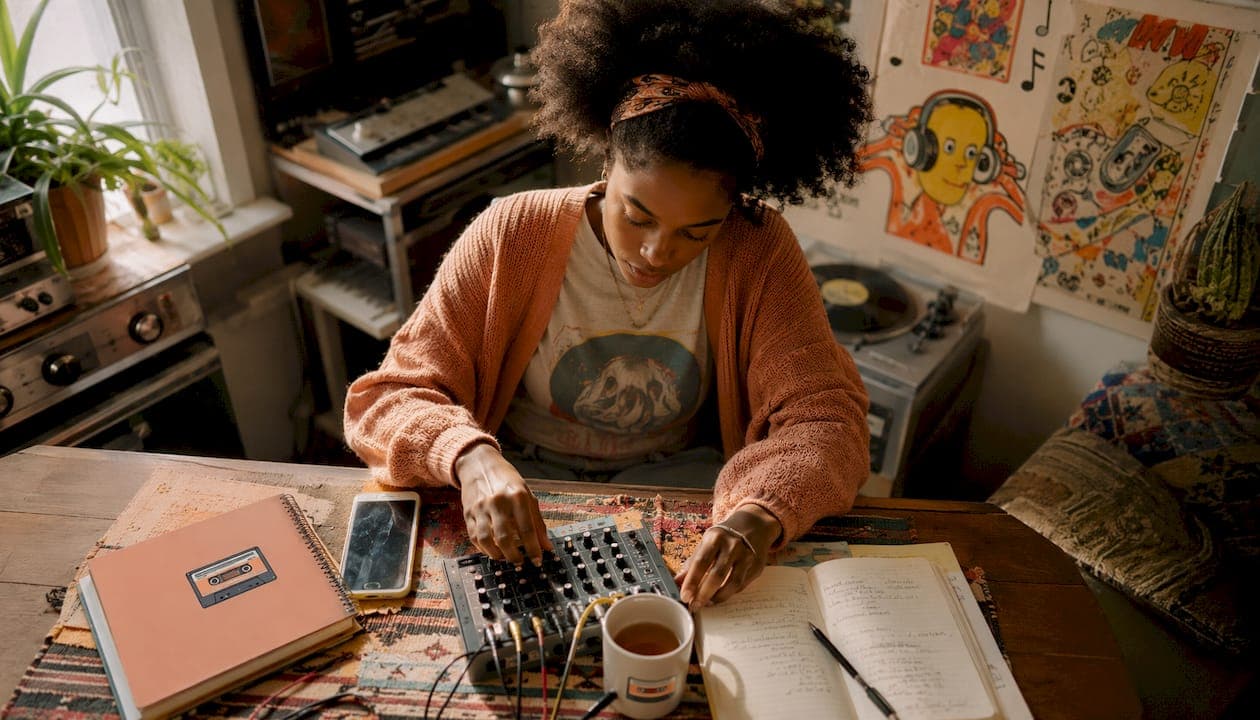
The six actions that consistently work for underground artists are: own a niche before widening your reach, pick one or two platforms and post consistently, treat live shows as your primary conversion engine, build direct channels (email and Discord) from day one, collaborate with artists and creators who share your audience, and release music on a regular cadence rather than in sporadic bursts. Growth is slow and compounding. Most artists see their first durable local or niche following within six to twelve months, not six days. The three things to do this week: write a tight one-paragraph artist bio that answers "why you, why now," pick one or two platforms where your listeners already spend time, and set up an email signup with a free incentive attached.
Start here:
- Write your artist bio (one paragraph, specific, no clichés)
- Choose your primary platform (TikTok or Instagram for most; SoundCloud if your genre skews toward producers and tastemakers)
- Set up an email capture page with a free unreleased track or acoustic version as the hook
The niche-first approach to building an audience is not a workaround for artists without label support. It is the actual strategy.
Table of Contents
- How underground artists build audiences: the niche-first case
- Content rules that actually work: the 70/20/10 framework
- Live shows are your fastest path to real fans
- How to release music so each song builds your fanbase
- Turning listeners into fans with email, Discord, and direct channels
- Collaboration playbook: how to access other artists' audiences
- What metrics actually matter and when to expect results
- Your 30–90 day plan: weekly tasks and what to measure
- Which platforms help underground artists get discovered and convert fans
- Key Takeaways
- Why local and owned relationships beat chasing viral moments
- Hppn helps underground artists turn discovery into attendance
- Useful sources and further reading
How underground artists build audiences: the niche-first case
The single most reliable path to a loyal fanbase is to pick a specific niche or scene and become the artist that scene cannot ignore. Generic reach is expensive and fragile. Niche depth compounds. An artist who is the go-to name in their city's lo-fi soul scene, their regional hardcore circuit, or their online ambient community has something far more durable than a viral moment: a group of people who feel like the music was made for them.
Marketing amplifies signal, and if the identity is vague, no amount of promotion fixes that. The artists who break through without label support are almost always the ones who answer "what do I offer that no one else in my genre does?" with something specific. Your story, your sound's specific emotional territory, your scene affiliations — these are the raw materials of a positioning that makes the right people feel found.
Picking a niche is not about limiting yourself permanently. It is about having a clear starting point. Look at the venues booking artists adjacent to you, the online communities where your genre lives, and the artists with audiences that overlap with yours. That intersection is your niche. Work it for at least 30 days before considering whether to widen.
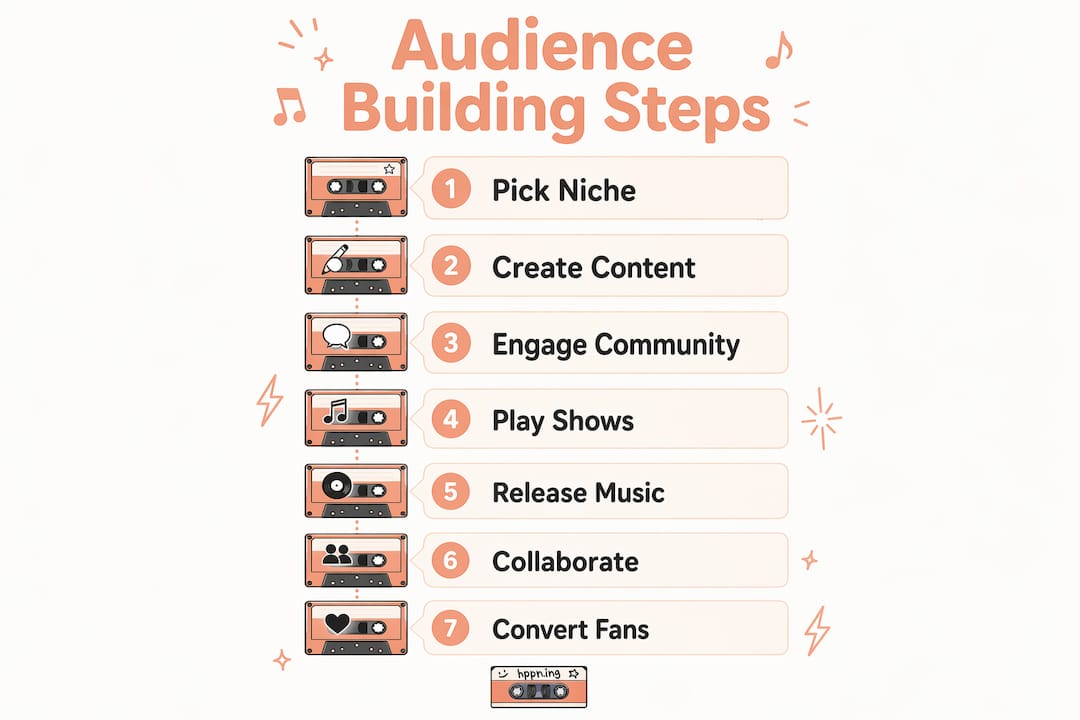
Pro Tip: Run a 30-day niche test. Post exclusively within one scene or genre frame, track which content gets the most saves and shares (not just likes), and note which listeners follow you to your other platforms. If engagement is climbing, stay narrow. If it's flat, adjust the niche, not the strategy.
The local music scene is often the fastest niche to own because geography creates natural community. Playing the same venues, knowing the same promoters, and showing up to other artists' shows builds the kind of social proof that no algorithm can manufacture.
Content rules that actually work: the 70/20/10 framework
Music marketing experts recommend the 70/20/10 content rule: 70% value-driven content, 20% community-focused content, and 10% promotional content. In practice, that means most of what you post should not be "new song out now." It should be the process, the perspective, the personality behind the music.
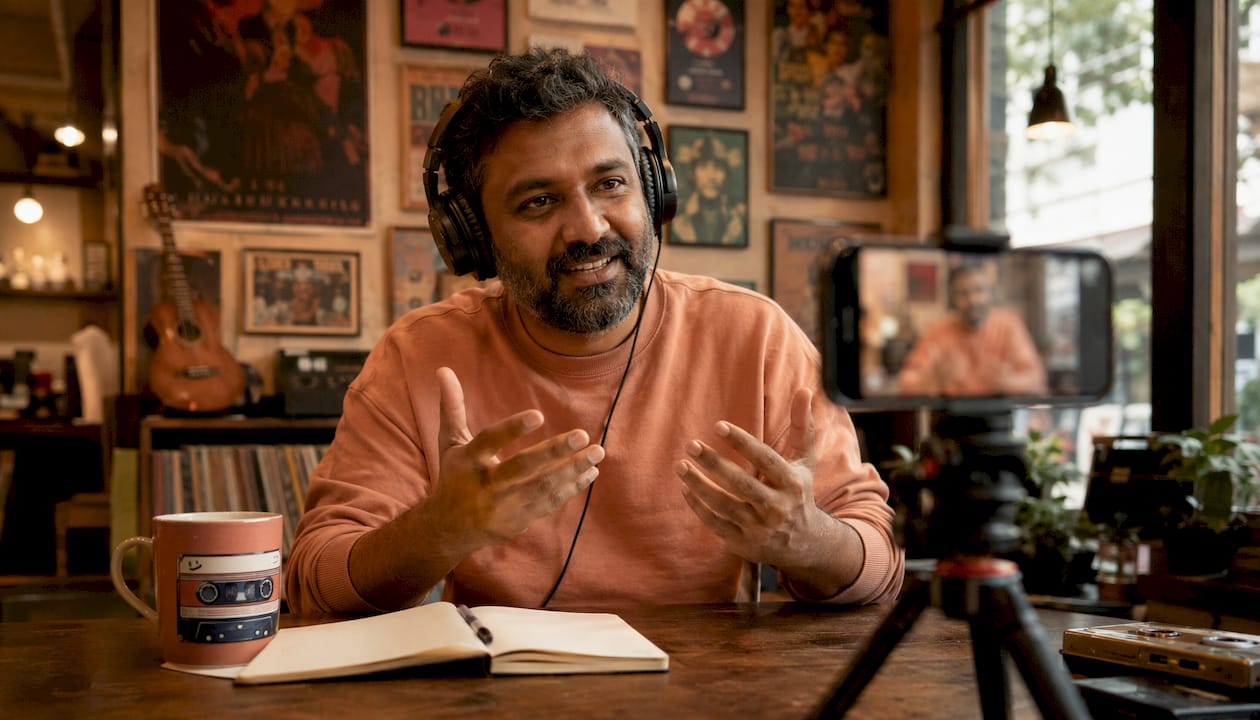
Choose your platforms based on where your listeners already are, not where you feel most comfortable. TikTok and SoundCloud for cold discovery. Instagram for community depth. Bandcamp for catalog and direct sales. Pick one primary and one secondary platform, then go deep rather than spreading thin across five.
| Platform | Best for | Content type | Cadence |
|---|---|---|---|
| TikTok | Cold discovery | 15–30 sec hooks, face-to-camera, process clips | 4x per week |
| Community and superfans | Stories, DMs, behind-the-scenes, fan reposts | 3–5x per week | |
| SoundCloud | Tastemaker seeding | Full tracks, WIPs, community comments | 1–2x per week |
| Bandcamp | Catalog and direct revenue | Full releases, pay-what-you-can, merch bundles | Per release |
| YouTube | Long-form and search | Music videos, live takes, studio sessions | 1–2x per month |
A practical weekly schedule for one primary (TikTok) and one secondary (Instagram) platform: Monday, a short process clip or lyric story; Wednesday, a community-focused post (question, poll, fan feature); Friday, a 15–30 second value-driven audio snippet with a CTA to your email signup or Bandcamp; Saturday, a promotional behind-the-scenes Story on Instagram. That is four posts across two platforms, aligning with the 70/20/10 content rule.
One track can generate multiple assets: a short vertical clip of the hook, a lyric visual for Instagram, a live acoustic take for SoundCloud, and a behind-the-scenes of the recording session for TikTok. Repurposing one song into 30 pieces of content is not padding. It is how you stay present without burning out.
Pro Tip: Treat creators as collaborators, not a distribution channel. Build a network of 10–20 creators who genuinely like your music and post with your sounds because they want to. One creator who believes in the music is worth more than ten paid placements from people who don't.
Live shows are your fastest path to real fans
No digital tactic converts a casual listener into a loyal fan as quickly as a live show. The physical experience creates a memory and an emotional bond that a Spotify stream simply cannot replicate. For underground artists, this is your clearest competitive advantage over artists who only exist online.
Booking checklist:
- Build a contact list of 20–30 local venues, promoters, and bookers in your genre
- Write a short pitch email: one paragraph on your sound, one on your draw (even if small), and a link to your best live clip
- Start with open mics, showcases, and support slots before pitching headline slots
- Follow up once, two weeks after the initial pitch, then move on
- Build genuine relationships with local promoters by attending their events before you need anything from them
The show itself is a data-capture opportunity. Merch table email and phone collection yields higher-value loyal fans than most passive digital followers. Set up a clipboard or a QR code at the merch table that links to your email signup. Offer something immediate: a free download, a discount on merch, or early access to your next release. People who sign up at a show are already warm. They showed up.
On-show conversion tactics:
- QR code at the merch table linking to your email signup
- Physical signup sheet with a clear incentive written at the top
- Announce the signup from the stage: "If you want the demo we're dropping next month before anyone else, sign up at the merch table"
- Hand out a physical card with your Bandcamp or Hppn artist page URL
The 48-hour follow-up matters as much as the show itself. Send a short email or DM to everyone who signed up: thank them for coming, share one exclusive asset (a live recording, a demo), and tell them what's coming next. That sequence is what turns a one-time attendee into a repeat supporter.
Pro Tip: Announce your next show from the stage at every gig. "We're playing [venue] on [date] — tell a friend." It sounds obvious, but most artists skip it. The people in the room are your most effective promoters.
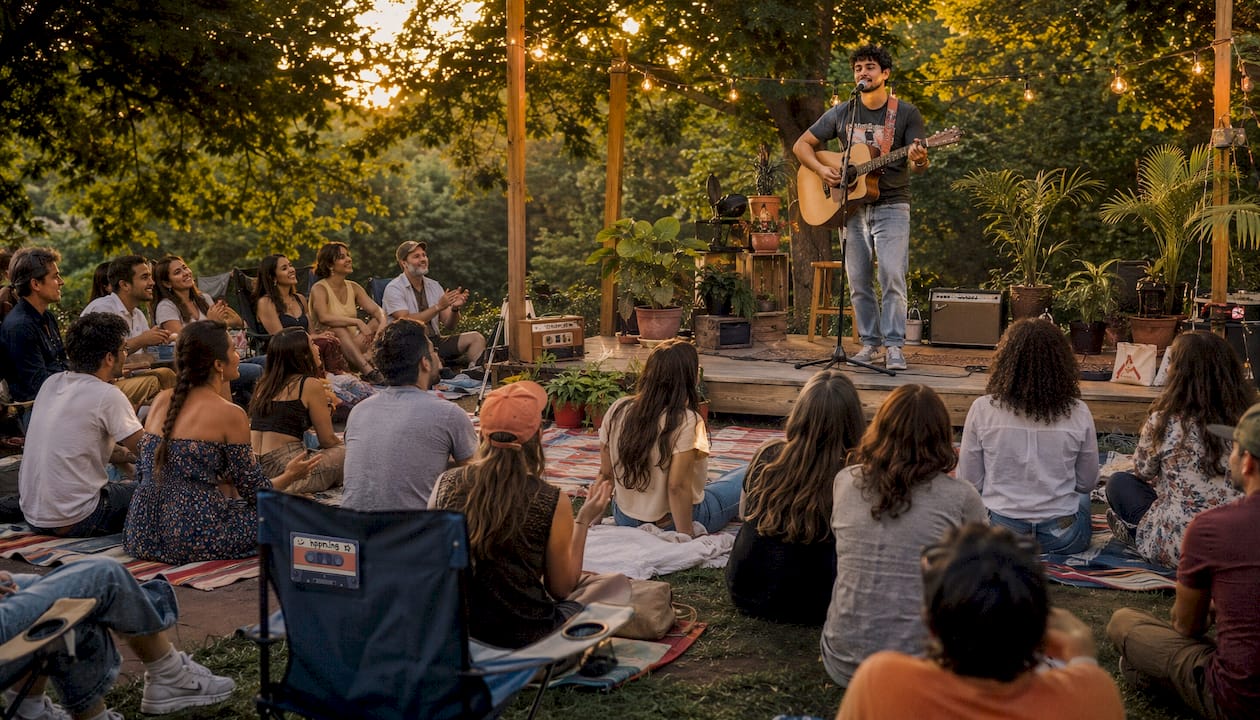
Local gigs build the kind of artist reputation that compounds over years, not weeks. Play consistently in your city, and the scene starts to feel like yours.
How to release music so each song builds your fanbase
Favor regular singles over long gaps between projects. A steady single release schedule keeps both fans and streaming algorithms engaged. Each release is an acquisition moment: a reason for new listeners to find you and existing fans to share you.
A practical release timeline:
- Weeks 6–4 before release: Finalize the track, create artwork, set up pre-save links, submit to Spotify editorial through your distributor
- Weeks 3–2 before: Tease content, share snippets, announce the release date, activate your email list with early access
- Release week: Post daily, engage with every comment, pitch curator playlists, send a release-day email
- Weeks 2–4 after: Sustain with live sessions, acoustic versions, fan reactions, and continued playlist outreach
For Spotify, set up Spotify for Artists and submit your track to editorial playlists at least seven days before release. Tag your releases accurately on Bandcamp so they surface in genre searches. Use SoundCloud to seed early versions or demos to tastemakers and community members who can spread the track before it goes wide.
Pitch curators in three tiers: editorial playlists through your distributor, algorithmic playlists (driven by saves and repeat listens in the first 48 hours), and independent curator playlists via direct outreach or tools like SubmitHub. College radio and local press are worth the effort too. A short, specific pitch email works better than a long one: one sentence on the song, one on why it fits their playlist, and a streaming link.
Pro Tip: Sequence your singles into an EP after three or four releases. Each single brings new listeners, and the EP gives them a catalog to explore. Listeners who discover you through the EP's third track will often go back and stream the singles, compounding your play counts without any additional promotion.
Turning listeners into fans with email, Discord, and direct channels
Start collecting emails before your first release. Email is the most durable channel you have. Algorithms change, platforms restrict reach, and accounts get suspended. An email list survives all of it.
How to capture emails:
- Set up a landing page with a clear incentive (unreleased track, acoustic version, early access)
- Optimize your link-in-bio to point to the signup page, not your Spotify profile
- Use a physical signup sheet or QR code at every show
- Add a signup CTA to every email you send and every piece of content you post
What to send and how often: a monthly personal update (what you're working on, what's coming), event alerts two weeks before a show, and exclusive snippets or demos that subscribers get before anyone else. Keep it short. A 200-word email that feels personal beats a 1,000-word newsletter that feels like a press release.
Discord and Patreon are for your most engaged fans. A Discord server works best when it feels like a creative community, not a fan club. Share unreleased demos, ask for feedback on track direction, involve members in naming releases. The people who feel genuinely involved become your most active promoters.
- Set up a free Discord server with two or three channels: general chat, music previews, and show announcements
- Invite your most engaged social followers first
- Post something exclusive there every two weeks: a demo, a voice note, a behind-the-scenes clip
- Keep a low-cost Patreon tier ($3–5/month) for fans who want to support directly, with perks like early access and name in the credits
On Bandcamp, use pay-what-you-can pricing for early releases. It lowers the barrier for new fans while letting superfans pay more. Limited-run merch drops (50 units, announced to email subscribers first) create urgency and reward loyalty.
A note on data collection: ask only for what you will actually use. An email address and a first name are enough. Follow standard US privacy norms and include an unsubscribe link in every email.
Collaboration playbook: how to access other artists' audiences
Collaborations are multiplier tactics. A well-chosen collaboration puts you in front of an audience that already trusts the artist introducing you. Done wrong, it is just noise. Done right, it is the fastest organic growth lever available to an underground artist.
The right collaborators share your audience's taste without duplicating your sound exactly. Look for artists with a similar or slightly larger following, genuine engagement with their fans, and creative chemistry with you. Audience overlap matters more than follower count.
Build the relationship before you pitch anything. Attend their shows, engage meaningfully with their content, share their music with your audience. When you eventually reach out, the collaboration feels like a natural next step rather than a cold ask.
Outreach script for an opener slot: "Hey [Name], I've been following your shows for a while and I think our audiences would genuinely connect. I'm [Artist Name], I make [brief description]. Would you be open to me opening one of your upcoming shows? Happy to cross-promote to my list and socials."
Checklist for a collaboration release or show swap:
- Agree on content assets in advance: who creates what, who posts when
- Set a shared cross-post schedule so both audiences see the collaboration simultaneously
- Use one destination link (a smart link or Bandcamp page) so you can track traffic from both audiences
- Follow up after the release with a shared thank-you post that tags both communities
Pro Tip: Remixes are an underused collaboration tool. Ask an artist in your scene to remix one of your tracks, then release it on both your Bandcamp pages. You each get a new piece of content, and both audiences discover the other artist organically.
Connecting with local music communities and tastemakers in your city is often more valuable than chasing online influencers. A local DJ who plays your track at a well-attended night reaches exactly the right people.
What metrics actually matter and when to expect results
Focus on conversion signals, not vanity metrics. Follower count tells you almost nothing about whether your audience-building is working. These are the numbers worth tracking:
- Email signups per month: the clearest signal that people want a direct relationship
- Show RSVP to attendance conversion: how many people who said they'd come actually showed up
- Saves and playlist adds on Spotify: the strongest algorithmic signal that listeners want to return
- Repeat plays: listeners who play a track more than once are far more likely to become fans
- Merch table signups per show: a direct measure of live conversion
Superfans spend 66% more on live events and 105% more on physical purchases than average listeners. That is why converting live attendees into email subscribers, and email subscribers into repeat show-goers, is the highest-return activity in your entire strategy. A small, deeply engaged list beats a large, passive following every time.
Realistic timeline expectations: months one through three are about building systems and getting your first 50–100 email subscribers. Months four through six, if you are playing shows consistently and releasing on cadence, you should see your first durable local following and early algorithmic traction on Spotify. Months seven through twelve, the compounding starts to show: each release pulls in listeners from previous releases, and your show attendance grows because your email list is working.
When a metric is flat, diagnose the bottleneck. If discovery is the problem (low streams, low profile views), invest in short-form video seeding and creator collaborations. If conversion is the problem (decent streams but no email signups, no show attendance), invest in better on-show capture and a stronger email incentive.
Your 30–90 day plan: weekly tasks and what to measure
This is the plan. Not a framework to adapt later. Do these things in this order.
Days 1–30: Identity, setup, and first capture
- Write your artist positioning statement: "I make [genre] for [audience] who want to feel [emotion]"
- Audit your visual identity across all platforms for consistency
- Set up an email capture page with a free incentive
- Post two short videos (process or story content, not promotion)
- Play two local shows or virtual showcases and collect emails at both
- Submit to one curator playlist and one college radio station
Days 31–60: Cadence, collaboration, and early merch
- Lock in a release cadence: one single every 4–8 weeks
- Reach out to three artists for collaboration or show swaps
- Play your first local residency or mini-tour (three to five shows in your region)
- Test a limited merch drop (50 units, email subscribers first)
- Start a 30-day music marketing sprint to build content momentum
Days 61–90: Community launch and conversion measurement
- Launch a Discord server and invite your most engaged followers
- Run a pre-save campaign bundled with a show announcement
- Measure your conversion rates: email signups per show, saves per release, repeat plays per track
- Adjust your weakest link: if discovery is low, add more short-form video; if conversion is low, improve your email incentive
| Week | Content | Outreach | Shows | Measurement |
|---|---|---|---|---|
| 1–2 | Bio, 2 short videos | Email capture setup | 1 local show | Email signups |
| 3–4 | 4 posts (70/20/10 mix) | 1 curator pitch | 1 showcase | Saves, repeat plays |
| 5–8 | Weekly cadence | 3 collab outreach | 2–3 shows | Show attendance rate |
| 10–12 | Pre-save campaign | Press + radio pitch | Mini-tour | Email list growth |
| 13 | Discord content | Creator network | Monthly gig | Conversion rates |
Which platforms help underground artists get discovered and convert fans
Use discovery platforms for cold reach, streaming platforms for catalog and revenue, and local discovery platforms to convert digital attention into real-life attendance.
Spotify: Set up Spotify for Artists immediately. Submit to editorial playlists at least seven days before release. Order your top three tracks so the strongest one is first. Monitor saves and repeat listens in the first 48 hours after release. Those signals drive algorithmic placement on Discover Weekly and Release Radar.
Bandcamp: Tag releases accurately by genre and subgenre. Use pay-what-you-can pricing for early releases. Bandcamp's community of dedicated music buyers skews toward underground and independent artists, and its discovery features surface new releases to fans who follow similar artists.
SoundCloud: Use SoundCloud for community seeding. Share early versions, demos, and remixes with tastemakers and community members. SoundCloud's comment system lets listeners timestamp reactions, which is useful feedback and social proof simultaneously.
TikTok: The platform distributes audio through content, not artist accounts. Seed your sound to 10–20 nano and micro creators in the content category where your sound naturally fits. Give them creative freedom. A creator who uses your track in a storytime video they would have made anyway is worth more than a scripted promotional post.
Instagram: Instagram is where listeners become fans. Reply to DMs personally for your first 1,000 followers. Post Stories the day after a TikTok performs well. Use polls and questions to surface lyric quotes and build community identity.
Hppn: Hppn bridges the gap that most platforms leave open. It connects digital discovery directly to real-life attendance, which is the conversion step where most underground artists lose momentum. On Hppn, fans can preview your music and find your upcoming shows in their city, browse by location, and access tickets. For underground artists, that local discovery surface is exactly where you want to be visible. Getting listed on Hppn means that fans who discover you online can immediately find out where to see you live, which is the highest-value conversion in your entire funnel.
Platforms that help artists bridge digital discovery to real-life attendance are critical for modern underground success. The artists who convert online listeners into show-goers are the ones building careers, not just streaming numbers.
Pro Tip: Measure platform ROI by tracking the full action funnel: impressions → profile visits → email signups → show attendance. A platform that drives 10,000 impressions but zero show attendees is not working for you. A platform that drives 200 impressions and 15 show attendees is.
Key Takeaways
Underground artists who build lasting audiences do it through consistent niche focus, direct fan relationships, and live shows that convert attendees into email subscribers and repeat supporters.
| Point | Details |
|---|---|
| Niche before reach | Own one scene or genre frame for at least 30 days before widening your focus. |
| Email from day one | Start collecting emails before your first release; 200 engaged subscribers outperform 10,000 passive followers. |
| Live shows convert | Merch table email capture yields higher-value fans than most passive digital channels. |
| Release on cadence | Singles every 4–8 weeks keep algorithms and fans engaged between major projects. |
| Hppn for local discovery | List your shows on Hppn so fans who find you online can immediately see where to catch you live. |
Why local and owned relationships beat chasing viral moments
The conventional wisdom in music marketing tells artists to optimize for streams and follower counts. The artists who actually build sustainable underground careers are optimizing for something harder to copy: genuine human relationships.
The evidence for this is not abstract. Artists who play consistently in their local scene, collect emails at every show, and build Discord communities around their music are converting algorithmic exposure into owned audience. Those owned audience members show up on release day, travel to shows, buy merch, and make the content that seeds the next release. Streams are rented. Email subscribers are yours.
There is also a timing argument. AI is flooding the market with more music than ever before. As recorded music becomes less scarce, the scarce resources become attention, trust, and belonging. The artists investing in those assets now, through local shows, direct fan relationships, and genuine community, are building something that cannot be replicated by an algorithm or a competitor with a bigger budget.
The live music discovery moment is where the most durable fan relationships begin. Not on a streaming platform, not in a comment section, but in a room where someone heard you play and felt something. Everything else in this playbook is designed to get more people into that room, and to keep them connected after they leave.
Hppn helps underground artists turn discovery into attendance
Most discovery platforms stop at the stream. Hppn goes further. It connects fans to live music happening near them, with artist previews, event listings, and direct ticket access built into a single experience designed for exactly the kind of underground and emerging artists this playbook is written for.
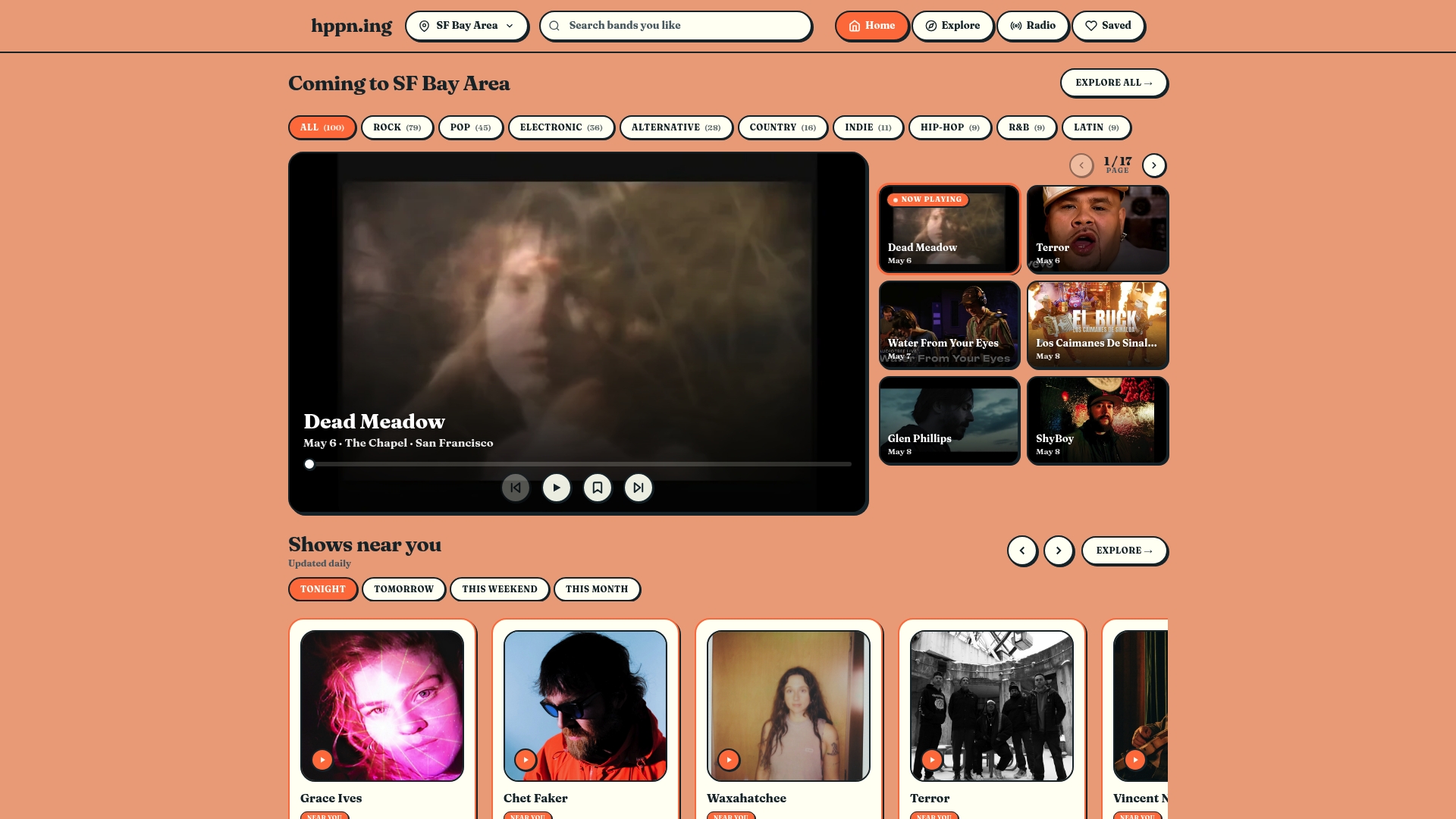
For underground artists, the highest-value conversion is not a stream. It is a fan who shows up to your show, signs up at the merch table, and comes back for the next one. Hppn makes that conversion easier by putting your live events in front of local fans who are actively looking for new music to experience in person. Your artist page on Hppn lets fans preview your music, find your upcoming shows, and access tickets, all in one place.
Browse local shows and preview artists on Hppn to see how the platform surfaces underground artists to fans in your city. If you want to get listed and start converting digital discovery into real attendance, visit hppn.ing to get started.
Useful sources and further reading
These are the sources that back the claims in this article, plus a few worth bookmarking for deeper implementation.
- How to Build a Fanbase Without a Viral Moment — Eric Alper's practical case for niche-first growth and consistent release cadence; directly supports the 4–8 week single strategy.
- How to Build a Music Following from Zero (2026 Edition) — Covers email-first strategy, process content, and the superfan spending data cited in the metrics section.
- Independent Artist Marketing Strategy 2026 | Slow Oak Studio — The most detailed breakdown of creator network building and owned audience conversion available; essential reading for the collaboration and community sections.
- Music Marketing for Indie Artists | liminl. — Strong on identity-first marketing and the $0 organic strategy; useful for artists starting with no budget.
- How to Build a Fanbase Without a Record Label | ALERA Blog — Covers the full arc from identity to live shows to email list; good reference for the 30–90 day plan.
- Independent Artist Growth Playbook 2026 | Artist Advisory Guides — The TikTok-to-Spotify handoff explained clearly; use this when diagnosing your discovery-to-conversion bottleneck.
- How to create music merch to grow your brand | Berklee Online — The source for merch table email capture and live conversion tactics; practical and specific.
- The 70/20/10 Social Media Rule for Bands | Sonicbids Blog — The original source for the content rule used throughout the content strategy section.
Use these when you sit down to implement the 30–90 day plan. Each one covers a specific phase in more depth than a single article can.