

Music fans find emerging talent through a combination of human-curated platforms, active community participation, and local scene exploration, not through algorithmic playlists alone. The industry term for this practice is "active music discovery," and it stands in direct contrast to passive listening. Platforms like OnesToWatch, Bandcamp, and Reddit, along with local venues and community radio, form the backbone of how dedicated fans spot rising artists months before mainstream audiences catch on. Nearly 70% of college radio DJs under 25 rely on personal recommendations over algorithms to find new music. That number tells you everything about where real discovery happens.
How music fans find emerging talent online
The most effective digital spaces for discovering new artists combine editorial judgment with community input. No single platform covers everything, so fans who rely on just one source miss most of the picture.
OnesToWatch operates as one of the most respected editorial pipelines in the industry. Their team reviews around 300 artists annually but selects only about 20 for their exclusive "Class Of" list. That 6.7% selection rate signals genuine scarcity. When an artist makes that list, it carries real weight.
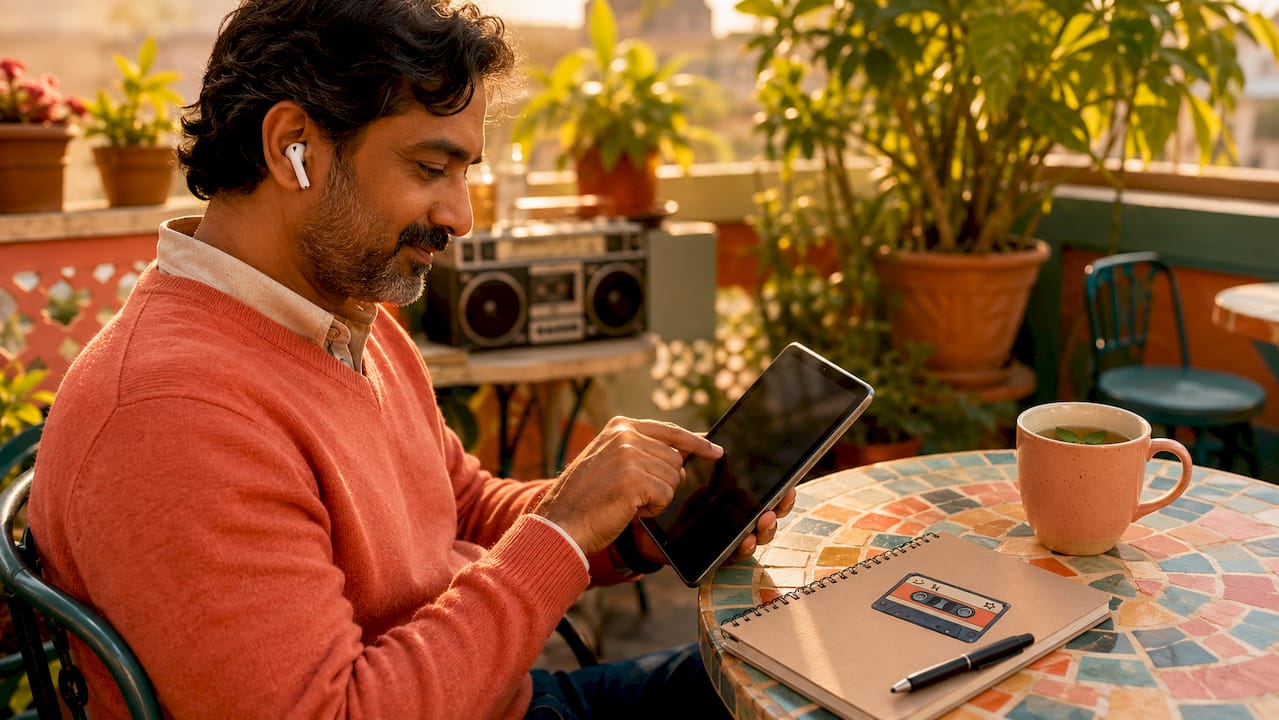
Bandcamp takes a different approach. Human-powered discovery through artist interviews, scene reports, and live session content builds deeper fan connections than any algorithm-generated playlist. Fans who read the context around an artist, not just stream the track, form lasting attachments. That depth is what separates Bandcamp from most other platforms.
TikTok functions as an early radar for breaking artists. 36% of US rock fans discovered new songs on TikTok in 2025, and 67% of TikTok users followed viral tracks back to streaming platforms. Searching hashtags like #emergingartists and #newmusic2026 surfaces artists weeks before they appear on editorial playlists.
Reddit communities like r/listentothis, which has 18 million members, and Rate Your Music offer fan-driven recommendations with detailed genre context. These spaces reward specificity. A post recommending a bedroom pop artist from Austin with a link to their SoundCloud demo is worth more than a generic "you might like" suggestion from an algorithm.
- OnesToWatch: Expert editorial curation with a rigorous selection process
- Bandcamp: Independent releases with full artist context and direct support options
- TikTok: Viral discovery through hashtag exploration and trending sounds
- Reddit: Genre-specific fan communities with authentic peer recommendations
- SoundCloud: Early demos and unreleased tracks from artists still building their sound
Pro Tip: Set up a weekly TikTok search for genre-specific hashtags alongside a Bandcamp "new arrivals" browse in your favorite tags. Combining both takes under 20 minutes and surfaces artists from completely different discovery pipelines.
Why local music scenes are the best place to spot rising artists
Live shows and local infrastructure surface artists that no digital platform catches. Manual discovery methods like checking local venues and community radio often surface music months before streaming algorithms catch on. That lead time matters if you want to say you heard someone first.
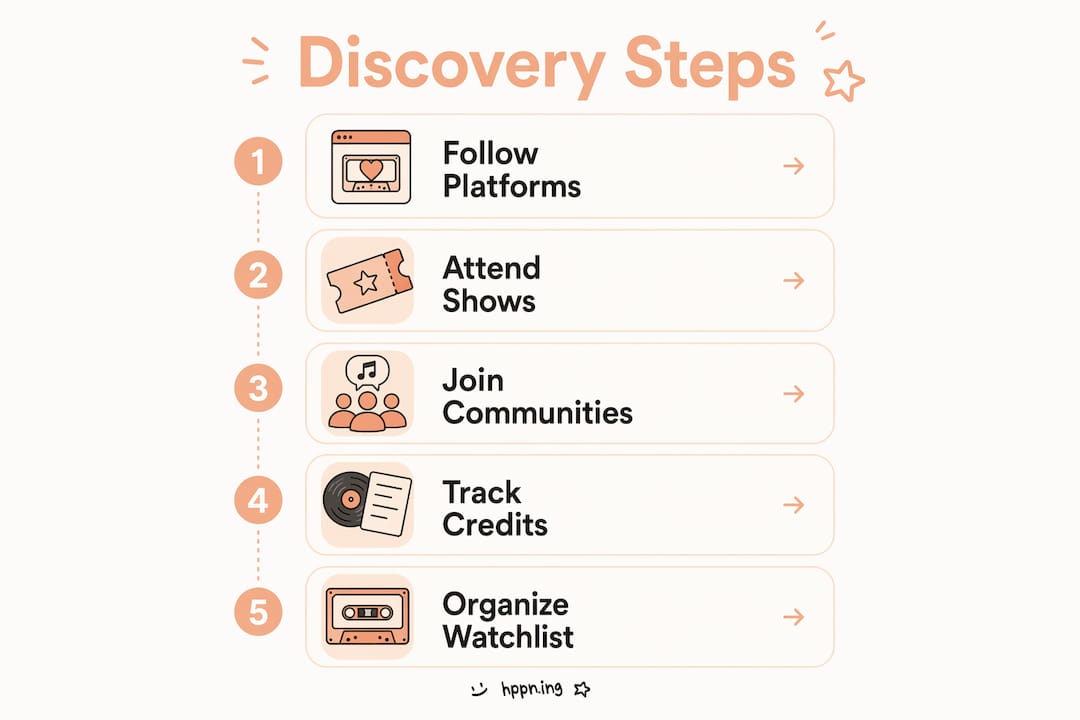
Local venue calendars are underused by most fans. Clubs that book emerging artists tend to repeat patterns. If a venue consistently puts on quality opening acts, their entire calendar becomes a reliable filter. Tracking that venue's bookings weekly costs nothing and pays off consistently.
Support acts deserve more attention than they get. When a mid-level touring artist brings a local opener, that opener has usually been vetted. Promoters do not book random acts for paying crowds. A strong support slot is a credibility signal worth following up on.
Community radio and record store staff picks operate on human taste, not listener data. A college radio DJ who programs a midnight slot for experimental electronic music knows that scene personally. Their picks reflect real knowledge, not engagement metrics.
- Local venue calendars: Track weekly bookings at clubs known for quality emerging acts
- Support acts: Treat every opening slot as a curated recommendation from the promoter
- Community radio: Follow DJs who specialize in your genre for consistent early picks
- Record store staff picks: Physical recommendations from people who live inside the music
- Local music nights: Recurring events like open mics and genre nights build scene familiarity fast
Attending live shows for new music creates something no streaming session can replicate: a direct memory tied to an artist. Fans who see someone perform before they blow up carry that experience permanently. It shapes how they hear every future release.
Pro Tip: After any show with a strong support act, search that artist immediately on your phone before you leave the venue. First impressions fade fast. Saving their profile in the moment means you actually follow through.
What systems do dedicated fans use to keep discovering new artists?
Consistent discovery requires a system, not just curiosity. Fans who treat discovery as a cluster ecosystem, linking venues, labels, scenes, and communities, avoid the narrow listening trap and surface better music more reliably.
Building a personal discovery map
A discovery map connects your sources rather than treating them as separate. Your local venue calendar feeds into your watchlist. Your watchlist connects to a Reddit thread about that genre. That thread links to a label releasing similar artists. Each node reinforces the others.
Weekly scanning routines
Dedicated fans build short weekly routines. Checking three or four trusted sources on the same day each week, whether that is a venue calendar, a curated playlist, or a fan forum, creates a rhythm. Sporadic discovery produces sporadic results.
Organizing a watchlist
A watchlist is not a favorites list. It tracks artists you are watching for movement: a second release, a tour announcement, a label signing. The goal is to triage artists by momentum, not just by how much you like them right now.
| Discovery method | Best for | Time investment |
|---|---|---|
| Venue calendar tracking | Local and regional emerging acts | 10–15 minutes weekly |
| Curated editorial platforms | Nationally breaking artists | 20–30 minutes weekly |
| Fan community forums | Genre-specific underground picks | 15–20 minutes weekly |
| Metadata credit tracking | Pre-breakthrough artists | 30–45 minutes monthly |
| Live show attendance | Authentic scene immersion | Variable, high reward |
Following clusters of artists, labels, and producers rather than isolated acts multiplies your discovery rate. One producer credit on a track you love can lead you to five other artists that producer has worked with. That chain rarely dead-ends.
Engaging with local music communities also keeps discovery social. Fans who share finds with others receive recommendations in return. The exchange compounds over time.
How do metadata and scene connections reveal underrated musicians?
Advanced fans follow credits, not just sounds. Expert listeners track producer, engineer, and session musician credits to uncover connected emerging artists that standard algorithms miss entirely. This approach requires more effort but produces discoveries that feel genuinely rare.
The logic is simple. A producer who worked on a track you love has almost certainly worked with other artists in the same orbit. Those artists share a sonic DNA. Following that credit chain leads you into scenes and sounds that no recommendation engine has mapped yet.
Tracking metadata patterns also reveals release consistency, which is one of the clearest indicators of career momentum. An artist releasing music every three to four months, building a catalog, and appearing on multiple producers' credits is moving. That pattern predicts longevity better than a single viral moment.
- Producer credits: Search every producer name on a track you love and find their full discography
- Engineer credits: Engineers often work within tight scenes, making their credits a scene map
- Songwriter credits: Co-writers frequently appear across multiple emerging artists in the same genre
- Label rosters: Independent labels with strong A&R instincts are worth following as a whole
Pro Tip: When you find a track you love, open the full credits on any streaming platform and search every name listed. Do this once a month with five tracks and your discovery network expands faster than any algorithm can replicate.
Platforms tracking over 10,000 new releases weekly make clear that the volume problem is real. No fan can filter that manually without a system. Metadata credit tracking cuts through volume by following quality signals instead of quantity.
Key Takeaways
Active music discovery combines human curation, community participation, and local scene engagement to consistently surface emerging artists before algorithms catch up.
| Point | Details |
|---|---|
| Human curation beats algorithms | Nearly 70% of college radio DJs under 25 rely on personal recommendations, not algorithms, to find new music. |
| Local venues are early signals | Venue calendars and support act bookings surface emerging artists months before streaming platforms notice them. |
| Metadata credits unlock scenes | Following producer and engineer credits connects fans to entire artist networks that algorithms never map. |
| Discovery systems outperform curiosity | Weekly routines combining venue calendars, forums, and curated platforms produce more consistent results than sporadic browsing. |
| Cluster thinking multiplies finds | Tracking linked venues, labels, and scenes rather than isolated artists reveals consistent quality across a connected ecosystem. |
The friction is the point
I have spent years watching fans complain that they cannot find good new music while refreshing the same three playlists. The problem is not that good music does not exist. Algorithms create comfort zones that limit surprise and variety, and most fans never push past them.
The fans who consistently find great emerging artists are not lucky. They have built habits. They check a local venue calendar every Monday. They follow three or four trusted voices in fan forums. They go to shows where they know nobody on the bill. That discomfort is the mechanism. The friction is not a bug in the discovery process. It is the process.
The hardest part is accepting that good discovery is slow. You will sit through sets that do not land. You will follow artists who stall out. But the ones you find six months before anyone else? Those discoveries feel different. They become part of your identity as a listener.
My honest advice: pick one new source you have never used, whether that is a local venue calendar, a niche subreddit, or a credit search on a track you love, and commit to it for four weeks. One source, consistently used, beats ten sources checked once. The benefits of local scene exposure compound the same way any habit does. Show up regularly and the scene starts showing up for you.
— Ari
Hppn makes local artist discovery easier
Finding emerging artists near you should not require hours of research across a dozen tabs. Hppn brings live music discovery, artist previews, and local scene exploration into one place built specifically for fans who want to go deeper than mainstream playlists.
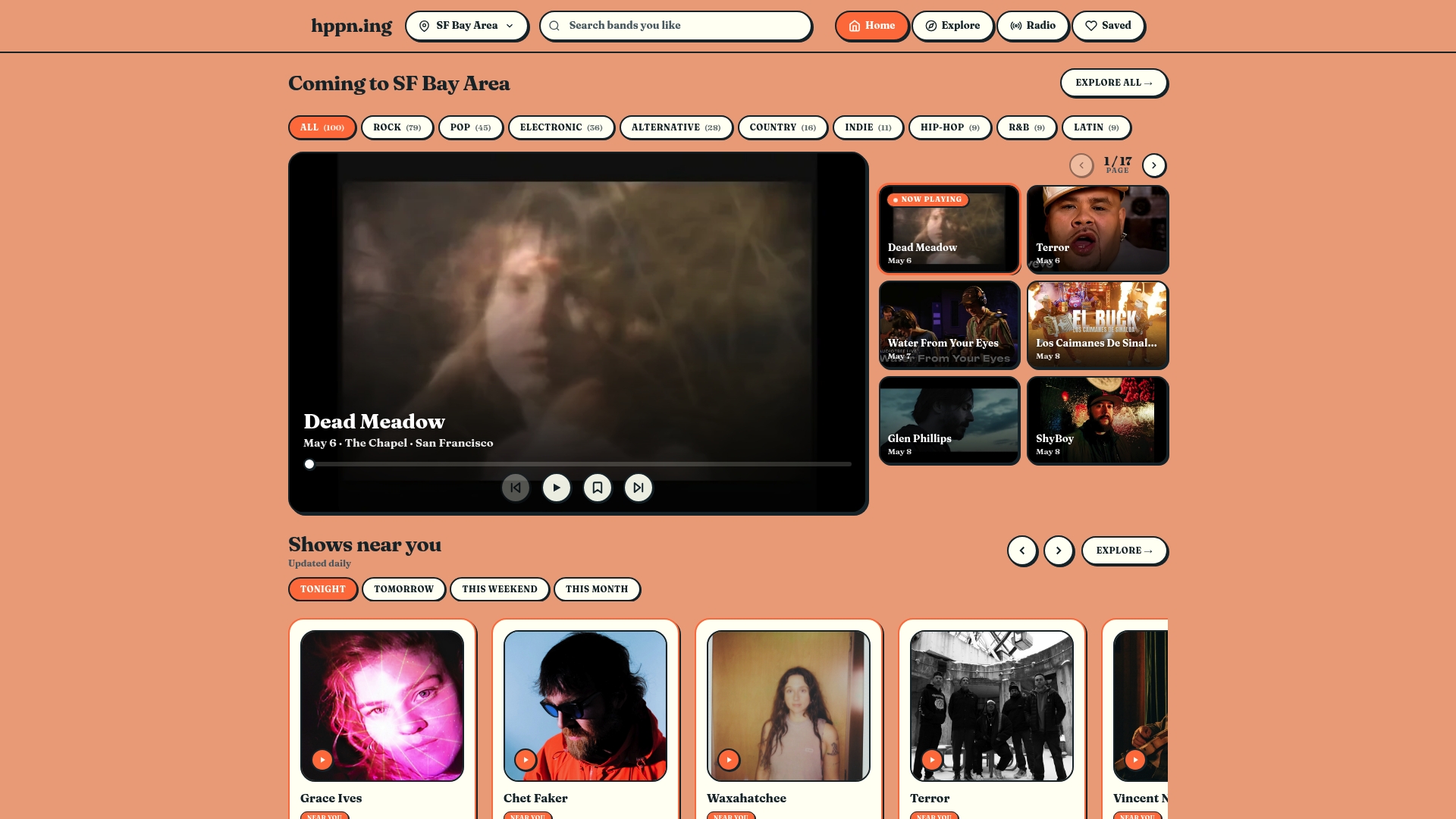
With Hppn, you can preview emerging artists before buying a ticket, browse concerts by location, and follow trending local performers through live music charts. The platform surfaces artists that major streaming services overlook, with a focus on smaller and underground acts building real momentum in your city. Search artists and preview music directly, or check the live music charts to see which local acts are gaining traction right now. Hppn puts the discovery work where it belongs: in the hands of fans who actually care.
FAQ
How do music fans find emerging talent before they blow up?
Dedicated fans combine editorial platforms like OnesToWatch, local venue calendars, and metadata credit tracking to find artists months ahead of mainstream attention. Manual discovery methods consistently surface music before streaming algorithms catch on.
What are the best platforms for discovering new underground music?
Bandcamp, Reddit communities like r/listentothis, SoundCloud, and TikTok hashtag searches each surface underground music through different mechanisms. Using all four together covers far more ground than any single platform.
Why do algorithms fail at finding emerging artists?
Algorithm feedback loops narrow variety by reinforcing what you already listen to, which means genuinely new artists rarely break through without external signals. Fans need deliberate friction from niche forums, local venues, and community radio to escape that loop.
How does following producer credits help with artist discovery?
Credit-based discovery tracks recurring collaborators across projects, connecting fans to entire artist networks that share a sonic identity. One producer credit on a track you love can lead directly to five or more undiscovered artists in the same scene.
How can I support emerging artists I discover locally?
Attending their shows, buying music directly on Bandcamp, sharing their profiles in fan communities, and following their release activity all contribute to real career momentum. Direct support at the local level has a measurable impact on artists still building their audience.