
Algorithms serve you more of what you already like. Playlists are curated by what you've already heard. Radio plays what's already popular. None of those systems were built to surprise you. But live videos? They operate on a completely different logic. The role of live videos in finding new music has quietly become one of the most significant shifts in how both fans and industry professionals discover artists. With 4.2 billion music clips shared daily across social platforms, live content has rewritten the rules of who gets heard, who gets found, and how fast it happens.
Table of Contents
- Key takeaways
- How live videos drive music discovery today
- How artists are redesigning live shows for discovery
- When viral exposure doesn't become lasting fandom
- Practical strategies for fans and professionals
- My take on where live video discovery is headed
- Discover new artists through Hppn
- FAQ
Key takeaways
| Point | Details |
|---|---|
| Live video dominates discovery | YouTube leads music discovery globally, with 60% of users finding new artists there first. |
| First 15 seconds are critical | Songs with a clippable hook early in a live performance are 3x more likely to go viral. |
| Discovery doesn't guarantee loyalty | Nearly half of social media music discoverers don't follow up with streaming within a month. |
| Artists are designing for screens | Front-loading sets with visual impact moments has become standard practice for emerging artists. |
| Platforms reward authenticity | Live streaming builds artist-fan connections that pre-recorded content simply cannot replicate. |
How live videos drive music discovery today
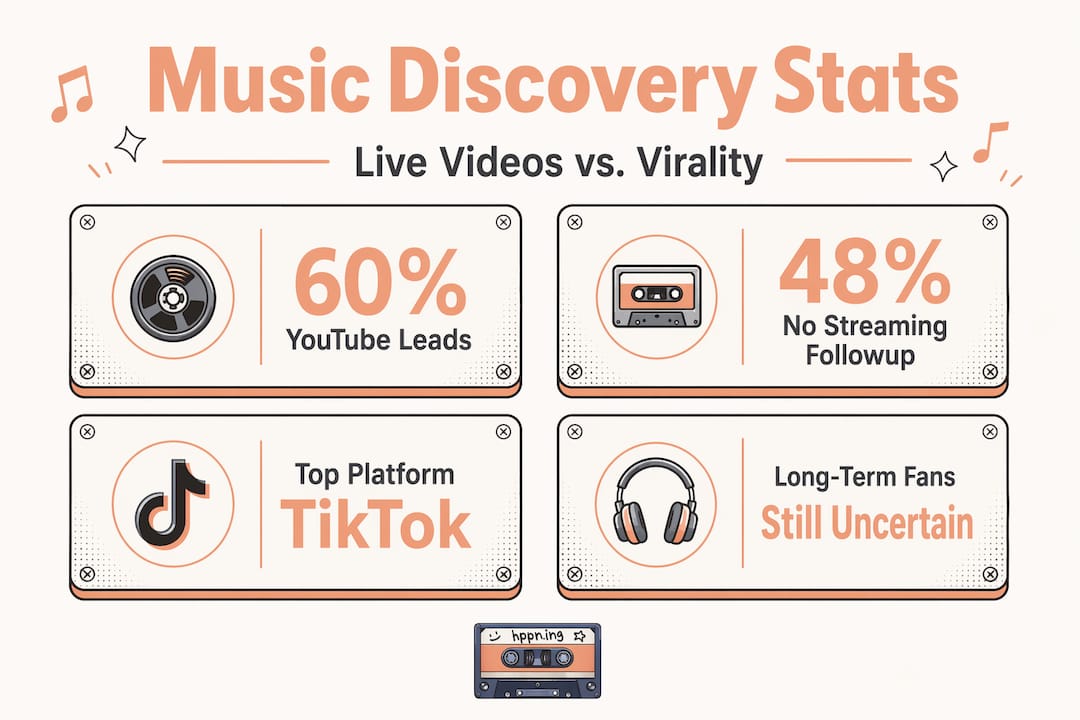
The mechanics are worth understanding because they explain why live video outperforms almost every other format for breaking new artists. YouTube remains the world's largest music discovery platform with 2.7 billion active users, and 60% of those users say they find new artists there first. That's not because YouTube has the best catalog. It's because live performance content captures something a studio recording cannot: the feeling of being in the room.
The impact of live streaming on music discovery runs deeper than passive watching. Platforms like Twitch, Instagram Live, YouTube Live, and TikTok Live each bring something distinct to the table. Twitch rewards long-form sessions where artists build communities over hours. Instagram Live converts existing followers into real-time participants. TikTok Live clips go sideways fast, reaching people who never searched for the artist at all. Each platform is a different kind of net, and together they cast wider than anything radio ever managed.
Here's what actually makes live video so effective for discovery:
- Real-time interaction changes the relationship between artist and audience. Chats, Q&As, and polls create experiences that traditional recordings cannot replicate.
- Algorithmic amplification rewards engagement signals like comments, shares, and watch time, which live content naturally generates in higher volumes.
- Geographic reach is essentially unlimited. Live streaming breaks down geographical barriers, letting a bedroom artist in Tulsa connect with fans in Tokyo without a tour budget.
- Clippable moments do the spreading. Songs with a hook in the first 15 seconds are three times more likely to go viral, which means the right live clip can do the work of an entire marketing campaign.
Pro Tip: When watching live streams for discovery purposes, sort by "live now" rather than browsing a creator's archive. The real-time energy and unexpected moments are where the most memorable discoveries happen.
How artists are redesigning live shows for discovery
Understanding how to find new music through live videos is only half the picture. The other half is what artists are doing intentionally to make themselves findable. This isn't accidental. Artists now craft performances to include a series of viral moments designed specifically for short-form video consumption, rather than traditional live pacing.
The shift is strategic and deliberate. Here's how artists are adapting:
- Front-loading the setlist. The strongest, most visual song goes first. Bold hooks and visuals designed for screen impact are placed where attention is highest, not saved for a finale that most clipped recordings never reach.
- Designing for mobile screens. Lighting, framing, and movement are now considered through the lens of a vertical phone screen, not just the back row of a venue. An artist with a compelling close-up reaction moment on a phone screen can outperform one with a technically superior but visually flat performance.
- Building in shareable peaks. Rather than one climactic moment per show, artists layer in multiple clip-worthy spikes throughout the set. Each one is a potential entry point for a new listener who encounters the video days later.
- Using analytics to iterate. Streaming and engagement data tells artists which clips performed, at what timestamp viewers dropped off, and which platforms delivered the most new followers. This feedback loop is compressing the learning cycle dramatically.
Pro Tip: If you're an artist or manager reviewing live video performance, pay attention to average watch duration by timestamp, not just total views. The drop-off point tells you exactly where your "clippable" moment failed or succeeded.
The trade-off here is real. Optimizing for virality can sometimes flatten the arc of a live show. The tension between crafting a fully immersive 90-minute experience and producing a series of 15-second peaks is one of the defining creative challenges of this era.
When viral exposure doesn't become lasting fandom
This is where the conversation gets more complicated. The role of video in music exploration has grown enormously, but discovery and loyalty are not the same thing. The gap between them is wider than most people assume.
48% of users did not stream music they discovered on social media within the last month. That's not a small rounding error. That's nearly half of all social discovery leading nowhere in terms of actual consumption. The reasons are worth examining.
| Platform behavior | Age group | Discovery-to-streaming conversion |
|---|---|---|
| TikTok primary discovery | 16 to 24 | Lower conversion to streaming |
| Multi-platform discovery | 25 to 34 | Higher streaming follow-through |
| Live stream focused | 35+ | Strongest catalog exploration |
The pattern here reflects something important about how live sessions influence music trends. Younger audiences discover more and convert less. They are consuming clips as entertainment, not necessarily as an entry point to an artist's catalog. Older audiences, who tend to engage with longer live content, convert at higher rates.
Algorithmic curation compounds this problem. Pure algorithmic feeds can narrow musical taste over time, creating echo chambers where discovery feels constant but is actually repetitive. Live streaming, by contrast, introduces the kind of randomness and friction that leads to genuinely unexpected finds. A Twitch stream goes off-script. An Instagram Live features an unannounced collab. That unpredictability is exactly what playlists can't deliver.
The harder truth is that virality does not guarantee long-term fan engagement. Many viewers follow the social content rather than the music itself. An artist can hit a million views on a live clip and still have 3,000 monthly listeners on streaming platforms. For industry professionals, this means thinking carefully about what success actually looks like and building post-discovery funnels that convert attention into genuine audience.
Practical strategies for fans and professionals
Whether you're a music lover trying to use live concerts for new music or a manager building an artist's discovery strategy, the approach looks different depending on which side of the screen you're on.
For music lovers looking to discover new artists:
- Follow live music streams on multiple platforms simultaneously rather than relying on one algorithm. Diversification is the best antidote to echo chambers.
- Watch full live sessions, not just clips. The best discoveries often happen three songs in, not in the viral moment that brought you there.
- Engage in comment sections and live chats during streams. Other fans are often the best A&R you'll find anywhere.
- Use live music charts that track trending artists by performance data rather than streaming numbers alone. This surfaces artists before they're mainstream.
- Browse by location. Local scenes often produce the most original music, and live videos from small venues are increasingly available online.
For industry professionals building artist exposure:
- Schedule live sessions around release moments, not just as standalone content. A live performance tied to a single release extends the discovery window significantly.
- Use exclusive virtual sessions, like acoustic sets or behind-the-scenes live Q&As, to convert casual viewers into invested fans.
- Cross-post live clips strategically across platforms, but adapt them for each one. A 60-second clip that works on TikTok needs different framing than the same moment repurposed for YouTube Shorts.
- Live streaming also opens monetization through subscriptions and virtual ticket sales, which means discovery content can also generate direct revenue rather than serving purely as a marketing cost.
Pro Tip: For industry professionals, pair live video release events with pre-registered RSVP lists. The email capture from a virtual release party is often more valuable long-term than the view count.
My take on where live video discovery is headed
I've watched the live video space evolve from a novelty into the primary way most music fans encounter new artists, and my honest assessment is that we're still in the early innings of understanding what this actually means.
The clip-first culture worries me when it comes to artist development. There's a real risk that we optimize so hard for the 15-second hook that we lose the artists who build something more complex. Some of the best music I've encountered through live videos was in the middle of a long, unpolished session that would never survive an algorithm's patience threshold.
What I think matters most, and what I don't hear discussed enough, is the difference between passive discovery and active discovery. Watching a clip because it appeared in your feed is not the same experience as seeking out a new artist because someone in a live chat recommended them with genuine enthusiasm. The interactive layer of live streaming is underutilized. Comments and real-time fan conversations are the closest digital equivalent to a friend grabbing your arm and saying "you have to hear this."
The technology side of things, particularly AI-driven recommendations tied to live performance data, is moving faster than most people realize. But I'd argue the best use of that technology isn't to replace human curation. It's to amplify it. The future of live video as a discovery tool looks most interesting to me when it combines platform intelligence with genuine community. Randomness, surprise, and human recommendation sitting alongside algorithmic personalization. That balance is where real discovery lives.
— Ari
Discover new artists through Hppn
Knowing that live video is your best discovery tool is one thing. Having a place that puts it all together is another entirely.
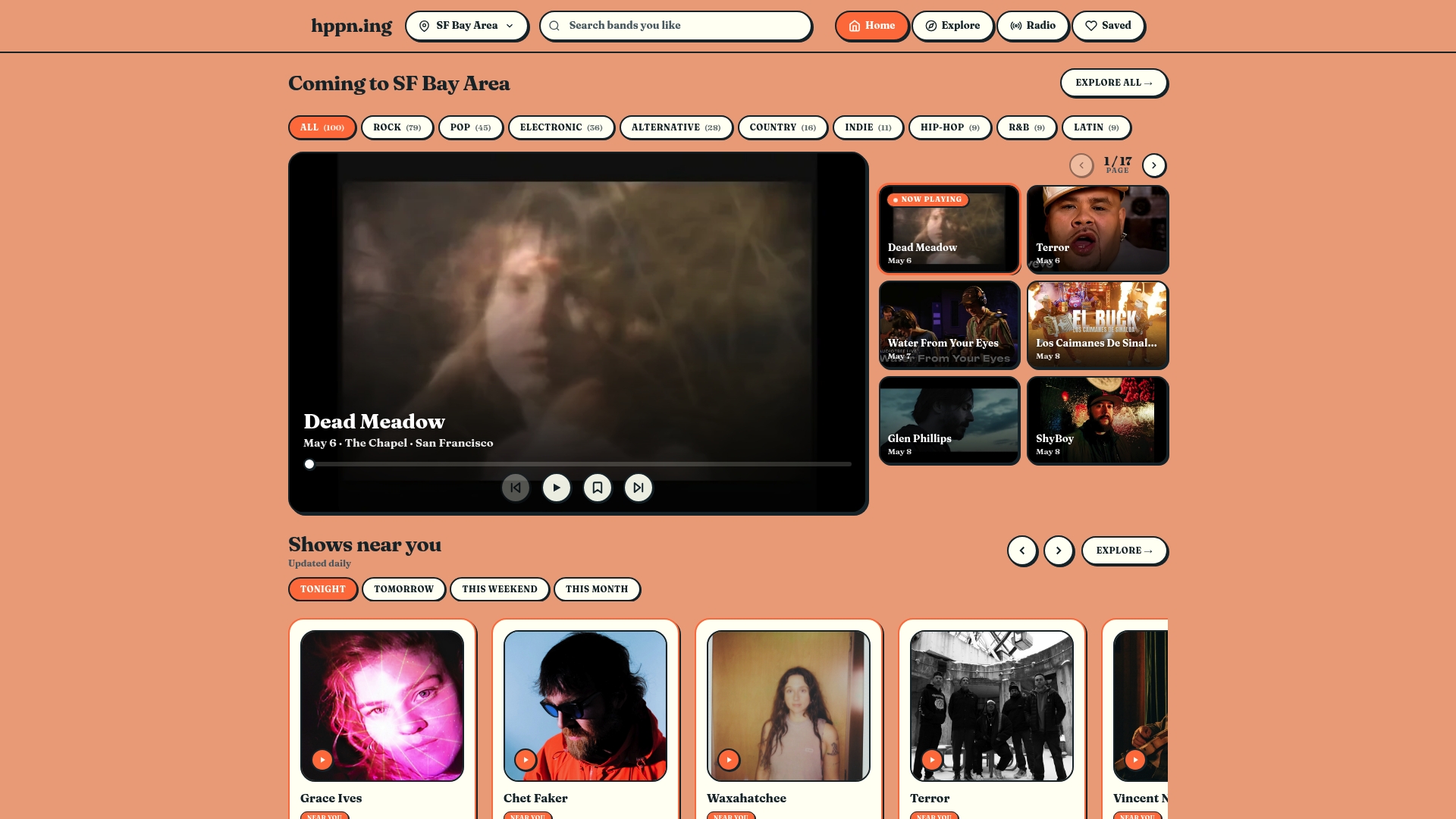
Hppn is built for exactly this. The platform lets you search and preview artists before you commit to a show, browse trending live performances across local and national scenes, and tune into radio streams featuring emerging performers you won't find on mainstream platforms. Unlike general music apps that surface whoever paid for the top slot, Hppn centers the emerging artist experience. You can explore your city's live music scene, catch clips from local shows, and connect with a community of fans who are actively hunting for the next great thing. If live video discovery is how you find music, Hppn is where you go deeper with what you find.
FAQ
What is the role of live videos in finding new music?
Live videos help fans encounter new artists through shareable clips, real-time streams, and performance moments that algorithms push to new audiences. They function as the most organic and interactive discovery format currently available across platforms.
Which platforms are best for discovering music through live videos?
YouTube, TikTok Live, Instagram Live, and Twitch each serve different discovery behaviors. YouTube works best for searchable live content, while TikTok drives unexpected exposure through algorithmic clip distribution.
Why don't viral music clips always lead to long-term fans?
Nearly half of social music discoverers don't follow up with streaming within a month of discovery. Viral exposure creates awareness but not necessarily loyalty, which requires deeper engagement beyond a single clip.
How do artists optimize live performances for music discovery?
Artists front-load sets with visual hooks designed for short-form video and use analytics to identify which performance moments generate the most shares and new followers.
How can music fans use live streams to find emerging artists?
Fans can find emerging artists by watching full live sessions rather than just clips, engaging in real-time stream chats, and using platforms like Hppn that surface local and trending performers outside mainstream charts.