

Concert discovery is most effective when you build a layered system that pulls from multiple sources at once. A single app or alert rarely captures the full picture of what's happening in your city. The best practices for concert discovery combine broad ticketing platforms, venue calendars, artist channels, and community signals into one manageable routine. The Apple Music and Bandsintown integration shows how the industry itself is moving toward connected, real-time discovery. That shift means fans who build layered habits now will consistently find better shows than those who rely on a single source.
1. What are the best practices for concert discovery?
The most effective concert discovery system integrates at least four distinct source types: discovery apps, venue calendars, artist channels, and community signals. Each source covers a different blind spot. No single source covers all of them.
- Discovery apps surface broad tour coverage and send automated location-based alerts. They work best for catching major and mid-size tours the moment tickets go on sale.
- Venue calendars offer the most accurate local detail. Venues post their own lineups first, update faster than third-party platforms, and include context like age policies and recurring weekly nights.
- Artist channels deliver official announcements directly. Following an artist's email list or social feed is the fastest way to learn about new dates, support acts, and presale windows.
- Community signals fill the gaps. Fan groups, local music boards, and concert meetup communities surface last-minute additions, show quality reports, and insider tips that no algorithm catches.
A layered discovery system combining all four source types consistently outperforms any single-source approach for local concert discovery. The reason is simple: each layer handles a different type of information at a different speed.
2. How to maintain and optimize your concert discovery routine

Building a discovery system is only half the work. Keeping it relevant requires regular maintenance. Without it, alert fatigue sets in and you start ignoring the notifications that actually matter.
A consistent maintenance routine that includes weekly review, pruning obsolete alerts, and personal tracking improves discovery quality over time. Here is a practical schedule that works:
- Weekly check-in. Spend 10 minutes reviewing your discovery apps and venue calendars. Flag any shows worth attending and note ticket sale dates.
- Monthly pruning. Remove artists, venues, or alert keywords that no longer match your taste. Your music preferences shift, and your alerts should shift with them.
- Personal show log. Keep a simple list of upcoming shows you want to attend, including the venue, date, and ticket sale deadline. A notes app or calendar works fine.
- Early ticket purchase for small shows. Intimate venues sell out faster than large ones. Buy tickets for small shows as soon as they go on sale, not the week before.
- Quarterly source audit. Every few months, check whether your sources are still active and accurate. Venues close, promoters change, and fan groups go quiet.
Pro Tip: Narrow your alerts by venue size, neighborhood, or genre rather than leaving them broad. Overly broad notifications flood your inbox with irrelevant events and train you to ignore alerts entirely. Curated inputs beat volume every time.
3. Which sources work best for different types of live shows?
The right source depends on the type of show you want to find. Using a major ticketing platform to find a 50-person basement show is like using a highway map to find a hiking trail.
Broad ticketing platforms excel at major tours but regularly miss smaller local shows or niche events. Venue websites and promoter channels surface those gaps far more reliably. Here is how each source type performs across key criteria:
| Source type | Reach | Local accuracy | Exclusivity | Update speed |
|---|---|---|---|---|
| Major ticketing platforms | Very high | Low for small shows | Low | Moderate |
| Venue websites and calendars | Local | Very high | Medium | Fast |
| Artist mailing lists | Targeted | High | High | Very fast |
| Promoter channels | Scene-specific | High | High | Fast |
| Community boards and fan groups | Niche | Very high | Very high | Real time |
Artist mailing lists and local promoters announce shows before broad ticket platforms in most cases. That early access matters most for small or niche shows where capacity is limited. Signing up for a venue's email list takes two minutes and often delivers presale codes that general fans never see.
Venue calendars are especially valuable for finding support acts and recurring nights. A venue might host the same DJ residency every thursday or a monthly local showcase that never appears on major platforms. Those recurring events build the foundation of a rich local music life.
4. What advanced strategies can sharpen your concert search?
Once your core system is running, a few advanced habits will surface shows you would otherwise miss entirely. These strategies work by connecting your existing music behavior to your discovery routine.
- Sync your streaming behavior with discovery tools. The Apple Music and Bandsintown integration alerts fans when artists they are actively listening to announce shows. That connection between passive listening and active ticket buying is the direction the whole industry is moving.
- Use social media algorithms deliberately. Follow artists and venues on Instagram and TikTok, then engage with their posts. The algorithm learns your preferences and surfaces related artists and events you have not found yet.
- Join local fan communities. Community fan groups and meetups provide show quality reports, venue tips, and social opportunities that no app replicates. A local Facebook group or Discord server for your city's music scene is one of the most underused discovery tools available.
- Track changing neighborhoods and new venues. Music scenes shift. A neighborhood that had no live music two years ago might now have three active small venues. Checking local arts coverage and neighborhood blogs keeps you ahead of those shifts.
- Use Hppn for location-based artist previews. Hppn lets you browse concerts by location and preview artists through video and audio before committing to a show. That preview layer is especially useful for discovering emerging artists you have never heard before.
Pro Tip: Build a dedicated calendar for live music. Add every show you are considering, every ticket sale date, and every presale window. A single consolidated view prevents the most common discovery failure: finding a great show two days after it sold out.
5. How to find emerging artists before they break
Finding emerging artists requires a different approach than tracking established acts. Established artists announce tours months in advance. Emerging artists often announce shows two to three weeks out, through channels their core fans already follow.
The most reliable method is to find new music through live shows by attending events where you do not know every act on the bill. Support slots and local openers are where emerging artists get their first real audiences. Paying attention to those names and following them immediately after a show is the fastest way to build a pipeline of artists worth tracking.
Hppn focuses specifically on this gap. The platform surfaces smaller and emerging musicians alongside their upcoming shows, so you can preview an artist's sound and buy a ticket in the same session. That combination of discovery and action is what separates a dedicated live music platform from a general event search tool.
Local promoters who specialize in a specific genre are another reliable source. A promoter who books jazz, punk, or electronic music in your city knows every emerging act in that scene before they appear anywhere else. Following those promoters on social media or subscribing to their newsletters puts you directly in the path of their discoveries.
Key takeaways
A layered concert discovery system built on multiple source types and maintained with a consistent weekly routine produces the best results for finding live music in 2026.
| Point | Details |
|---|---|
| Layer your sources | Combine apps, venue calendars, artist channels, and community groups for full coverage. |
| Maintain your alerts | Prune and review your discovery tools weekly to reduce noise and stay relevant. |
| Match source to show type | Use major platforms for big tours and venue or promoter channels for small shows. |
| Act early on small shows | Buy tickets for intimate venues as soon as they go on sale to avoid sellouts. |
| Sync streaming with discovery | Connect your listening behavior to discovery tools for alerts at the moment of inspiration. |
Why I stopped relying on one app for concert discovery
For a long time, I ran my entire concert calendar through a single discovery app. It worked fine for major tours. But I kept missing the shows I actually cared about most: the 200-person room with an artist six months from breaking, the local showcase that turned into the best night of the year. Those shows never showed up in my feed.
The shift to a layered approach changed that. Once I added venue email lists and a local promoter newsletter to my routine, my show quality went up immediately. The big app still catches the tours. The venue calendar catches the residencies. The fan group catches everything else.
The other thing I learned is that balance matters. A calendar full of arena shows is not the same as a rich music life. The smaller shows, the ones where you are 10 feet from the stage and the artist is genuinely surprised by the crowd response, those are the ones you remember. Building a system that surfaces both types is the actual goal.
Refine your sources every few months. Artists evolve, scenes shift, and the venue that was booking your favorite genre last year might have changed its focus entirely. A discovery system that worked in january might need a full reset by july. Flexibility is not optional. It is the whole practice.
— Ari
Hppn makes live music discovery faster and more personal
Finding the right show in your city should not require checking five different websites. Hppn pulls together personalized concert recommendations, artist previews, and location-based search into one place designed for music fans who want more than the mainstream.
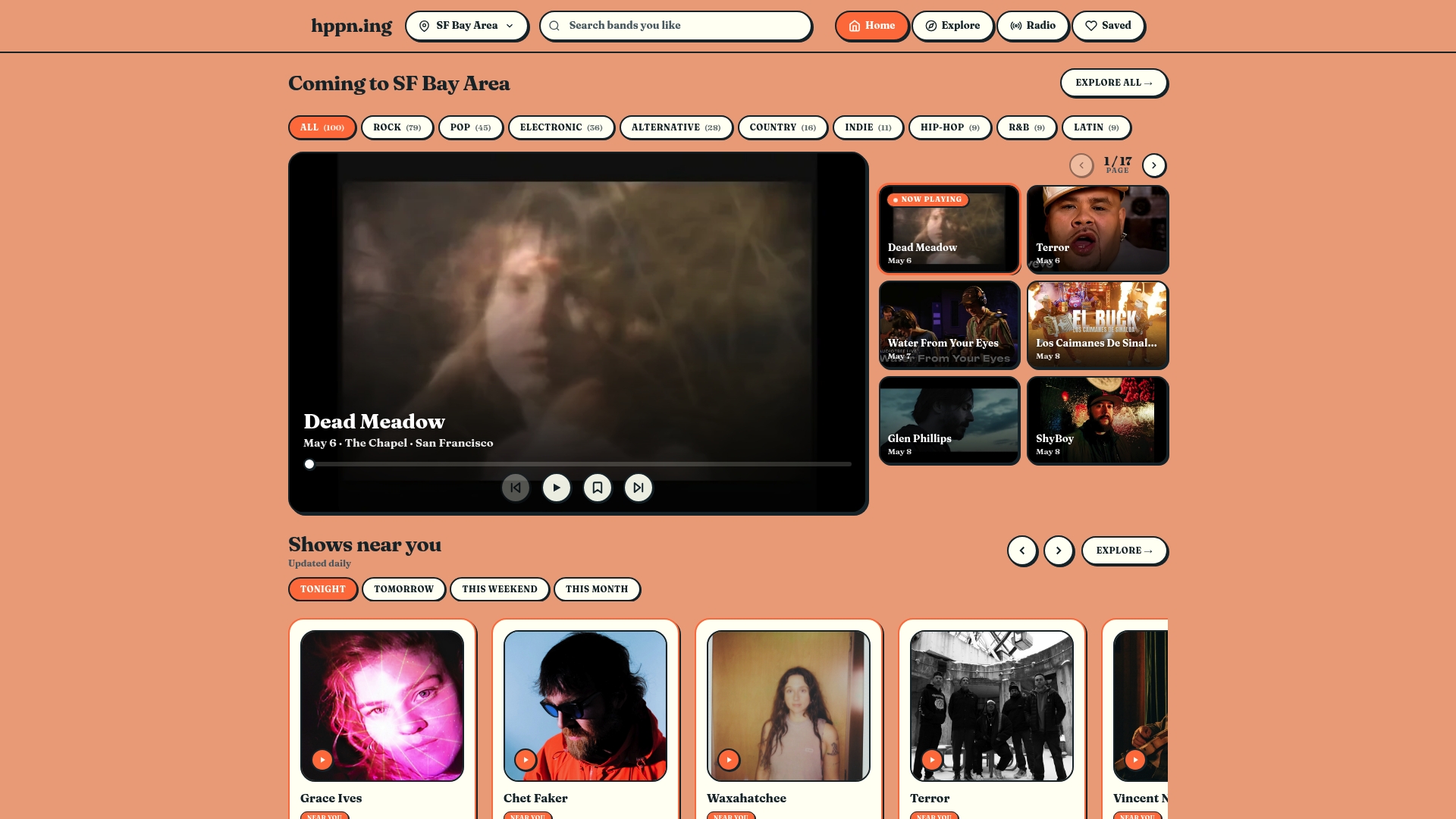
Browse the live music charts to see which emerging artists are trending in your area right now. Preview their sound before you commit to a ticket. Read community notes from fans who have already seen them live. Hppn connects the full discovery loop, from first listen to front row, without the noise of a general event platform.
FAQ
What is the most effective concert discovery method?
A layered system combining discovery apps, venue calendars, artist mailing lists, and community fan groups produces the most complete and timely concert information. No single source covers all show types equally well.
How do I find small concerts before they sell out?
Sign up for artist mailing lists and local promoter newsletters, which announce shows before major ticketing platforms. Buy tickets for intimate venues as soon as they go on sale, since small rooms sell out faster than large ones.
How do concert discovery platforms work?
Discovery platforms match your location and listening history to nearby shows, then send alerts when relevant artists announce dates. The Apple Music and Bandsintown integration is a current example of streaming behavior syncing directly with live event alerts.
How do I avoid alert overload from concert notifications?
Narrow your alerts by genre, venue size, or neighborhood rather than setting broad notifications. Curated, specific alerts deliver higher-quality results than a high volume of general event updates.
What is the best way to discover emerging artists playing live?
Attend shows where you do not know every act on the bill, and pay attention to support slots and local openers. Platforms like Hppn surface emerging artists alongside their upcoming shows, letting you preview their sound and find tickets in one place.