
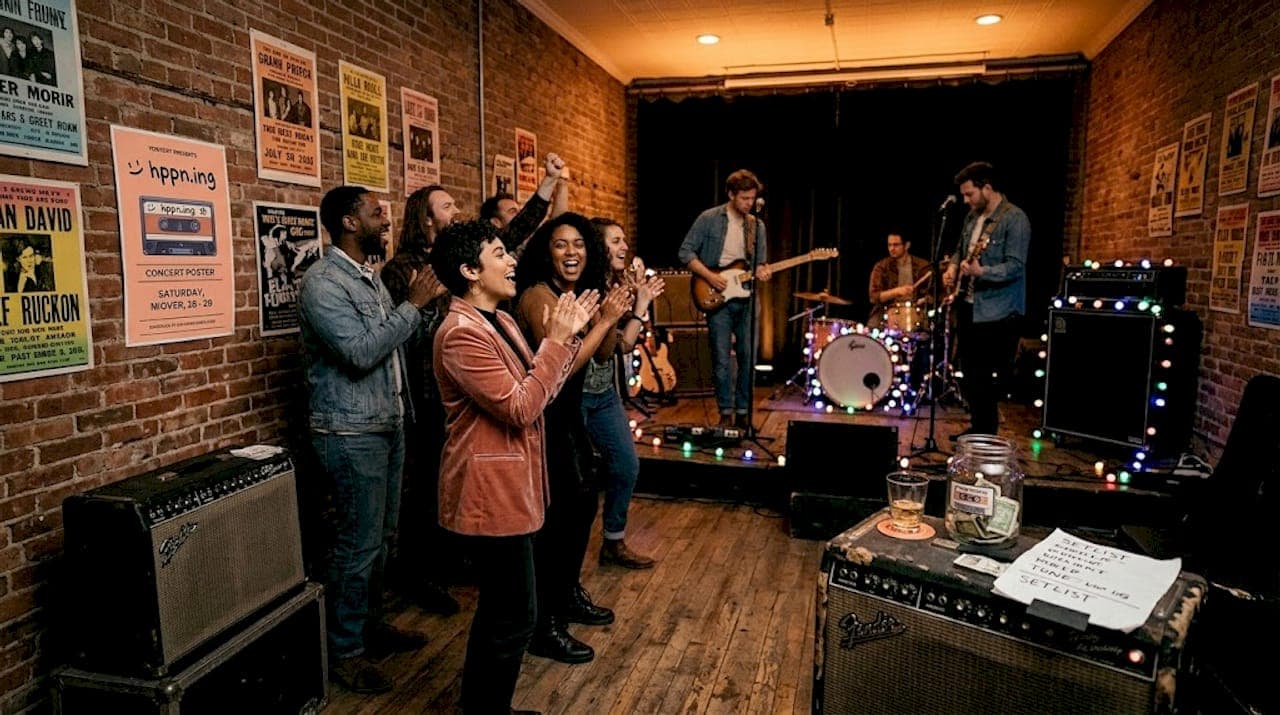
Streaming algorithms are good at giving you more of what you already like. They are terrible at surprising you. If you genuinely want to find new music through live shows, you are already thinking about discovery the right way. A live venue puts you in the same room as an artist you have never heard, and within three songs you know if something real is happening. No playlist curates that feeling. This guide covers exactly how to identify the right shows, use the best tools, and turn every concert into a discovery session worth your time.
Table of Contents
- Key Takeaways
- How to find new music through live shows near you
- Digital tools that make live music discovery easier
- Strategies for getting more out of every concert
- Building a live music discovery habit that actually sticks
- My honest take on why live shows still win
- Discover new artists faster with Hppn
- FAQ
Key Takeaways
| Point | Details |
|---|---|
| Start with local venues | Smaller clubs and bars host emerging artists you will never find on mainstream playlists. |
| Use discovery platforms | Tools like Bandsintown sync with your streaming accounts to surface shows you will actually care about. |
| Arrive early, stay curious | Opening acts are the single best source of unexpected new favorites at any concert. |
| Support artists directly | Buying merch and tipping at the door creates real financial impact for independent musicians. |
| Build a discovery habit | Following artists after a show and tracking upcoming live music events compounds your discoveries over time. |
How to find new music through live shows near you
Before you book a single ticket, spend ten minutes thinking about your local music scene. Most cities have more going on than people realize, and understanding the terrain saves you from showing up to the wrong room.
Venue types shape what you will discover. A 200-capacity club books regional artists trying to break out. A coffee shop with a corner stage hosts songwriters who might have ten listeners right now and ten thousand in two years. A 500-seat theater books artists a step above the underground. Each level gives you a different kind of live music discovery experience. The smaller the room, the earlier in an artist's career you are likely to catch them.
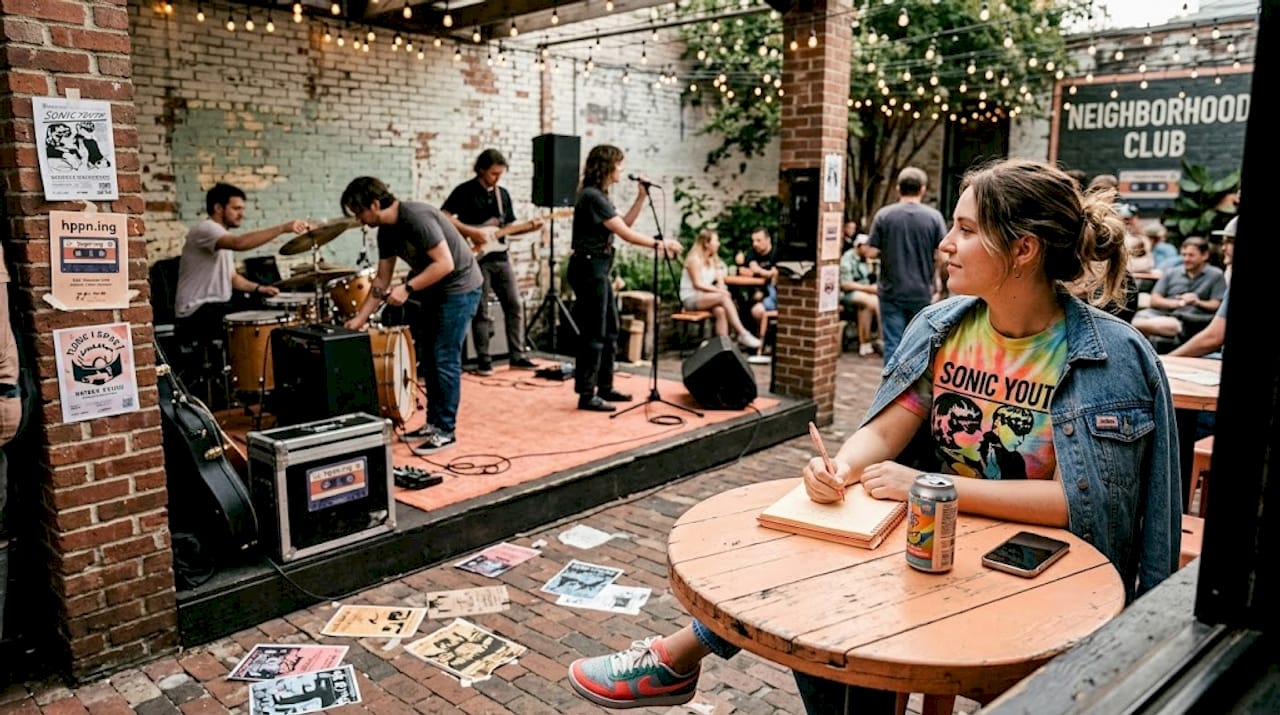
Before you start looking at what is happening this weekend, be honest about your taste. You do not need to have it figured out. But knowing whether you lean toward guitar-driven sounds, electronic beats, or something more atmospheric helps you filter events faster and spend less time at shows you regret attending.
Here is where to start identifying your local scene:
- Check which venues in your city or town post regularly on social media. Active accounts signal active booking.
- Ask a bartender or door person at a local club what night tends to bring in the most original music. They always know.
- Look for genre-specific nights. Cities often have jazz nights, experimental evenings, or local songwriter showcases on a recurring weekly schedule.
- Watch for multi-act bills at small venues. These give you three or four artists in one evening, making every ticket a discovery opportunity.
Pro Tip: Pick one small venue in your city and commit to showing up once a month regardless of who is playing. Regularity builds familiarity with the local circuit faster than any app.
Digital tools that make live music discovery easier
You do not need to scroll aimlessly through social media to find upcoming live music events. Several platforms were built specifically for this, and using two or three together covers far more ground than any single source.
Here is a quick comparison of the main options:
| Platform | Best for | Key feature |
|---|---|---|
| Bandsintown | Fans with established listening habits | Syncs with Spotify and Apple Music to suggest shows |
| Songkick | Tracking artists on tour | Email alerts when followed artists announce shows near you |
| Eventbrite | Independent and niche events | Covers smaller local shows not always on larger platforms |
| JamBase | Genre-specific discovery | Deep filters for genre, venue size, and region |
| Hppn | Emerging artist discovery | Artist previews, live charts, and local event browsing in one place |
Bandsintown connects 95 million fans and over 645,000 artists, which makes it one of the most useful tools for anyone who already knows some of what they like and wants to find shows nearby. The streaming integration is the real value here. You link your Spotify account and the platform immediately starts suggesting concerts based on what you have been listening to recently.
The gap most of these platforms leave is discovery of artists you have never heard of at all. That is where supplementary sources matter. Combining Bandsintown and Songkick with your local venue's social accounts and an alt-weekly newspaper gives you far better coverage than any single platform. Local alt-weekly papers publish timely, editorially curated event previews that go beyond generic listing pages. Think of it as a two-layer approach: apps for personalization, local media for serendipity.
Pro Tip: Set calendar reminders to check your city's alt-weekly every Thursday. Most publish weekend entertainment previews and often spotlight artists worth watching before anyone else does.
Most live shows run between 7 and 11 PM, with the most activity Thursday through Saturday. Knowing this helps you plan your week around discovery instead of fitting it in as an afterthought.
Strategies for getting more out of every concert
Showing up is step one. What you do when you get there determines how much you actually discover. Most people walk in, watch the headliner, and leave. Here is a smarter approach.
-
Arrive before the opening act. Opening acts are almost always the best discovery opportunity on the bill. Headliners are already known quantities. The support slot is where you find the artist three years away from selling out larger rooms. Getting there early costs nothing and can completely change your night.
-
Talk to the sound person or door staff. These people see every act that comes through the venue. Ask them which opening act they are most excited about tonight. Their answers are usually honest and always informed.
-
Look for the 'Verified Human Artist' signal. Vocana's recently launched badges for active performers are based on real live show data from JamBase, separating authentic, performing artists from catalog-only or AI-generated content. As authenticity becomes a bigger signal in music discovery, tools like this help you prioritize performers who are genuinely active on stage.
-
Browse the merch table before the show. This sounds counterintuitive, but looking at an artist's merch table before their set tells you a lot. What are they selling? What do their visuals communicate? Is there a QR code that links to their music? It is a fast way to get a read on who they are before they play a single note.
-
Go to shows outside your default genre. If you always attend indie rock shows, go to a jazz night or a hip-hop showcase once a month. Local music festivals for new bands are especially good for this because they put multiple genres on one stage in a single evening, making it easy to cross into unfamiliar territory with low risk.
Pro Tip: CountingConcerts tracks over 25,000 upcoming shows across more than 6,000 venues in the United States. Use it to browse by city and venue size when you want to explore a specific part of your local circuit.
Building a live music discovery habit that actually sticks
Discovering an artist once at a show is great. Turning live music into a real discovery system takes a little more structure, and it is easier than it sounds.
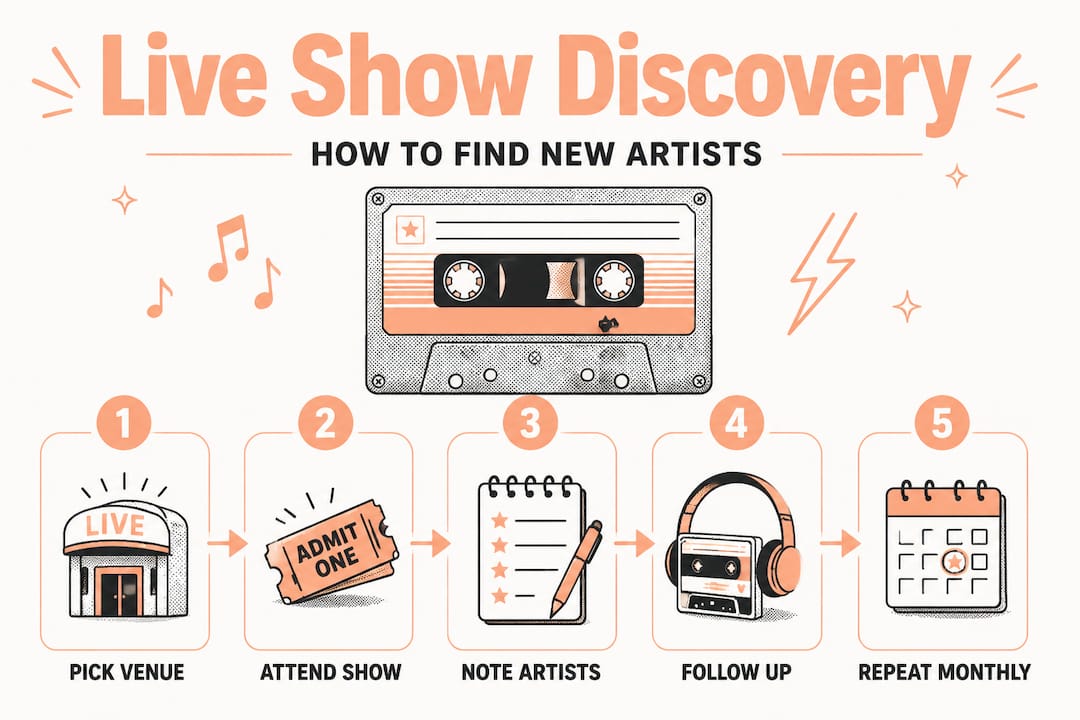
The most important thing you can do after a show is follow every artist you liked before you leave the building. Memory is unreliable. Pull out your phone, search their name, and follow them on whatever platform they use most actively. This takes thirty seconds and makes sure you do not wake up the next morning trying to remember who that second act was.
Here is a practical set of habits to develop:
- Keep a running notes document labeled by month with artists you saw live and a one-line reaction to each. Reviewing it quarterly reveals patterns in your taste you did not notice in real time.
- Buy something at the merch table when an artist genuinely moves you. Direct financial support through merch and tips creates measurable impact for independent and local musicians who rely on show income far more than streaming royalties.
- Share what you discover. Post about the artist on social media, text the track to a friend, or mention them in a music community. Word of mouth is still how most emerging artists grow, and you become part of that.
- Connect with other regulars at the venues you frequent. Fans who show up consistently have already done the filtering work. They know which local acts are worth tracking, and they are usually happy to share.
"The best music I ever found wasn't on a playlist. It was at a Tuesday night show in a room that held maybe eighty people, and the artist on stage had no idea anyone was about to care."
Building this habit does not require attending five shows a week. Two or three shows a month at local venues, approached with genuine curiosity, is enough to steadily grow your musical world in a way no algorithm can replicate.
My honest take on why live shows still win
I have spent a lot of time thinking about how people actually discover music they love, not just music they tolerate. And I keep coming back to the same conclusion: the live room is irreplaceable, not because it is nostalgic, but because it is honest.
Algorithms optimize for engagement, which is not the same thing as quality or surprise. What I have seen again and again is that the artists who hit you hardest are the ones you had no reason to expect. A random Tuesday show, a support act you had never heard of, a local venue you almost skipped because the headliner did not interest you. Those are the moments people remember for years.
What I find most interesting is how live attendance sharpens your taste over time. You start to notice what you respond to physically before you can name it intellectually. Energy, arrangement, stage presence, the way a room feels when a song lands. That education is not available anywhere else, and it makes every listening session afterward richer.
My advice: stop treating live shows as something you do when you already know an artist. Start treating them as the place where discovery happens first. The show is not the reward for discovering an artist. It is how you find them.
— Ari
Discover new artists faster with Hppn
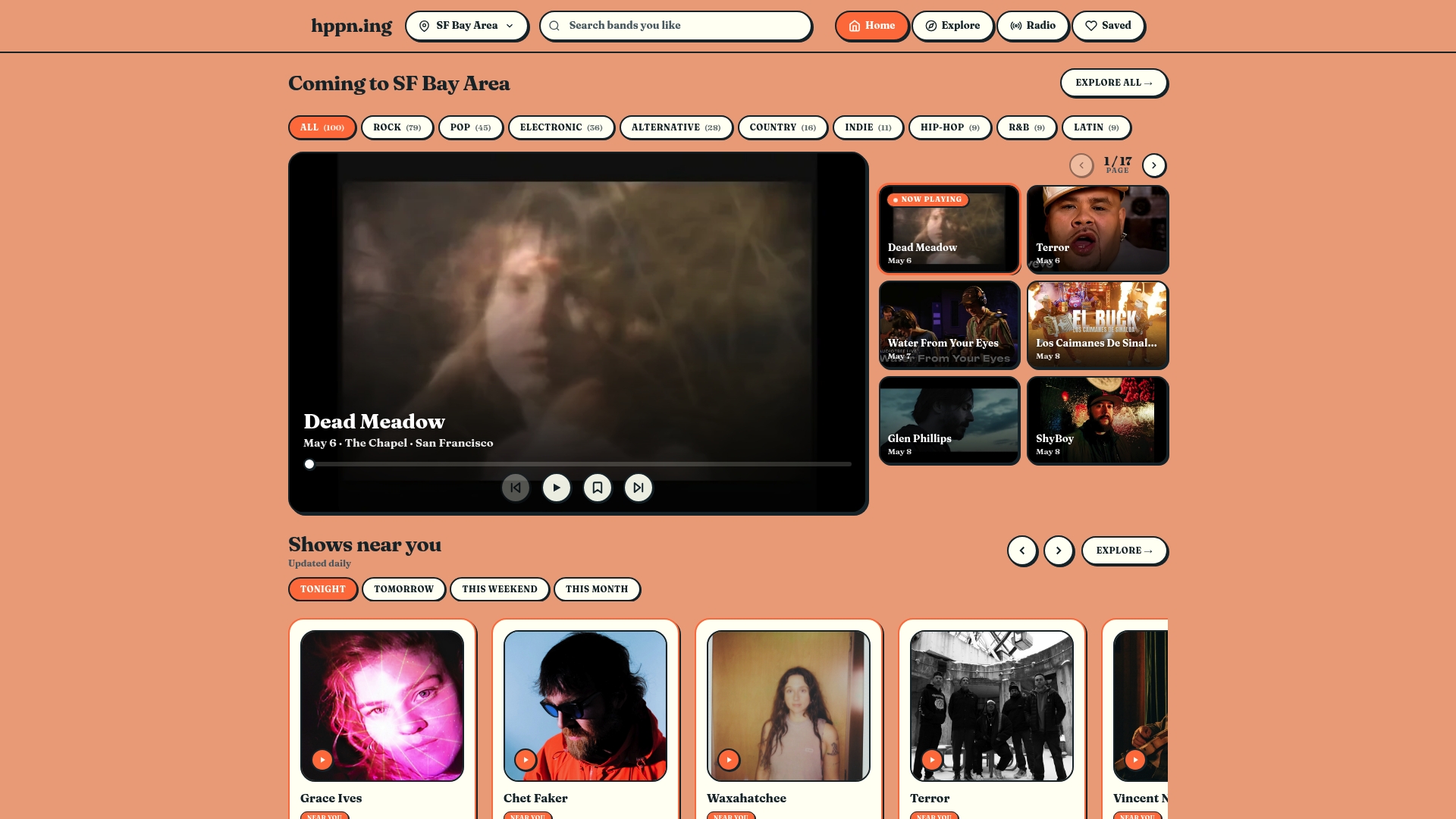
Hppn was built specifically for music fans who want to explore beyond the mainstream. On hppn.ing/listen, you can browse concerts by location, preview artists through video and audio clips before committing to a ticket, and see which local performers are trending in your city right now. It solves the exact problem this article is about: knowing who is worth showing up for before you walk in the door. You can also explore live music charts to spot artists gaining momentum in your area, which is one of the fastest ways to build a list of shows worth attending this month. If you are serious about live music discovery, Hppn gives you the tools to make every night out count.
FAQ
What is the best way to find new music at live shows?
Arrive early enough to catch opening acts, which are typically the strongest source of unexpected discoveries. Combining this habit with pre-show artist previews on platforms like Hppn helps you walk in with context and walk out with new favorites.
Which apps help you discover upcoming live music events?
Bandsintown, Songkick, and Eventbrite are the most widely used tools for finding local concerts. Bandsintown is particularly effective because it syncs with Spotify and Apple Music to tailor concert recommendations to your listening history.
Are local live shows good for discovering new genres?
Yes. Smaller local shows and multi-genre music festivals are among the most effective settings for genre exploration because the low-pressure environment and affordable tickets make it easy to attend unfamiliar acts without a large time or financial commitment. Ticket prices typically range from $10 to $50.
How do I keep track of artists I discover at concerts?
Follow them immediately on social media or a music platform before you leave the venue. Keeping a simple notes document with artist names, dates, and a short reaction line is one of the most reliable long-term tracking methods.
How can I support artists I discover at live shows?
Buying merch and tipping at the door have direct financial impact for emerging musicians. Sharing their music on social media and bringing friends to future shows also contributes meaningfully to an independent artist's growth.