
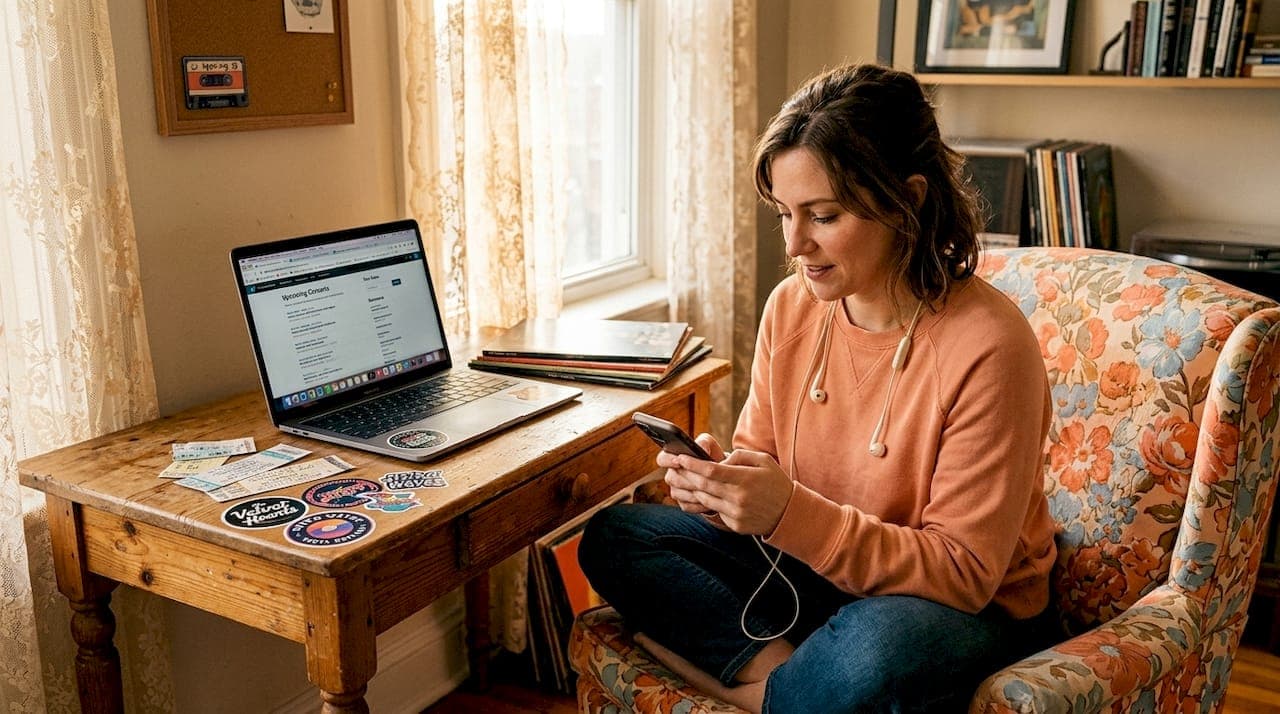
You find out your favorite artist played a small venue two towns over last week. You had no idea. The show sold out in hours, got rave reviews, and everyone who was there is still talking about it. That gut-punch feeling of missing a live show you would have loved is completely avoidable, and it happens to fans every single weekend. This guide walks you through exactly how to follow live music tour dates, set up reliable alerts, and stay ahead of announcements for both major headliners and the underground acts your friends haven't discovered yet.
Table of Contents
- What you need to follow live music tour dates
- Step-by-step: Set up personalized tour alerts
- Troubleshooting: Avoiding missed shows and common mistakes
- How to verify and make the most of your live music alerts
- Why relying solely on popular platforms isn't enough
- Discover more shows with hppn.ing
- Frequently asked questions
Key Takeaways
| Point | Details |
|---|---|
| Choose the right tools | Combine major apps with local calendars to never miss a show. |
| Personalize artist alerts | Follow your favorite artists and set app alerts for your city or region. |
| Avoid missing notifications | Double-check settings and use backup alert systems for reliability. |
| Go beyond the mainstream | Tap into community sites for access to underground and emerging acts. |
What you need to follow live music tour dates
Now that you know what's at stake, let's make sure you have the right tools to actually follow artist tour dates. The good news is that most of what you need is free, and setup takes less than 20 minutes.
The core tools fall into three categories: dedicated concert tracking apps, local event calendars, and community-driven discovery platforms. Songkick is positioned as a live-music tracking service where you can follow artists and get notifications when they announce tour dates near you. Bandsintown works similarly, with a strong focus on artist-to-fan communication. For fans who want to go deeper into the underground and local scene, live music discovery tools like hppn.ing fill a critical gap by surfacing emerging performers that mainstream apps often overlook.
Beyond apps, you'll need a few basics in place: a smartphone or laptop with notifications enabled, an active email address for backup alerts, and at least one social account to catch artist announcements. Many fans underestimate how much a simple notification setting can change their concert attendance rate.
Here's a comparison of the main platforms to help you choose the right mix:
| Platform | Artist tracking | Notifications | Best for |
|---|---|---|---|
| Songkick | Yes, follow any artist | Email and push | Mainstream and mid-tier acts |
| Bandsintown | Yes, syncs with music apps | Push, email, fan alerts | Direct artist-to-fan updates |
| hppn.ing | Yes, with audio/video preview | Real-time discovery | Emerging, local, underground acts |
| Local venue calendars | Venue-specific | Newsletter or social | Hyperlocal shows and DIY events |
When choosing your toolkit, keep these factors in mind:
- Genre focus: Some platforms index certain genres more deeply than others. If you're into jazz, metal, or experimental music, local and niche platforms often have better coverage.
- Underground participation: If you want to catch DIY shows and emerging acts, community-driven platforms and local calendars are essential, not optional.
- Notification fatigue: Following too many artists on a single app can bury the alerts you actually care about. Spread your tracking across two platforms with different strengths.
- Discovery vs. tracking: Some tools are better for finding new artists, while others are better for monitoring artists you already love. Use both types.
Good music fan tools combine passive discovery with active tracking. You want to be notified about artists you already follow, but you also want to stumble onto something new. That combination is what separates casual concert-goers from people who always seem to know about the best shows.
Step-by-step: Set up personalized tour alerts
With your toolkit ready, here's exactly how to follow tour dates and set up never-miss alerts.
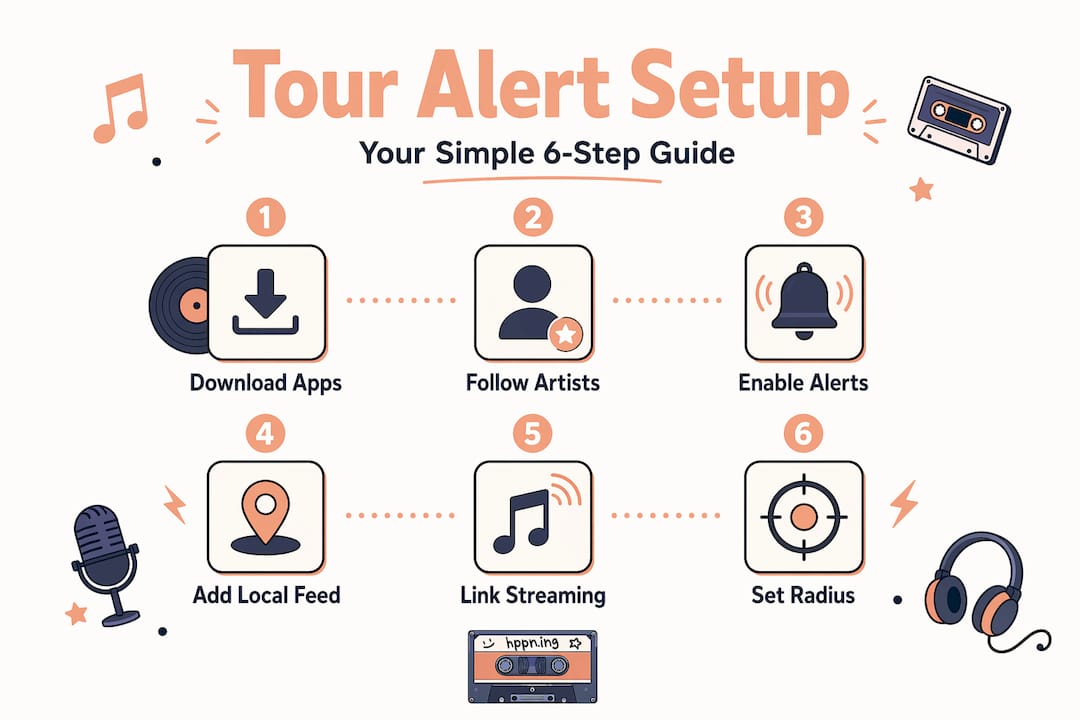
Step 1: Download your chosen apps and create accounts. Start with Songkick and Bandsintown as your foundation. Both are free. During signup, enter your city or zip code accurately. This location data is what powers the "near you" filtering that makes alerts actually useful.
Step 2: Follow your existing favorite artists. Search for every artist you care about and hit follow. Both apps let you import your listening history from streaming services, which instantly populates your follow list. This is the fastest way to get started. Songkick will notify you as soon as artists announce tour dates near you, letting you view comprehensive concert listings without manually checking each artist's page.
Step 3: Set your notification preferences. Go into each app's settings and turn on push notifications and email alerts. Don't skip this. Many users download the app, follow artists, and then never configure notifications, which defeats the entire purpose. Bandsintown Pro's fan alert system targets users based on the artists they follow and their location, so your setup accuracy directly affects what you receive.
Step 4: Add a local discovery platform. This is where most guides stop, but you shouldn't. Sign up for hppn.ing and browse trending artists in your area. Unlike the major apps, this platform lets you preview artists through audio and video before you commit to following them. It's a much faster way to discover local performers you've never heard of but would genuinely enjoy live.
Step 5: Link your music library. Both Songkick and Bandsintown offer integrations with major streaming services. Connecting your library means the app auto-follows artists based on your actual listening habits. This catches artists you love but might have forgotten to manually search for.
Step 6: Set a radius for your location. Most apps let you choose how far you're willing to travel: 10 miles, 25 miles, 50 miles. Be realistic but generous. Some of the best shows happen in smaller cities nearby. Setting a 40 to 50 mile radius often reveals shows you'd absolutely drive to.
Step 7: Explore the search and preview music features on discovery platforms. Before following a new artist, spend 60 seconds previewing their sound. This keeps your alert feed relevant and prevents notification fatigue.
Pro Tip: Follow at least five artists you've never seen live but are curious about. Tour alerts for unfamiliar artists are how you discover your next favorite live act. The best concert experiences often come from a show you almost didn't go to.
Troubleshooting: Avoiding missed shows and common mistakes
Once your alerts are live, let's make sure you don't fall into easy-to-miss traps.
Even with everything set up correctly, fans still miss shows. The reasons are almost always the same, and they're all fixable.
Common pitfalls that cause missed local shows:
- Notifications turned off at the device level, not just the app level
- Following an artist's old or inactive social account instead of their official one
- Only following headliners and ignoring opening acts, who often tour independently
- Relying on a single app with no backup system
- Not updating your location when you move or travel
- Ignoring venue newsletters, which often announce shows before artists do
- Assuming a sold-out show will get a second date without checking
Bandsintown users receive fan alerts based on artists they follow and location, which means an outdated location setting will send you alerts for cities you no longer live in. Check this setting every few months.
To double-check your setup, do a manual test. Search for an artist you know has upcoming shows and confirm the notification appeared in your history. Cross-reference the app's listing with the artist's official website. If the dates match, your system is working. If they don't, the app may have a data lag, and you should add that artist to a secondary tracking app.
Don't assume social media algorithms will show you every tour announcement. Algorithms prioritize engagement, not chronological updates. A tour announcement post can get buried within hours.
Using local concert calendars as a third layer of coverage catches shows that don't make it onto major apps at all. Many DIY and underground shows are only listed locally. For fans who care about spotlighting local talent, this step is non-negotiable.
Pro Tip: Run two alert systems simultaneously. Use one mainstream app for established artists and one local or community-driven platform for underground and emerging acts. This two-track approach dramatically reduces the chance of missing a show.
Understanding online music promo tips from the artist's side also helps. Smaller artists often announce shows with very short lead times, sometimes just days in advance. Staying plugged into their direct channels, not just third-party apps, gives you the fastest possible notice.
How to verify and make the most of your live music alerts
You've set up alerts and avoided pitfalls; now, confirm everything works and multiply the value of the notifications you receive.
Verification is a step most fans skip entirely, and then they wonder why they still miss shows. Take 10 minutes to run through a simple check after your initial setup.
| Verification check | What to look for | Pass or fail |
|---|---|---|
| Notification arrived | Push alert appeared on your device | Pass if visible in notification history |
| Date accuracy | App date matches artist's official site | Pass if dates are identical |
| Link works | Tapping the alert opens the correct event page | Pass if page loads with correct venue info |
| Artist info correct | Name, photo, and genre are accurate | Pass if no mismatches |
| Venue details present | Address and ticket link are included | Pass if both are present |
Songkick lets you view all upcoming tour dates for any artist in one place, making cross-referencing fast. If something looks off, the artist's official website is always the authoritative source.
Once you've confirmed your alerts work, here's how to get the most out of every notification you receive:
- Share immediately with friends. The moment you get a tour alert for a show you're interested in, forward it. Group chats and shared calendars are how small shows sell out and how you guarantee company.
- Join local discussions. Platforms with community features let you connect with other fans who are going to the same show. This is where you find out about pre-show meetups, after-parties, and support acts worth arriving early for.
- Support the artist before the show. Stream their latest release, buy a digital download, or follow them on every platform. This small act helps emerging artists get better show placements and bigger venues over time.
- Use alerts to spot rising talent. When an artist you've never heard of gets added as an opener for someone you love, that's a signal. Check their profile, preview their music, and decide if you want to follow them too. This is how you build a personal radar for music discovery strategies that consistently surfaces great acts before they blow up.
- Engage in community notes on platforms that support them. Fan-generated content around a show, like set lists, photos, and reviews, helps you decide whether to catch the next date in a nearby city if you missed the first one.
Understanding how fans and communities shape local live music scenes gives you a real advantage. The most informed fans aren't just using apps passively. They're participating in conversations that surface information no algorithm has indexed yet.
Why relying solely on popular platforms isn't enough
By now you've learned how to follow tour dates, but here's an insider truth on where most fans go wrong.
The big apps are genuinely useful. Nobody is saying otherwise. But they are built around the artists who already have visibility. Their recommendation engines are trained on popularity signals, which means they consistently surface acts that already have large followings. That's fine for tracking Taylor Swift, but it's a dead end if you want to find the best show happening in your city next Friday.
Real music discovery doesn't happen in a single place. It happens in the overlap between what an app tells you, what a friend texts you, what a local venue posts on their newsletter, and what a community board surfaces from someone who saw a flyer at a coffee shop. Mainstream apps capture maybe 60 percent of that picture. The rest lives in smaller, more connected spaces.
We've seen this pattern repeatedly: the shows people remember forever are rarely the ones an algorithm recommended. They're the ones found through a tip, a community post, or a platform built specifically for local and underground music. The discussion boards for live music on community-driven platforms carry information that no major app has yet, because the people posting there are closer to the ground than any data pipeline.
"No single tool catches every underground show. Community voices fill the gaps."
The practical takeaway is simple. Use the mainstream apps as your baseline. Then layer in community-driven tools, local calendars, and niche platforms that are specifically built to surface what the big players miss. That combination is what separates fans who always seem to know about the best shows from everyone else who finds out too late.
Discover more shows with hppn.ing
Ready to stay truly ahead in your local scene? Here's how you can level up your tour tracking.
If you've made it this far, you already know more about following live music tour dates than most fans ever will. The next step is putting that knowledge into a platform built specifically for this purpose.
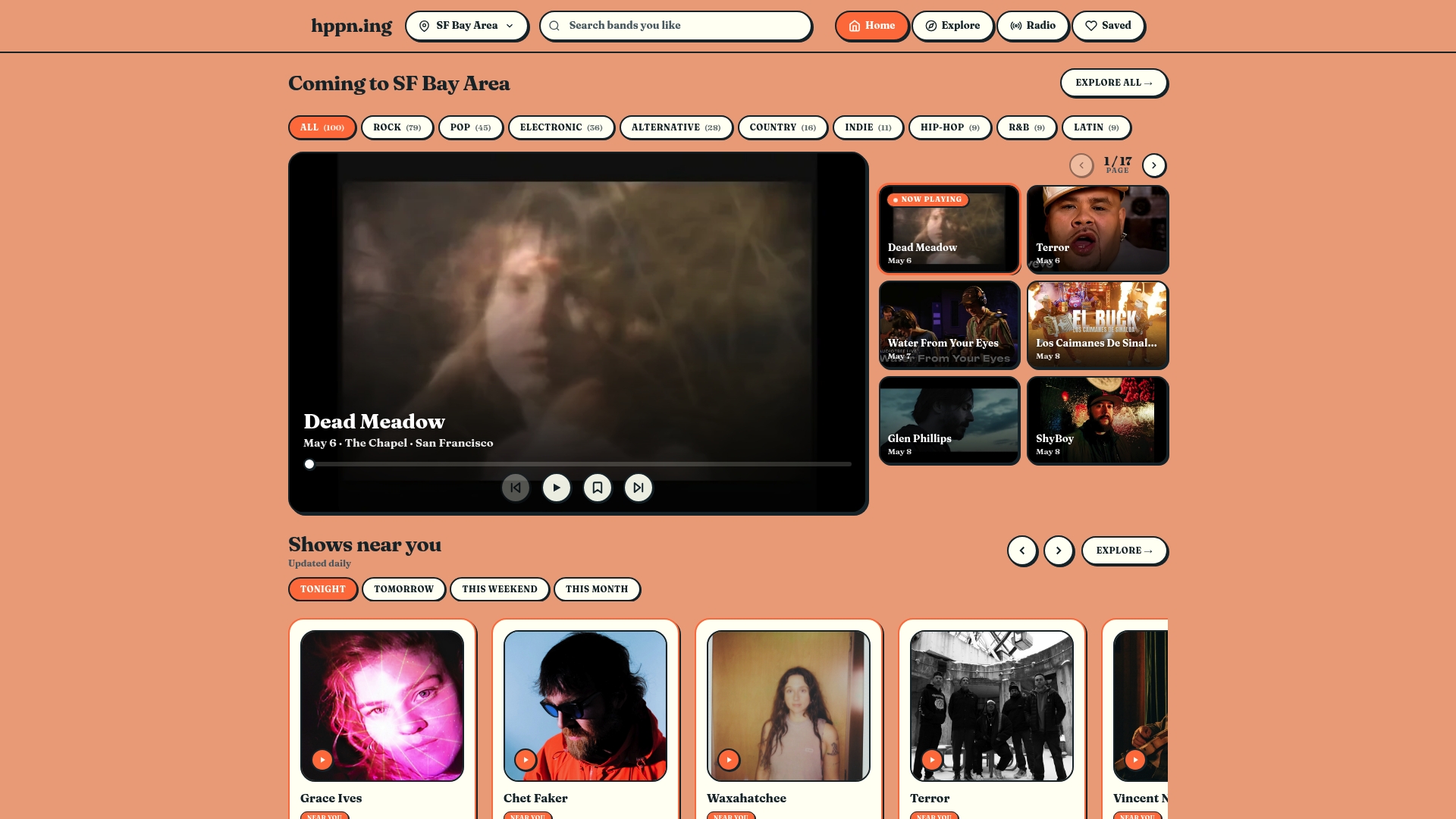
Hppn.ing brings together concert discovery, artist previews, local charts, and community discussion in one place. You can browse live music charts to see which artists are trending in your city right now, preview their sound before committing to a show, and connect with other fans through music community notes to get real-time tips on what's worth seeing. Whether you're tracking a headliner or hunting for the next underground act that's about to break through, hppn.ing gives you the tools to find it first.
Frequently asked questions
What is the most reliable app for following live music tour dates?
Songkick and Bandsintown are among the most reliable for real-time tour date notifications, offering push alerts and email updates tied to your followed artists and location.
How do I get alerts only for my favorite local artists?
Follow specific artists and set your location preferences to prioritize nearby shows. Bandsintown's fan alerts are triggered by the artists you follow and your saved location, so keeping both updated keeps your alerts relevant.
Can I follow tour dates for underground or DIY bands?
Yes. Mainstream apps cover some smaller acts, but community-driven platforms and local venue calendars are far more reliable for catching DIY and underground shows that don't get indexed by major apps.
What's the best way to discover new acts through tour date tracking?
Follow local venue calendars, join community discussion boards, and use platforms that let you preview emerging artists before you follow them. Opening acts on alerts for artists you already love are one of the best signals for finding your next favorite performer.