
Every music fan knows the frustration: you scroll through event listings, see the same recycled names, and wonder if there's something genuinely exciting happening just a few blocks away. The truth is, your city's most thrilling performers are often hiding in plain sight, playing to small but devoted crowds before anyone else catches on. Knowing how to spot a trending local artist before they blow up is a skill that separates casual concertgoers from true music hunters. This guide gives you the criteria, the examples, and the decision tools to make your next live show unforgettable.
Table of Contents
- What makes a local performer 'trending'?
- Top 5 examples of trending local performers
- Comparing trending performers: What to consider
- How to choose your next local concert
- Our take: Why local trends matter more than ever
- Find trending local performers with hppn.ing
- Frequently asked questions
Key Takeaways
| Point | Details |
|---|---|
| Understand trending criteria | Knowing what makes an artist trend locally helps you focus on performers you'll truly enjoy. |
| Diverse artist options | Exploring artists of various genres expands your discovery and enhances your concert-going stories. |
| Compare before you choose | Using charts and stats ensures you pick the best local live experiences. |
| Join the conversation | Community notes and boards give real fan perspectives and tips you can trust. |
What makes a local performer 'trending'?
To identify top new performers, it's important to first understand what actually sets them apart. Here's what makes an artist truly 'trending' at the local level.
"Trending" is not just about streaming numbers. At the local level, it's a combination of signals that, taken together, tell you an artist is on the rise. Understanding these signals means you can spot the next big thing before the rest of the crowd does.
Here are the key indicators to watch:
- Audience engagement. Are their shows selling out? Are fans lining up early or traveling from other neighborhoods to catch a set? Rapid follower growth on social platforms, especially when it's organic and concentrated in a specific city or region, is a strong sign.
- Chart rankings and playlist features. When a local artist starts appearing on curated playlists or climbing local music trends charts, it signals that tastemakers are paying attention. These charts aggregate real listener data and are a reliable early indicator.
- Community buzz and word of mouth. This is often the most powerful signal of all. When multiple people in different social circles start mentioning the same artist unprompted, something real is happening. Pay attention to conversations at shows, in coffee shops, and on local music forums.
- Social media momentum. Short video clips from live performances going viral within a city, rapid comment activity, and shares from local influencers or journalists all point to growing momentum.
- Critical recognition. Features in local press, music blogs, and airtime on independent radio stations carry real weight. These outlets have editorial standards and don't cover every act that comes through town.
"The artists who will headline festivals in three years are playing 200-capacity rooms right now. The fans who find them early never forget it." — A common truth among veteran local music writers.
Pro Tip: Don't overlook open mics and small-venue artists. Some of the most exciting performers in any city are still building their audience in rooms that hold fewer than 100 people. These are the acts most likely to break out next, and seeing them now means you get a front-row seat to history.
Live Music Charts & Trending Artists lists help identify what's hot locally, pulling together data from streams, ticket sales, and community engagement into one clear picture.
Top 5 examples of trending local performers
Now that you know what 'trending' means, here are examples of emerging local artists making the biggest waves right now. These profiles are illustrative of the types of performers you'll find in any active city music scene, and they represent the diversity and energy that makes local music so rewarding to explore.
-
Maya Solano (Indie Rock / Dream Pop). Maya started playing house shows two years ago and has since packed every mid-size venue in her city. Her signature move is layering live looping pedals with raw, confessional lyrics that hit differently in a small room. She's trending because her last three shows sold out within hours, and a regional music blog named her one of the top acts to watch this year. Catch her at intimate listening rooms where the sound system is good enough to do justice to her layered production.
-
Darius Webb (Hip-Hop / Spoken Word). Darius blends sharp social commentary with jazz-influenced beats, and his live sets feel more like performance art than a traditional rap show. He's been featured on two local radio programs and has a growing following among college students and creative professionals. His shows tend to spark real conversations after the set ends, which is a sign of an artist who leaves a lasting impression. Check the live music discussion board for fan reactions after his recent appearances.
-
The Fernwood Collective (Folk / Americana). This rotating ensemble of four to six musicians brings a communal energy to every performance. No two shows are exactly the same because the lineup shifts and the setlist evolves. They've built a loyal following through consistency and warmth, playing farmers markets, outdoor festivals, and small theaters with equal enthusiasm. Their trending status comes from word of mouth more than any algorithm, which makes it feel earned.
-
Priya Nair (Electronic / Ambient). Priya produces and performs entirely live, using hardware synthesizers and custom software to build soundscapes in real time. Her shows are visual as much as musical, with projected visuals she creates herself. She's trending because electronic music fans in her city have been discovering artists locally through community platforms and sharing her sets widely. She's also been booked for two upcoming multi-artist events, a sure sign of rising stock.
-
Carlos Mendez Quartet (Jazz / Latin Fusion). Carlos leads a tight four-piece that fuses traditional jazz structures with Latin rhythms and occasional hip-hop influences. His quartet has a residency at a beloved local jazz club, and attendance has grown steadily over the past six months. Jazz fans love the technical precision; non-jazz fans get pulled in by the groove. He's the kind of performer who expands your taste without you even realizing it.
"I went to see Carlos on a whim because a friend wouldn't stop talking about him. I've been back four times since. That's what local music does to you." — A fan comment from a local music community board.
Pro Tip: Try artists outside your usual genre for hidden gems. The most memorable live experiences often come from performers you wouldn't have chosen based on genre alone. A folk show can surprise you with its intensity; an electronic set can move you emotionally in ways you didn't expect.
Comparing trending performers: What to consider
With so many talented options, it can be tough to decide who to see live. Here's a clear comparison to guide your decision.
Fans often use chart data and artist previews to assess which acts are rising fast, but a side-by-side look at key factors makes the decision even clearer. Here's how our five example artists stack up:
| Artist | Genre | Avg. show size | Social buzz | Typical venue | Standout quality |
|---|---|---|---|---|---|
| Maya Solano | Indie / Dream Pop | 300-500 | High, growing fast | Listening rooms, small theaters | Emotional depth, sold-out shows |
| Darius Webb | Hip-Hop / Spoken Word | 150-300 | Strong on video platforms | College venues, arts spaces | Post-show conversations |
| The Fernwood Collective | Folk / Americana | 200-400 | Steady, word of mouth | Outdoor stages, small theaters | Rotating lineup, communal energy |
| Priya Nair | Electronic / Ambient | 100-250 | Rising sharply | Galleries, club spaces | Live visual production |
| Carlos Mendez Quartet | Jazz / Latin Fusion | 100-200 | Loyal, niche but deep | Jazz clubs, residencies | Technical mastery meets groove |
A few things stand out from this comparison:
- Show size matters less than engagement. A 150-person crowd that is completely locked in is a better experience than a 500-person crowd where half the audience is on their phones.
- Venue type shapes the experience. Seeing Priya Nair in a gallery space is a completely different experience than seeing her in a club. Check the specific venue before you buy tickets.
- Social buzz is a leading indicator. When an artist's social activity is growing sharply, ticket prices and venue sizes tend to follow. Seeing them now, before that happens, is both cheaper and more intimate.
You can preview artist music before committing to a ticket, which is one of the smartest things you can do. Listening to a few tracks or watching a live clip gives you a real sense of whether an artist's energy matches what you're looking for on a given night.
How to choose your next local concert
By now, you have a list of stand-out performers. Here's how to turn that list into an unforgettable local concert experience.
Choosing a show is more than just picking a name you recognize. A little planning goes a long way toward making sure the night delivers. Here's a practical step-by-step approach:
-
Define your preferences for the night. Are you looking for something high-energy or more intimate? Do you want to dance, sit and listen, or be part of a crowd singalong? Knowing what kind of experience you want narrows the field quickly.
-
Research the artists on your shortlist. Watch live clips, not just studio recordings. A performer can sound great on a record and be flat live, or vice versa. Live footage tells you what you're actually buying a ticket for.
-
Check event reviews and community feedback. Real fan reactions are more useful than press releases. Community notes and discussion boards are full of honest, detailed accounts from people who were actually in the room. Look for mentions of specific moments, energy levels, and crowd reactions.
-
Plan your logistics. Venue location, parking, door time, and support acts all affect your experience. Arriving late to a small venue can mean missing the best part of the show. Check whether the headliner goes on at 9 PM or midnight.
-
Buy tickets early. Trending local artists sell out faster than you'd expect. Once word spreads, tickets for a 200-capacity venue disappear within days. Set a reminder or check local concert tips for heads-up alerts from the community.
Pro Tip: Look for multi-artist events to sample several trending acts in one night. Local showcases and festival-style lineups are one of the best ways to discover multiple new performers in a single outing. You might go for one act and leave talking about someone you'd never heard of two hours earlier.
Our take: Why local trends matter more than ever
There's a version of music fandom that is entirely passive. You follow the algorithm, you see whoever is touring nationally, and you enjoy it well enough. But that version of fandom has a ceiling. It never surprises you. It never changes your life.
The fans who get the most out of live music are the ones who pay attention to what's happening locally. They show up to small rooms, they take chances on unfamiliar names, and they build real connections with artists who are still figuring out who they are on stage. That process is messy and exciting in a way that stadium shows simply cannot replicate.
Here's the uncomfortable truth: most people discover their all-time favorite artist before that artist becomes famous. The connection formed in a small room, where the performer makes eye contact with the crowd and the sound is almost too loud, is different from anything you experience in a 20,000-seat arena. It's personal. It's yours.
Local performers are also where the real innovation happens. Without the pressure of a major label or a massive audience to please, emerging artists take risks. They blend genres, experiment with structure, and say things in their music that polished mainstream acts would never attempt. The community music discussion happening around these artists reflects that energy, with fans who are genuinely invested in the art, not just the celebrity.
Supporting local trends also strengthens the entire creative ecosystem of your city. When fans show up, venues stay open. When venues stay open, artists keep performing. When artists keep performing, the scene grows and attracts more talent. It's a cycle that benefits everyone, and it starts with a single ticket purchase.
Find trending local performers with hppn.ing
Inspired to explore more? Here's how hppn.ing makes finding and following local music trends both fun and effortless.
Hppn.ing was built for exactly this kind of music discovery. Whether you want to track who's rising in your city or just find something great to do this weekend, the platform puts the right tools in your hands.
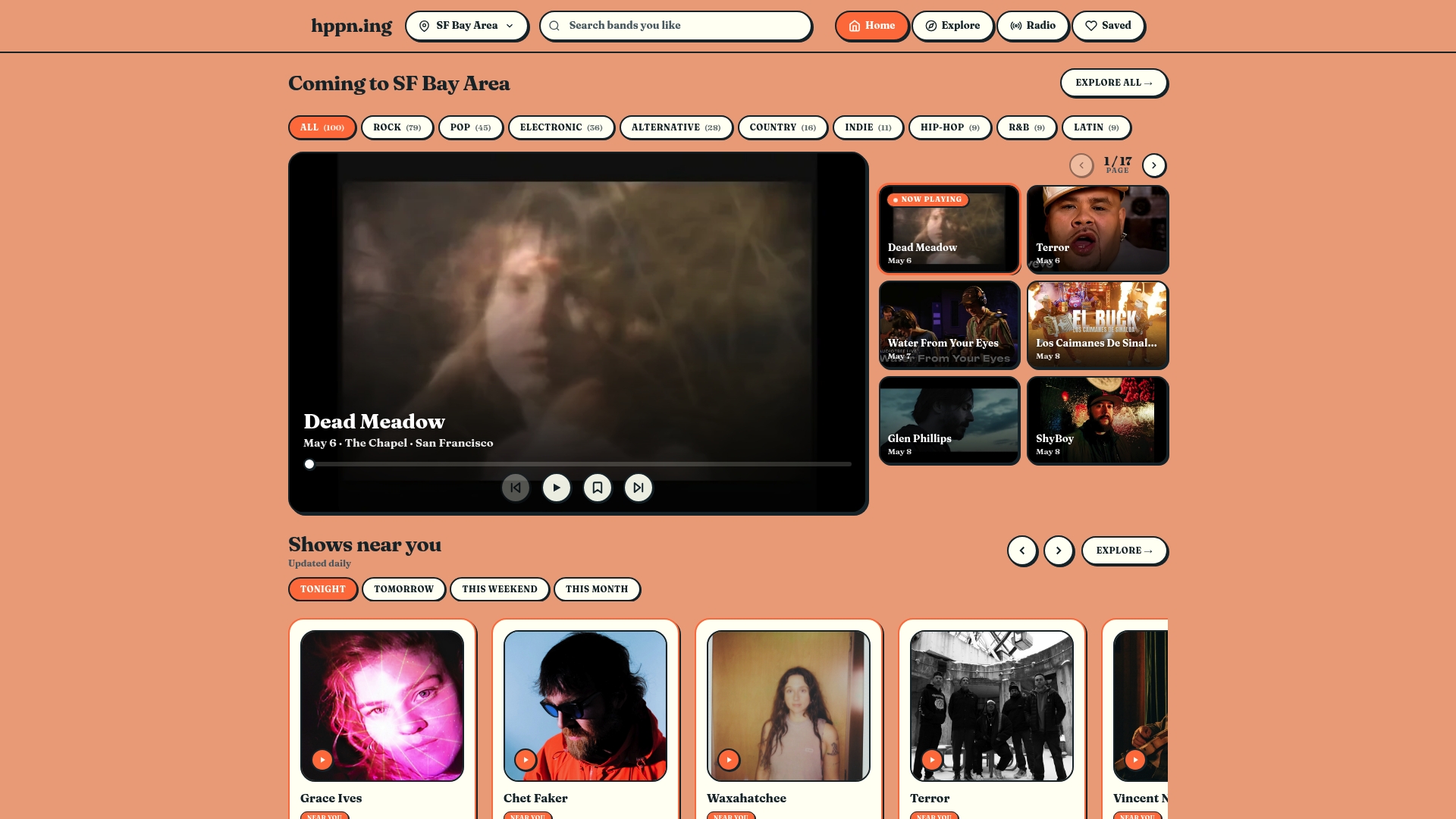
Browse the live music charts to see which local performers are gaining momentum right now, updated with real data from streams, ticket activity, and community engagement. Use the artist search tool to preview music, watch live clips, and read fan reviews before you commit to a show. And when you're ready to preview shows easily, the platform surfaces upcoming events near you, complete with artist profiles and community notes from fans who've already been in the room. Your next favorite artist is already out there performing. Hppn.ing helps you find them first.
Frequently asked questions
How are trending local performers identified?
Trending performers are identified through a combination of live music charts, community engagement metrics, social media activity, and word-of-mouth buzz within a specific city or region.
Where can I preview music from trending local artists?
Hppn.ing lets you search, preview audio and video, and follow trending artists before buying a ticket, giving you early access to performers who may become future headliners.
What's the best way to find unique local concerts?
Checking community notes and discussion boards alongside live music charts is one of the most reliable ways to surface unique shows, hidden gems, and under-the-radar events in your area.
Is it better to attend large or small-venue performances for new artists?
Small venues almost always offer more intimate, memorable experiences and give you the rare chance to see rising stars up close before they break out to bigger stages.