
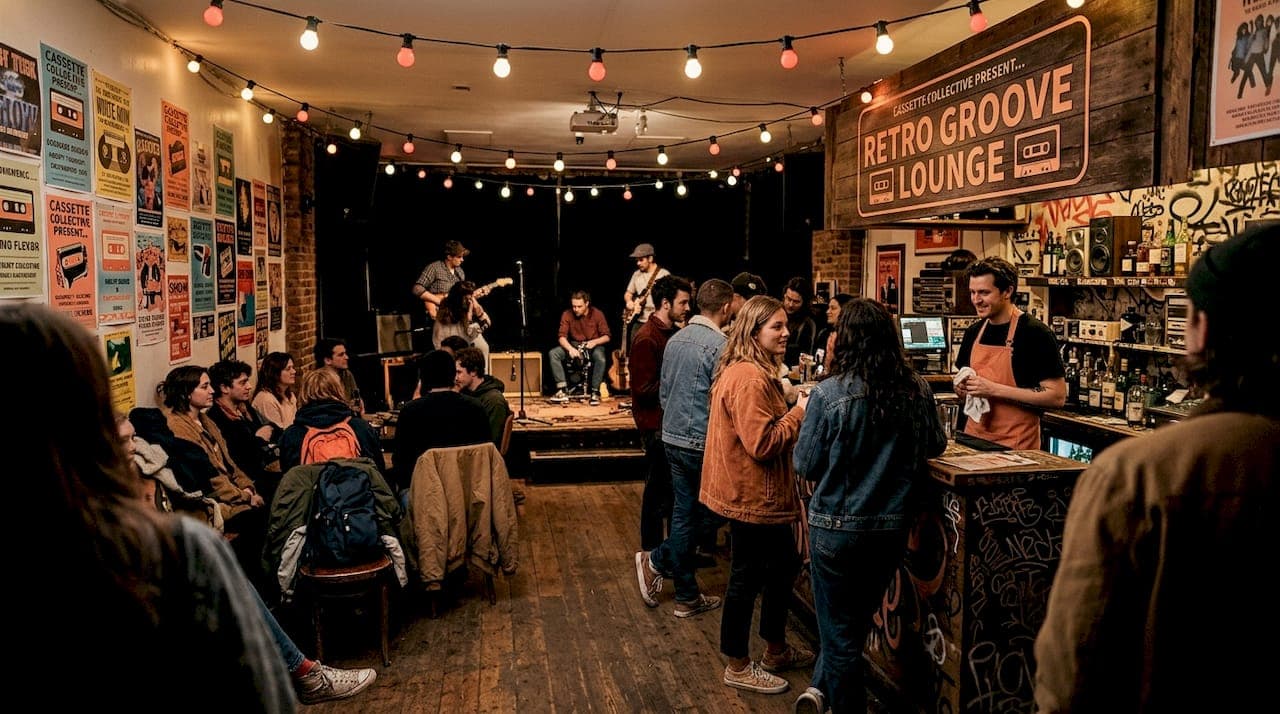
Most people picture live music as a simple transaction: a band plays, a crowd shows up, everyone goes home happy. But that picture leaves out almost everything that actually makes a local music scene work. The reality is a sprawling, living network where fans, business owners, city planners, and underground artists all pull in different directions at once. When that network is healthy, new talent surfaces, venues stay open, and a city develops a genuine cultural identity. When it breaks down, even cities with strong music histories can watch their scenes go quiet within a few years.
Table of Contents
- What is a live music ecosystem?
- Participants and their roles in the ecosystem
- How urban pressures and policy shape music scenes
- Ecosystem health: Beyond headliners to local vitality
- Why supporting your local ecosystem is more impactful than you think
- Explore, connect, and support live music near you
- Frequently asked questions
Key Takeaways
| Point | Details |
|---|---|
| Ecosystem complexity | A live music ecosystem connects musicians, fans, venues, businesses, and policymakers into a dynamic network. |
| Policy impact | City governance and laws fundamentally shape the sustainability and diversity of local music scenes. |
| Local engagement | Small venues and grassroots community efforts are just as important as big headline events. |
| Active participation | By attending, sharing, and supporting local music, you make concert life more vibrant and resilient. |
What is a live music ecosystem?
The phrase "live music ecosystem" gets thrown around a lot, but it's worth pinning down exactly what it means before going further. Borrowed from ecology, the term describes something far more complex than a roster of bands and a list of venues. Think of it the way you'd think about a forest: every organism depends on others, and removing one piece can trigger changes that ripple far beyond what you'd expect.
Research from the Live Music Mapping Project frames it precisely: a live music ecosystem is an interconnected, dynamic system that includes more than just musicians and venues, spanning audiences, policymakers, and local businesses that interact socially and economically around live performances. That definition is doing a lot of work. It means the teenager who posts a clip of a local band on social media is part of the ecosystem. So is the landlord who decides whether to renew a venue's lease. So is the city council member voting on noise ordinances.
What makes this framing so useful is that it forces you to see live music as a system with inputs, outputs, and feedback loops rather than a series of isolated events. When a beloved small club closes, it doesn't just disappoint regulars. It removes a rehearsal space, a first-gig opportunity for new artists, a meeting point for local promoters, and a proving ground for sound engineers just starting out. The ripple effects are real and often invisible until they've already done damage.
Social and economic interactions are the glue holding the whole thing together. A venue hires bartenders and security staff. Those employees spend money at nearby restaurants. The restaurant owner sponsors a local music festival. The festival draws visitors who discover the neighborhood. Each of those interactions feeds back into the health of the scene. If you want to understand why one city has a thriving underground music culture and another doesn't, you have to look at the whole web, not just the headliners.
You can explore how this plays out in real time by joining the live music community discussion happening right now among fans and artists who are actively shaping their local scenes.
Participants and their roles in the ecosystem
With the definition laid out, let's look closer at who exactly participates in this system and what roles they play. The ecosystem has layers, and each layer depends on the others in ways that aren't always obvious.
The performance core is what most people think of first: musicians, venue staff, sound technicians, lighting crews, and talent bookers. These are the people who make a show actually happen on a given night. But even within this group, the interactions are complicated. A talent booker who takes a chance on an unknown local act is doing something fundamentally different from one who only books proven touring artists. One feeds the ecosystem; the other just harvests from it.
Fans are arguably the most underestimated force in the system. Beyond buying tickets, fans drive discovery through word of mouth, social sharing, and showing up consistently to small shows where the artist-to-audience ratio might be embarrassingly small. That kind of loyalty is what turns a promising local act into a regional draw. Research confirms that a live music ecosystem spans audiences and local businesses beyond just the artists and venues, which means your presence at a Tuesday night open mic genuinely matters more than you might think.
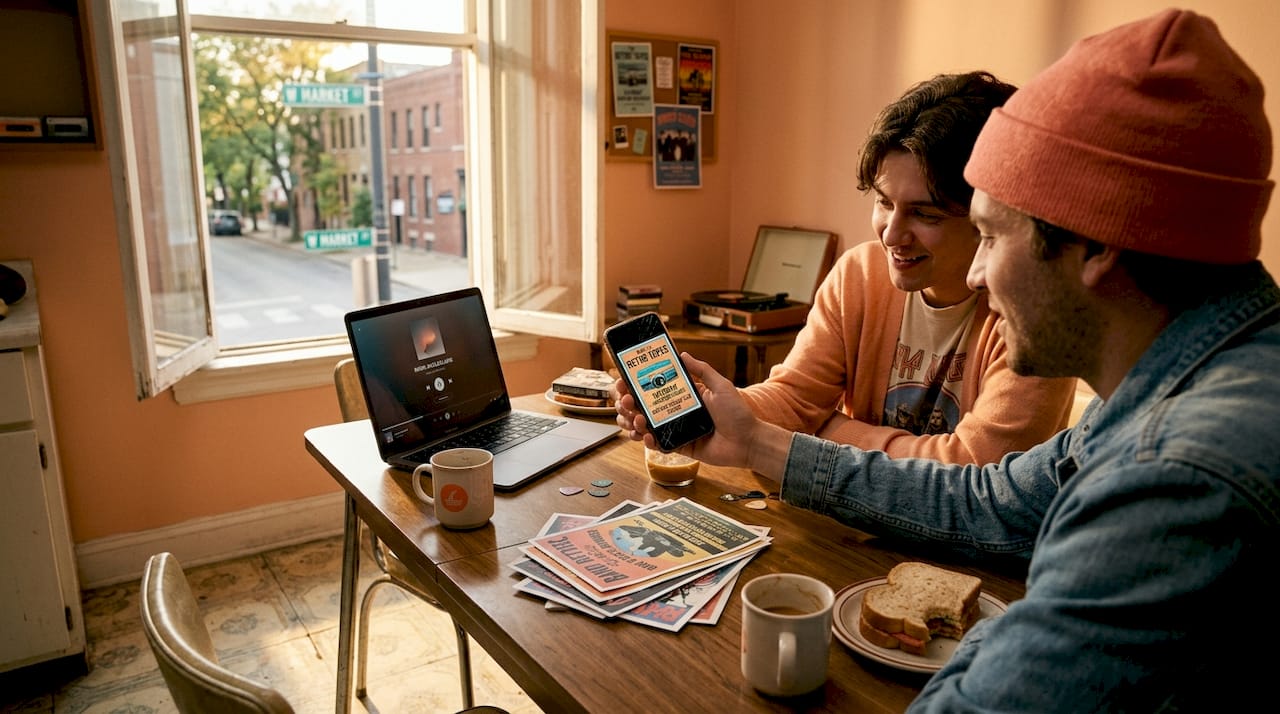
Local businesses play a supporting role that rarely gets acknowledged. Coffee shops that let bands put up flyers, record stores that host in-store performances, restaurants that cross-promote shows to their customers: all of these create connective tissue that holds the scene together. Sponsorships from local businesses can mean the difference between a community festival happening or not.
Policymakers and regulators operate mostly in the background, but their decisions shape everything. Zoning laws determine where venues can exist. Licensing rules affect how late shows can run. Noise enforcement policies can make or break a neighborhood's music culture. These aren't abstract bureaucratic concerns. They're the invisible architecture of every live music scene.
Here's a quick breakdown of how each participant group contributes:
| Participant group | Primary contribution | Impact on ecosystem |
|---|---|---|
| Musicians | Content and culture | Direct, high visibility |
| Venue staff and bookers | Infrastructure and curation | Direct, often undervalued |
| Fans | Attendance, sharing, advocacy | Indirect but foundational |
| Local businesses | Financial support, promotion | Indirect, stabilizing |
| Policymakers | Regulation and zoning | Structural, long-term |
You can track which local acts are gaining momentum right now by checking out trending artists in your area, which gives you a real-time view of who's rising in the ecosystem near you.
How urban pressures and policy shape music scenes
Now that we've explored who's part of the ecosystem, let's examine the often-unseen forces that make or break these networks: city policy, governance, and development.
Cities are not neutral containers for music scenes. They are active participants with enormous power to shape what survives and what disappears. Researchers and policymakers increasingly frame live music ecosystems using social-ecological systems thinking and adaptive governance, which means treating the music scene as a living system that requires active stewardship rather than just leaving it to market forces.
The most immediate policy levers are zoning, licensing, and noise enforcement. Zoning determines which neighborhoods can host venues at all. In many cities, rapid gentrification pushes commercial rents up in areas that historically housed music venues, forcing closures without a single noise complaint ever being filed. Licensing rules can make it prohibitively expensive for small venues to operate legally, which pushes shows into gray areas or eliminates them entirely.
"Governance and policy levers matter because parts of the ecosystem can fail through feedback loops; social-ecological systems frameworks emphasize interdependencies such as zoning, land use, licensing, noise enforcement, and market pressures rather than treating venue sustainability as a standalone business problem." Music ecosystem feedback loops
The feedback loop problem is particularly important to understand. When a neighborhood loses its anchor venue, nearby smaller venues often follow within a few years because the foot traffic that sustained them disappears. The artists who used those spaces move to other cities or stop performing. The fans who gathered there scatter. Rebuilding that network from scratch takes a decade, if it happens at all.
Here's a comparison of how different policy approaches affect ecosystem health:
| Policy approach | Short-term effect | Long-term effect on ecosystem |
|---|---|---|
| Strict noise enforcement | Fewer late-night shows | Venue closures, scene contraction |
| Agent of change policies | Protects existing venues | Stabilizes ecosystem during development |
| Cultural zoning districts | Concentrates music activity | Creates resilient hubs |
| Licensing fee reductions | Lower barriers to entry | More experimental and small venues |
Pro Tip: If you want to advocate for your local scene, attending city council meetings on zoning and licensing issues is one of the highest-leverage actions you can take. Most decisions that affect venues happen in rooms where fans are almost never present.
The good news is that some cities have figured out how to use policy as a tool for ecosystem health rather than a threat to it. Austin's music office, Melbourne's agent of change policies, and Amsterdam's nighttime economy initiatives all show that thoughtful governance can actively support a thriving live music culture. You can find live shows in cities where these policies are working and see the difference firsthand.
Ecosystem health: Beyond headliners to local vitality
To see how everything fits together, let's examine why every layer, from huge festivals to small bars, matters for a genuinely vibrant scene.
There's a tempting shortcut when measuring a city's music health: count the major festivals, the arena tours, the streaming numbers for local artists. By those metrics, plenty of cities look thriving. But those numbers can be deeply misleading. Research on the concert economy makes a critical point: ecosystems can be "healthy" in terms of headline and touring volume while still missing the smaller-venue infrastructure that enables discovery and local development.
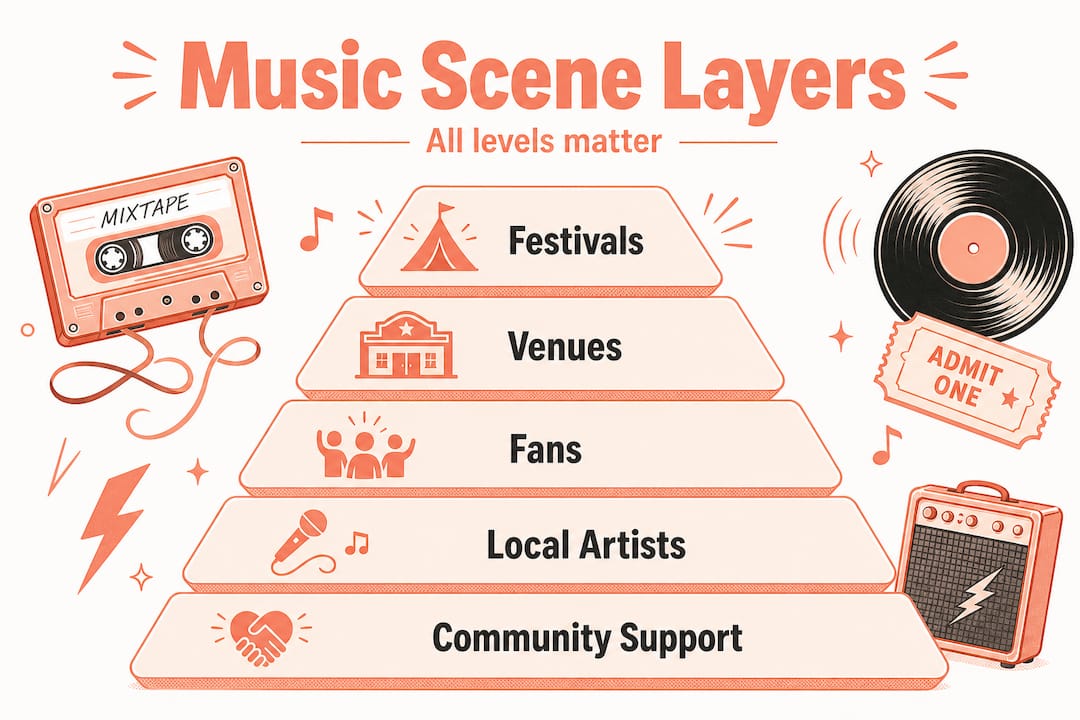
Think of it like a food chain. Big festivals and arena shows are the apex predators. They're visible, impressive, and generate a lot of economic activity. But they depend entirely on a healthy base: the open mics where artists first perform in front of strangers, the 100-capacity rooms where they learn to hold an audience, the mid-size clubs where they build a regional following. Remove the base and the apex eventually collapses too, because there's no pipeline of new talent to replace what ages out.
Small venues do several things that large ones simply cannot. They create low-stakes environments where artists can experiment and fail without career-ending consequences. They allow fans to get close enough to actually connect with performers, which is how real loyalty gets built. They serve as community gathering spaces where scenes develop their identity and values. An open mic night at a neighborhood bar is doing cultural work that no stadium show can replicate.
Here's what fans can do right now to support ecosystem health at the ground level:
- Attend small shows regularly, even when you don't know the artist. Your ticket money and physical presence matter enormously at this scale.
- Share local artists on social media with genuine enthusiasm rather than passive reposts. Personal recommendations still carry more weight than algorithm-driven promotion.
- Engage with community spaces like record stores, music schools, and rehearsal studios that anchor the scene.
- Support local promoters by buying tickets in advance rather than at the door, which helps them manage financial risk.
- Advocate loudly for venues when they face closure threats, because public pressure on landlords and city officials actually moves outcomes.
Pro Tip: Make it a habit to discover local artists you've never heard of at least once a month. Intentional discovery is one of the most powerful things a fan can do for ecosystem health.
The underground scene is where the next generation of artists you'll love is being born right now. Supporting it isn't charity. It's an investment in your own future listening experience. You can share your event experience after attending local shows, which helps other fans in your community find the same artists and venues.
Why supporting your local ecosystem is more impactful than you think
Here's something the conventional music fan narrative gets wrong: the idea that your individual choices don't matter much, that the scene will take care of itself, or that the real action is at the top of the pyramid with the biggest artists and the largest festivals.
That framing is not just inaccurate. It's actively harmful to the scenes most of us actually care about.
Every time you choose to attend a local show instead of streaming a playlist, you're doing something the algorithm cannot replicate. You're creating a memory, building a relationship with an artist, and sending a financial signal that this kind of music and this kind of space deserves to exist. That's not a small thing. At the scale of a 60-person venue, a dozen engaged regulars can be the difference between a booker continuing to take risks on new artists or defaulting to safe cover bands.
The fragility of ecosystem balance is something most fans genuinely don't appreciate until it's too late. Scenes that look robust can collapse surprisingly fast when a few key elements disappear simultaneously. A beloved venue closes, a respected promoter burns out, a neighborhood becomes unaffordable for artists to live in. Any one of those alone is survivable. All three at once can hollow out a scene within 18 months.
What keeps scenes resilient is exactly what's hardest to measure: community investment, personal relationships, and the kind of low-level constant engagement that doesn't generate headlines. The fan who shows up to every local show, who introduces friends to new artists, who argues passionately for a venue's survival, who joins the discussion online and offline, that person is doing more for the ecosystem than someone who attends three arena shows a year and calls themselves a music fan.
The most vibrant scenes in the world aren't maintained by institutions or algorithms. They're maintained by people who care enough to show up consistently, even when the room is half-empty and the sound system is questionable.
Explore, connect, and support live music near you
Ready to make a difference in your local music ecosystem? Here's how to get started.
Understanding the ecosystem is one thing. Actively participating in it is where real change happens. Hppn.ing was built specifically for fans who want to go deeper than the mainstream and actually engage with the living, breathing music scenes around them.
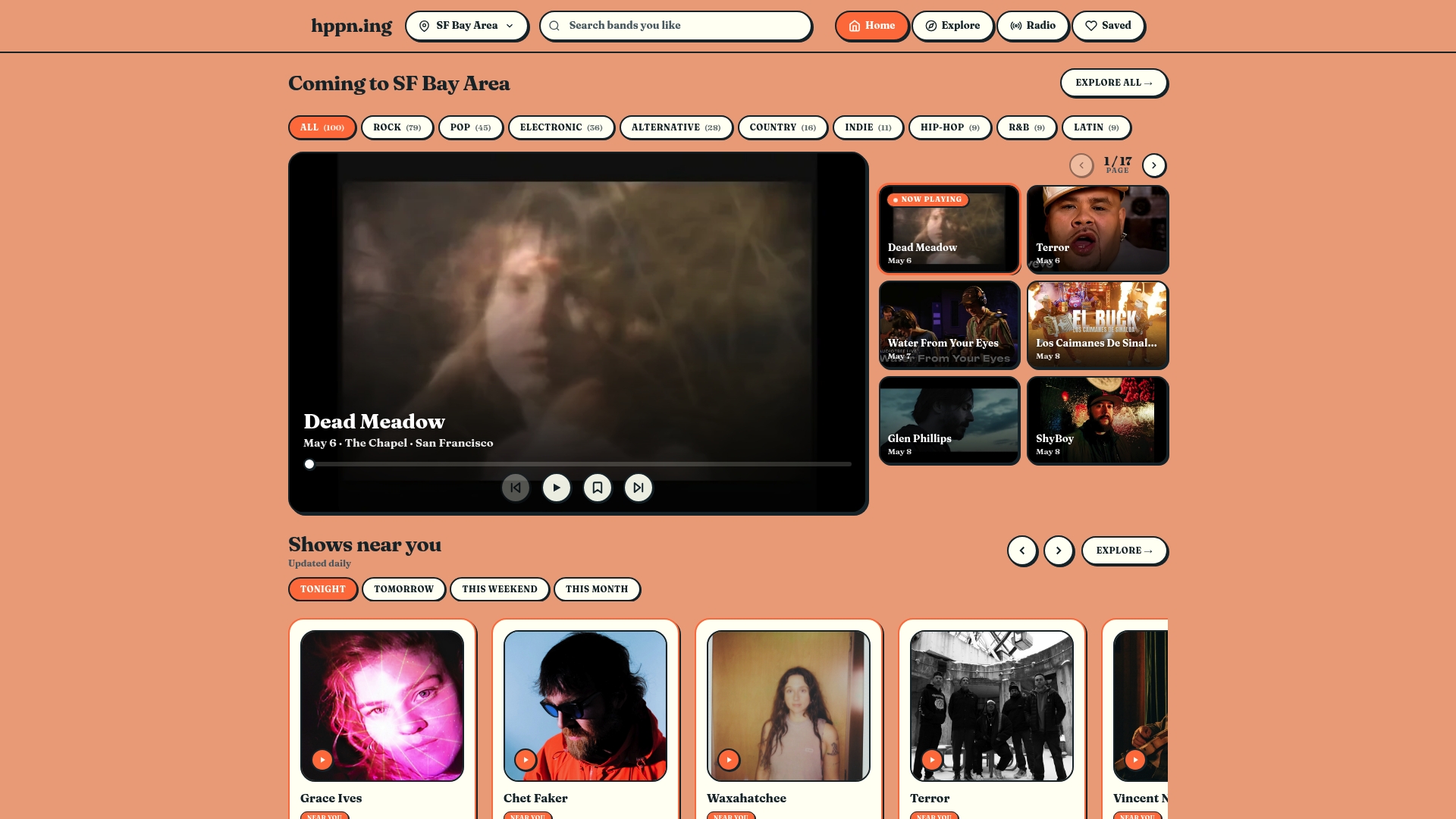
You can discover live music near you by browsing concerts and events filtered by your location, so you're always just a few taps away from finding your next favorite local act. The platform lets you preview artists through video and audio before you commit to a show, which makes it much easier to take chances on artists you've never heard. Check out see trending artists to find out who's gaining momentum in your city right now, or search artists to explore performers across genres and neighborhoods. The community features let you share experiences, trade recommendations, and connect with other fans who are just as invested in keeping their local scene alive as you are.
Frequently asked questions
What are the main components of a live music ecosystem?
A live music ecosystem includes musicians, venues, audiences, policymakers, and local businesses that interact to support live performances. Research confirms that a live music ecosystem is an interconnected, dynamic system spanning all of these groups, not just the artists and stages.
How do local policies impact live music scenes?
Local policies such as zoning and licensing directly affect where venues can operate, how late shows can run, and the survival of small music spaces. Governance and policy levers matter because they shape the structural conditions that determine whether a scene can sustain itself long-term.
Why do small venues matter in the music ecosystem?
Small venues enable artist discovery and local development in ways that big concerts and headliners simply can't replicate. Ecosystem health depends on the full supply chain of venues, promoters, and support roles, not only the high-profile events at the top.
How can fans support their local music ecosystem?
Fans can attend small shows consistently, share event information within their networks, engage with community spaces, and support local artists both online and in-person. Even small, repeated actions like buying a ticket in advance or posting about a local act create meaningful ripple effects throughout the ecosystem.