

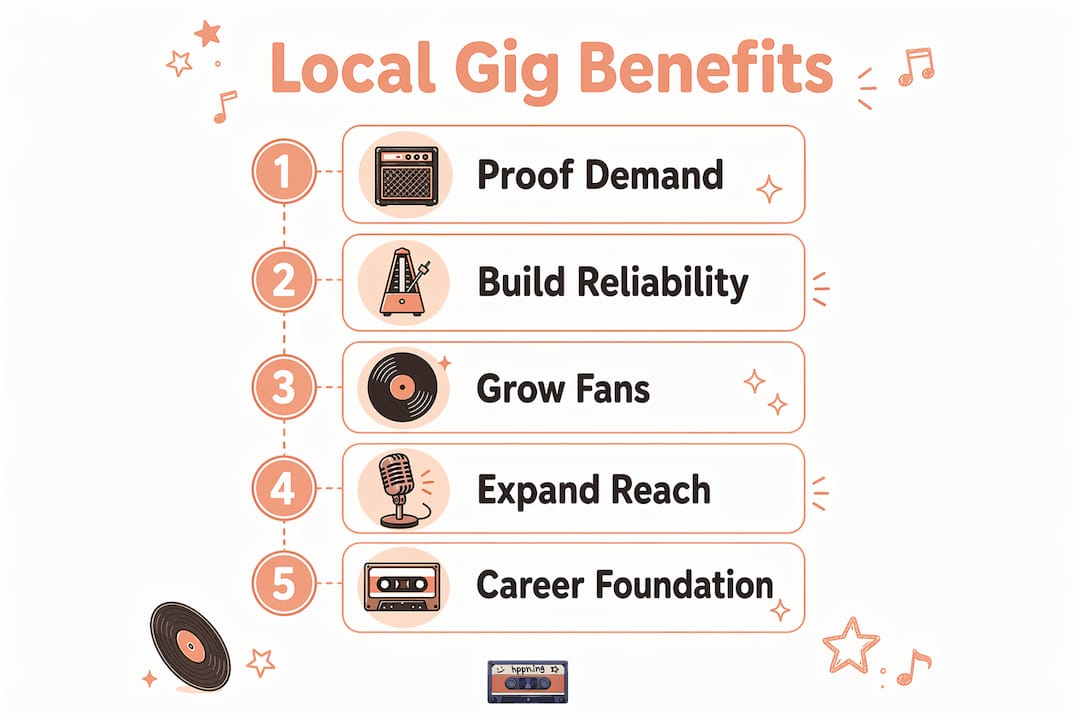
Local gigs are the primary proof of concept for any emerging artist's career. They create concrete, verifiable evidence that you can draw a crowd, perform professionally, and build loyal fans who show up repeatedly. Why local gigs build artist reputation comes down to one simple truth: promoters, venues, and industry contacts trust what they can measure. A consistent local draw of 50–100 people gives you real leverage before you ever need a booking agent. This article breaks down exactly how that reputation compounds into a lasting career asset.
Why local gigs build artist reputation faster than streaming
Local performances create proof that streaming numbers simply cannot replicate. When you play a venue and bring 80 people through the door, that is a fact a promoter can verify. A Spotify play count tells them nothing about whether you can fill a room on a Tuesday night.
Promoters book artists as a form of risk management. Their primary concern is not your sound. It is whether you will show up on time, handle your promotion, and deliver the audience you promised. Local reputation is the main metric they use to make that call.
The impact of gigs on reputation is cumulative. Each show adds a data point to your record. Ten consistent, professional performances outweigh one spectacular set because they prove reliability, not just talent. Venues track this pattern across multiple bookings, and a strong track record reduces their perceived risk when offering you better slots or higher guarantees.
Building reputation through local shows also means building it in public. Every fan who posts a photo, every venue that tags you after a show, and every local music blog that covers your set adds to a visible, searchable record of your activity. That record travels ahead of you when you start approaching venues in neighboring cities.
How do venues and promoters actually evaluate emerging artists?
Venues evaluate artists on two things: attendance numbers and professionalism. Both are tracked across multiple shows, not just one.
- Attendance consistency. Bringing the crowd you promised is non-negotiable. Overestimating your draw and underdelivering repeatedly gets artists blacklisted. Venues talk to each other, especially in mid-size markets.
- Review scores. Maintaining a 4.5+ star average across 10 or more reviews is the industry standard for demonstrating credibility to new promoters. That benchmark signals you handle your audience well and represent the venue professionally.
- Communication and punctuality. Responding to booking inquiries quickly, arriving at load-in on time, and honoring your technical rider are all part of your reputation. Venues remember artists who make their jobs easier.
- Promotion effort. Did you post about the show? Did you bring your own audience or rely entirely on the venue's walk-in traffic? Artists who actively promote their dates signal that they treat the partnership seriously.
Pro Tip: Keep a simple spreadsheet after every show. Log the venue name, date, attendance count, and any feedback from the promoter. This archive becomes your proof of demand when you pitch to larger venues or regional bookers.
The benefits of local gigs extend beyond the night itself. Every professional interaction you have with a venue staff member, sound engineer, or opening act builds your local network. That network is what generates referrals, last-minute booking opportunities, and co-billing invitations that move your career forward.
Why live fans are worth more than passive digital listeners
One engaged live fan delivers more long-term career value than thousands of casual online listeners. This is not a philosophical claim. Active live fans buy tickets, purchase merchandise, and tell their friends about you in ways that streaming algorithms cannot replicate.
The key is capturing that engagement before the crowd walks out the door. Artists who treat local gigs as data-gathering opportunities build audiences that compound over time. Here is a practical system for doing that:
- Set up a mailing list signup at your merch table. A physical sign-up sheet or a QR code linking to a Mailchimp or Substack list works well. Offer a free download or early ticket access as an incentive.
- Collect email addresses at every show, not just big ones. A 40-person show at a neighborhood bar still produces real fans. Thirty consistent email subscribers from a small show can seed your next city.
- Follow up within 48 hours. Send a short thank-you email with a link to your next show date. This single habit separates artists who build audiences from those who start over at every gig.
- Track merch conversion rates. Metrics like merch sales and audience retention tell you which songs and setlists connect most. That data sharpens your live show and gives you concrete numbers to share with promoters.
- Encourage fan-driven sharing. Ask your audience to tag the venue and your artist page when they post photos. User-generated content extends your reach into social networks you cannot access directly.
Pro Tip: A QR code on your setlist or stage backdrop that links to your email signup removes all friction. Fans can sign up while you are still playing your last song.
The importance of local music events lies partly in this direct access to your audience. No algorithm stands between you and the people in that room. That direct relationship is what builds lasting fan loyalty that sustains a career through platform changes, industry shifts, and long gaps between releases.
What reputation mistakes do emerging artists make at local shows?
Most reputation damage at the local level comes from three predictable mistakes: overpromising attendance, playing for free too often, and inconsistent behavior across shows.
- Overpromising attendance. Telling a venue you will bring 200 people and delivering 40 is a credibility problem that is very hard to recover from. Artists who overestimate their draw and repeat that pattern across multiple venues get quietly removed from booking consideration. Always give conservative, honest estimates.
- Playing for free too often. Performing for exposure repeatedly anchors your market value at zero. Venues and promoters begin to expect free or near-free performances from you, which makes it very difficult to negotiate paid bookings later. Every free show should serve a specific, defined career goal.
- Inconsistent professionalism. Showing up late, skipping soundcheck, or being difficult with venue staff creates a reputation that spreads fast in local scenes. Bookers value reliability over perfect performances. Ten consistent, professional shows build more trust than one outstanding set followed by three unreliable ones.
- No documentation. Artists who do not archive their performances, fan contacts, and venue relationships lose that reputation capital when they move to a new city or change platforms. Your reputation should be a portable asset, not something tied to one venue's memory.
Artists offering to open for established acts should protect their pricing by negotiating a fee rather than accepting pure exposure. Even a modest payment establishes that your time has market value.
How can local shows expand your regional career opportunities?
Local shows are the testing ground for everything that comes next. Smart artists use them to refine their setlist, gather fan data, and build the momentum needed to approach venues in neighboring cities.
| Strategy | What it does for your reputation |
|---|---|
| Co-billing with artists from other cities | Exposes you to new audiences and creates cross-city credibility |
| Documenting attendance and merch data | Gives promoters concrete proof of demand when you pitch regional shows |
| Targeting venues where similar acts play | Increases booking success by matching your audience profile to the room |
| Following up with fans after every show | Converts one-time attendees into repeat ticket buyers |
| Building promoter relationships locally | Generates referrals to regional promoters through trusted networks |
Booking patterns matter when targeting new venues. Research which venues book artists in your genre and at your draw level, then approach them with your documented performance history. A pitch that includes real attendance numbers and a mailing list size is far more persuasive than a press kit with no data.
Co-billing is one of the most underused tools for reputation growth through gigs. When you share a bill with an artist who has a strong following in a city you want to break into, you borrow credibility from their existing relationship with that audience. That borrowed trust accelerates your reputation in a new market by months.
Building a systematic career record with archived show data, promoter contacts, and fan lists makes your reputation a transferable asset. When you move into regional touring, that documentation tells a coherent story of consistent growth that industry professionals can verify.
Pro Tip: After every show, send a brief follow-up email to the venue booker. Thank them, share your attendance count, and mention your next local date. This single habit keeps you top of mind for future bookings and builds the promoter relationships that open regional doors.
Key takeaways
Local gigs build artist reputation by creating verifiable proof of demand, professional reliability, and loyal fan relationships that compound into career-defining leverage with venues and promoters.
| Point | Details |
|---|---|
| Consistent draw is your proof of demand | Aim for 50–100 attendees locally before expanding to neighboring cities. |
| Professionalism outweighs talent alone | Ten reliable shows build more promoter trust than one outstanding performance. |
| Live fans outperform passive listeners | One active live fan delivers more career value than thousands of casual digital listeners. |
| Free shows can damage your pricing power | Only perform for exposure when it serves a specific, defined career goal. |
| Document every show | Archive attendance, merch data, and fan contacts to make your reputation portable and verifiable. |
The foundation most artists overlook
I have watched artists with genuinely great music stall out because they treated local gigs as a stepping stone to skip rather than a foundation to build. The ones who break through consistently are the ones who show up reliably, track their numbers obsessively, and treat every 60-person show like it is an audition for the next level. Because it is.
The mistake I see most often is treating reputation as something that happens to you rather than something you build deliberately. Your reputation is a business asset. It lives in the memory of every promoter you have worked with, every fan who signed up for your list, and every venue that has your name in their booking history. That asset compounds when you protect it and collapses fast when you ignore it.
Playing for free is the trap that catches the most talented artists. I understand the logic: exposure sounds like currency. But exposure without strategy is just working for nothing. Every time you accept a zero-dollar booking without a clear reason, you teach the market that your time has no value. That lesson is very hard to unlearn.
The artists who build real regional careers treat every local show as a data point, a relationship, and a proof of concept rolled into one. That mindset is what separates a musician with a hobby from an artist with a career.
— Ari
Where Hppn fits into your local reputation strategy
Building a reputation through local shows requires visibility beyond the night itself. Hppn is a live music discovery platform built specifically for emerging artists and the fans who want to find them.
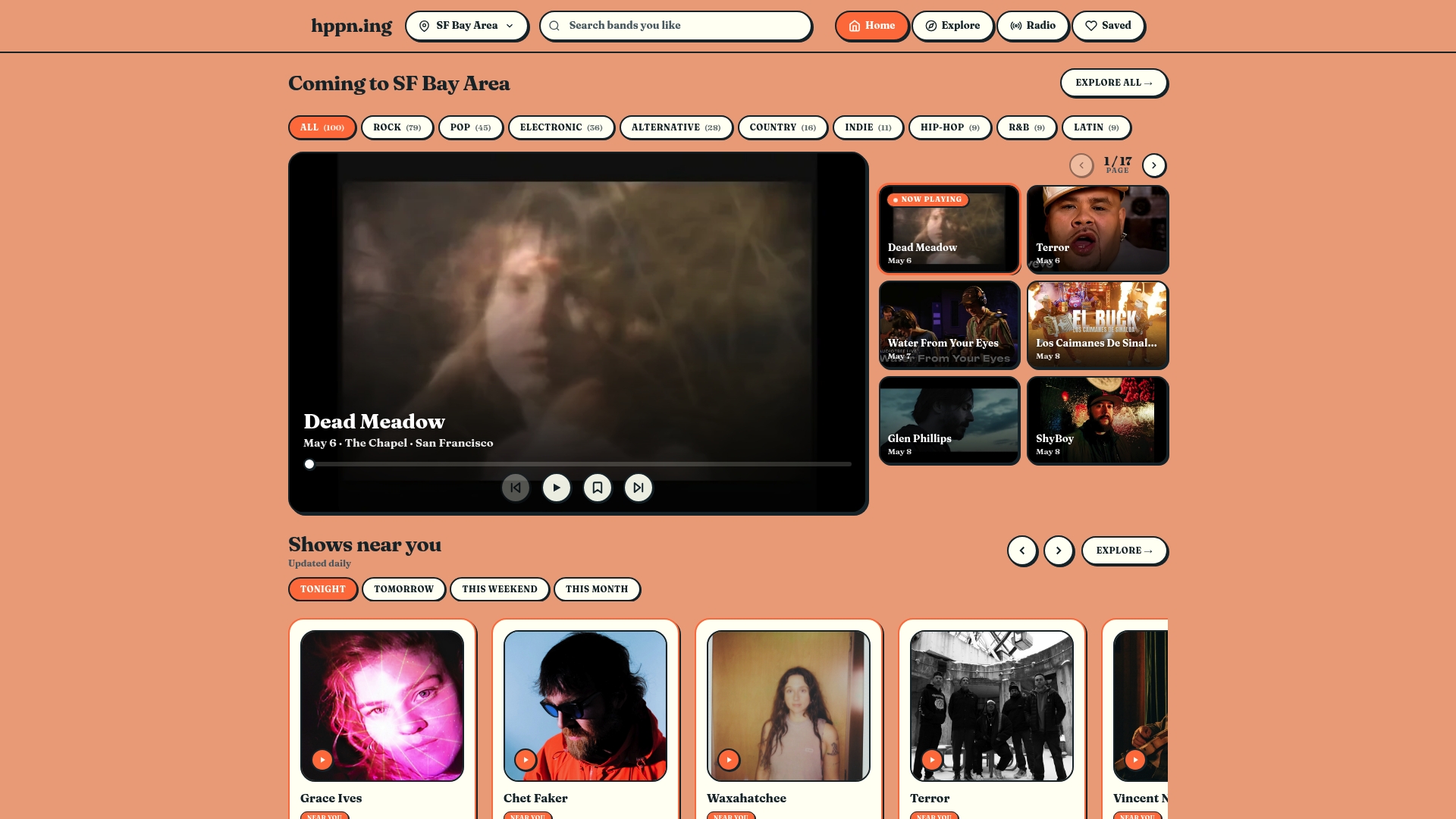
On Hppn, artists can be discovered by local fans browsing concerts near them, preview their sound through video and audio, and connect with local music communities in real time. The platform surfaces emerging musicians rather than mainstream acts, which means your local gig history and artist profile reach audiences who are actively looking for new live music. For artists building reputation through local shows, Hppn puts your work in front of the right people at exactly the right moment. Search artists and preview music to see how emerging performers in your city are already using the platform to grow their local presence.
FAQ
Why do local gigs matter more than streaming for reputation?
Local gigs create verifiable proof of demand that promoters and venues can measure directly. Streaming numbers do not tell a booker whether you can fill a room or handle a professional show environment.
How many local fans do you need before expanding to other cities?
A consistent draw of 50–100 people locally is the recommended threshold before approaching venues in neighboring cities. That number gives you enough leverage to negotiate paid bookings without an agent.
How do you convert gig attendees into long-term fans?
Use mailing list signups or QR codes at every show to capture contact information. Follow up within 48 hours with your next show date to turn one-time attendees into repeat supporters.
Is playing for free ever worth it for emerging artists?
Free performances are only worth it when they serve a specific career goal, such as opening for a well-known act in a new market. Performing for exposure repeatedly anchors your market value at zero and makes future paid bookings harder to negotiate.
What data should artists track after every local show?
Track attendance count, merch sales, email signups, and any feedback from the venue booker. This documented record becomes your proof of demand when pitching regional venues and promoters.