
Most people think finding live music means typing a city name into a search bar and scrolling through results. That's event searching. Live music discovery is something different. It's the process by which the right fan finds the right show at the right time, often before they even knew they were looking. Powered by AI, integrated platforms, and community signals, live music discovery has become a personalized system that connects you to concerts, local scenes, and emerging artists based on what you already love. This guide breaks down exactly how it works and how to use it.
Table of Contents
- Key takeaways
- What live music discovery means today
- The real challenges of finding live music
- How discovery platforms and features compare
- How to start discovering live music effectively
- My take on live music discovery's real value
- Find your next show with Hppn
- FAQ
Key takeaways
| Point | Details |
|---|---|
| Discovery vs. searching | Live music discovery surfaces shows you'd love automatically, rather than requiring you to search manually. |
| The awareness gap | About 40% of US concert tickets go unsold because fans simply don't know the event exists. |
| AI powers personalization | Platforms use your listening habits and location to recommend relevant shows before you ask. |
| Human curation still matters | Algorithms work best when combined with editorial playlists, radio, and real-world signals. |
| Multi-platform habits win | Fans who use discovery feeds, social video, and venue apps together find more and miss less. |
What live music discovery means today
Live music discovery, also called concert discovery or fan-to-event matching, is the practice of using technology, data, and community signals to surface live performances that are genuinely relevant to a specific listener. It's the industry term for a process that goes far beyond a simple calendar search.
The concept has a few distinct components working together:
- Artist tracking. You follow artists you love, and a platform notifies you when they announce dates near you.
- Taste-based recommendations. An algorithm reads your listening habits and suggests artists you haven't followed yet but are likely to enjoy live.
- Location awareness. The platform filters results by what's happening in your city or within a radius you set.
- Discovery feeds. A personalized stream of upcoming events, trending local performers, and curated picks, similar to a social media feed but built entirely around live music.
The scale of this system is worth understanding. Platforms like Bandsintown operate a network of 700,000 artists and 65,000 venues, delivering over 450 million personalized recommendations every month. That's not a search engine. That's an active matching system.
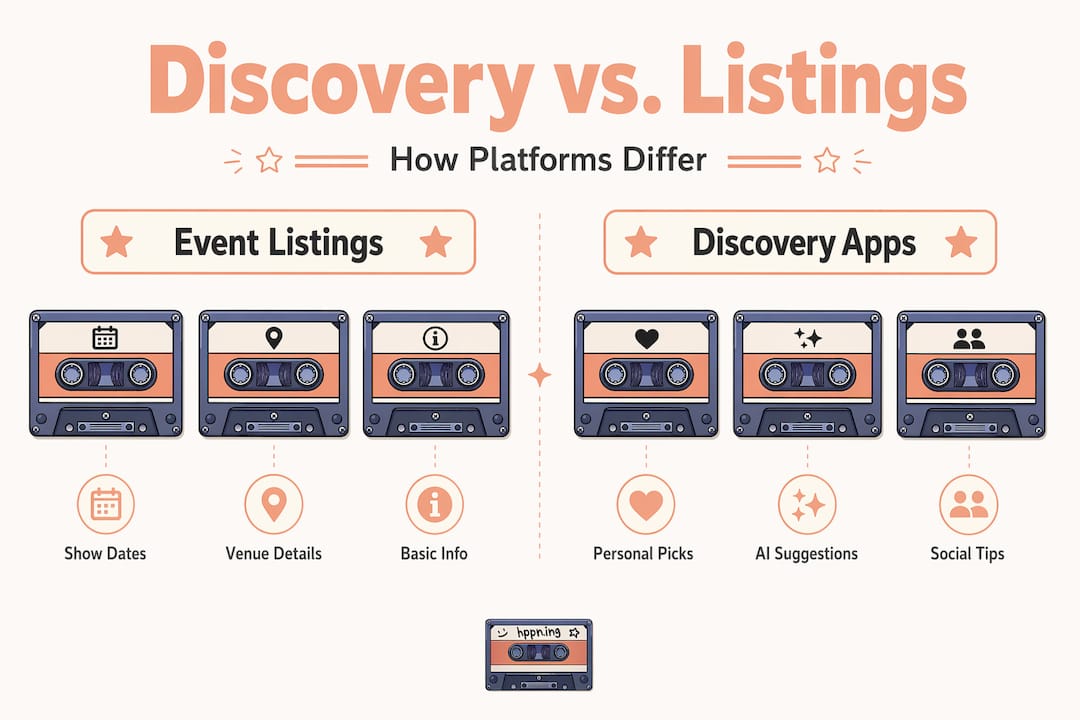
What separates a discovery platform from a basic event listing is intent. Event listings tell you what's happening. Discovery platforms tell you what's happening for you. The distinction matters because discovery is most effective when it moves fluidly between the app and the physical world, connecting a song you're streaming today with a show you attend next Friday.
Multi-channel behavior is increasingly the norm. Gen Z music fans now discover music through Twitch streams, short-form social video, video games, and live events, not just streaming playlists. Live music discovery platforms are built to capture signals from all of these surfaces and translate them into show recommendations.
The real challenges of finding live music
Here's something most guides skip. The biggest problem in live music isn't a lack of shows. It's awareness.
Roughly 40% of concert tickets in the US go unsold, not because nobody wants to go, but because the fans who would have loved that show never found out it was happening. That's the core problem live music discovery tries to solve. And it's harder than it sounds.
Four specific challenges complicate the process:
- Algorithm blind spots. AI recommendation engines are trained on streaming data, which skews toward the artists you already know. They're weaker at surfacing artists you've never heard of, which is exactly where the most exciting discoveries live.
- Fragmented profiles. If an artist hasn't properly linked their streaming profiles to event platforms, their shows won't appear in your discovery feed. Artists must connect their Apple Music artist pages with platforms like Bandsintown for concert syncing to work correctly. Many smaller artists haven't done this yet.
- Notification fatigue. Too many apps sending too many alerts means most people tune them out, so genuinely relevant show notifications get buried.
- The digital-to-physical gap. Seeing a show recommendation on your phone is one thing. Actually buying a ticket and showing up is another. The best discovery experiences close this gap, but many platforms still treat discovery as finished once they show you the listing.
The solution that actually works is blending algorithmic tools with human curation. Editorial playlists, radio programming, venue newsletters, and word-of-mouth recommendations from friends all carry signals that no algorithm has fully replicated. The fans who discover the most interesting live music use both.
Pro Tip: Follow two or three local venues directly on social media in addition to using a discovery app. Venues post about shows that haven't made it to aggregator platforms yet, and you'll often find out before tickets sell out.
How discovery platforms and features compare
The tools available for live music discovery have expanded considerably in 2026. Here's how the major approaches stack up.
| Platform / Feature | Primary strength | Best for |
|---|---|---|
| Bandsintown | AI recommendations, artist tracking | Finding shows by artists you already follow |
| Apple Music Concerts tab | In-app concert listings, push notifications | Fans who stream heavily on Apple Music |
| Spotify integrations | Playlist-to-concert suggestions | Discovering shows based on saved songs |
| Shazam | Real-time ID to artist discovery | Catching unknown artists and finding their shows |
| TikTok / short video | Organic artist discovery | Finding emerging artists before they blow up |
| Hppn | Local scenes, emerging artists, community | Finding underground shows and previewing artists |
Bandsintown's scale makes it the most established player. Its AI tracks intent signals and drives over 20 million monthly ticketing clicks from recommendations alone, which tells you the recommendations are actually converting into attendance, not just impressions.
Apple Music's integration with Bandsintown is one of the more practical recent developments. Concert events sync within 24 to 48 hours of announcement, and fans receive push notifications about nearby shows directly inside the app. If you already live inside Apple Music for daily listening, this means you don't need to remember to check a separate app. Discovery comes to you.
Pro Tip: Connect your streaming accounts to any discovery platform you use during setup, not after. Platforms build their recommendation model from the moment you join, so the earlier you sync your listening history, the faster the recommendations become accurate.
Not all discovery interfaces work the same way. Some platforms focus on showcasing the music itself, letting you preview an artist through video or audio before deciding whether to go, rather than just listing a name and a date. This approach reduces discovery fatigue because you're making an informed choice, not a blind one. Hppn takes this approach with its artist preview features, which lets you hear and watch an artist before committing to a show. You can explore live music near you and preview artists directly within the same experience.
For a broader view of how aggregators fit into the picture, the guide on how live music aggregators work breaks down the mechanics in useful detail.
How to start discovering live music effectively
Knowing what live music discovery is and actually using it well are two different things. Here's how to build a discovery habit that actually sticks.
Start with what you already listen to. Open your streaming app of choice and identify your top five to ten most-played artists from the past few months. Follow every one of them on a concert discovery platform. This seeds your recommendation engine with real preference data and gives it something to work with immediately.
Use your discovery feed actively. Most music fans check event apps passively, maybe once a month. Treat your music discovery feed the way you'd treat a news feed. Check it a few times a week, save shows you're interested in even if you're not ready to buy, and let your engagement signal the platform to show you more like that.
- Enable location-based notifications so shows near you surface automatically.
- Browse by neighborhood or venue type rather than just by artist name. This is how you find shows you didn't know to look for.
- Watch artist preview videos before dismissing an unfamiliar name. Half the best live discoveries start with "I've never heard of them" followed by one video clip.
- Check live music charts and trending artists in your area weekly. What's trending locally often reflects underground momentum before it hits mainstream platforms.
- Read local music blogs and community notes. Algorithmic tools miss the context that locals carry: which venues have the best sound, which promoters book the most interesting lineups.
Pro Tip: The best concerts often sell out before major discovery platforms even list them. Follow three to five independent promoters in your city on Instagram or their mailing list. They announce first.
Join a music discovery community. The fastest way to find great live music is to know people who are already finding it. Online communities built around local scenes, genre-specific groups, and platform-based discussions surface recommendations that no algorithm generates. A real person saying "this show on Thursday is going to be packed" carries more weight than a notification. When you combine community signals with platform tools, your discovery rate improves significantly. The guide on finding local shows in 2026 covers this combination in more depth.
My take on live music discovery's real value
I've spent a long time thinking about why live music discovery matters in a way that streaming discovery doesn't quite replicate. Here's my honest read on it.
Most people treat discovery as a means to an end: find a show, buy a ticket, go. What I've found is that the discovery process itself is where most of the value is. The moment you stumble onto an artist you've never heard of, watch a 90-second live clip, and realize you're already sold before the first chorus ends. That experience doesn't happen when you're searching for something specific. It only happens when you're open to being surprised.
The thing I think newcomers most consistently miss is this: discovery tools work on the artists you already follow, but the real gains come from what those tools recommend adjacent to your taste. Most people click on the familiar names and skip the unknowns. Flip that habit. The familiar artists you already know about. The unknowns are what discovery is actually for.
I also believe most platforms still underestimate the value of community. Algorithms are good at pattern matching. They are genuinely bad at capturing the local cultural context that makes a show worth attending. A community of people who actually go to shows in your city and talk about what they experienced is a signal source no platform has fully integrated yet. The platforms that figure this out will own the next decade of live music.
The connection from listening to attending is the real frontier, and we're only partway there.
— Ari
Find your next show with Hppn
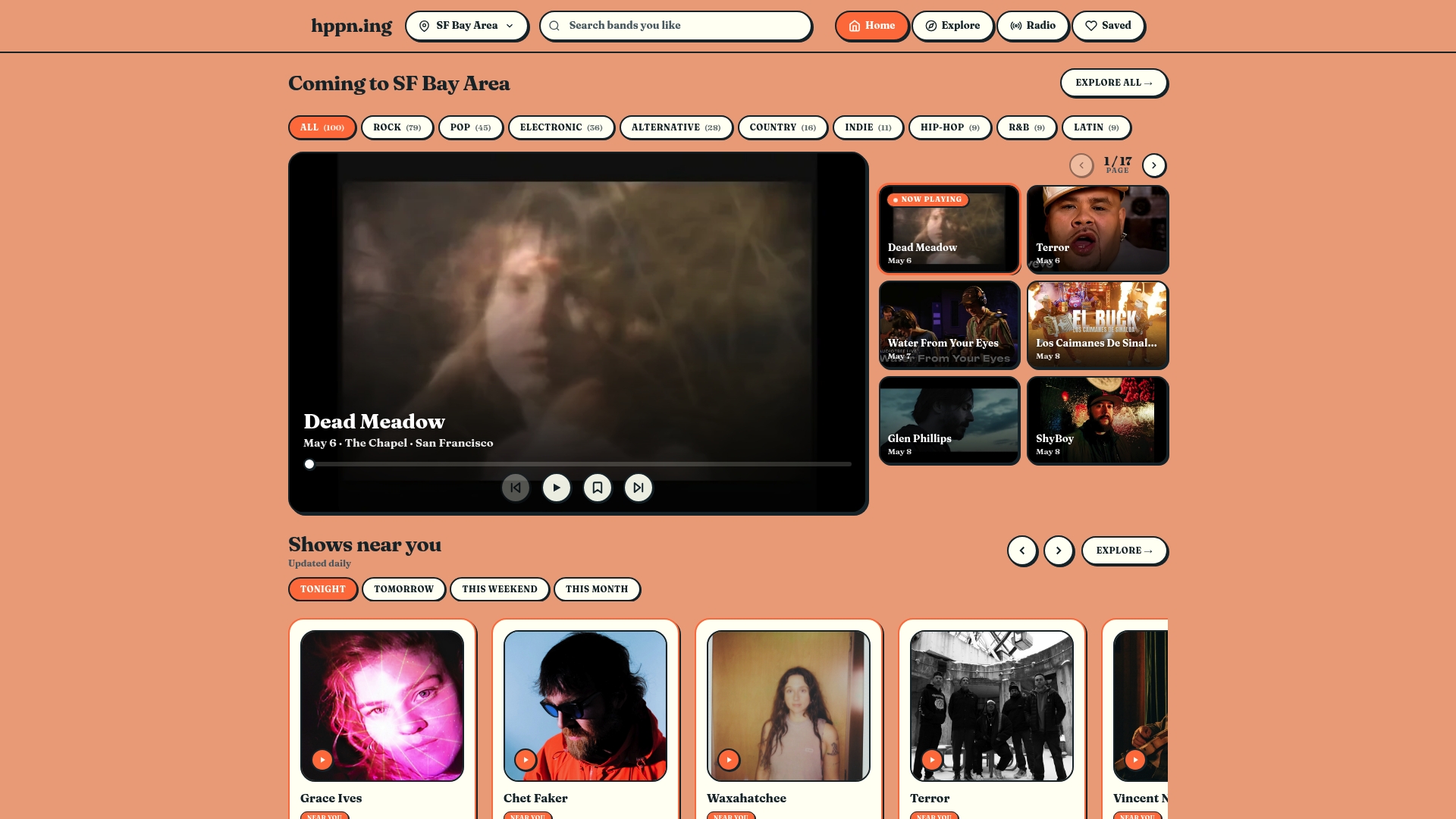
Hppn is built specifically for fans who want to go deeper than mainstream concert listings. Browse shows by location, preview artists through audio and video before you commit to a ticket, and see what's trending in your local scene in real time. Whether you're looking for an underground set happening this weekend or an emerging artist worth following long-term, Hppn puts those discoveries in one place. You can also join the music discovery community to read what other fans are saying about shows near you. Start exploring at hppn.ing and see what's happening around you tonight.
FAQ
What is live music discovery?
Live music discovery is the process of using technology, personalized recommendations, and community signals to connect fans with concerts and emerging artists that match their taste, often without requiring them to actively search.
How do discovery apps differ from event listing sites?
Event listing sites show you what's happening. Discovery apps use your listening history, location, and behavior to surface shows that are specifically relevant to you, making the experience personalized rather than generic.
Why do so many concert tickets go unsold?
About 40% of US concert tickets go unsold primarily because fans aren't aware the event is taking place, which is the core problem live music discovery platforms are designed to fix.
What is a music discovery feed?
A music discovery feed is a personalized stream of upcoming concerts, trending local artists, and curated show recommendations that updates based on your location, listening habits, and past engagement with the platform.
Do I need multiple apps for live music discovery?
Using two or three complementary tools, such as a discovery platform, a streaming app with concert integration, and a community resource, gives you better coverage than any single app alone, since each surface captures different signals from your music life.