
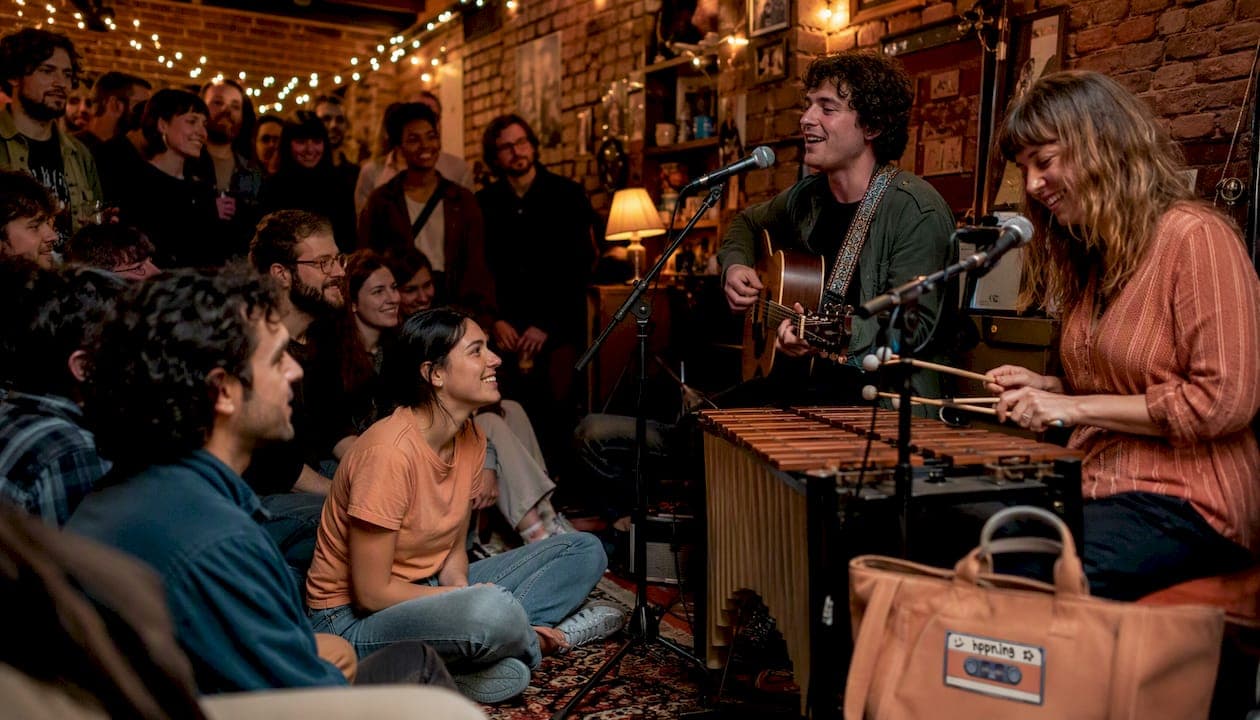
An intimate venue concert is a live music performance where proximity, personal connection, and stripped-back production define the experience — not a strict headcount. You're close enough to see the sweat on the guitarist's hands, hear a singer's breath between phrases, and feel the room react as one. Most people use under 500 attendees as a rough rule of thumb, but atmosphere matters far more than capacity.
- What you'll feel: A direct, unfiltered connection to the performer — no jumbotron required.
- Typical logistics: Simpler parking, shorter lines, often general admission, and tickets that frequently cost less than a stadium show.
- Why it matters: Intimate shows are where you discover artists before they blow up, hear music the way it was meant to sound, and occasionally end up chatting with the band after the set.
Table of Contents
- What actually creates the 'intimate' feeling at a small concert
- Why fans and artists keep choosing intimate concerts
- Venue types that host intimate concerts
- What to expect at a small concert: logistics and etiquette
- How intimate concerts compare to arena and stadium shows
- How to find intimate venue concerts in your city
- When should you choose an intimate show over a large one?
- Key Takeaways
- The case for small shows that most people miss
- Hppn makes finding your next intimate show easy
- Useful sources
What actually creates the 'intimate' feeling at a small concert
The word "intimate" gets thrown around loosely, but four concrete elements produce it consistently.
Proximity and sightlines. When the stage is at floor level and the back row is thirty feet away, every facial expression reads. You're not watching a performer on a screen — you're sharing a room with them. That physical closeness changes how you listen.
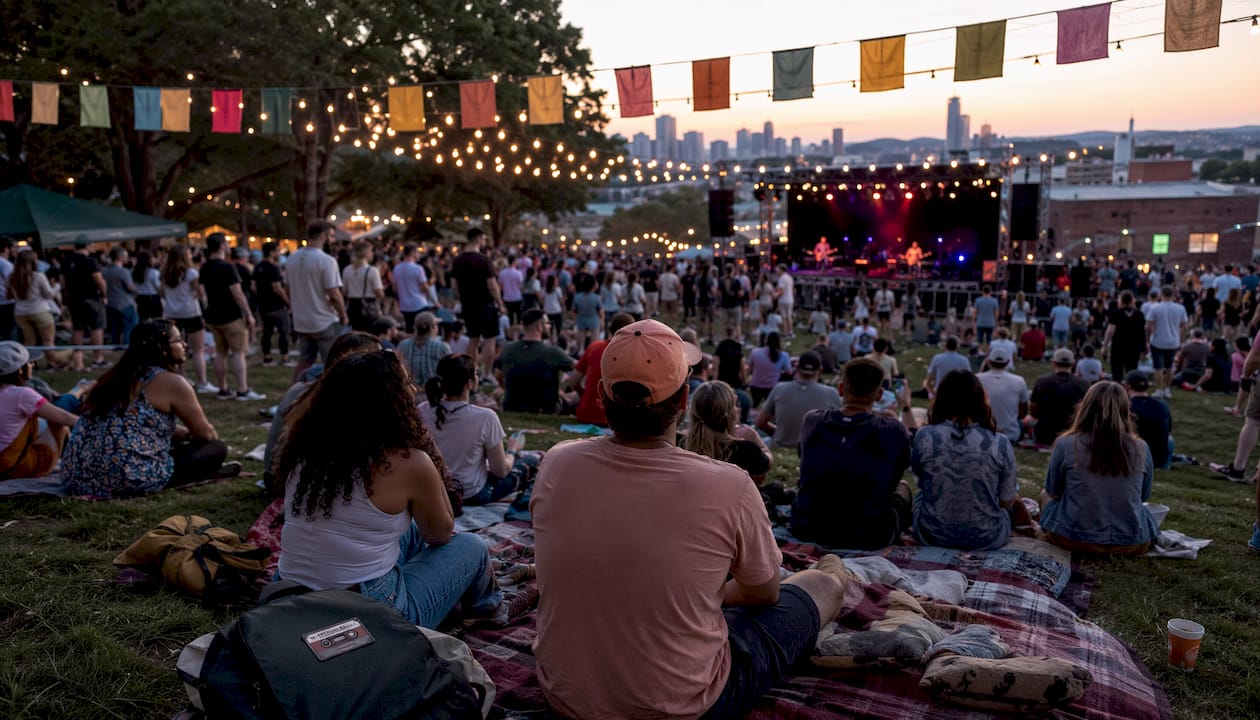
Production choices. Intimate shows strip away the arena toolkit: no massive PA stacks, no elaborate lighting rigs, no pyrotechnics. The sound system is sized for the room, which means less reverb and more detail. The difference between acoustic and amplified setups becomes audible in ways a stadium never lets you notice.
Crowd size as a range, not a rule. Fans and venues commonly use three bands as guidance:
- Under 200: Ultra-intimate. You can make eye contact with the artist.
- 200–500: The sweet spot for indie scenes. Enough energy to feel like a real show, small enough to stay personal.
- 500–1,000: Borderline small/midsize. Can still feel intimate depending on staging and ticketing.
The same 400-capacity room can feel cavernous or cozy depending on whether the promoter sells it out, removes the barricade, or places the stage in the center of the floor.
Audience interaction. Artists at small shows often talk between songs, take requests, or acknowledge specific people in the crowd. That back-and-forth is almost impossible at scale.
Pro Tip: If you want the most intimate experience possible, arrive early and position yourself center-stage within the first few rows. At a show under 200 people, that's often just a matter of walking up.
Why fans and artists keep choosing intimate concerts
Artists champion smaller venues because they allow creative freedom and deeper fan connection — things a 20,000-seat arena actively works against. For fans, the payoff is just as real.
- Emotional presence: Without production crutches, performers have nowhere to hide. That honesty tends to produce the most memorable moments in live music.
- Sonic clarity: You hear dynamic shifts, whispered passages, and fingerpicking detail that gets buried in a large hall. The room itself becomes part of the instrument.
- Practical upside: Tickets are often cheaper, lines are shorter, and parking is rarely the ordeal it is at a stadium. Small venues are also frequently located near transit, which makes the whole night easier.
- Discovery: Intimate shows are where careers start. Seeing someone in a 150-cap room before their debut album drops is a story you'll tell for years.
A good example of what's possible: when singer-songwriter Sofia Isella performed at Rough Trade, a compact record store in London, the retail space became something closer to a cathedral. The audience's silence during quiet passages amplified every note. That kind of moment doesn't happen at a festival.
Venue types that host intimate concerts
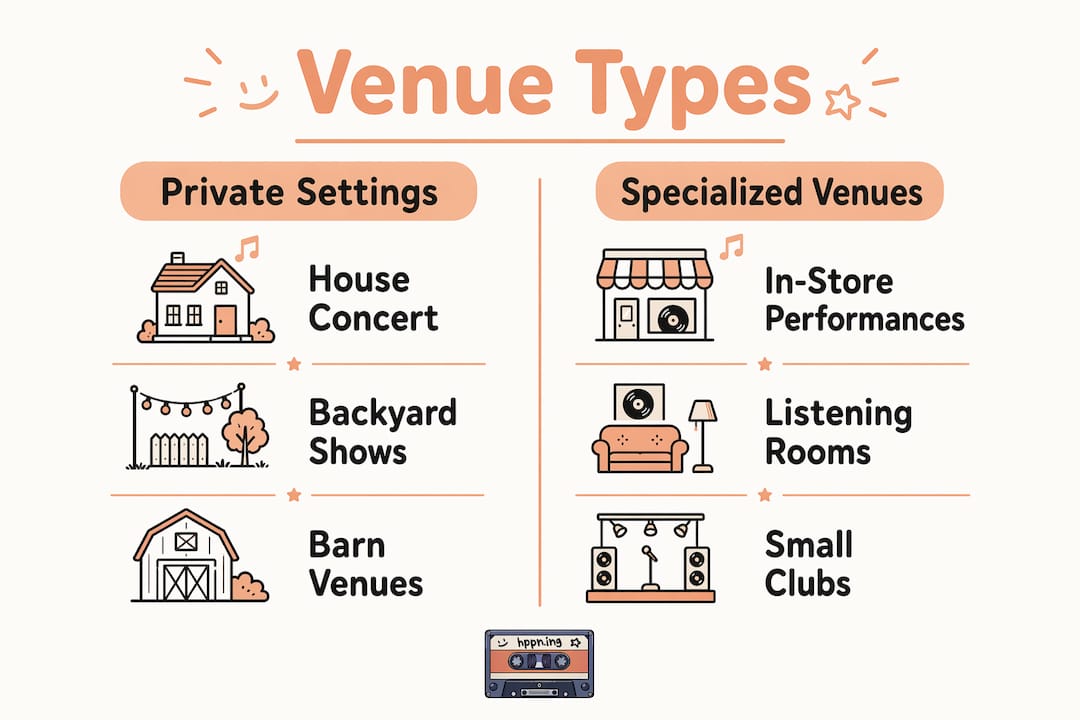
Intimacy isn't tied to one building type; for curated, intimate programming, consider how to hire a pianist in residence to enhance the live music experience. A converted church, a backyard, and a coffee shop can all deliver the same closeness if the promoter makes the right choices. Here's a quick reference:
| Venue Type | Typical Capacity | What Makes It Intimate |
|---|---|---|
| House concert | Under 200 | Performed in a home, barn, or backyard; audience on the floor |
| Coffeehouse / café | Under 100 | Conversational scale; often acoustic or lightly amplified |
| Record store | Under 150 | Retail setting repurposed; audience surrounds the performer |
| Listening room | 100–300 | Seated, quiet-focused; designed for attentive listening |
| Small club | 200–500 | Purpose-built stage; general admission standing |
| Retrofitted church or community space | 100–400 | Natural acoustics; pews or folding chairs |
| Backyard / outdoor private space | Under 200 | Informal; often ticketed through word of mouth |
House concerts take place in homes, backyards, barns, and similar private settings and are almost invariably described as "intimate" experiences. They represent the format in its purest form: no barrier between artist and audience, no venue overhead, no merch table.
In-store performances and listening rooms are worth seeking out specifically. A listening room is designed around one rule: the music comes first. Talking during the set is frowned upon, phones stay down, and the result is a level of collective attention you rarely find elsewhere. For a broader breakdown of how these spaces compare, the types of live music venues guide covers the full spectrum.
What to expect at a small concert: logistics and etiquette
Knowing what to expect before you walk in makes the whole night better.
Logistics checklist:
- Arrive early. General admission means no assigned seats. The best spots go fast, and doors often open only 30–45 minutes before showtime.
- Check the ticket format. Many intimate shows sell advance tickets online at lower prices — a coffee-roastery show might list advance tickets generally costing less than door prices — with will-call or mobile delivery. Bring a backup screenshot.
- Carry some cash. Small venues often run cash-only bars or merch tables. An ATM on-site is not guaranteed.
- Plan your transit. Parking near small clubs and cafés can be tight. Transit or rideshare is usually the smarter call.
- Dress casually. Unless the event specifies otherwise, jeans and a t-shirt are the norm. Comfort matters when you're standing for two hours.
Etiquette dos and don'ts:
- Do stay quiet during soft or acoustic passages. In a 100-person room, one loud conversation carries.
- Do put your phone away during the set, or at least keep it low. The artist can see you.
- Don't push toward the front once the show starts. The crowd is small enough that it disrupts everyone.
- Do browse the merch table and introduce yourself after the set. Artists at intimate shows are almost always accessible.
A practical live music checklist can help you prep for the specifics of any show format.
How intimate concerts compare to arena and stadium shows
The differences go well beyond size.
- Production scale: Arenas run full lighting rigs, video walls, and PA systems engineered for 15,000+ people. Intimate shows use what the room needs — sometimes just a single microphone.
- Sound: Large venues fight physics. Sound bounces off concrete and steel, creating delays and muddiness. Small rooms, especially those with wood or fabric surfaces, let you hear the music cleanly.
- Sightlines: At an arena, the artist is a figure on a distant stage. At a small club, you're close enough to notice the setlist taped to the floor monitor.
- Audience behavior: Stadium crowds cheer, sing along, and move as a mass. Intimate crowds listen differently — more attentively, more quietly during soft moments.
- Price: Intimate show tickets are often significantly cheaper, though high-demand small shows can sell out and command premium resale prices.
- Discovery potential: Arenas book proven headliners. Small venues are where you find the artist who will headline an arena in three years.
When to choose intimacy: date nights, discovering new artists, acoustic or folk music, and any show where you want to actually hear the lyrics. When the stadium wins: massive production spectacles, bucket-list artists, and shows where the crowd energy is the point.
How to find intimate venue concerts in your city
Discovery is the one genuine friction point with intimate shows. They don't advertise on billboards.
- Follow venue calendars directly. Small clubs, listening rooms, and coffeehouses post their own calendars. Subscribe to their email lists — shows sell out before they appear on major ticketing platforms.
- Use Hppn. Hppn is built specifically for this: browse concerts by location, preview artists with audio and video before you commit, and follow trending local performers you've never heard of. It surfaces the kinds of shows that get buried on mainstream platforms.
- Check neighborhood event pages. Facebook Events, Nextdoor, and local subreddits surface house concerts and pop-up shows that never make it to Ticketmaster.
- Search by venue type. Searching "listening room [your city]" or "house concert series [your city]" often turns up recurring event series with their own mailing lists.
- Set alerts. Google Alerts for "[your city] + intimate concert" or "[artist name] + small show" catches announcements early.
Pro Tip: Preview an artist on Hppn before buying a ticket to an unfamiliar show. Hearing 60 seconds of their music tells you more than a press bio ever will.
For more tactics, the guide on how to browse concerts by location covers the full discovery workflow.
When should you choose an intimate show over a large one?
A quick decision guide based on what you're actually after:
- You want to connect with the music, not just witness it. Choose intimate every time.
- You're going on a date or with a small group. A cozy concert setting beats a stadium for conversation and shared experience.
- You want to discover an artist early. Intimate shows are the format. The local music scene is where careers begin.
- Budget is a factor. Smaller shows typically cost less, and the overall night (parking, drinks, transport) is cheaper too.
- You want spectacle and scale. Go to the arena. Some artists are built for it, and fighting that is pointless.
For a first date: an intimate show at a listening room or small club. For discovering your next favorite artist: any show under 300 people. For a bucket-list moment with a legacy act: the stadium is the right call.
Key Takeaways
Intimate venue concerts deliver what large shows structurally cannot: proximity, sonic clarity, and a direct connection between artist and audience that no production budget can manufacture.
| Point | Details |
|---|---|
| Feeling beats headcount | Atmosphere defines intimacy more than capacity; under 500 is a guideline, not a rule. |
| Four elements create intimacy | Proximity, stripped-back production, crowd size, and active artist-audience interaction all contribute. |
| Venue types vary widely | Coffeehouses, listening rooms, house concerts, record stores, and small clubs all qualify. |
| Logistics are simpler | Expect general admission, lower ticket prices, casual dress, and easier parking than a stadium. |
| Hppn finds them for you | Use Hppn to browse intimate shows by location and preview artists before you buy. |
The case for small shows that most people miss
There's a tendency to treat intimate concerts as a consolation prize — what you attend when you can't get tickets to the real thing. That framing gets it exactly backward.
The shift toward smaller venues isn't a fallback; it's a deliberate artistic choice. Artists who could fill larger rooms sometimes choose not to, because the format forces honesty. There's no fog machine to cover a weak moment, no video wall to distract from a flat note. What you get instead is a performance that has to earn its keep in real time, in front of people close enough to notice.
The NPR Tiny Desk series made this visible at scale. The War and Treaty performing in a cramped office setting, with family members in the audience, produced something that a stadium production would have diluted. The constraint was the point.
What most people underestimate is how much of a live music experience is actually logistics anxiety — will I see anything, will it be too loud, will I find parking. Intimate shows remove most of that friction. You show up, you're close, and the music does the work.
Hppn makes finding your next intimate show easy
Finding a great small show used to mean knowing the right people or obsessively checking venue websites. Hppn changes that. The platform lets you browse upcoming concerts by location, preview artists through audio and video clips before you commit to a ticket, and follow trending local performers who haven't broken through yet. It's built for exactly the kind of discovery that mainstream ticketing platforms aren't designed for.
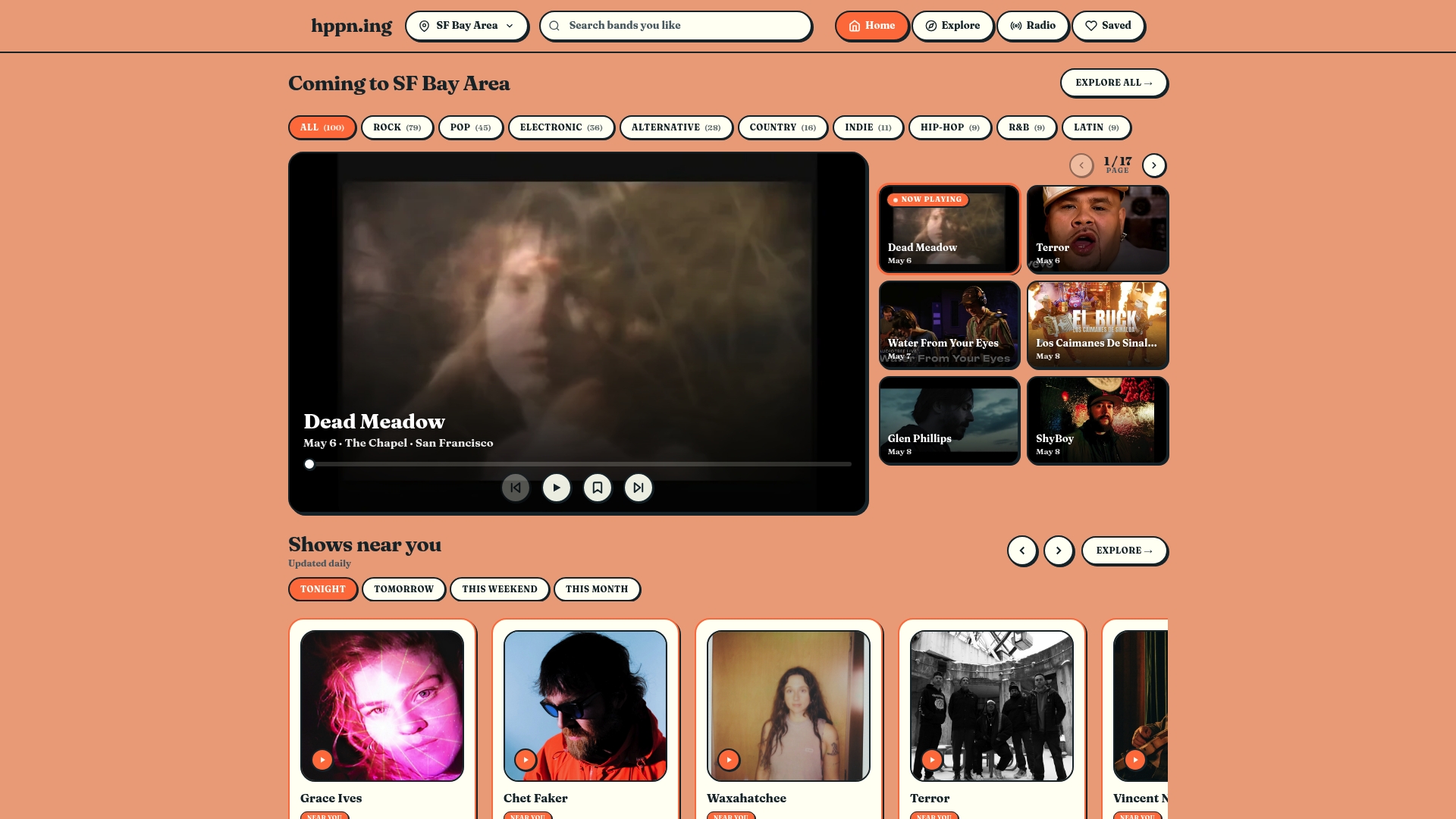
Whether you're looking for a listening room set on a Tuesday night or a house concert series in your neighborhood, Hppn surfaces the shows that would otherwise slip past you. Browse intimate shows near you and preview the artists playing them — no algorithm pushing the same five headliners.
Useful sources
- What Is Considered a Small Concert? — Concert News Online: Covers capacity ranges and the atmosphere-over-headcount argument in detail.
- House Concert — Wikipedia: The clearest overview of the house concert format, its history, and what makes it distinct.
- Closer to the Music: Why Artists Champion Smaller Venues — Fast Company: Industry perspective on why artists and promoters are leaning into smaller spaces.
- Discover Live Music Near You — Hppn: Browse intimate concerts by location and preview artists before you buy.