

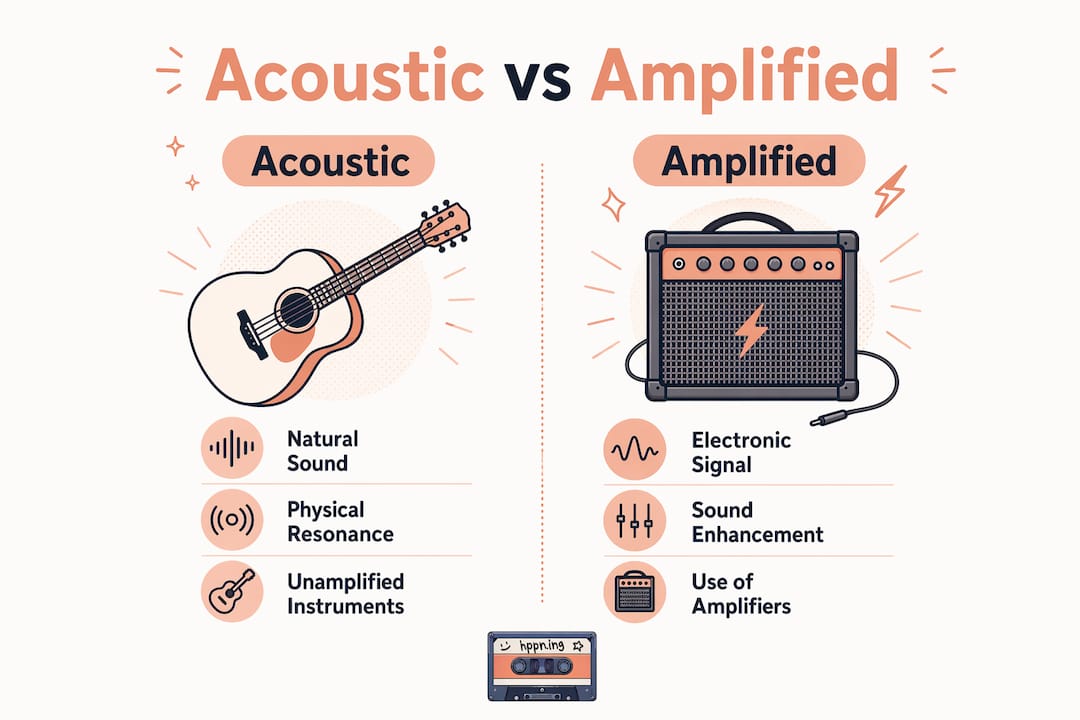
Acoustic music is defined as sound produced entirely by the natural physical properties of an instrument, without electronic alteration of the signal. Amplified live music, by contrast, relies on electronic systems to increase volume and modify tonal qualities. Understanding what is acoustic versus amplified live music matters because the distinction shapes everything: the gear musicians use, the venues that work best, and how the music lands emotionally with listeners. Both formats are alive and thriving in 2026, and knowing the difference makes you a sharper, more informed music fan.
What is acoustic versus amplified live music?
Acoustic instruments produce sound through physical resonance alone. A steel-string guitar vibrates its top plate and projects sound through its body cavity. A violin resonates through its spruce top. A drum pushes air with membrane tension. No electricity required. The sound you hear is the direct result of physics.
Amplified music introduces electronics into that chain. Amplified music is legally defined as sound increased by electronic or motor-powered means. That covers everything from a singer using a PA system to an electric guitarist running through a tube amp with distortion and reverb. The signal path is fundamentally different.

One important clarification: acoustic does not mean unplugged. A fingerpicked acoustic guitar on a concert stage almost always runs through a microphone or a pickup into a PA system. What keeps it "acoustic" is that the amplification aims to reproduce the natural tone transparently, without reshaping it. Signal flow is the key distinction: acoustic music uses linear amplification, while amplified electric music uses significant signal processing to sculpt the sound.
How do acoustic and amplified instruments produce sound?
The mechanics behind each format explain why they feel so different to listen to.
Acoustic sound generation:
- String resonance: guitar, violin, upright bass, and piano all convert string vibration into air movement through a resonating body.
- Air column vibration: flutes, clarinets, and brass instruments shape a column of air inside a tube.
- Membrane tension: drums and hand percussion push air directly through a struck surface.
Amplified sound generation:
- Pickups and transducers convert string or body vibration into an electrical signal.
- That signal travels to a preamp, then a power amp, then a speaker cabinet.
- Effects processors, EQ units, and digital signal processors modify the signal before it reaches the speaker.
The electric guitar is the clearest example of amplified sound design. Its solid body produces almost no acoustic volume. The entire sonic character, from clean shimmer to heavy distortion, is built in the amplifier and effects chain. An electric violin works the same way. The instrument body is often minimal because the electronics do the tonal work.
Acoustic amplification takes a different approach. Acoustic amps are built around flat frequency response and feedback suppression. They include dedicated tweeters for high-frequency detail, notch filters to cut feedback frequencies, and phase controls to prevent resonance buildup. The goal is transparency: make the instrument louder without making it sound different.
Pro Tip: If you play acoustic guitar live, run a notch filter or feedback suppressor before your amp or PA channel. Feedback is the number one enemy of acoustic amplification, and suppressing it early keeps your natural tone intact.
What are the acoustic versus amplified live music experiences in different venues?
Venue size and atmosphere are the primary factors determining which format works. Acoustic acts suit smaller, intimate venues that encourage conversation and ambience, while amplified performances excel in larger spaces requiring full-frequency, high-volume coverage.
Here is how the two formats map to common venue types:
- Wine bars and lounges: Acoustic duos or solo performers work perfectly. The natural dynamic range matches the low ambient noise floor and keeps conversation possible.
- Wedding receptions: A hybrid approach is standard. Acoustic sets during cocktail hour and dinner, then a full amplified band for dancing. Professional wedding bands use high-end PA systems even for acoustic sets to maintain clarity across larger reception halls.
- Mid-size clubs (300–800 capacity): Amplified bands with a full PA system are the standard. The room size demands volume and projection that acoustic instruments cannot provide unaided.
- Outdoor festivals: Full amplified rigs with line arrays are required. Acoustic instruments disappear outdoors without significant reinforcement.
- House concerts and art galleries: Truly unplugged acoustic performances thrive here. The intimacy of the space becomes part of the experience.
| Venue type | Best format | Key reason |
|---|---|---|
| Lounge or wine bar | Acoustic | Low noise floor, conversation-friendly |
| Wedding reception | Hybrid | Energy shifts from dinner to dancing |
| Mid-size club | Amplified | Room size demands volume |
| Outdoor festival | Amplified | Open air kills unaided projection |
| House concert | Acoustic | Intimacy is the entire point |
Venues find success combining both formats, scheduling acoustic sets during quieter hours and amplified sets when energy needs to peak. This approach manages the room's emotional arc across an entire evening. You can read more about how different live music venue types shape these decisions.
How does live music affect listener psychology and emotional experience?
The psychological effects of live music are real and measurable, and they apply to both acoustic and amplified formats. Both acoustic and amplified performances can reduce cortisol by influencing the limbic system, the brain's emotional processing center. That means a quiet acoustic set and a loud rock show can both produce genuine stress relief.
The more nuanced finding is this: musical composition and environment matter more than amplification status alone when it comes to emotional impact. A poorly chosen acoustic set can feel flat and disconnected. A well-crafted amplified performance can feel deeply moving. The format is a tool. The music is what does the work.
That said, each format has distinct psychological strengths:
- Acoustic music tends to produce relaxation and a sense of intimacy. The natural timbral qualities of wood, string, and air feel organic to the human ear. Listeners often report feeling closer to the performer.
- Amplified music drives physical engagement. High volume and low-frequency energy from bass and kick drum trigger physical responses, including elevated heart rate and the urge to move.
- Hybrid events use this contrast deliberately. The acoustic set lowers cortisol and opens listeners emotionally. The amplified set then channels that openness into energy and participation.
"The choice between acoustic and electric is a psychological decision as much as a technical one. It shapes how guests feel, how they move, and how long they stay engaged."
Understanding the live music experience at this level changes how you listen. You stop hearing just notes and start noticing how the format itself is shaping your mood.
What are best practices for choosing between acoustic and amplified live music?
Musicians and event planners face this decision constantly. The right call depends on four factors: venue acoustics, audience size, event goals, and the artist's natural sound.
For musicians:
- Match your amplification to your instrument's natural character. Acoustic instruments need transparent, flat-response amplification. Electric instruments are designed to be shaped by their amp.
- Run a thorough sound check. Feedback is the most common failure point in acoustic live performance. Test every frequency range before the audience arrives.
- Consider a hybrid music format if your setlist crosses both worlds. Many guitarists now use acoustic-electric instruments that can shift between natural and processed tones mid-set.
- Acoustic amplification aims for transparency, using notch filters and phase controls to suppress feedback without coloring the sound. Electric amplification is designed to color the sound. Confusing the two produces bad results.
For event planners:
- Audit the room before booking. Hard surfaces reflect sound and create feedback problems for acoustic sets. Soft furnishings absorb it. Know your room's acoustic profile.
- Sequence formats intentionally. Acoustic sets work best early in an event when guests are arriving and settling. Amplified sets work best when the crowd is warmed up and ready to engage.
- Confirm PA requirements in advance. Acoustic performances in larger spaces still require professional sound reinforcement to distribute sound evenly without losing natural timbre.
Pro Tip: Ask your sound engineer to use a high-pass filter on acoustic instrument channels. Cutting frequencies below 80Hz removes low-end rumble that muddies acoustic tone in live settings, and it reduces the risk of feedback from floor vibration.
The difference between acoustic and amplified music is not a hierarchy. Neither format is superior. Each is the right tool for specific conditions. The musicians and planners who understand this produce better events every time.
Key takeaways
Acoustic music uses natural physical resonance, while amplified music uses electronic signal processing. The format you choose shapes venue fit, listener psychology, and overall event quality.
| Point | Details |
|---|---|
| Core distinction | Acoustic music relies on physical resonance; amplified music uses electronic signal processing. |
| Venue fit | Acoustic suits intimate spaces; amplified formats are required for large or outdoor venues. |
| Psychological impact | Both formats reduce stress, but composition and context matter more than amplification alone. |
| Amplification transparency | Acoustic amps use flat response and feedback suppression to preserve natural tone. |
| Hybrid strategy | Combining acoustic and amplified sets across an event manages energy and audience engagement. |
Why the acoustic-amplified divide is more interesting than it looks
I have spent years attending and writing about live music across every format imaginable, from solo fingerpickers in 40-seat rooms to festival main stages with 80,000 people. The question I hear most often is some version of: "Which is better, acoustic or electric?" It is the wrong question entirely.
What I have noticed is that the most memorable performances almost always involve a deliberate choice about format, not a default one. The artists who understand their amplification chain, who know exactly how their sound will behave in a given room, consistently outperform technically superior musicians who ignore these variables. A great acoustic set in a room that is too large feels thin and disconnected. A great amplified set in a room that is too small feels aggressive and fatiguing.
Technology is also blurring the traditional definitions faster than most listeners realize. Acoustic-electric hybrids, digital modeling amps, and room-correction software mean the line between "natural" and "processed" is thinner than ever. What matters now is intentionality. Does the artist know what sound they are going for? Does the venue support it? If both answers are yes, the format almost stops mattering. The experience takes over.
The listeners who understand this distinction get more out of every show they attend. They hear the choices behind the sound, not just the sound itself.
— Ari
Find your next live show with Hppn
Whether you are drawn to the warmth of an acoustic set in a small venue or the energy of a fully amplified band on a club stage, finding the right show starts with knowing what is out there.

Hppn is built for exactly this. The platform lets you preview artists and find shows near you, browse by location, and hear what performers actually sound like before you commit to a ticket. You can filter by music style and venue type, which means you can specifically seek out acoustic nights, electric showcases, or hybrid events that shift between both. Hppn focuses on emerging and local artists, so you are more likely to find the kind of raw, intentional performances where the acoustic versus amplified choice actually matters.
FAQ
What is the main difference between acoustic and amplified music?
Acoustic music is produced by the natural physical resonance of an instrument without electronic alteration. Amplified music uses electronic systems to increase volume and modify tonal qualities through signal processing.
Can acoustic music be amplified and still be called acoustic?
Yes. Acoustic music can be run through a PA system or acoustic amplifier and still be classified as acoustic, as long as the amplification is transparent and does not significantly alter the instrument's natural tone.
Which format is better for small venues?
Acoustic performances suit smaller, intimate venues because the natural dynamic range matches low ambient noise levels and keeps the atmosphere conversational. Amplified setups can overpower small rooms and cause listener fatigue.
Does amplified music affect listeners differently than acoustic music?
Both formats stimulate the limbic system and can reduce cortisol. Research shows that musical composition and environment context matter more than amplification status for emotional and psychological impact.
How do event planners decide between acoustic and amplified live music?
The decision depends on venue size, room acoustics, audience size, and event goals. Most professional events use acoustic formats for quieter early segments and amplified formats when higher energy and crowd engagement are needed.