
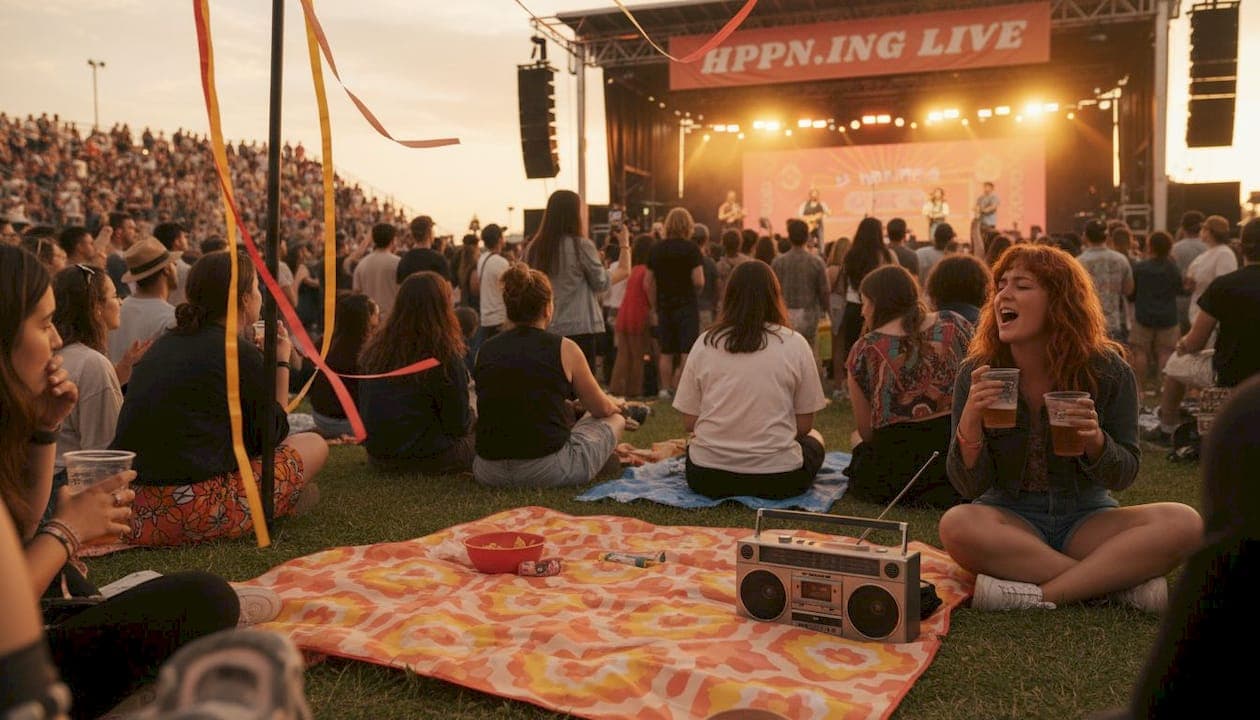
There is a reason your body reacts differently the moment a band takes the stage versus when you hit play on a track at home. A live music experience is not just a performance — it is a full-body, shared event that recorded music physically cannot replicate. The bass moves through your chest. The crowd breathes together. The artist looks up from the mic and makes eye contact with someone three rows back. For music enthusiasts and local concert-goers looking to go deeper than a Spotify queue, understanding what makes live music so distinct is the first step toward finding shows that genuinely move you.
Table of Contents
- What makes live music unique? Defining the live music experience
- The powerful emotional and social effects of live music
- Exploring different live music settings: intimacy vs large venues
- How to find and make the most of unique live music experiences near you
- Why live music experiences are more essential than ever: a fresh take
- Experience live music like never before with hppn.ing
- Frequently asked questions
Key Takeaways
| Point | Details |
|---|---|
| Live music is dynamic | Live music is a real-time, interactive performance that differs fundamentally from recordings due to artist-audience feedback and physical co-presence. |
| Boosts well-being | Attending live music events triggers shared emotional energy and physiological responses that enhance mental health and extend life expectancy. |
| Venue matters | Smaller, intimate venues often provide deeper social connections and well-being benefits than large concert halls or arenas. |
| Regular attendance helps | Frequent live music experiences maximize emotional, social, and health benefits beyond one-off events. |
| Find local shows | Use specialized platforms and local resources to discover unique underground artists and enrich your live music experience. |
What makes live music unique? Defining the live music experience
Live music is exactly what it sounds like, but the definition runs deeper than you might expect. Live music is a real-time sonic experience produced by musicians and perceived by an audience sharing the same physical space, complete with natural variations and an ongoing artist-audience feedback loop. That feedback loop is the part most people overlook. The crowd's energy changes how an artist performs. A quiet, attentive room pulls a singer into a more intimate delivery. A rowdy, packed venue pushes a band to play louder and longer. Neither version of that show exists on any recording.
What defines a live concert, then, is not just the music itself. It is the collision of variables that can never be perfectly recreated:
- Unpredictability: A string breaks, a key change happens on the fly, or an artist extends a solo because the crowd won't let them stop.
- Physical sensation: Low frequencies below 20 Hz, often called infrasound, are felt in the body rather than heard through the ears, and they only come through at live volumes.
- Visual performance: Watching a drummer's hands, a guitarist's expression, or a singer's posture adds layers of meaning that studio recordings strip away entirely.
- Social co-presence: Being surrounded by people who chose to be in that room for the same reason creates a sense of belonging that listening alone cannot.
"The live music experience transforms a passive listener into an active participant. The music doesn't just reach you — it requires something from you in return."
This is especially true in smaller rooms. Bringing live music to your area at a local level, with underground artists and community venues, often delivers this dynamic in its purest form. The barriers between performer and audience nearly disappear.
The powerful emotional and social effects of live music
Understanding what makes live music different, let's look at what it actually does to you. The science here is more striking than most people realize.
A 2026 University at Buffalo study found that collective effervescence — the shared emotional high that groups experience during events like concerts — directly predicts improvements in well-being that can last for days after the show ends. This is not just a warm feeling. It is a measurable psychological shift. Researchers tracked participants' moods, sense of belonging, and life satisfaction in the days following live music events, and the results pointed clearly to in-person attendance as the driver.
The physical effects are just as real:
- Heart rate synchronization: Audiences at live shows have been observed synchronizing their heart rates and breathing, especially during emotionally charged moments.
- Dopamine release: The anticipation of a favorite song and its live delivery creates a neurochemical response stronger than passive listening.
- Cortisol reduction: Stress hormone levels drop during live music engagement, particularly in shared settings.
- Oxytocin production: Physical co-presence and collective movement, like swaying or clapping together, trigger the bonding hormone.
The numbers are hard to argue with. Attending live music every two weeks boosts well-being by 21%, outperforming yoga and dog walking, and is associated with potentially adding up to nine years to life expectancy.
The importance of live performances goes beyond entertainment. What you are really getting is a form of social medicine. The live music social impact is especially visible in tight-knit local scenes, where regulars at small shows often describe those communities as genuine sources of friendship and emotional support.
Exploring different live music settings: intimacy vs large venues
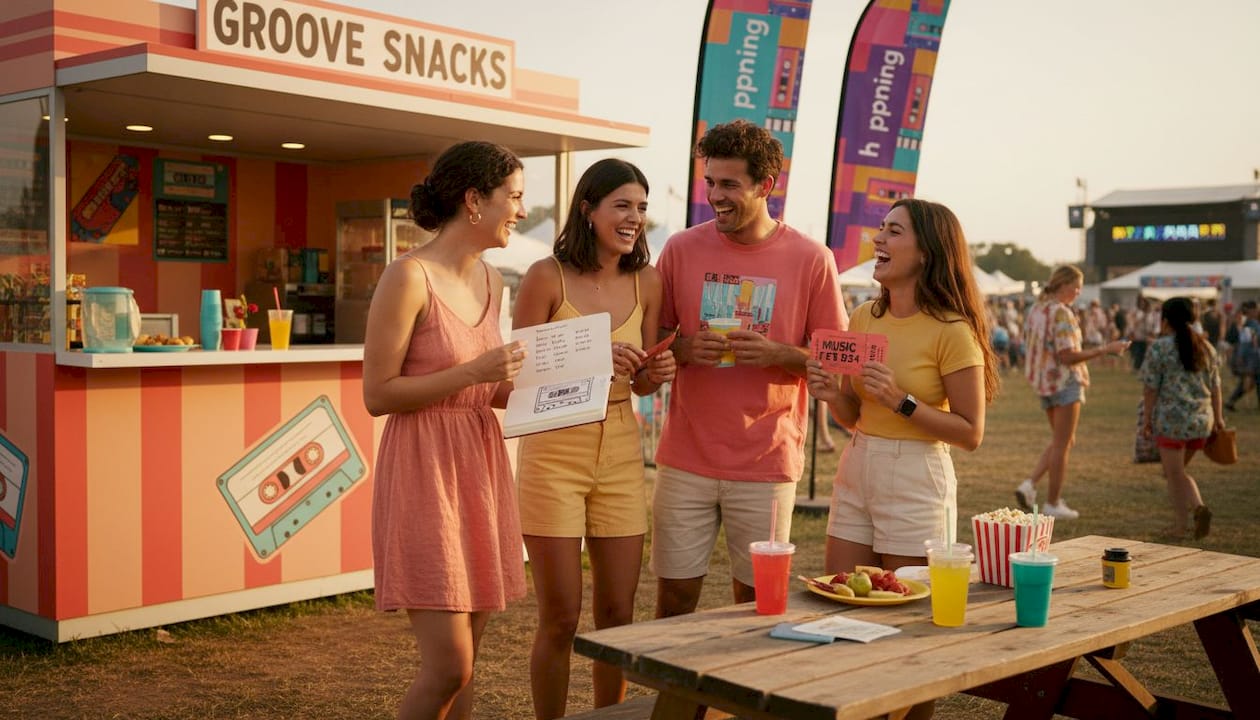
Not all live music experiences are equal, and the venue size shapes everything from how personally connected you feel to how well you remember the night a week later.
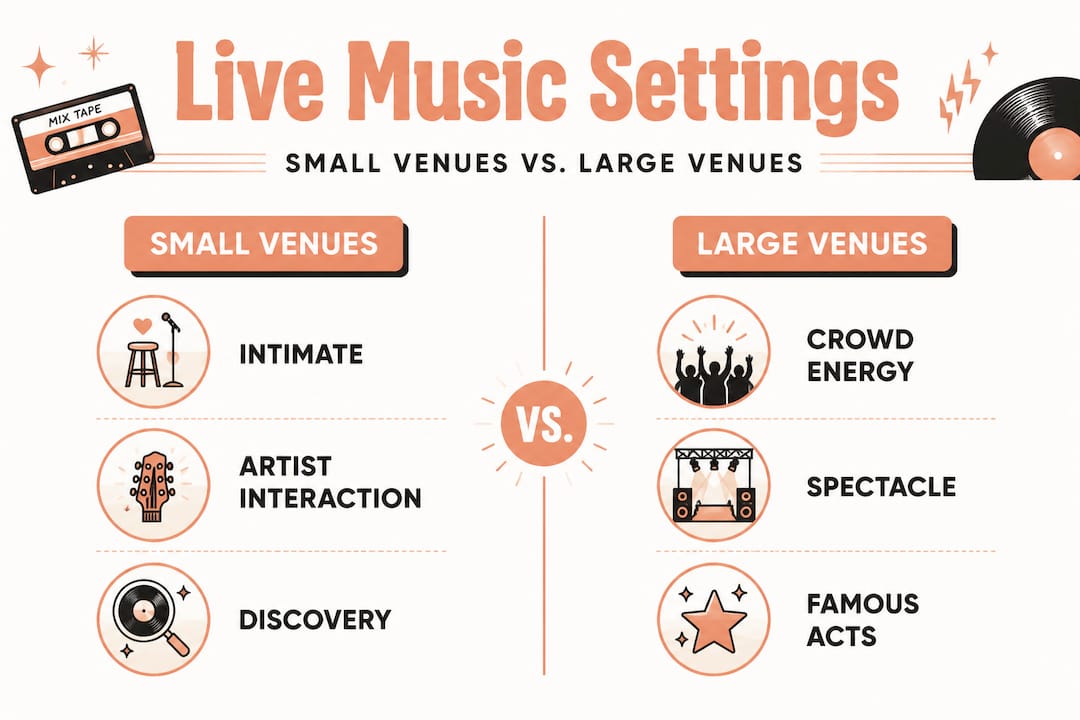
| Setting | Connection level | Artist interaction | Crowd energy | Discovery potential |
|---|---|---|---|---|
| Stadium or arena | Low | None | Very high | Low |
| Mid-size club | Medium | Occasional | High | Medium |
| Small bar or lounge | High | Frequent | Focused | High |
| Underground or house show | Very high | Direct | Intimate | Very high |
Smaller, frequent performances in community venues boost well-being more than large concerts, primarily because of higher interaction and the deeper sense of social identity they create. When you recognize the same faces at a small venue every month, you are not just attending a show. You are building a community with a shared musical identity.
Underground venues take this a step further. A legendary example is McCabe's Guitar Shop in Los Angeles, which has hosted underground and folk acts for decades in a setting designed purely around listening. No flashy production. No distractions. Just music and presence. That environment creates a depth of connection that a festival main stage simply cannot offer.
Here is what smaller shows give you that large venues rarely do:
- Pre-show and post-show artist access: You might end up talking to the performer at the bar after the set.
- Cleaner sound: Smaller PA systems in intimate rooms often produce more accurate, detailed audio than massive arena rigs.
- Shared discovery: Everyone in a small room is learning about an artist together, which bonds the audience differently than singing along to a known anthem.
Pro Tip: If you want a more immersive music experience, arrive early at a small venue. The sound check alone can feel like a private performance, and it gives you time to find a spot with ideal acoustics.
Finding local concerts quickly is easier than it used to be, and starting small is almost always the right move for anyone who wants genuine connection over spectacle.
How to find and make the most of unique live music experiences near you
Knowing the value of live music and the right settings for it, the next question is practical: where do you actually find these shows?
- Start with neighborhood venues, not national tours. Look for bars, art galleries, coffee shops, and community centers that host regular music nights. These are the incubators for the underground scene in your city.
- Use live music aggregators to pull event listings from multiple sources in one place, filtered by location and genre. This saves hours of calendar-hunting across individual venue websites.
- Browse by artist, not just by event. When you find a new local artist you like, follow their shows over time. Watching someone develop as a performer is one of the most rewarding parts of being a consistent live music fan.
- Attend regularly. The well-being research is clear on this: the benefits of live music compound with frequency. Going once a season is enjoyable. Going twice a month changes your baseline emotional state.
- Engage with the crowd, not just the stage. Talk to the people around you. The best recommendations for the next show you will love almost always come from someone standing next to you at one you already found.
- Join live music community discussions online to get tips from locals who track underground shows, pop-up concerts, and emerging artists before they sell out.
Pro Tip: Search for venues with a "residency" model, where an artist plays the same spot weekly or monthly for a stretch. These shows are often free or cheap, and they let you watch an artist refine their sound in real time across multiple performances.
The goal is to discover live music near you that fits your specific taste, not just whatever happens to be touring through a major venue this weekend. Local scenes are rich, and they reward the curious.
Why live music experiences are more essential than ever: a fresh take
Here is an opinion that runs against the current of a lot of music industry conversation: livestreams are not a substitute for live shows. They are a different product entirely, and treating them as equivalent has quietly eroded the way some people value in-person attendance.
The neuroscience backs this up clearly. Live performances create stronger brain-to-rhythm coupling and greater emotional engagement than recorded or streamed music. When you are in the room with a musician, your brain is not just processing sound. It is synchronizing with a living, responsive system. That process produces neurological effects that a screen, regardless of how high the resolution, cannot trigger at the same intensity.
The deeper issue is cultural. We have spent years optimizing music for convenience: streaming on demand, curated playlists, algorithm-driven discovery. That is genuinely useful. But it has trained people to consume music passively, in the background, while doing something else. Live music demands your full attention, and that demand is precisely where its power lives. Attention is the currency of emotional connection.
There is also the loneliness angle that nobody in the industry talks about enough. Rates of social isolation have climbed steadily, and live music is one of the few remaining spaces where strangers willingly crowd into a small room and feel something together. The "we" feeling from a great show, that shared recognition that everyone in the room just witnessed the same unrepeatable moment, is a specific antidote to the disconnection that defines modern urban life. Understanding how fans and communities shape local live music scenes reveals just how much of a social infrastructure live music actually provides beyond entertainment.
Prioritizing live attendance, especially at smaller and local shows, is not a nostalgic preference. It is a practical investment in your mental health and your sense of place in a community.
Experience live music like never before with hppn.ing
If this article has you ready to stop scrolling playlists and start showing up in person, hppn.ing is built for exactly that. The platform focuses on helping you discover live music near you with real artist previews, location-based concert listings, and a focus on the underground and emerging performers your algorithm-driven apps will never surface.
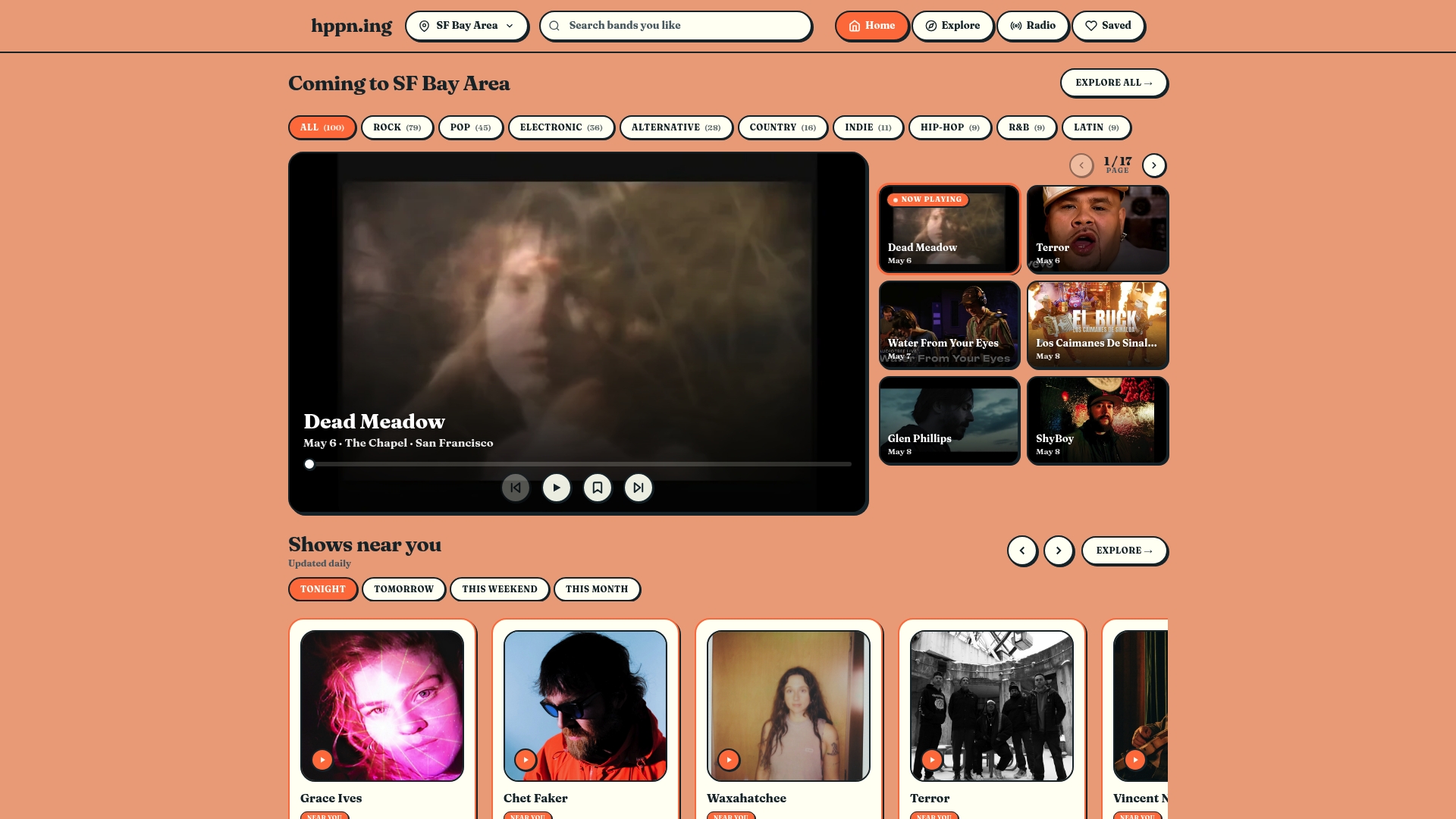
You can browse live music charts to catch trending local acts before they outgrow the small rooms, preview artists through audio and video before committing to a ticket, and tap into live music community notes from fans who are actively tracking the scene in your city. Whether you are chasing your next favorite underground artist or just want to find a great show happening tonight, hppn.ing gives you the tools to get off the couch and into the room.
Frequently asked questions
What exactly defines a live music experience?
A live music experience is a real-time performance by musicians in a shared physical space with an audience, involving direct interaction and unique variations each time it happens — no two performances are identical.
How does attending live music events improve well-being?
Live music induces collective effervescence, a shared emotional energy that boosts mental health and social bonding, with measurable effects on mood and life satisfaction that can linger for days after the event.
Are small concerts better for connection than large festivals?
Smaller, frequent performances in community venues tend to boost well-being more than large shows because closer artist-audience interaction and shared social identity run much deeper when the room holds 80 people instead of 80,000.
Can live music really add years to your life?
Research links regular live music attendance to a 21% well-being boost and reduced stress, with some findings suggesting the social and emotional benefits could add up to nine years to life expectancy compared to more solitary activities.
How can I find unique live music experiences in my community?
Use local concert calendars, live music aggregators, and platforms like hppn.ing to discover underground artists and intimate venues that prioritize the music itself over production spectacle — and tap into local fan communities for word-of-mouth tips that no algorithm will send you.