
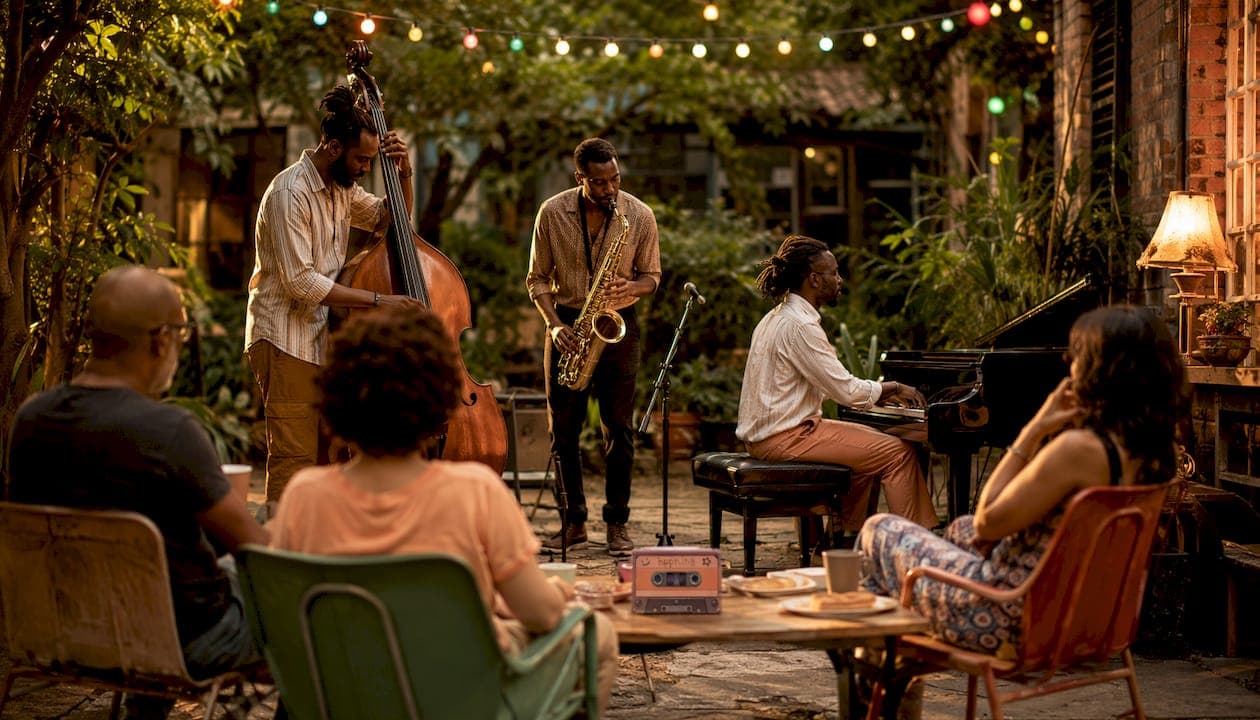
A neighborhood music scene is a localized, community-driven ecosystem of musicians, venues, and fans that shapes cultural identity and daily life in a specific area. It is not a genre, a label, or a brand. It is the living network of people and places that makes music happen on your block.
- Core purpose: A neighborhood scene exists to create and share music within a community, giving artists a place to develop and audiences a reason to gather.
- Your next step: Attend one local open-mic night or house show this month. Hppn makes it easy to find shows near you and to preview artists before you walk in the door.
Table of Contents
- What counts as a neighborhood music scene?
- What actually makes up a neighborhood music scene?
- Why DIY culture is the engine of most neighborhood scenes
- Why neighborhood scenes matter to artists, audiences, and cities
- How neighborhood scenes form and what threatens them
- How to find and join a neighborhood music scene
- Tools and resources for finding local shows
- Notable U.S. neighborhood scenes worth knowing
- Terms and rituals you will encounter in neighborhood scenes
- How musicians and organizers can actively grow a scene
- Key Takeaways
- Why neighborhood scenes are worth defending
- Hppn makes neighborhood discovery easier
- Useful sources
What counts as a neighborhood music scene?
The term covers a wide range of scales. At its smallest, a scene is a single café that hosts jazz every Thursday and draws the same thirty faces each week. At its largest, it is a cluster of bars, DIY lofts, and pocket festivals spread across a walkable district, all feeding the same informal network of musicians and fans.
The key distinction is geographic and cultural proximity. A scene lives where people can run into each other, share gear, and show up for each other's sets without planning a road trip. Neighborhood music culture is embedded in local routines: open-mic nights, jazz Thursdays, block parties that turn an ordinary parking lot into a cultural landmark.
How a neighborhood scene differs from a citywide or national one:
- Scale: A neighborhood scene fits on a mental map. A citywide scene requires a guide.
- Access: Entry barriers are low. Cover charges are often $5 or free, and shows happen on weeknights.
- Relationships: Fans know the musicians by name. Musicians know the sound person.
- Speed: Word travels by text and flyer, not press release.
- Accountability: Everyone is a regular. Behavior has social consequences.
Backroom stages and low-cover shows typically pack multiple bands into a single night in intimate settings, which is structurally different from a ticketed arena event or a curated festival with national sponsors.
What actually makes up a neighborhood music scene?
A scene has five recognizable parts. Pull any one of them away and the whole thing gets thinner.
- Musicians: The core. They write, rehearse, and perform. In a healthy scene, they also show up to each other's shows, share contacts, and lend equipment.
- Venues: The physical infrastructure. These range from a bar with a corner stage to a converted taqueria backroom to someone's living room. Each venue sets the social temperature of the scene.
- Promoters and organizers: The connective tissue. A local promoter books the bands, designs the flyer, and makes sure the sound system shows up. Without them, musicians and fans never find each other.
- Fans and regulars: Not passive consumers. In a neighborhood scene, the audience is part of the culture. Regulars bring friends, buy merch, and vote with their attendance.
- Informal infrastructure: Equipment-sharing arrangements, group chats, neighborhood Facebook groups, local zines, and community noticeboards. This invisible layer holds everything together between shows.
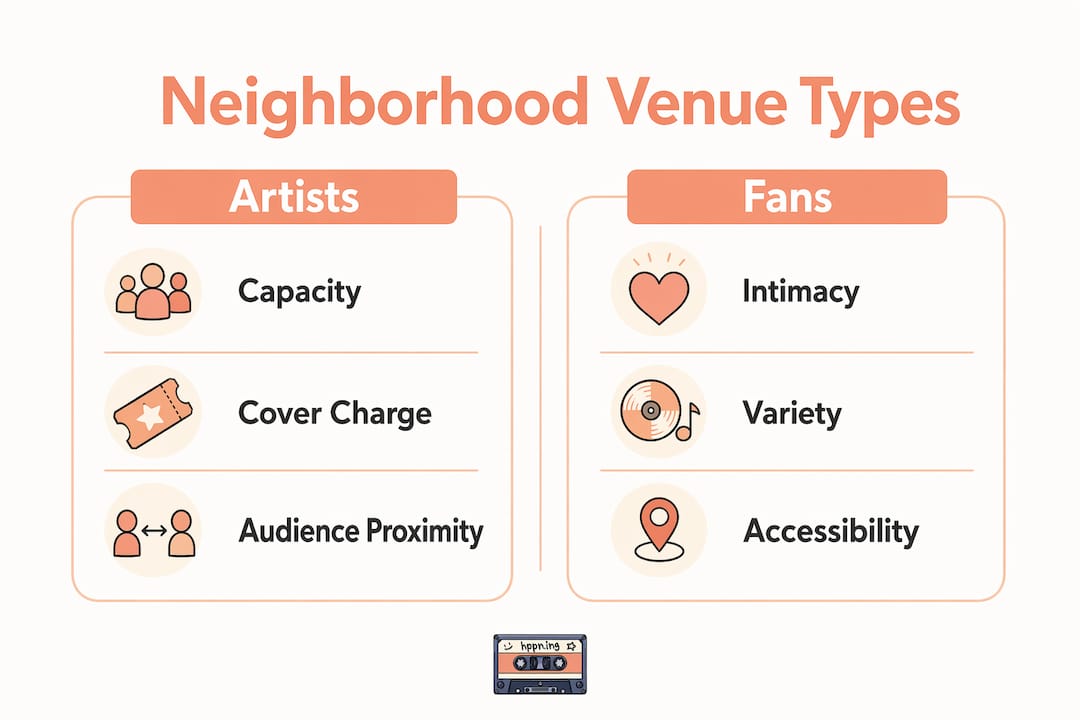
The table below shows how common venue types differ in ways that matter to both artists and fans.
| Venue type | Typical capacity | Cover charge | Audience proximity |
|---|---|---|---|
| House show / loft | 20–30 | Free or pay-what-you-can | Arm's length from the performer |
| Bar backroom stage | 30–100 | $5 | Close; standing room |
| Café / coffee shop | 30–100 | Free or tip jar | Seated, conversational |
| Small club | 30–100 | $5 | Stage elevated; some distance |
| Pocket festival | — | — | Varies by stage |
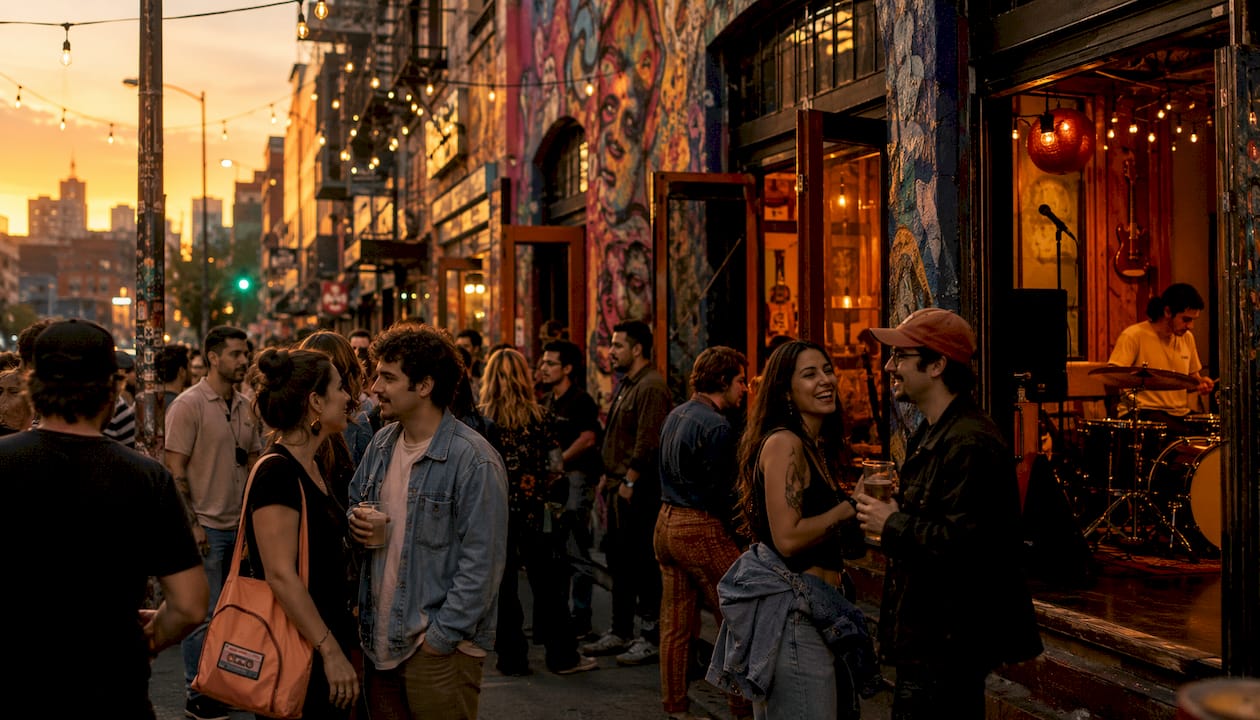
Chicago neighborhoods like Wicker Park, Logan Square, and Lincoln Park illustrate how clustered venues create informal circuits where fans can walk from one show to the next on the same night, which is exactly the kind of density that keeps a scene self-sustaining.
Why DIY culture is the engine of most neighborhood scenes
DIY stands for "do it yourself," but in a music scene it really means "do it together without asking permission." The ethos is a practical response to the economics of small-scale music: no label, no booking agency, no marketing budget. So musicians book each other, share a PA system, split the door, and print their own flyers.
The difference from mainstream promotion is structural. A mainstream show has a promoter who takes a fee, a venue that takes a percentage, and a label that takes the rest. A DIY show has a host who covers costs, a band that gets most of the door, and a crowd that feels personally invested because they know someone on stage.
Practical forms this takes in neighborhood scenes:
- House shows: A musician or fan opens their home. Attendance is word-of-mouth. The intimacy is the point.
- Backroom stages: A bar or restaurant carves out space for music, often with no formal booking contract. Casa Cafe on Chicago's South Side converted a taqueria backroom into a DIY stage that helped stabilize the business's revenue while serving as a neighborhood anchor.
- Collectives: Groups of bands share booking duties, gear, and promotion. One band handles the flyer; another handles the sound; a third handles the door. The labor is distributed and the trust compounds over time.
Some Tucson musicians have gone further, explicitly reprioritizing face-to-face shows over algorithmic discovery, betting that a durable local following built in person outlasts any viral moment. That is not nostalgia. It is a survival strategy.
Pro Tip: If you want to get involved in a DIY scene, offer to help before you ask for anything. Volunteer to run the door, carry gear, or design a flyer. That kind of reciprocity is the currency of the scene.
Why neighborhood scenes matter to artists, audiences, and cities
For artists, a neighborhood scene is a low-stakes laboratory. A musician can test a new song in front of thirty people who will give honest reactions before playing it for three hundred. The exposure benefits compound: local fans become long-term supporters, and local press gives emerging artists their first documented record.
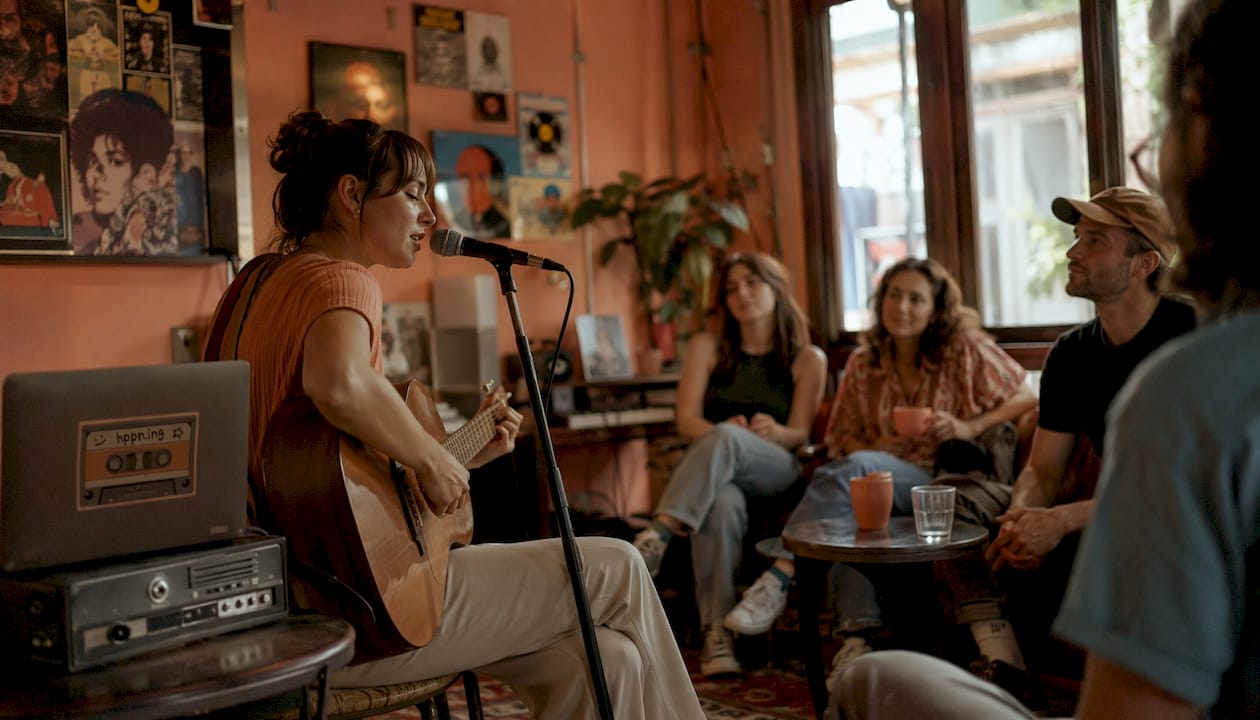
For audiences, the intimacy is irreplaceable. You are close enough to see a guitarist's fingers, hear a vocalist breathe, and feel the room shift when a song lands. Live audience reactions shape performances in real time, which is something no recording can replicate.
For neighborhoods themselves, the economic ripple effects are real. Steady programming draws regular crowds who eat at nearby restaurants, drink at adjacent bars, and return to the block for reasons beyond music. Venues that program consistently often provide a stable revenue stream for surrounding small businesses.
Historically, the pattern repeats. Seattle's grunge scene in the late 1980s and early 1990s grew out of a cluster of cheap rehearsal spaces and all-ages clubs in Capitol Hill and the University District. Athens, Georgia, produced R.E.M. and the B-52s from a handful of bars and house parties in a college town with low rents and a high tolerance for experimentation. The spatial conditions mattered as much as the talent.
Neighborhood scenes also matter to communities in ways that resist easy measurement: they create shared identity, give young people a social world outside of school and work, and preserve musical traditions that mainstream platforms would never surface.
How neighborhood scenes form and what threatens them
Scenes rarely start with a plan. The typical formation looks something like this:
- A venue opens or repurposes a space and begins hosting music, often informally.
- A small group of musicians starts playing there regularly, building a familiar crowd.
- Rituals form: a weekly open mic, a monthly benefit show, a seasonal block party.
- Word spreads through personal networks. Attendance grows. Other venues notice.
- A loose circuit emerges. Musicians play multiple rooms. Fans follow them.
The conditions that accelerate this process are well-documented in urban economics research: affordable rehearsal and living space, a walkable concentration of venues, at least one anchor institution (a university, a record store, a community center), and a culture of low-barrier entry.
Signs a scene is healthy:
- Steady weekly or monthly programming that people plan around
- Cross-demographic attendance (different ages, backgrounds, genres)
- Low or no cover charges that do not exclude anyone
- Musicians attending each other's shows, not just their own
Threats that can unravel a scene quickly:
- Gentrification and rising rents: When rehearsal space and housing become unaffordable, musicians leave. The scene follows them or dissolves.
- Venue closures: One anchor venue closing can scatter a community that took years to build.
- Licensing and permit pressure: Noise ordinances and liquor license restrictions can make it economically impossible to host small shows.
- Algorithmic attention shifts: When discovery moves entirely online, local scenes lose the foot traffic that sustained them. The Tucson example above is a direct response to this pressure.
Cities that invest in local music scenes through cultural policy, venue protection, and small-business support tend to retain the conditions that let scenes survive displacement pressure.
How to find and join a neighborhood music scene
Discovery is mostly about showing up in the right places consistently. Here is a practical sequence:
- Start local and physical. Walk into independent cafés, record stores, and bars and look for flyers. A hand-stapled flyer on a bulletin board is almost always for a real show with a real community behind it.
- Follow local promoters and venue accounts. Search Instagram or Facebook for your city's neighborhood name plus "live music" or "open mic." The accounts that post regularly about local shows are the ones worth following.
- Use discovery tools. Hppn lets you browse concerts by location and preview artists before you commit to showing up. Cross-check with the venue's own social page to confirm the show is still on.
- Attend consistently. One visit makes you a tourist. Six visits makes you a regular. Regulars get invited to things that are not publicly posted.
- Introduce yourself. After a set, tell the musician what you thought. Scenes run on human connection, and most artists are genuinely glad someone showed up.
For newcomers, a few dos and don'ts:
- Do arrive early. The opening act is often the most interesting, and showing up late signals you are there for the headliner's clout, not the community.
- Do buy a drink or pay the cover, even when it is technically optional. The venue needs to stay open.
- Do volunteer. Running the door or helping with load-out earns trust faster than any introduction.
- Don't gatekeep. Every scene was once full of newcomers. The ones that stayed are the ones who were welcomed.
- Don't film everything. Ask first, especially at house shows where the host's address is semi-private.
For musicians approaching booking: bring decent gear, offer a short set (20–30 minutes is ideal for a first booking), and be flexible on the bill position. Compensating the sound person, even informally, signals that you understand how the ecosystem works.
Pro Tip: Use open-mic nights as your entry point. They are low-pressure, structured, and designed for exactly this kind of introduction.
Tools and resources for finding local shows
The most reliable discovery tools combine digital listings with local verification:
- Hppn: The platform lets you preview artists and find shows by location, browse trending local performers, and engage with a music-focused community. It is built specifically for the kind of smaller, emerging artists who anchor neighborhood scenes rather than arena tours.
- Venue social pages: A venue's Instagram or Facebook account is usually the most current source for lineup changes and cancellations.
- Neighborhood Facebook groups and Reddit threads: Search your city or neighborhood name. These communities surface shows that never make it onto ticketing platforms.
- Local zines and community noticeboards: Physical media still circulates in active scenes. A zine rack at a record store is a reliable signal that a scene is alive.
- Hppn community notes: The community discussion hub on Hppn lets fans and artists share real-time scene conversation, which is useful for finding out what is actually happening this weekend.
How to vet a listing before you go: check that the venue's own page confirms the date, look for a posted lineup rather than just a genre description, and verify the address is a real venue rather than a private residence (for house shows, trust is built through personal invitation, not public listing).
Some musicians and venue operators are prioritizing face-to-face discovery over social algorithms, which means the best shows sometimes do not appear in any app. Local word-of-mouth remains the highest-signal channel.
Notable U.S. neighborhood scenes worth knowing
A few examples that illustrate how different a neighborhood scene can look depending on place and culture:
- Chicago's South Side DIY circuit: Casa Cafe's backroom stage became a neighborhood anchor by programming diverse lineups at low or no cover, stabilizing the business while building a loyal community. The South Side scene prioritizes accessibility and economic inclusion in ways that many better-known Chicago venues do not.
- Wicker Park and Logan Square, Chicago: These North Side neighborhoods offer clustered venues close enough to walk between on a single night, creating an informal circuit that sustains steady crowds across genres.
- East Austin, Texas: Community Garden in the Chestnut neighborhood operates as a coffee shop, wine bar, and performance venue. Owner James Harcrow built the programming from his personal network outward, and weekly "doodle nights" soundtracked by local DJs became a Wednesday tradition within months of opening.
- Denton, Texas: About 40 miles north of Dallas, Denton's scene is estimated to encompass 100 or more acts at any given time, described as "eclectic and artistically ambitious, with a high degree of musicianship and a strong DIY ethic." Two universities and affordable housing created the spatial conditions for a scene with national recognition.
- Silver Lake and Echo Park, Los Angeles: These neighborhoods have historically anchored L.A.'s indie scene, producing artists across genres and sustaining a circuit of small clubs and DIY spaces that operates largely outside the mainstream industry.
Terms and rituals you will encounter in neighborhood scenes
A short glossary for anyone new to the culture:
- Open mic: A structured event where any performer can sign up for a short slot, typically 2–3 songs. Low-pressure and designed for newcomers. Timer setups keep things moving and fair.
- House show: A performance in a private home or loft. Attendance is usually by word-of-mouth or personal invitation. The host often passes a hat or sets a suggested donation.
- DIY: "Do it yourself." In scene context, it means self-booked, self-promoted, and community-funded rather than label- or agency-driven.
- Benefit show: A show where proceeds go to a cause, a person in need, or a venue facing closure. These events are community thermometers: a well-attended benefit show signals a healthy, reciprocal scene.
- Residency: A recurring booking at the same venue, often weekly or monthly. Residencies let artists build a dedicated local audience over time.
- Backline: The amplifiers, drum kit, and other gear a venue provides for performers. Knowing what a venue's backline includes saves musicians from hauling unnecessary equipment.
- Pay-what-you-can: A sliding-scale admission model that removes financial barriers without eliminating revenue. Common at DIY and community-focused events.
- Soundcheck: The pre-show period when musicians and the sound engineer set levels. Arriving on time for soundcheck is a basic courtesy that signals professionalism.
- Busking: Street performance in public spaces. Often an entry point for both performers and listeners, and a visible marker of a neighborhood's musical activity.
At a house show, expect the performer to be three feet away, the PA to be a single Bluetooth speaker or a borrowed amp, and the conversation to continue between songs. At a bar backroom show, expect a small stage, a basic sound system, and a bartender who has seen everything.
How musicians and organizers can actively grow a scene
A scene does not sustain itself. It requires deliberate, repeated acts of community-building from the people inside it.
- Co-book with other artists. Putting together a bill of three bands from different corners of the scene cross-pollinates audiences and builds goodwill across subgenres.
- Host open rehearsals. Inviting people to watch a band practice removes the mystique and builds connection between artists and fans before a show ever happens.
- Run collaboration nights. Events where musicians from different acts play together in improvised or structured formats create new relationships and keep regulars coming back.
- Build a shared gear library. A collective PA, a shared drum kit, or a communal van reduces the financial barrier for newer artists and creates practical interdependence.
- Mentor newer acts. Introducing a newer band to your booking contacts or letting them open your show costs nothing and compounds the scene's depth over time.
- Program inclusively. Rotating genres, featuring artists from different backgrounds, and keeping cover charges low are not just ethical choices. They are the programming decisions that sustain long-term cultural vibrancy and retain local artists.
On the economics: merch tables, community funding (Bandcamp Fridays, local arts grants), and sliding-scale covers can keep events viable without pricing out the audience that makes the scene worth attending. A show that costs $25 at the door is no longer a neighborhood show. It is a small concert.
Artists and organizers who want to bring live music to their area often find that the first step is simply hosting something, anything, and seeing who shows up.
Key Takeaways
A neighborhood music scene is a localized, community-driven ecosystem of musicians, venues, and fans that shapes cultural identity, supports local economies, and gives artists a place to develop outside the mainstream industry.
| Point | Details |
|---|---|
| Core definition | A neighborhood scene is a localized ecosystem of musicians, venues, and fans built on community and proximity. |
| DIY ethos is central | House shows, shared gear, and co-booking are not workarounds; they are the structural foundation of most neighborhood scenes. |
| Scenes face real threats | Gentrification, venue closures, and rising rents can dissolve in months what took years to build. |
| Discovery takes consistency | Attending regularly, volunteering, and following local promoters matters more than any single app or algorithm. |
| Hppn for local discovery | Hppn lets you browse shows by location and preview artists before attending, making it a practical starting point for finding neighborhood scenes near you. |
Why neighborhood scenes are worth defending
The conventional wisdom says that streaming and social media have made geography irrelevant to music discovery. That is only half true. Algorithms surface what is already popular. They do not surface the band playing a backroom in your zip code to thirty people who will remember that show for years.
What neighborhood scenes offer is not available at scale. The intimacy, the accountability, the sense that the room is full of people who chose to be there rather than people who were served a recommendation: these are features, not bugs, of smallness. A scene that loses its anchor venue does not simply relocate. It often dissolves, because the relationships were tied to the physical space as much as to the music.
The scenes that survive displacement pressure tend to share one trait: they treated belonging as the product, not the byproduct. Casa Cafe on Chicago's South Side did not survive because it had the best sound system. It survived because it functioned as a third space where people felt they had a stake in what happened there. That is replicable. It requires intention, not money.
If you care about local music culture, the most useful thing you can do is show up. Not once, but repeatedly. The scene you want to exist is built one attended show at a time.
Hppn makes neighborhood discovery easier
Finding the right show in an unfamiliar neighborhood used to mean knowing someone who knew someone. Hppn changes that without replacing the human element. The platform lets you browse live music near you, preview artists through audio and video before you commit to showing up, and track trending local performers who are building followings outside the mainstream.
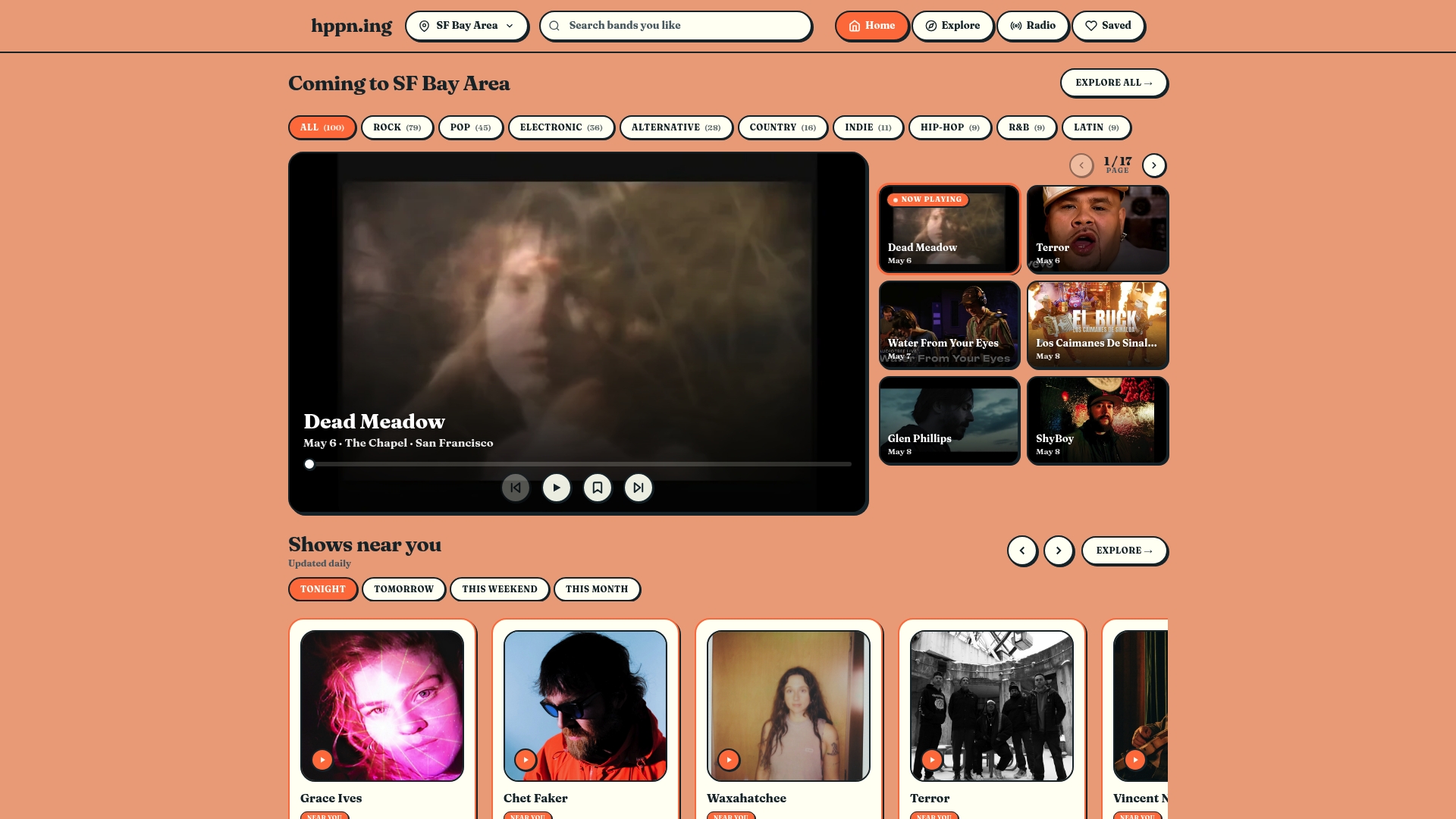
Hppn is built for exactly the kind of discovery this article describes: smaller venues, emerging artists, and community-rooted events that never make it onto major ticketing platforms. Cross-check any listing with the venue's own social page before you go, since show details change. Then show up, buy a drink, and introduce yourself. Head to hppn.ing to start browsing shows in your area tonight.
Useful sources
The sources below informed this article and are worth reading for deeper context on neighborhood music scenes, DIY culture, and local discovery.
| Title | URL | Note |
|---|---|---|
| Local Music Scene — Frenly Art | https://frenly.art/entry/local-music-scene | Definition and scope of local music scenes |
| How Casa Cafe Became the Defiant Heart of Chicago's South Side DIY — South Side Weekly | https://southsideweekly.com/how-casa-cafe-became-the-defiant-heart-of-chicagos-south-side-diy/ | Case study on DIY venue economics and community impact |
| Chicago Neighborhoods for Music Lovers — Choose Chicago | https://www.choosechicago.com/articles/chicago-music/chicago-neighborhoods-for-music-lovers/ | Overview of Chicago's neighborhood music circuits |
| Tucson Musicians Bet on Community Over Algorithm — Tucson Spotlight | https://www.tucsonspotlight.org/tucson-musicians-bet-on-community-over-algorithm/ | Face-to-face vs. algorithmic discovery in local scenes |
| How Local Music Shapes Neighborhood Culture — Live Music Blog | https://livemusicblog.com/music-community-local-bands-events-culture/ | Rituals, routines, and economic ripple effects |
| Indie Music Scene — Wikipedia | https://en.wikipedia.org/wiki/Indie_music_scene | Historical examples of neighborhood-rooted indie scenes |
| Street Performance — Wikipedia | https://en.wikipedia.org/wiki/Street_performance | Busking as accessible entry point for performers and listeners |
| Community Garden Hub — KUT Radio, Austin | https://www.kut.org/life-arts/community-garden-east-austin-tx-doodle-nights-art-djs-electronic-music | East Austin case study on multi-use venue programming |
| Music Scenes as Economic Clusters — Artivate | https://artivate.org/index.php/artivate/article/download | Academic analysis of scenes as urban economic clusters |
| Discover Live Music Near You — Hppn | https://hppn.ing/listen | Platform for browsing neighborhood shows and previewing artists |