
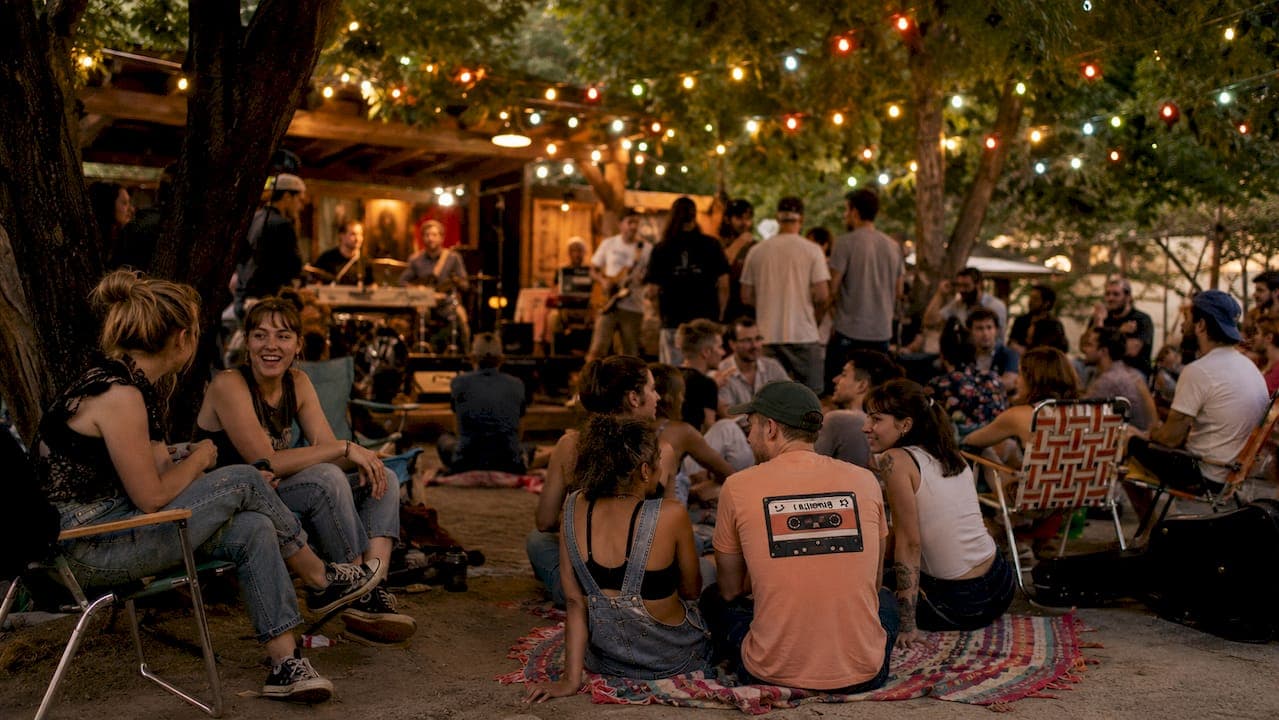
Music venue community nights are recurring, participatory events where local venues shift from passive concert settings into active social spaces built around shared musical experience. The best examples of music venue community nights prove that the format works not because of headlining acts, but because of consistent structure, low barriers to entry, and creative programming that turns attendees into participants. From Pittsburgh's open jam sessions to Austin's art-and-music mashups, these events build the kind of local music community that no algorithm can replicate. Hppn tracks exactly these kinds of nights so you can find them before they sell out.
1. Examples of music venue community nights that blend music with art
The strongest community nights pair music with a second creative outlet. That combination lowers the stakes for newcomers who might hesitate to show up to a pure music event.
Doodle Nights at Austin's Community Garden are the clearest proof of this. The weekly event pairs electronic music with casual doodling as a social activity. What started as a themed night evolved into a community tradition that draws a genuinely diverse crowd, not just music fans. The art component gives people something to do with their hands, which removes the awkward "just standing there" feeling that keeps newcomers from returning.
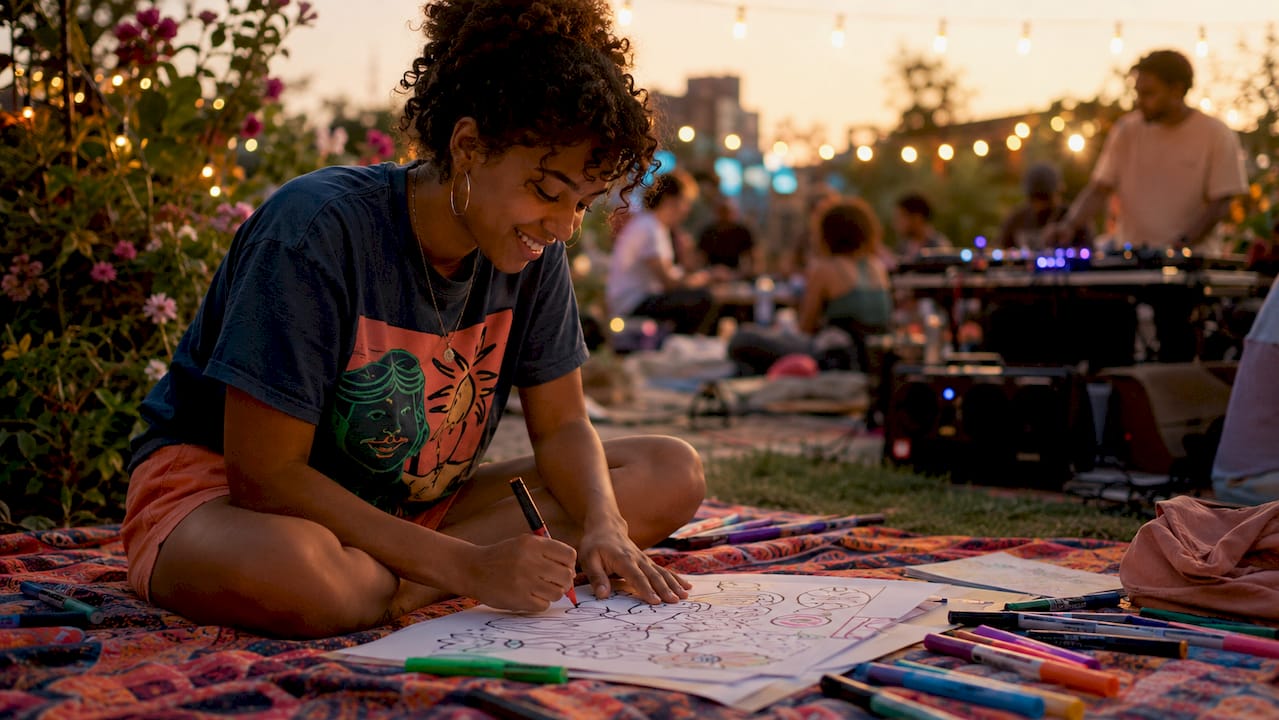
Mystery Music Mondays at Club Cafe in Pittsburgh takes a similar approach. The open jam format attracts roughly 20 regular musicians plus 5–10 new participants each week. That steady flow of new faces alongside a reliable core group is the exact recipe for a healthy community night.
Pro Tip: Pair your music night with one low-pressure creative activity, whether drawing, zine-making, or collage. You will attract people who love music but feel intimidated by pure performance settings.
2. Open jam nights and their role in community building
Open jam nights are the original community night format. They work because they give musicians a place to play without the pressure of booking a full set.
Mystery Music Mondays is the model here. The event runs weekly, and its open structure means anyone can sit in. That consistency builds habit. Regulars know when to show up, and newcomers know the door is always open. The social-musical outlet matters more than the performance quality, which is exactly the point.
The key difference between a successful open jam and a forgettable one is rotation management. Venues that let the same five musicians dominate every session lose the community feel fast. Managed rotation keeps the energy fresh and prevents clique formation.
3. Silent disco community nights
Silent disco formats are one of the most underused tools in community engagement in music. Participants wear wireless headphones and choose between multiple live or DJ channels, which means the event works for wildly different musical tastes at once.
Newark's Members Only Happy Hour runs a silent disco weekly with open-deck sessions twice a month. That open-deck component is what makes it a true community night rather than just a party. Local talent gets real exposure, and the low-pressure format lets emerging artists experiment without the fear of a bad set tanking their reputation.
Silent discos also solve a practical problem: noise ordinances. Venues in dense urban areas can run later and louder without complaints, which extends the social window and keeps people connected longer.
Pro Tip: If you run a silent disco, dedicate one channel exclusively to local unsigned artists. It gives emerging musicians a real platform and gives your regulars a reason to keep coming back.
4. Open deck nights for rising local talent
Open deck nights function like open mics for DJs and producers. They give local talent a platform that traditional booking models rarely provide.
The Members Only Happy Hour model in Newark shows how this works at scale. Open-deck sessions twice a month create a predictable opportunity for rising artists to test new material in front of a real crowd. That predictability is the engine of community. People plan around it.
| Format | Frequency | Community benefit |
|---|---|---|
| Open jam | Weekly | Builds musician regulars and newcomer flow |
| Open deck | Twice monthly | Exposes local DJs and producers |
| Silent disco | Weekly | Serves diverse tastes, extends social time |
| Themed art night | Weekly | Attracts non-musicians and lowers entry barriers |
5. Monthly recurring nights with fixed schedules
Recurring schedules are the single most underrated tool in how to organize music nights. A night that happens on the last Thursday of every month at 7:00 PM becomes a social anchor. People build their calendars around it.
The Burnt Butter Jam runs monthly on the last Thursday at 7:00 PM. That fixed schedule is not a logistical detail. It is a community promise. Regulars know the date without checking, and that automatic recall is what separates a thriving local venue gathering from a one-off event.
The research on recurring music nights confirms this: habitual attendance builds the social bonds that make community nights feel irreplaceable rather than optional.
Pro Tip: Pick one fixed night and stick with it for at least six months before evaluating success. Community habits take time to form, and early low turnout is normal.
6. Participatory composition and co-creation nights
Participatory design nights go further than open jams. They invite the audience to contribute to the actual music being made. This is community engagement in music at its most direct.
Collaborative composition projects that draw on participant stories produce authentic artistic outputs with real community voices embedded in them. The audience stops being spectators and becomes co-authors. That shift changes the entire social dynamic of the room.
Venues can run simpler versions of this: collective beat-building sessions, group lyric writing, or live sound collage nights where anyone can add a layer. The format does not need to be complex. It needs to be genuinely open.
7. Music and wellbeing nights
Some venues position their community nights explicitly around mental health and social connection. These events attract people who would never describe themselves as music fans but who need exactly what music provides.
The Music Connection Lab model runs concerts, workshops, and music labs that treat participation and inclusivity as the primary goals. Social cohesion and mental wellbeing are the outcomes, not side effects. That framing changes who shows up and how they engage.
"Music Connection Lab uses music as a connection and wellbeing tool by engaging audiences as active participants rather than passive spectators. The series includes concerts, workshops, and music labs focusing on participation and inclusivity, contributing to social cohesion and mental wellbeing."
These nights work best when they are explicitly marketed as social spaces, not performances. The word "concert" sets the wrong expectation. "Music night" or "music lab" signals something more open.
8. Themed genre nights with rotating focus
Themed genre nights give regulars a reason to keep coming back and give newcomers a clear entry point. A jazz Monday, a soul Wednesday, and an electronic Friday each attract different crowds, which expands the venue's community base over time.
The key is rotating the theme while keeping the format consistent. Attendees know what to expect structurally even when the musical content changes. That balance between predictability and variety is what local venue gatherings need to stay fresh without losing their regulars.
Genre nights also create natural partnerships with local record stores, music schools, and artist collectives. Those partnerships bring in new audiences and reinforce the venue's identity as a community hub rather than just a bar with a stage.
9. Workshop-integrated music nights
Workshops attached to music nights turn passive attendance into active learning. A 30-minute beatmaking workshop before the main event gives newcomers context and confidence. They arrive as students and stay as participants.
Community music involvement shifts teaching approaches toward participatory methodologies that develop social skills alongside musical ones. Venues that build workshops into their community night programming tap into that same dynamic. The social skills developed in a workshop setting carry over into the open jam or dance floor that follows.
This format works especially well for venues trying to attract younger audiences who grew up with music production software and want to understand the craft behind what they hear live.
10. Neighborhood-specific community nights
The most durable community nights are rooted in a specific neighborhood identity. They reflect the culture, demographics, and history of the block they sit on. That specificity is what makes them irreplaceable.
A venue in a historically Black neighborhood that programs a weekly soul and R&B night is not just booking music. It is affirming community identity. A venue in an immigrant neighborhood that hosts multilingual open mics creates a space that no other institution in that zip code provides.
Music events that strengthen communities do so precisely because they reflect the people who live nearby, not a generic idea of what a music night should look like. The more specific the programming, the stronger the community bond.
Key Takeaways
The most effective music venue community nights combine recurring schedules, low-barrier formats, and participatory programming to build lasting local connections rather than one-time audiences.
| Point | Details |
|---|---|
| Pair music with creative activities | Adding art or workshops lowers entry barriers and attracts non-musicians. |
| Fix your schedule and keep it | Monthly or weekly consistency builds habitual attendance and community loyalty. |
| Manage performer rotation | Preventing cliques keeps the energy open and welcoming for new participants. |
| Market as social spaces, not gigs | Framing nights as participatory events attracts broader, more engaged crowds. |
| Root events in neighborhood identity | Hyperlocal programming creates irreplaceable community anchors. |
Why community nights matter more than most venues realize
I have spent a lot of time at music events that technically delivered great sound and completely missed the point. The band was tight, the mix was clean, and nobody talked to anyone they did not already know. That is not a community night. That is a concert with a bar.
The events that actually changed how I think about live music were the messy ones. The open jam where a teenager sat in with a 60-year-old bassist and neither of them cared about the skill gap. The doodle night where I ended up in a conversation about grief with a stranger because we were both drawing and the music made it feel safe. Those moments do not happen by accident. They happen because someone designed the night to make them possible.
What I find most interesting about the research on participatory music formats is that the social benefit is not a byproduct. It is the product. Venues that understand this stop chasing booking budgets and start investing in formats. The format is the product. The music is the medium.
If you run a venue or organize events, the single best thing you can do is pick one night, commit to a format, and show up for it every week for six months. The community will find you. It always does.
— Ari
Find your next community night with Hppn
Knowing these formats exist is one thing. Finding where they happen near you is another.
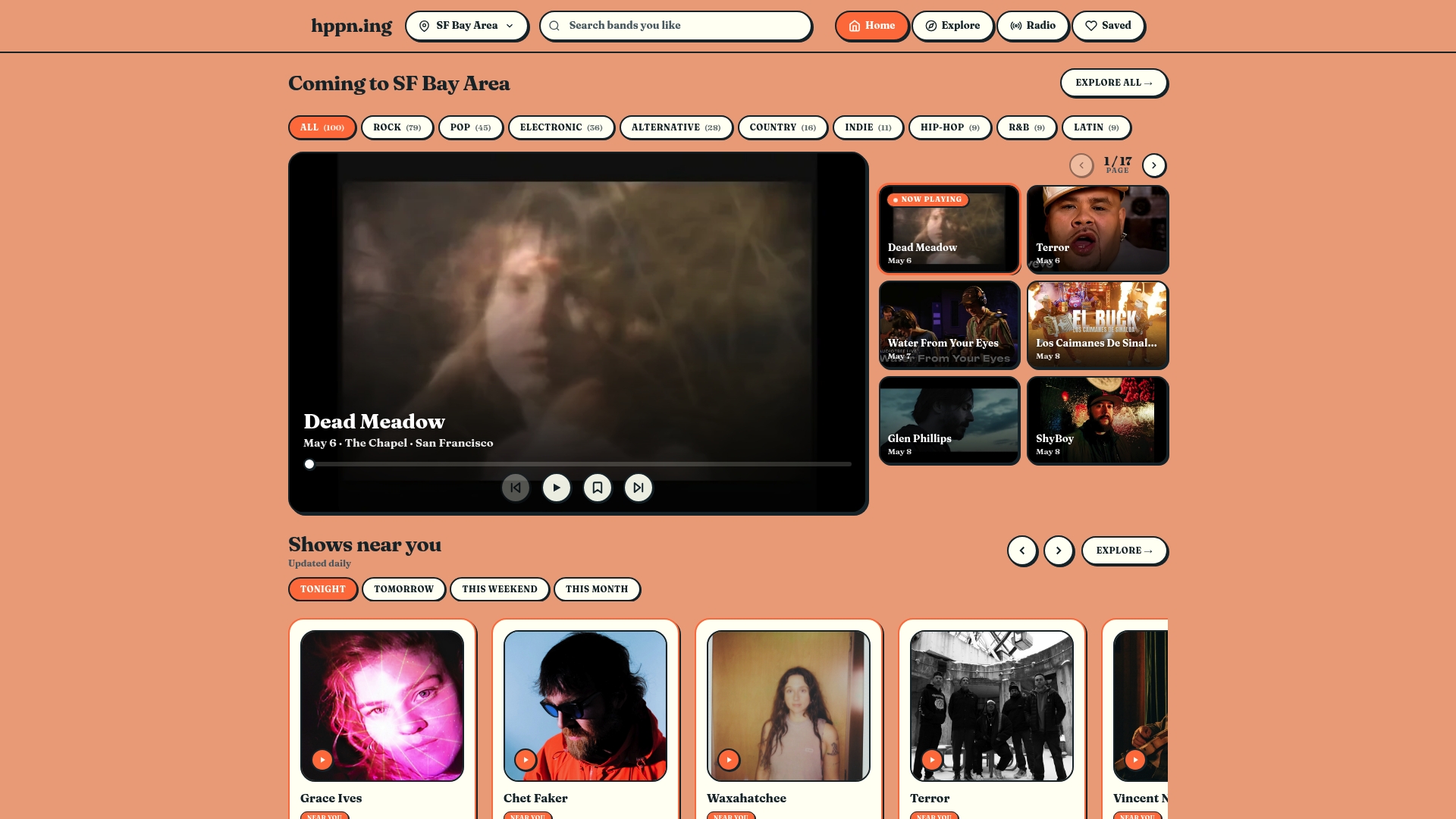
Hppn is built for exactly this. The platform lets you browse live music nearby, preview artists before you commit to a night out, and find the kind of local venue gatherings that do not show up on mainstream ticketing sites. Whether you are looking for an open jam, a silent disco, or a neighborhood-specific music night, Hppn surfaces the events that matter to your local scene. You can also search artists directly to preview who is playing before you go. The community nights worth attending are out there. Hppn helps you find them before they fill up.
FAQ
What are music venue community nights?
Music venue community nights are recurring, participatory events where venues create inclusive social spaces around music. They prioritize engagement and connection over performance, often using open jam, open deck, or themed formats.
How do I find community nights near me?
Hppn lets you discover local music events by location, preview artists, and find upcoming community nights that do not appear on mainstream platforms.
What makes a community night successful?
Recurring schedules, low-barrier formats, and managed performer rotation are the three factors that consistently produce thriving community nights, as seen in events like Mystery Music Mondays and the Burnt Butter Jam.
How do silent discos work as community events?
Silent disco nights use wireless headphones with multiple channels, letting participants choose their music while sharing the same physical space. Newark's Members Only Happy Hour pairs this format with open-deck sessions to give local artists real exposure.
Why should venues pair music with other activities?
Pairing music with low-pressure creative activities like drawing or workshops lowers entry barriers for newcomers and attracts people who love music but feel intimidated by pure performance settings.