
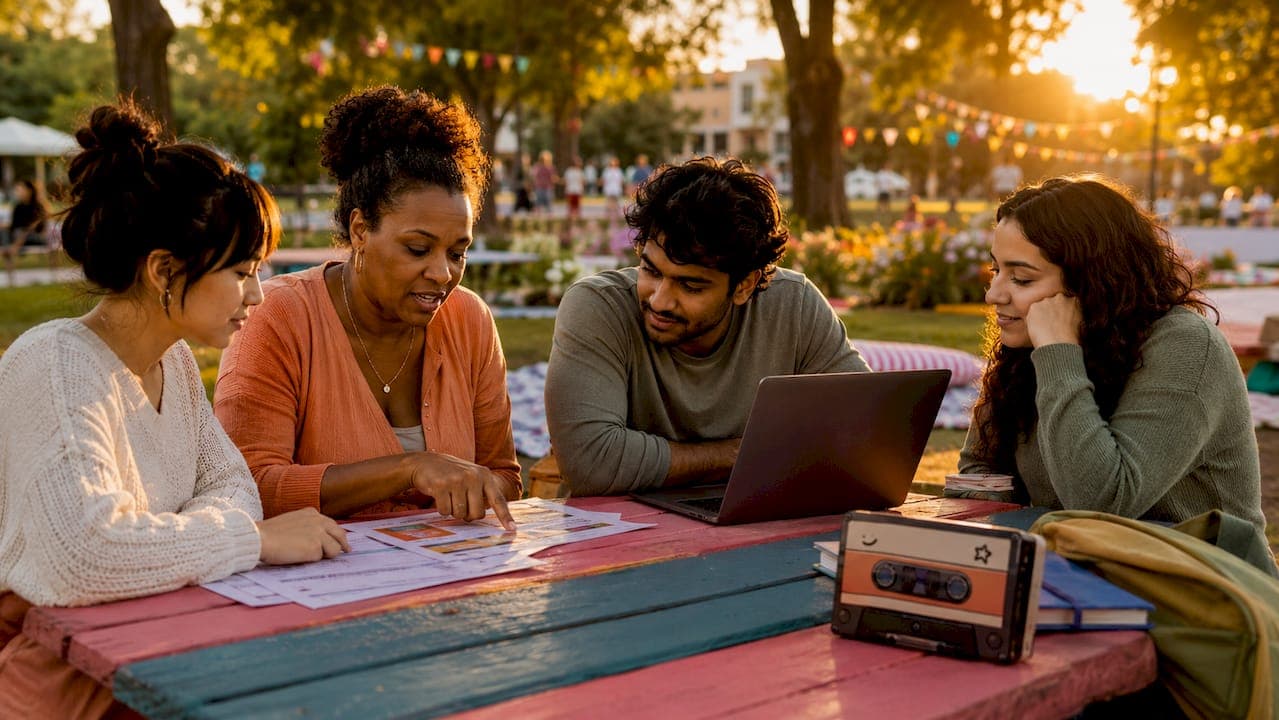
A community concert event is a planned, live music gathering designed to bring people together, celebrate local culture, and strengthen neighborhood bonds. Unlike a street performer drawing a passing crowd, a community concert involves intentional programming, a focused audience, and a clear social purpose. These events range from backyard open mics to large park festivals, and they serve as some of the most accessible entry points into local music culture. Whether you want to attend, volunteer, or organize one yourself, understanding what makes these gatherings tick changes how you experience live music entirely.
What is a community concert event, exactly?
A community concert event is defined by three core elements: a planned program, live performers, and an audience that consciously chooses to attend. That last point separates it from busking, where music reaches whoever happens to walk by. At a community concert, attendance is a decision. That decision signals investment in the event and in the people around you.
The community concert definition also includes intent. The gathering exists to serve a neighborhood, town, or shared identity group. A jazz trio playing a ticketed show at a downtown venue is a concert. That same trio performing at a free neighborhood block party, organized to bring residents together after a long winter, is a community concert. The music is the same. The purpose is different.
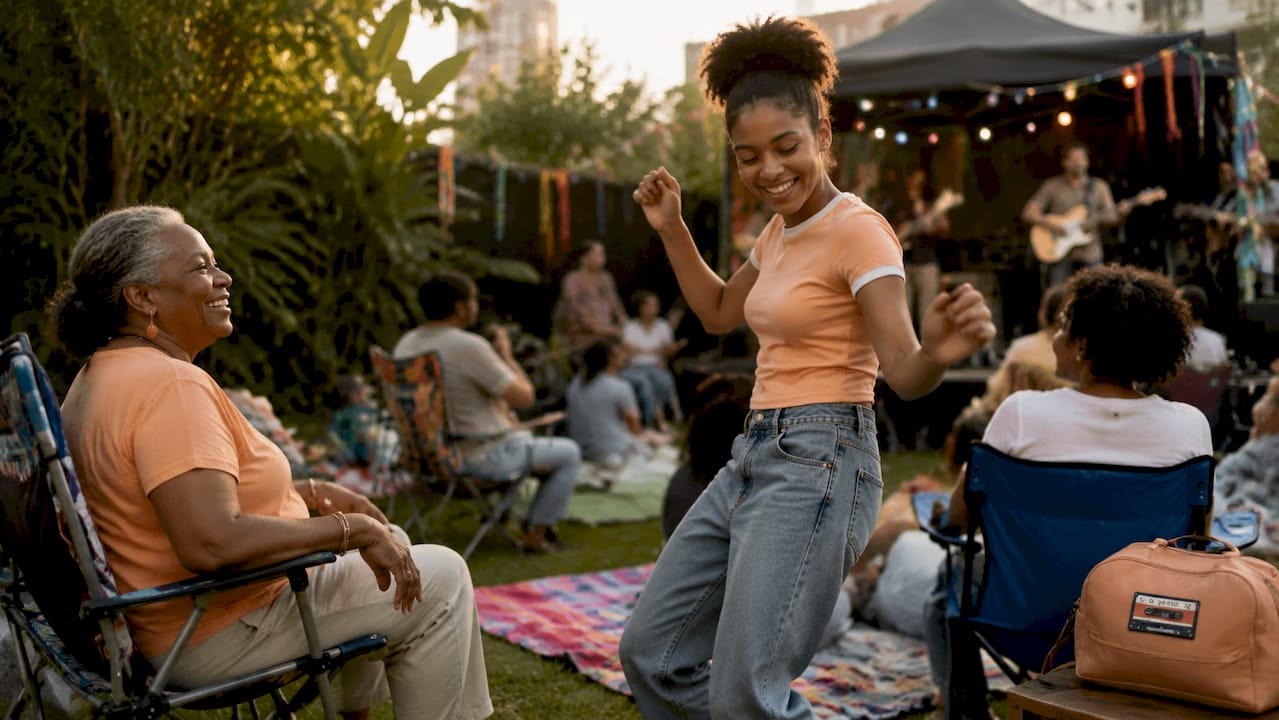
Tickets may or may not be involved. Community concerts range from fully free events to ticketed shows priced between $20 and $75 for professional multi-ensemble performances. Smaller events typically prioritize access over revenue, which is why so many community concerts are free or low cost.
What features distinguish a community concert from other live music?
Several characteristics set community concerts apart from casual performances or commercial gigs.
- Intentional programming: Someone planned the lineup, the schedule, and the venue. There is a structure, even if it feels informal.
- Focused audience: Attendees showed up specifically for the music and the gathering. They are not accidental listeners.
- Local or participatory culture: The event reflects the neighborhood, town, or group hosting it. Local artists, local causes, and local flavor are central.
- Accessible design: Most community concerts prioritize inclusion. Free admission, outdoor venues, and family-friendly formats are common.
- Community purpose: The event exists to connect people, not just to sell tickets or promote a touring act.
Contrast this with an impromptu jam session in a park, which lacks planning and a committed audience. Contrast it with a commercial arena show, which prioritizes revenue and production scale over neighborhood connection. Community concerts sit in a distinct middle space where music serves people rather than the other way around.
Pro Tip: If you are unsure whether an event qualifies as a community concert, ask one question: was it designed to bring a specific group of people together? If yes, it almost certainly fits the community concert definition.
What types of community concert events exist?
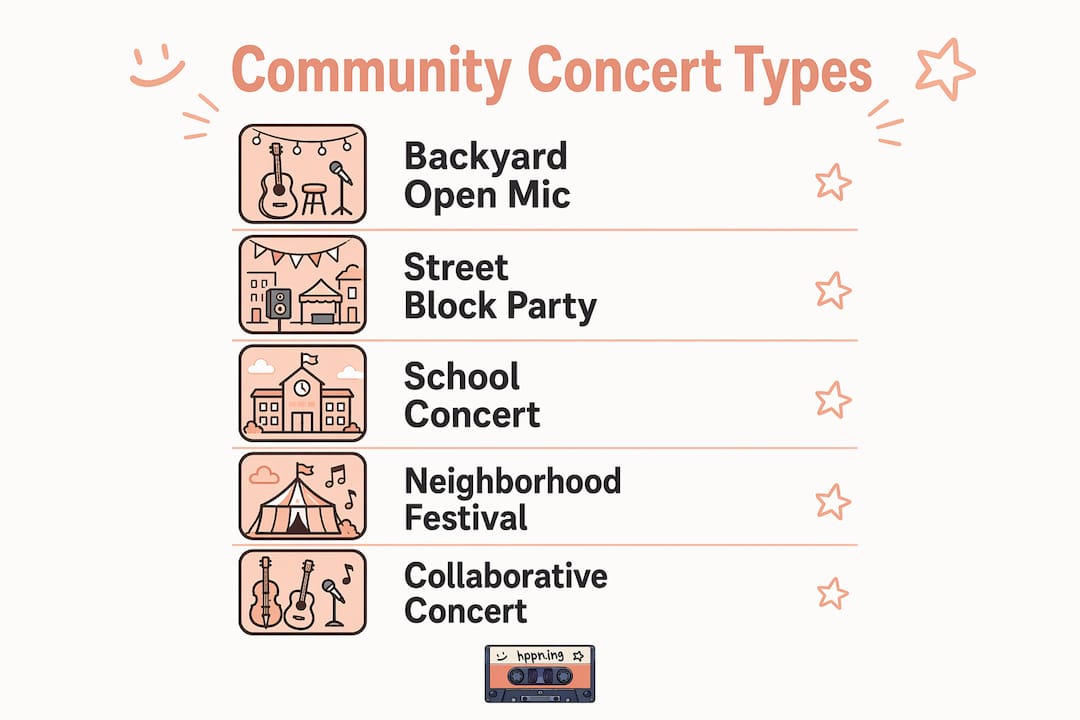
Community concerts come in many formats, and the differences matter when you are deciding how to attend or organize one. Here is a breakdown of the most common types and what each involves logistically.
| Event type | Typical cost to organize | Permit needs | Scale |
|---|---|---|---|
| Backyard open mic | $0–$50 | Noise ordinance check | 10–40 people |
| Community hall show | $300–$2,000 | Venue permit | 50–300 people |
| Park pop-up concert | $500–$3,000 | Public space permit | 100–500 people |
| Street block party | $1,000+ | Street closure permit | 200–1,000 people |
| Community music festival | $5,000+ | Multiple permits | 500+ people |
Planning costs vary widely based on venue type and permit requirements. A backyard open mic can happen for almost nothing, while a street block party regularly crosses the $1,000 threshold before a single musician is paid.
Beyond format, community concerts also differ by organizational model. The United States hosts about 2,500 community bands made up of volunteer musicians who perform regularly at local events, particularly patriotic holidays like the Fourth of July and Memorial Day. These bands range from 10 to over 100 musicians. They operate more like specialized nonprofits than hobby groups, with artistic directors and operational staff managing rehearsals and performance schedules year-round.
Other community concerts are one-off events organized by neighborhood associations, schools, local businesses, or individual music fans. The University of North Dakota's "Constellations" concert in 2026 blended music and aerospace themes in a free interdisciplinary event that drew audiences well beyond the typical music crowd. That kind of creative collaboration shows how far the format can stretch.
Pro Tip: Check your city's parks and recreation department website before planning any outdoor event. Most cities publish permit requirements and fee schedules online, which saves you significant time in the early planning stages.
What are the benefits of community concerts?
The social, cultural, and personal benefits of community concerts are well documented and genuinely significant.
"Concerts function as vital social glue by fostering low-stakes interactions that build trust and long-term civic engagement among neighbors." — Crafting Community Concerts: A How-To Guide
That framing matters. A community concert is not just entertainment. It is a structured opportunity for neighbors to interact without the pressure of a formal meeting or a transactional exchange. Shared music creates a common emotional experience, and that experience builds the kind of trust that makes neighborhoods function better over time.
The specific benefits break down across several groups:
- For attendees: Social connection, exposure to local artists, and a low-cost cultural experience.
- For local musicians: Performance opportunities, audience building, and visibility in their own community.
- For organizers and volunteers: Leadership experience, civic engagement, and a tangible contribution to neighborhood life.
- For the broader community: Stronger local identity, increased foot traffic for nearby businesses, and a healthier civic culture.
Events designed with social glue features like kids' music corners, potluck tables, and interactive activities convert passive listeners into active participants. That shift from audience member to participant is where the deepest community benefits happen. People who share a meal and a song at a neighborhood concert are far more likely to look out for each other the following week.
The importance of community music events also shows up economically. Local concerts draw foot traffic to surrounding businesses, support working musicians who might otherwise leave a city for larger markets, and create the kind of cultural reputation that attracts residents and visitors alike.
How can you participate in or organize a community concert?
Getting involved in local community concerts is more accessible than most people realize. Here are the most practical paths forward.
- Find events near you. Search local Facebook groups, neighborhood apps, city event calendars, and platforms like Hppn that specialize in local live music discovery. Many community concerts are not widely advertised, so local channels are your best source.
- Volunteer. Most community concerts need help with setup, ticketing, sound, and cleanup. Volunteering gets you inside the event and connected to the organizers.
- Define your purpose before organizing. The single most important step in planning a concert event is knowing why you are doing it. A neighborhood welcome event, a fundraiser for a local school, and a showcase for emerging artists all require different formats and audiences.
- Set a realistic budget. Use the cost ranges above as a starting point. Factor in permits, sound equipment rental, artist fees, and any venue costs. Many first-time organizers underestimate permit costs, which can run $100–$500 for public spaces.
- Handle permits early. Contact your city or county office at least 60 days before the event. Noise ordinances, zoning rules, and public space availability all require lead time. Small backyard concerts are valid community events but still require checking local noise regulations.
- Design for participation. Build in moments where attendees interact with each other, not just with the stage. Shared food, open mic slots, and informal gathering spaces all increase the social value of the event.
For readers who want to go deeper on logistics, the guide on how music events are organized locally covers permits, budgets, and artist coordination in practical detail. If your goal is to spotlight local talent specifically, the resource on bringing live music to your area walks through artist outreach and community promotion.
Key takeaways
Community concerts are the most accessible form of live music because they are built around people first and performance second.
| Point | Details |
|---|---|
| Core definition | A community concert is a planned live music event designed to connect a specific group of people. |
| What sets it apart | Intentional programming and a conscious audience separate it from busking and casual performances. |
| Types and costs | Formats range from free backyard open mics to permitted park festivals costing $3,000 or more. |
| Social benefits | These events build neighborhood trust, support local artists, and strengthen civic engagement. |
| How to get involved | Attend, volunteer, or organize. Start with a clear purpose and check permit requirements early. |
Why community concerts matter more than most people think
I have been to hundreds of live music events, from stadium shows to tiny café sets with 12 people in the room. The ones that stay with me are almost always community concerts. Not because the production was impressive, but because something real happened between the people in the room.
There is a version of live music culture that treats concerts as consumption. You buy a ticket, you watch a performance, you go home. Community concerts break that model. When a neighborhood block party features a local band you have never heard of, and you end up talking to your neighbor for the first time in two years because you both loved the same song, that is not a small thing. That is the kind of connection most people are quietly hungry for.
What I find underappreciated is how much creative range these events have. The University of North Dakota's "Constellations" concert, blending music with aerospace themes, is a perfect example. Most people assume community concerts mean a cover band in a park. The format is actually wide open. A community concert can be a chamber music performance in a library, a hip-hop showcase in a parking lot, or a folk singalong in a backyard. The only requirement is intention.
My honest observation after years of watching local music scenes: the cities with the strongest music cultures are the ones where community concerts happen regularly and consistently. They are not the cities with the biggest venues. They are the ones where people show up for each other, week after week, at small events that never make the news. That is where real music culture lives.
— Ari
Discover live music near you with Hppn
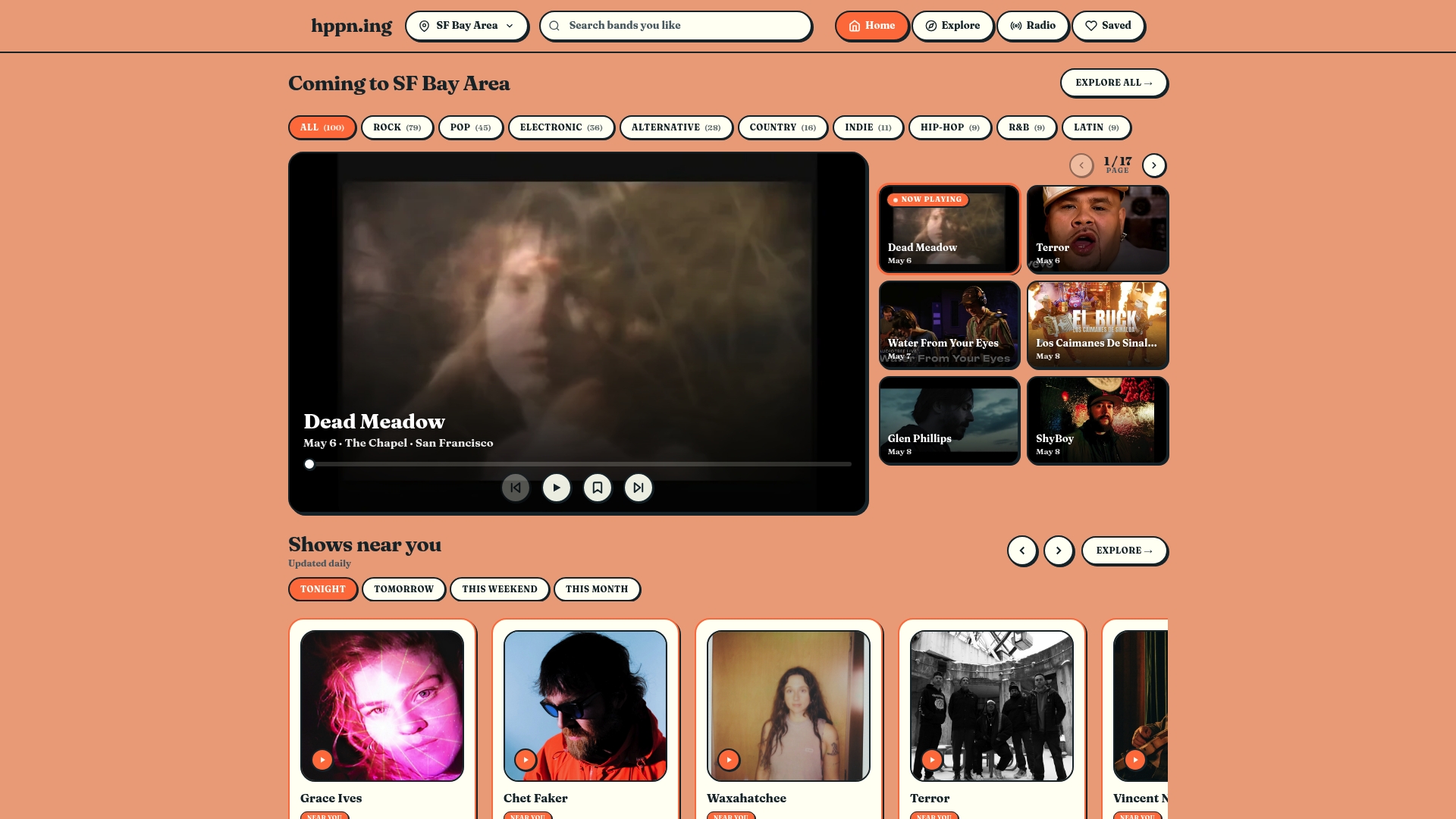
Hppn is built for exactly the kind of music discovery that community concerts represent. The platform lets you preview local artists and shows before you commit to attending, so you can find events that actually match your taste. You can browse concerts by location, watch video previews of emerging performers, and read community notes from fans who have already been to the shows you are considering. Hppn focuses specifically on smaller and emerging musicians, which means the artists you find there are often the same ones performing at neighborhood events and local festivals near you. If you want to stay connected to your local music scene, explore what's happening nearby and start building your own live music calendar.
FAQ
What is the community concert definition?
A community concert is a planned live music event designed to bring a specific group of people together, with music as the primary focus and community connection as the core purpose. It differs from commercial concerts in that access and local engagement typically take priority over revenue.
What is a collaborative community concert?
A collaborative community concert involves multiple groups or disciplines working together to create a shared musical experience. The University of North Dakota's 2026 "Constellations" event, which combined music and aerospace departments, is a strong example of this format.
How much does it cost to organize a community concert?
Costs range from $0–$50 for a backyard open mic to $1,000 or more for a street block party, depending on venue, permits, and scale. Park pop-ups typically fall in the $500–$3,000 range.
Do community concerts require permits?
Most community concerts held in public spaces require permits. Noise ordinances and zoning rules apply even to small backyard events, so checking with your local city or county office at least 60 days in advance is the standard recommendation.
How do I find local community concerts near me?
Search city event calendars, neighborhood social media groups, and live music platforms like Hppn, which specializes in surfacing local and emerging artists performing at nearby events.