
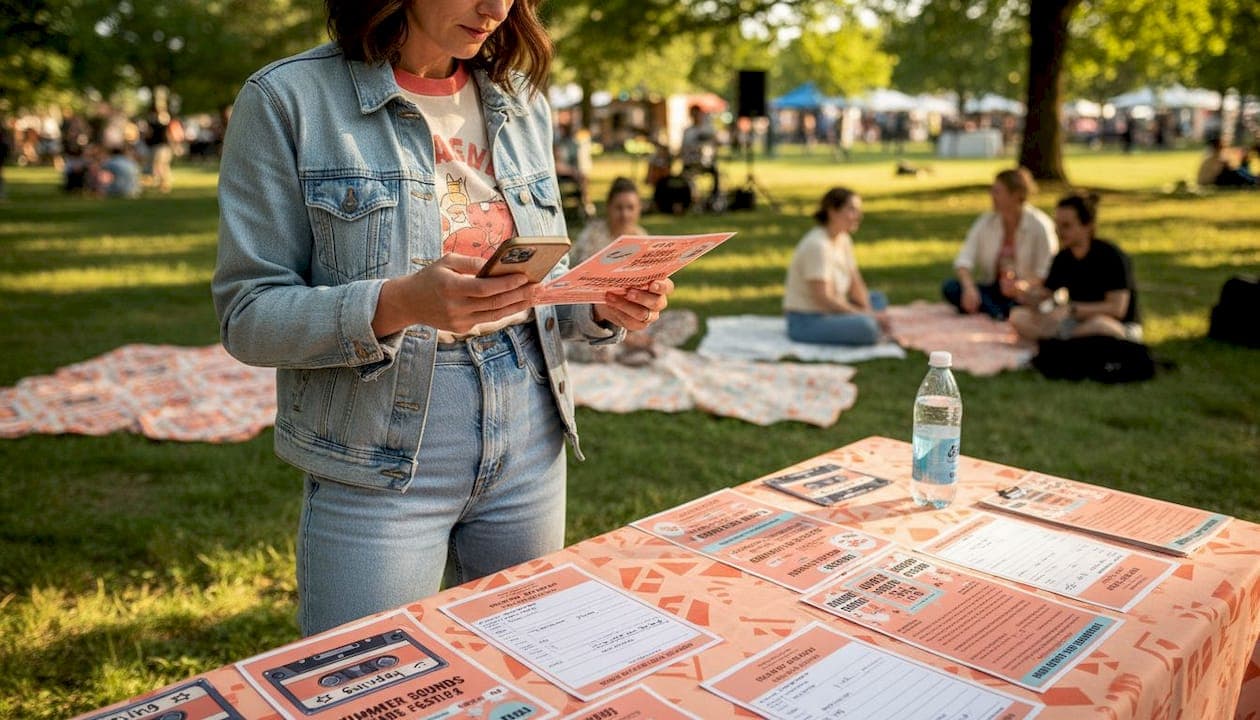
Most local music fans have no idea how much work sits between an artist booking a gig and you walking through the venue door. Understanding how music events are organized locally changes the way you experience shows. It shifts you from passive attendee to informed participant who knows exactly where to look, what to expect, and why some events feel effortless while others fall apart. This guide covers the event types, operational steps, legal requirements, and discovery tools that shape your local music scene.
Table of Contents
- How music events are organized locally: event types explained
- Planning and operational steps for local music events
- Legal requirements and noise control for local music events
- How to discover and attend local music events in your community
- Why local music event organization often hinges on administrative fit and early clarity
- Explore local music events and discover new artists with hppn.ing
- Frequently asked questions
Key Takeaways
| Point | Details |
|---|---|
| Know your event type | Understanding whether your event is a festival or concert series sets the foundation for planning and compliance. |
| Plan operations early | Confirm capacity, technical needs, contracts, and contingencies well before the event day to ensure smooth execution. |
| Comply with legal rules | Obtain necessary permits and respect noise ordinances to avoid disruptions and complaints. |
| Use trusted listings | Find shows by relying on local calendars and platforms that provide clear, detailed event information. |
| Administrative clarity matters | Successful events depend as much on clear rules and ownership as on artistic creativity. |
How music events are organized locally: event types explained
Before anyone books a band or prints a flyer, the first decision is what kind of event you're putting on. This isn't just semantics. The format you choose determines your legal obligations, marketing strategy, ticketing model, and even your eligibility for funding.
The three most common formats in local music event planning are single shows, concert series, and festivals. Each one has its own DNA.
A single show is the most familiar format: one night, one or two artists, one venue. These are the bread and butter of local music event management, especially in small to mid-size cities. They're fast to organize and relatively low-risk.
A concert series strings multiple individual shows across weeks or months under a shared brand or theme. Think "Jazz in the Park" every third Sunday. The local music event planning overview on hppn.ing's blog gets into how these series build community loyalty over time in ways single shows rarely can.
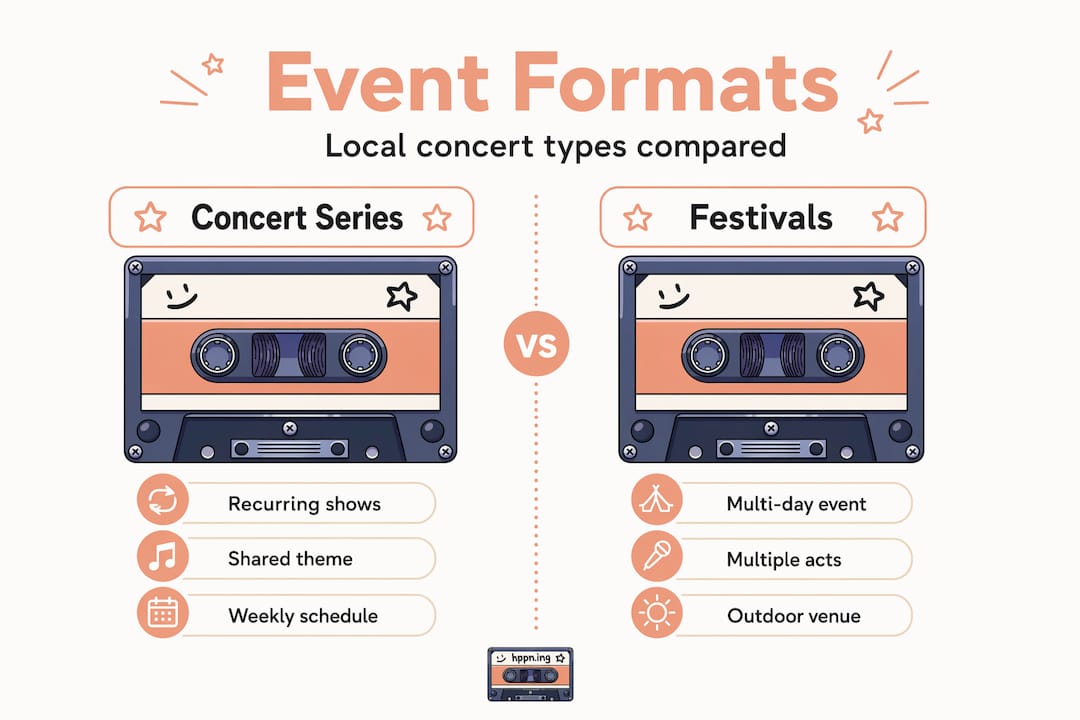
Festivals are a different animal entirely. The Levitt Foundation's festival grant application draws a precise line between festivals (extended, consecutive-day events with free admission and no RSVP) and concert series (spread over time with more scheduling flexibility). If you're seeking grant funding, that distinction is not optional. Getting it wrong disqualifies your application.
Why event format affects you as an attendee
Here's what most fans don't realize: the ticketing model is almost always a function of the event format. Free festivals often come with funder restrictions that prohibit advance ticket sales entirely. Paid concerts may have tiered pricing based on reserved seating vs. general admission. Knowing the format tells you a lot about what to expect at the door.
| Event type | Typical admission model | Duration | Funding eligibility |
|---|---|---|---|
| Single show | Paid tickets | One evening | Venue-dependent |
| Concert series | Paid or free per event | Weeks to months | Often grant-eligible |
| Festival (grant-qualified) | Free, no RSVP required | Consecutive days | Grant-eligible (e.g., Levitt) |
| Pop-up or underground show | Door fee or free | One night | Rarely funded |
Key points to keep in mind when identifying local event types:
- Free events with no RSVP often signal grant funding and specific programming rules
- Ticketed series usually allow advance purchase and refund policies
- Festivals typically involve multiple stages, vendors, and neighborhood permits
- Underground or pop-up gigs move fast, announce late, and favor cash at the door
Planning and operational steps for local music events
Now that we know the common event types, let's explore what it takes operationally to organize local music events.

Most event chaos is preventable. The 10-Point Event Management Checklist from Paul Robin Promotions makes this point directly: the biggest causes of show-day problems are poor sequencing and unclear ownership of basics. Someone needs to own each task. If two people think someone else is handling the PA system rental, no one is.
Here's how the core steps in organizing community concerts typically break down:
- Confirm the venue and legal capacity before booking any artists. Capacity drives everything else.
- Establish curfew and sound restrictions with the venue in writing. This shapes your set times.
- Negotiate and sign artist contracts with clear payment terms, set lengths, and technical riders.
- Apply for required permits (more on this in the next section), particularly for outdoor or amplified events.
- Set up ticketing using a platform that gives you access to real-time sales data and allows quick changes.
- Brief all staff and volunteers with a written run-of-show document at least one week out.
- Build a contingency plan covering weather (for outdoor events), artist cancellation, and technical failure.
- Publish a clear event page with date, venue address, ticket price, age restrictions, accessibility info, and parking.
That last step matters more than most organizers treat it. When an event page is vague or incomplete, it generates support emails, refund requests, and social media confusion that eats up time and erodes trust.
The community role in event planning is something worth reading about, especially how local music fans contribute to promotion and word-of-mouth when they feel informed and included.
Pro Tip: Assign one person the role of "logistics owner" whose only job is tracking the checklist. Don't split this role. At shows with five or more staff, nobody naturally owns the full picture unless someone is specifically designated to do so.
Legal requirements and noise control for local music events
With operations clear, it's important to consider legal and regulatory factors that shape local event organization.
This is the part of local music event management that first-time organizers almost always underestimate. Legal and noise requirements are not suggestions. They're fixed production constraints, as real as the PA rental or the stage size.
Amplified outdoor music events in cities like Redmond, WA require special event permits that come with specific volume caps and timing restrictions. Most cities follow a similar model, even if the exact numbers differ.
Typical requirements for steps to arrange local gigs outdoors include:
- Special event permit submitted 30 to 90 days in advance depending on the city
- Noise level caps usually measured in decibels at the property line, commonly between 55 and 75 dB depending on zoning
- Hard curfew times for amplified sound, often 10 or 11 pm in residential-adjacent areas
- Complaint procedures that give authorities the power to shut down a show mid-set if violations are confirmed
- Insurance documentation naming the city or venue as additional insured
"Treating noise and permit rules as non-negotiable production inputs, the same as power requirements or stage size, is the mindset shift that separates experienced event organizers from first-timers."
That framing matters. When an experienced promoter finds out a venue has a 10 pm sound curfew, they don't fight it. They set the headliner at 8:30 and build the night accordingly. The constraint becomes the structure.
For attendees, this is worth knowing too. A show that ends early isn't being badly run. It's almost always legal compliance in action.
How to discover and attend local music events in your community
Understanding the legal framework helps us now explore how fans actually find and attend local music events.
Why music event calendars matter locally goes beyond convenience. A well-maintained local calendar is an active signal of a healthy music scene. When venues, promoters, and publications contribute to it consistently, fans trust it, and that trust drives attendance for emerging artists who don't yet have the audience to fill rooms on name recognition alone.
Local music calendars like the one published for the Fort Wayne area show exactly what useful event listings look like: dates, venues, ticket prices, registration links, and accessibility notes all in one place.
Here's what a complete local music event listing should always include:
- Event name and artist(s) with links to preview their music
- Date, time, and venue address (including parking or transit info)
- Ticket price tiers (advance, door, VIP if applicable)
- Age restrictions or all-ages designation
- Accessibility information (wheelchair access, ASL interpretation)
- Any special policies (bag check rules, re-entry, photo policy)
| Listing element | Why it matters to attendees |
|---|---|
| Ticket price tiers | Helps budget and plan in advance |
| Accessibility info | Ensures all fans can attend comfortably |
| Artist preview links | Lets you decide if the show is worth attending |
| Venue address and parking | Reduces show-day stress |
| Age restrictions | Prevents wasted trips for underage fans |
Different sources for discovering local shows include venue websites, local newspaper arts sections, music-focused newsletters, and platforms built specifically for live music discovery near you. The most useful sources update frequently, provide artist context, and link directly to tickets. Generic event aggregators often lag by days and strip out the artist detail that makes a listing actually useful.
Using a local concert calendar guide can also help you understand how to read listings and never miss the shows that actually match your taste.
Why local music event organization often hinges on administrative fit and early clarity
Here's the uncomfortable truth about how to host music festivals and local events: creativity is the easy part. Curating a lineup, imagining the atmosphere, picking the right venue. Any music fan can do that in their head on the way to work. The events that succeed are the ones where someone did the unglamorous work before anything else.
The Levitt Foundation grant model illustrates this clearly. Grant-funded music series don't succeed or fail on the strength of their artist bookings alone. They succeed because the organizational structure matches the funder's definitions precisely. Does your event fit the festival definition? Is admission actually free? Is there genuinely no RSVP barrier? Each condition is a yes/no gate. Miss one and the funding disappears regardless of how good the music is.
For community concert organizers without grant funding, the same principle holds in a different form. The 10-Point Event Management Checklist documents what promoters with real experience know: the biggest problems at shows are caused by skipping or vaguely assigning foundational tasks. Curfew confirmed? Whose name is on the ticketing account? Who calls the venue if the headline act's van breaks down?
Most first-time organizers spend their energy on social media graphics and ignore the backstage logistics that protect them when something goes wrong.
The community and operational lessons from local scenes that sustain themselves over years almost always point back to the same thing: consistent administrative discipline at the start of every event cycle. The creative energy is what draws people in. The operational clarity is what keeps them coming back.
As an attendee, you feel this whether you know it or not. The shows that feel effortless, the ones where doors open on time, the sound check is done, the staff know the policies, and the artist preview matched the live experience, those are the products of early planning, not luck.
Explore local music events and discover new artists with hppn.ing
You've now got a real picture of what goes into organizing local music events, from format decisions and permit filings to the operational clarity that separates a great show from a chaotic one. The next step is using that knowledge to actually find and enjoy more live music in your city.
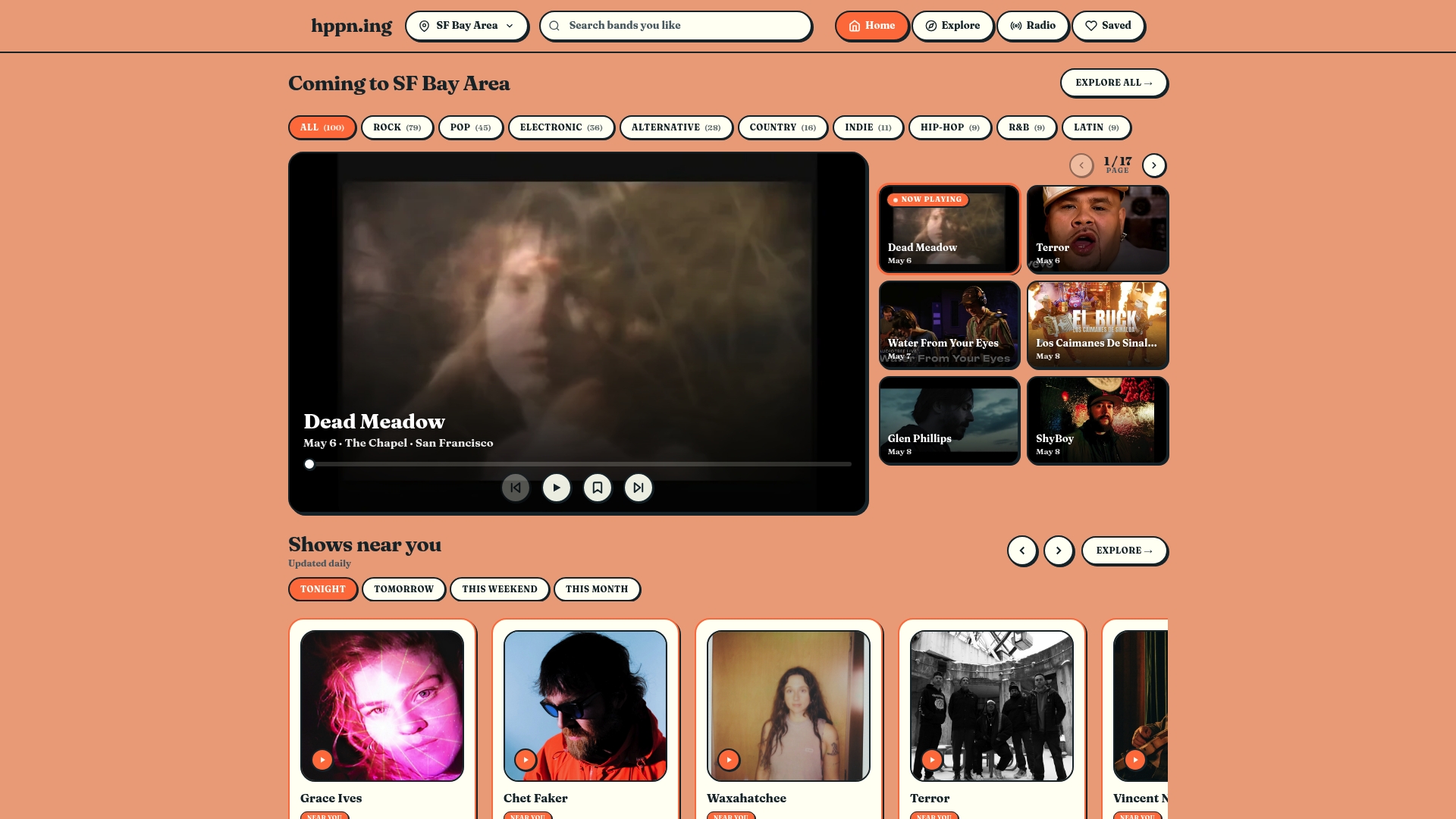
Hppn.ing is built for exactly this. You can browse live music near you by location, preview artists through video and audio before committing to a ticket, and discover emerging performers your city's mainstream listings will never surface. The platform combines concert discovery, artist context, and ticket access in one place, so you're never choosing shows blind. You can also join community notes and discussions to connect with other local music fans, get real-time tips about upcoming shows, and stay ahead of the local scene. Stop stumbling onto good music by accident.
Frequently asked questions
What types of local music events are commonly organized?
Local music events usually include festivals, concert series, and single shows, each with distinct formats and ticketing rules. The Levitt Foundation distinguishes festivals from concert series with different free admission and duration requirements that affect how each event is planned and funded.
Do I need a special permit to hold outdoor amplified music events locally?
Most local governments require a special event permit for amplified outdoor music, including noise limits and curfew conditions. Redmond, WA's regulations are a clear example of how cities enforce volume caps and timing restrictions for these events.
How can I easily find upcoming local music shows?
Using local music calendars, venue listings, and online platforms that provide detailed event info is the most reliable way to find upcoming shows. Fort Wayne's music calendar is a solid example of how complete, accessible listings help fans discover events quickly.
Why is early operational planning crucial for local music event success?
Early clarity on capacity, curfew, technical setup, and ticketing responsibilities prevents the costly last-minute problems that ruin shows for both organizers and audiences. Paul Robin Promotions stresses that sequencing and task ownership from the start is what separates smooth events from chaotic ones.