
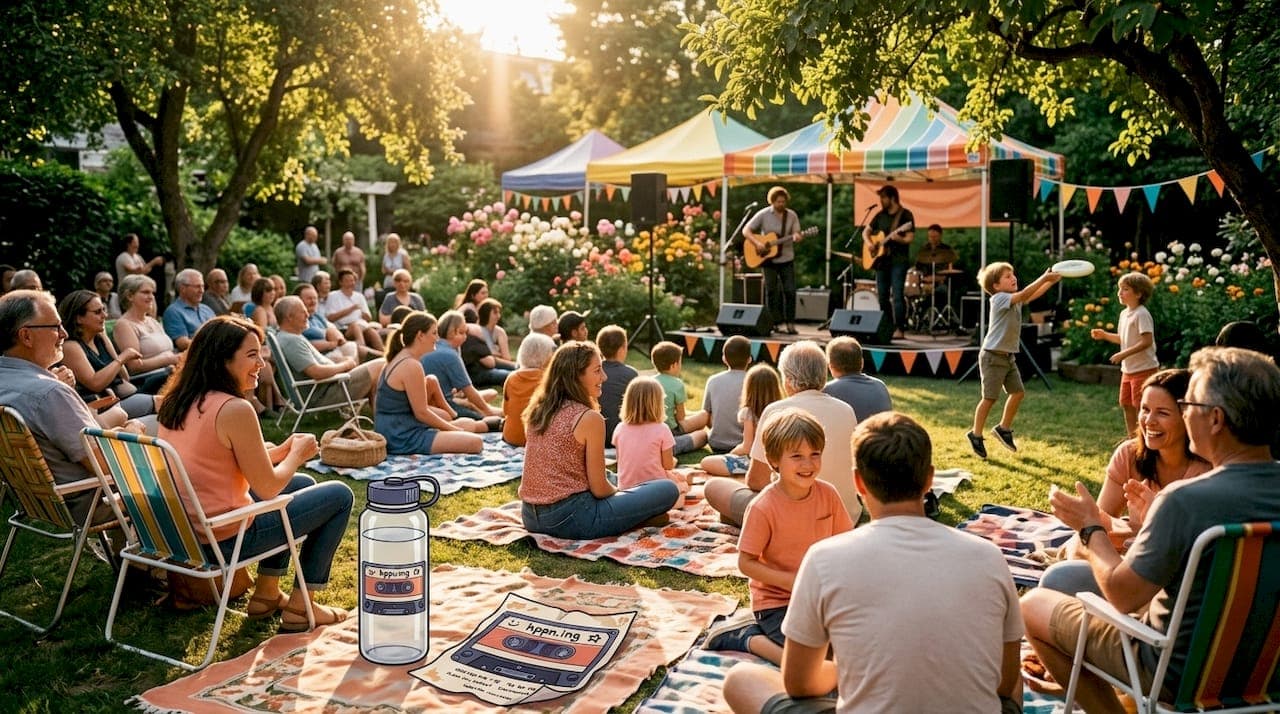
Finding free local music is one of those things that sounds simple until you actually try to do it. Concert listings scatter across city websites, neighborhood Facebook groups, and half-updated event calendars that haven't been touched since last summer. Yet the payoff for tracking them down, examples of free local music events tucked into parks, porches, and alleyways across North America, is absolutely worth it. This article cuts through the noise by showcasing real, genre-diverse community concerts happening in 2026, comparing their formats, and giving you the practical tips you need to show up prepared and enjoy every minute.
Table of Contents
- Key takeaways
- 1. What to look for in free local music events
- 2. Concert series in the park: the backbone of free summer music
- 3. PorchFest events: neighborhood music you walk through
- 4. Multi-venue festivals: more bands, more choices
- 5. Amphitheater and starlight shows: structured outdoor performances
- 6. How free music event formats compare
- 7. How to plan your visits and get the most from free events
- What free events have taught me about live music
- Discover free concerts near you with Hppn
- FAQ
Key takeaways
| Point | Details |
|---|---|
| Free events span many formats | Concert series, PorchFest gatherings, multi-venue festivals, and amphitheater shows each offer a distinct experience. |
| Arrive early and come prepared | Gates often open an hour before showtime, so bringing chairs and blankets secures your spot and comfort. |
| Rules vary by event | Pet policies, cooler sizes, and seating rules differ across events, so check the details before you go. |
| Use discovery platforms | Tools like Hppn make it easier to preview artists and find free outdoor music events near you before you commit. |
| Free music builds community | These events attract diverse audiences and give emerging local artists a platform they rarely get elsewhere. |
1. What to look for in free local music events
Not every free concert is worth your Saturday evening. Knowing what separates a well-organized free community concert from a forgettable one helps you spend your time on the good ones.
Here are the key criteria worth applying before you add anything to your calendar:
- Accessibility. Is the venue easy to reach by foot, bike, or transit? Free events that require expensive parking or long drives can quietly negate the "free" part.
- Genre variety. The best free local festivals mix blues, jazz, reggae, folk, and rock across their lineups so there is something for everyone in your group.
- Family-friendly features. Look for events that explicitly include kids' activities, sensory-friendly spaces, or relaxed seating arrangements. These tend to be better organized overall.
- Food and amenities. Food trucks, vendors, and nearby restrooms signal that organizers have thought through the logistics. Events without these can feel underprepared.
- Clear event rules. Check policies on coolers, pets, lawn chairs, and alcohol before you go. Event rules communicated clearly balance accessibility with safety, which is what keeps free programs sustainable year after year.
- Scheduling that fits your life. Free weekend music events with evening start times draw the biggest crowds for a reason. Look for weekend or early evening slots, especially during summer.
Pro Tip: If an event website lists its food vendors, nonprofit partners, and performer lineup with dates attached, that is a strong signal the organizers are running a tight ship. Vague or outdated listings often mean a disorganized experience on the ground.
2. Concert series in the park: the backbone of free summer music
City-organized concert series are the most reliable format you will find. They run on predictable schedules, benefit from municipal support, and often span an entire season's worth of entertainment.
Nanaimo's 2026 Concerts in the Park is a great case study. The city scheduled 16 artists across 14 concert dates, covering blues, folk, reggae, hip hop, pop, and country rock. Some concerts tie into Food Truck Friday events, turning a simple outdoor show into a full evening out. Attendees are encouraged to bring a chair or blanket, keeping the barrier to entry as low as possible.
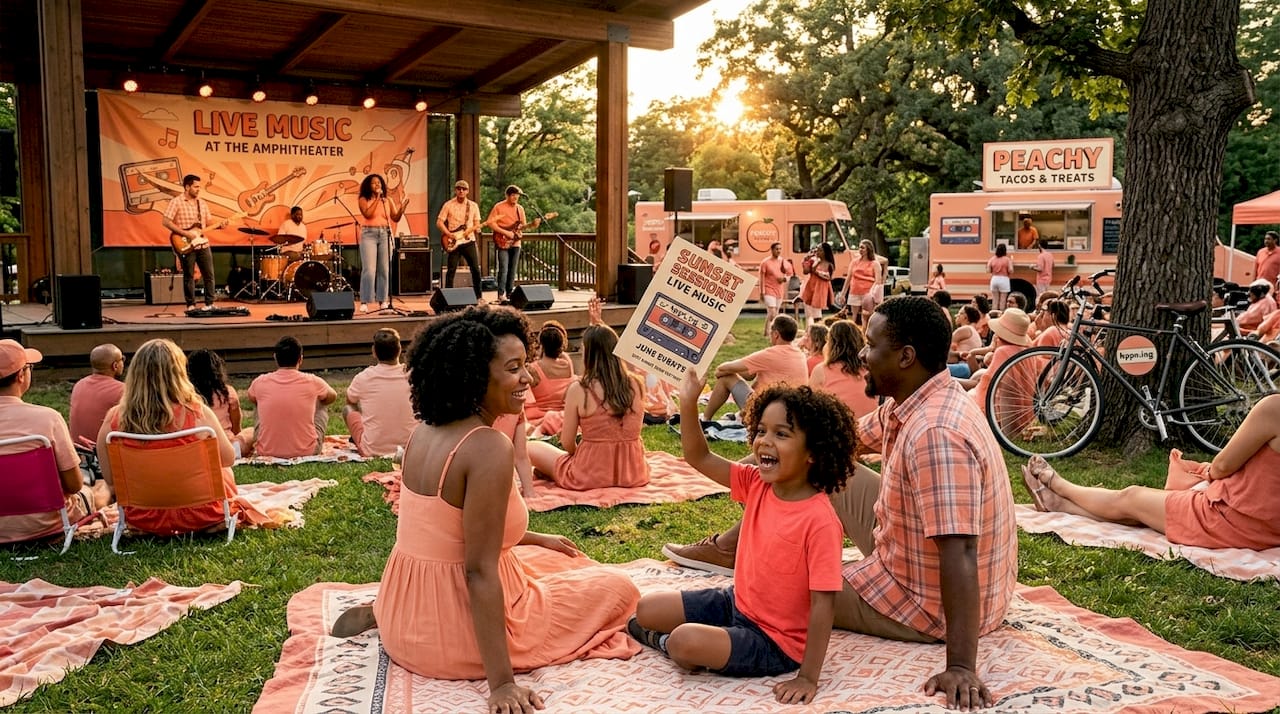
Huntsville, Alabama takes a similar approach. Weekly concerts run from June 1 to August 3 at Big Spring Park, covering local rock, country, jazz, and R&B. Food trucks show up at every show, and leashed pets are welcome. Ten consecutive Monday evenings of live music without spending a dollar is a genuinely hard deal to beat.
Santa Clarita's program has been running for 36 years, which tells you something about how much the community values it. The 2026 series runs every Saturday at 7 PM from July 11 through August 29. It stands out for its Chill Zones designed for sensory-sensitive children, themed nights, and nonprofit spotlights built into each show. That kind of intentional inclusivity rarely shows up at paid events.
3. PorchFest events: neighborhood music you walk through
PorchFest is the format that turns an entire neighborhood into a venue. Musicians perform on their front porches, stoops, and yards while attendees stroll through the streets at their own pace. It is casual, intimate, and deeply local in a way that stadium concerts simply cannot replicate.
Somerville, Massachusetts runs one of the most well-organized versions. Performances are split into three two-hour zones: noon to 2, 2 to 4, and 4 to 6 PM. That structure lets you plan a walking route rather than aimlessly wandering. You can catch a folk duo in one block, a jazz trio two streets over, and a rock band before dinner without ever getting in a car.
"PorchFest encourages attendees to explore walking routes by time zone, turning a neighborhood into a living music venue with safety and community built into the design."
North Attleborough's version runs 1 to 3 PM with eight acts spread across homes and businesses. The afternoon scheduling was a deliberate choice to improve accessibility for older performers and families with young kids. Bringing a lawn chair is encouraged. The whole thing feels less like an event and more like a block party where the neighbors happen to be genuinely talented.
4. Multi-venue festivals: more bands, more choices
If PorchFest is intimate, multi-venue festivals are the opposite end of the spectrum. They spread dozens of acts across bars, stages, alleys, and outdoor spaces, giving you a full festival experience without the ticket price.
Keokuk, Iowa's Back Alley Bandfest is one of the best examples in the country. Over 30 bands play for free across multiple venues, with the event split into two distinct waves. Twenty bands start at 6 PM, and then 12 more kick off at 9:30 PM. The genre range is deliberately wide, running from heavy metal to Glenn Miller-style swing. Musicians play for tips, local restaurants and food trucks are involved, and the family-friendly atmosphere holds through the early evening wave.
That two-wave scheduling is genuinely smart design. It lets families attend the early set and head home before the later, louder acts take the stage. It also keeps energy levels up across the entire evening instead of hitting a mid-festival lull. If you want to discover emerging local performers across multiple genres in a single night, this format delivers.
5. Amphitheater and starlight shows: structured outdoor performances
Not every free outdoor show is casual and blanket-on-the-grass. Some cities invest in proper amphitheater settings with curated lineups, structured rules, and a more polished production feel.
College Station's Starlight Music Series at Wolf Pen Creek is a strong example. Three free spring concerts run from April through June, with gates opening at 6 PM and shows starting at 7. That one-hour window before the music starts matters. Arriving early secures preferred seating and gives you time to navigate the space before it fills up.
The rules here are more specific than at a casual park concert. Coolers are limited to 48 quarts, pets are not allowed, and picnic items are welcome within those parameters. These restrictions exist to keep the space comfortable for everyone. Events with clear boundaries like these tend to run more smoothly and feel more enjoyable once you are actually inside.
Orlando's Next Door Live takes a pop-up approach in walkable neighborhood settings, prioritizing local discovery. It is a looser format, but it scratches the same itch for anyone searching for live music near me without wanting a full production setup.
6. How free music event formats compare
Choosing which type of event fits you best comes down to what you actually want out of the evening.
| Format | Typical schedule | Best for | Amenities | Pet-friendly |
|---|---|---|---|---|
| Concert series (park) | Weekly, summer evenings | Families, casual crowds | Food trucks, seating | Often yes (leashed) |
| PorchFest | One day, afternoon zones | Explorers, neighborhood fans | Walkable, self-directed | Usually yes |
| Multi-venue festival | Single day, two waves | Genre explorers, night owls | Bars, restaurants, outdoor stages | Varies by venue |
| Amphitheater series | Seasonal, 3-6 dates | Those wanting structure | Curated setup, food vendors | Often no |
The park concert series wins on ease and consistency. You know when it is, you know what to bring, and the whole family can show up without planning much in advance. PorchFest wins on discovery. You will hear artists you have never encountered, often in genres you would not seek out yourself. Multi-venue festivals win on volume and energy. Amphitheater shows win on production quality.
Pro Tip: For multi-venue events like Bandfest or PorchFest, download the event map or schedule to your phone before you arrive. Cell service at outdoor events gets unreliable fast, and knowing your route ahead of time prevents you from missing the acts you actually came to see.
7. How to plan your visits and get the most from free events
Showing up is half the battle. Showing up prepared is the other half.
- Arrive before gates open. For structured events like the Starlight Music Series, gates open an hour early specifically so you can settle in without the stress of finding a good spot in a crowd.
- Pack the right gear. A lightweight folding chair, a blanket, sunscreen, and a reusable water bottle cover 90% of outdoor music scenarios. Check if outside food and drink are permitted before you leave the house.
- Read the rules before you go. Cooler limits, pet policies, and alcohol rules vary dramatically by event. Spending two minutes on the event website saves you from turning back at the gate.
- Plan your PorchFest route by time zone. Events like Somerville's three-zone setup are designed for this. Map which performers play in each window and build a logical walking path between them.
- Engage with vendors and neighbors. The food trucks and local businesses at community-focused free concerts are part of the experience. Buying from them helps sustain the events you love.
- Respect performers. Musicians at tip-based events like Bandfest are giving their time and talent for free. Tipping generously and staying present during their sets keeps these programs worth doing for the artists.
Pro Tip: Sign up for your city's parks and recreation newsletter. It is the single most reliable way to get free concert lineups before they sell out on social media noise.
What free events have taught me about live music
I've spent years hunting down shows in cities I know well and cities I'm visiting for the first time. My honest take: free community concerts have given me more unexpected musical discoveries than any paid festival I've attended. There is something about the low-stakes setup that makes both performers and audiences more relaxed and open.
What I've noticed is that free music events serve as social glue in a way paid events rarely do. When admission is free, the crowd is genuinely diverse. You are standing next to people who would never attend the same paid show, and that mix creates an energy that feels alive.
I've also seen the tension that comes with running these events well. Organizers walk a real line between keeping things open and keeping them safe. The events that manage it best, places like Nanaimo and Santa Clarita, do so by designing events to be welcoming and low-effort without being chaotic. Clear rules, good logistics, and a genuine investment in local artists are what separate the events people return to every year from the ones that quietly disappear.
My advice: stop waiting for the perfect show and go to the free one nearby. The emerging artist you hear on a park stage this summer might be someone you tell people about for years.
— Ari
Discover free concerts near you with Hppn
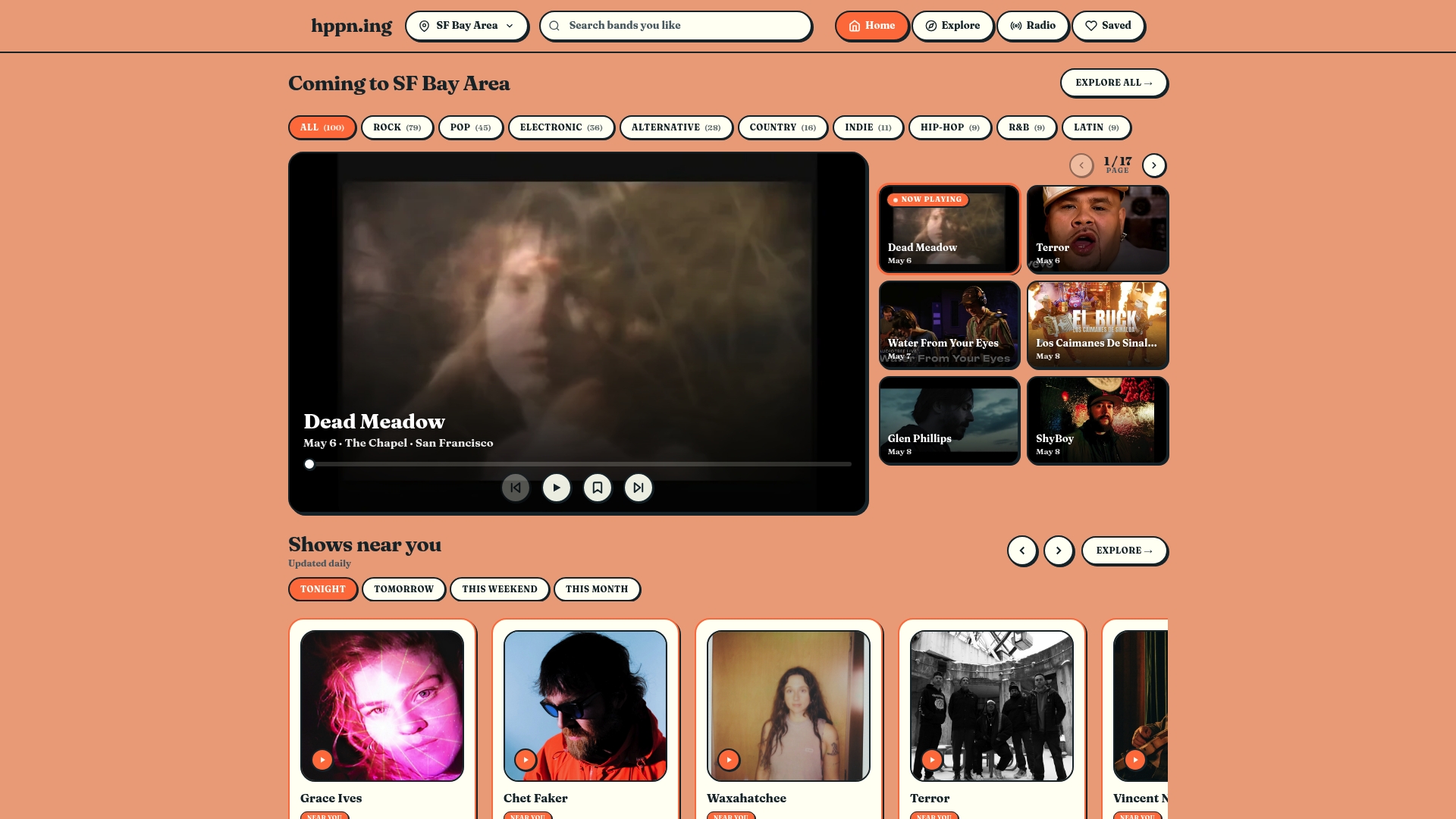
Hppn is built exactly for moments like this. You want to find live music near me, but the event you are curious about features artists you have never heard of. That is where Hppn earns its place in your routine. You can preview local artists through audio and video before you decide whether a show is worth your evening, and you can browse concerts by location to see what free and ticketed events are happening in your area right now.
The community notes and discussions on Hppn are especially useful for free event planning. Other music fans share tips about parking, which acts ran long, and which local performers are worth arriving early for. Pair that with trending artist charts to see which emerging local names are gaining traction in your city, and you have a real edge on discovering the next great free show before it blows up.
FAQ
What are the most common types of free local music events?
The most common formats are park concert series, PorchFest neighborhood festivals, multi-venue bandfests, and amphitheater starlight shows. Each offers a different vibe and level of structure.
How do I find free concerts happening near me?
Check your city's parks and recreation website, local event platforms like Hppn, and neighborhood social media groups. City newsletters are often the most reliable and earliest source of free concert lineups.
Are free outdoor music events family-friendly?
Most are. Events like Santa Clarita's Concerts in the Park even include inclusive Chill Zones for sensory-sensitive children. Always check the event page for specific amenities and age-related policies.
Can I bring my dog to free community concerts?
It depends on the event. Huntsville's Concerts in the Park welcomes leashed pets, while College Station's Starlight Music Series does not allow them. Check the rules for each specific event before you go.
What should I bring to an outdoor free concert?
Bring a folding chair or blanket, sunscreen, a reusable water bottle, and cash for food vendors. Check the event's cooler and outside food policy ahead of time to avoid any surprises at the gate.