

Whether you're chasing the energy of a 10,000-person festival or just want a relaxed Sunday afternoon in the park with a cold drink and live music, knowing the types of outdoor music events nearby changes how you plan your season. The options near most urban and suburban areas have grown significantly, and outdoor venues now span amphitheaters, rooftops, plazas, parks, and breweries. The problem is they all look similar until you're standing in the wrong line. This guide breaks down every major event type so you can match your mood, budget, and schedule before you show up.
Table of Contents
- Key takeaways
- 1. Types of outdoor music events nearby: what to evaluate first
- 2. Single-night outdoor concerts at fixed venues
- 3. Recurring outdoor concert series
- 4. Major outdoor music festivals and multi-day events
- 5. Themed and community-driven outdoor music events
- 6. Free outdoor music events: what you need to know
- 7. Comparison of event types by preference and situation
- My take on finding the outdoor events worth your time
- Find your next outdoor show before the tickets are gone
- FAQ
Key takeaways
| Point | Details |
|---|---|
| Event types vary widely | From free park concerts to multi-day festivals, each format has different costs, crowds, and logistics. |
| Free does not mean unstructured | Free outdoor concerts have fixed schedules and limited dates you need to verify in advance. |
| Logistics matter as much as music | Parking, transit access, and weather policies directly affect your experience at live outdoor performances. |
| Community events offer more than music | Themed and civic festivals include family activities, vendors, and educational components beyond the stage. |
| Platform tools shorten your research | Using a discovery tool like Hppn helps you preview artists and filter upcoming music shows before committing. |
1. Types of outdoor music events nearby: what to evaluate first
Before you commit to any outdoor concert or festival, a few quick criteria will save you from a bad experience. Not every event suits every person, and knowing what to look for makes the difference between a highlight of your summer and a frustrating afternoon in traffic.
Event format and duration is the first thing to sort out. Is this a single evening show, a weekly series running all summer, or a three-day festival requiring travel and planning? Each demands a different level of commitment from you.
Cost and ticketing structure matters more than people expect. Some events are completely free. Others have General Admission plus VIP tiers and group packages. Knowing this upfront shapes whether you can bring friends or need to plan ahead.
Location and venue type shapes the whole experience. Parks and open plazas have different energy than amphitheaters with assigned seating. Rooftop shows feel intimate. Stadium-adjacent lots feel chaotic without a plan.
Here are the practical questions worth asking before you attend any outdoor event:
- Is there on-site parking, or do you need a transit plan?
- Is the event family-friendly, or does the crowd skew older?
- What happens if it rains? Does the organizer publish a weather contingency policy?
- Are outside food and drinks allowed?
- What time does the music end? Licensing restrictions often cap outdoor amplified music at specific hours, so late arrivals may miss the headliner.
Pro Tip: Check the event's official page the morning of the show. Organizers like Duke Arts publish rain alternate locations by 1 p.m. on event days, so a five-minute check can save you a wasted trip.
2. Single-night outdoor concerts at fixed venues
These are the most accessible outdoor music experiences in most cities. A single night, one artist or a small lineup, and a specific venue. You buy a ticket or show up for free, and the format is self-contained.
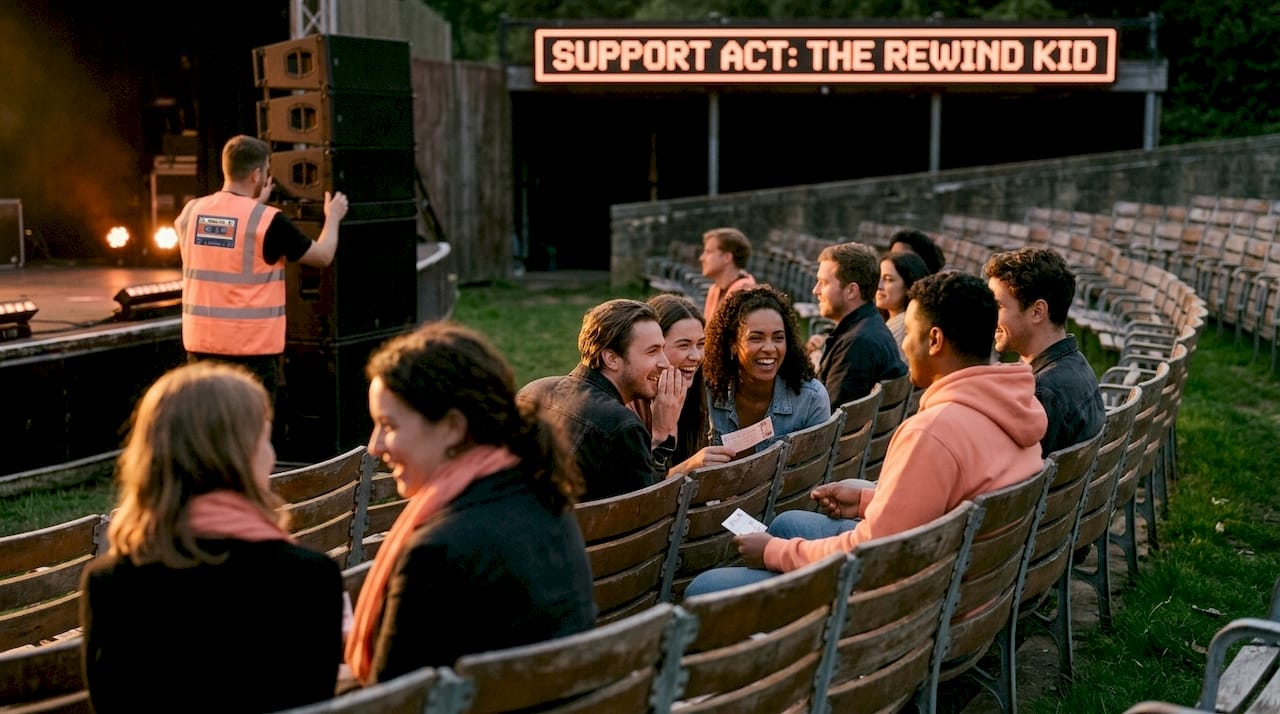
Amphitheaters are the most structured version of this. Assigned seating, professional sound, and a clear start time. Urban plazas and rooftop venues run a more casual version with general standing or limited seating. Breweries have made single-night live outdoor performances a staple of their weekend programming, often featuring local acts on Friday or Saturday evenings.
What makes single-night concerts work so well is their low commitment. You decide the week of, check the artist, and go. Hppn's artist preview tool lets you listen before you commit, which is especially useful when the act is someone you haven't heard yet.
3. Recurring outdoor concert series
This is arguably the most underrated type of outdoor event. City parks, waterfronts, and public plazas across the country run weekly or monthly concert series throughout spring and summer, and many are completely free to attend.
The format is low-key. You bring a lawn chair or blanket, find a spot, and settle in. Artists tend to be local or regional, which means you're genuinely discovering new music rather than watching someone you already know from a streaming service.
Some notable examples of what this format looks like in practice:
- Bryant Park in New York City hosts midday piano performances running from 12:30 to 2:30 p.m., free and open to everyone
- Duke Arts runs free outdoor concerts at American Tobacco and other locations, encouraging picnic seating and casual attendance
- Nanaimo's Concerts in the Park series features 14 scheduled concerts across a defined seasonal window, not daily events
That last point is worth emphasizing. Just because a series is "running all summer" does not mean there is an event every single day. You need to check the actual calendar. Missing a show because you assumed it was every Saturday is a common mistake.
Pro Tip: Use a local concert calendar to track exact dates for recurring series in your area. These shows often fill up or get moved without much notice.
4. Major outdoor music festivals and multi-day events
This is what most people picture when they hear "outdoor music event." Multi-day festivals are a different category entirely from a single concert. They require planning, and the experience is designed around extended immersion rather than a quick evening out.
The ticketing structure alone tells you a lot. Events like the AREA 506 Festival offer pricing from $119 to $8,999, spanning Early Bird passes, Weekend General Admission, VIP experiences, and premium group cabanas. That range reflects the variety of ways people want to experience the same event.
Here is what typically comes with a major outdoor festival:
- Multiple stages running simultaneously with overlapping sets
- Food vendors, merchandise, and sponsor activations across the grounds
- VIP sections with improved sightlines, private bars, and dedicated restrooms
- Camping or hotel packages for destination attendees
- Age restrictions or family sections depending on the event
| Feature | General Admission | VIP | Group/Cabana |
|---|---|---|---|
| Access | All public stages | All stages plus exclusive areas | Private reserved space |
| Price range | $119 and up | $300 and up | $1,000 to $8,999 |
| Amenities | Standard | Upgraded food, bars, restrooms | Full service, dedicated staff |
| Best for | Budget-conscious fans | Comfort-focused attendees | Corporate or large groups |
Arrival logistics at large festivals deserve serious attention. Many sites have no main lot parking, and overflow neighborhood parking with carpooling is strongly encouraged. Plan your arrival time, know your transit options, and add at least 45 minutes to your expected travel time on day one.
Pro Tip: Buy your festival ticket tier before the event sells upward into the next price bracket. Early Bird pricing disappears fast, and the jump to the next tier can be significant.
5. Themed and community-driven outdoor music events
Not every outdoor event is purely about the music. Themed and community-driven festivals layer in programming that makes the experience about something larger, whether that's an environmental cause, a cultural tradition, a neighborhood celebration, or a family-focused civic event.
The Turn It Upstream Music Festival in Pittsburgh is a strong example. It combines live music with environmental advocacy, and children 12 and under are admitted free with a paying adult. The Hudson River Music Festival follows a similar model, making outdoor performances genuinely accessible to families rather than just tolerating their presence.
What sets these events apart:
- All-ages programming with dedicated family activity zones
- Educational booths, community vendors, and local organization presence
- Strong neighborhood identity, often organized by local nonprofits or civic groups
- Explicit policies around accessibility, parking alternatives, and transit options
These community music gatherings are often the most welcoming events for first-time outdoor concert attendees. The focus on inclusion over spectacle keeps the crowd approachable, and you usually get a more authentic representation of the local music scene than you would at a mainstream festival.
6. Free outdoor music events: what you need to know
Free outdoor music is genuinely one of the best things about summer in most cities. But "free" comes with its own set of conditions that casual attendees often miss. Understanding them turns a potentially frustrating experience into an easy win.
Here is a practical checklist before attending any free outdoor event:
- Confirm the exact date. Free series are not daily events. Nanaimo's 2026 series runs 14 concerts over a defined period, not every day of summer. Check the calendar, not just the season announcement.
- Bring your own seating. Park-based concerts prioritize casual, flexible attendance. Chairs and blankets are expected. Reserved spots do not exist.
- Check the prohibited items list. Large outdoor events follow standard prohibited item policies even when they are free. Glass containers, professional camera equipment, and outside alcohol are commonly banned.
- Know the weather policy. Some organizers, like Duke Arts, commit to notifying attendees of rain location changes by a specific time on the day of the event. If your event does not publish this policy, follow their social accounts for updates.
- Arrive early for prime spots. Free shows with popular local acts fill up faster than you would expect. Getting there 30 minutes early makes a real difference in where you end up standing.
Pro Tip: Pack sunscreen, a reusable water bottle, and a light layer regardless of the forecast. Afternoon outdoor concerts often run past sunset, and the temperature shift is faster than you expect.
7. Comparison of event types by preference and situation
This table gives you a direct comparison so you can match the right type to your actual situation. Use it as a reference when you're deciding which upcoming music shows to prioritize.
| Event type | Cost | Crowd size | Duration | Family-friendly | Best for |
|---|---|---|---|---|---|
| Single-night concert | Low to high | Small to large | 2 to 3 hours | Varies | Dedicated fans of a specific artist |
| Recurring park series | Free | Small to medium | 1.5 to 2 hours | Yes | Casual listeners, local music discovery |
| Major festival | Medium to high | Very large | 1 to 4 days | Sometimes | Immersive experiences, broad lineups |
| Themed/community event | Free to low | Medium | Half day | Usually yes | Families, civic engagement, local scenes |
| Free outdoor concerts | Free | Small to large | 1 to 2 hours | Yes | Spontaneous attendance, low commitment |
The organization of local music events varies more than most people realize, and that variation directly affects which type suits you on any given weekend. Casual listeners benefit most from recurring free series. Dedicated festival goers get the most value from multi-day events when they plan ticket tiers and logistics in advance.
My take on finding the outdoor events worth your time
I've made enough mistakes at outdoor concerts to know what actually matters. I showed up to a "summer series" thinking it ran every weekend, and it turned out the specific show I wanted was one of eight all season. Checking the actual dates, not just the headline announcement, is something I now do without thinking.
What I've learned is that the most memorable outdoor shows are rarely the most hyped ones. The free community music gatherings in smaller parks, the themed festivals organized by local nonprofits, the recurring brewery series with a local act you haven't heard yet. Those experiences feel more connected than standing 200 feet from a stage in a 20,000-person crowd.
I've also found that people underestimate logistics at big festivals until they're stuck in parking for 90 minutes. The music is the reason you go, but the experience is shaped by everything around it. Going in with a transit plan, knowing your entrance gate, and buying the right ticket tier changes everything.
My honest recommendation: start with a free local series if you haven't been to many outdoor shows. Discover a few artists you like. Then graduate to themed community events for a richer experience. Save the major multi-day festival for when you have a friend group to plan it with properly.
— Ari
Find your next outdoor show before the tickets are gone
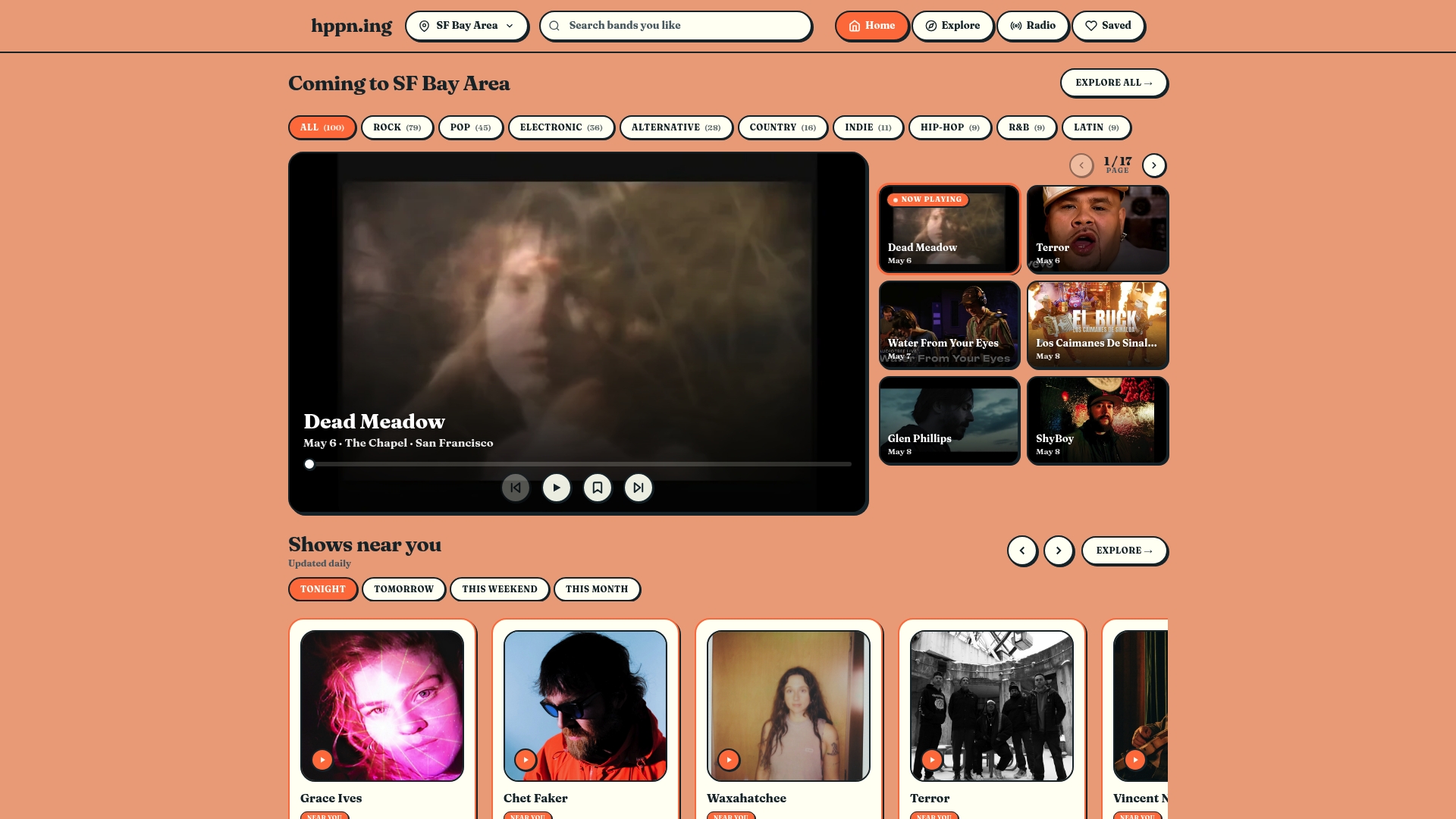
Hppn is built specifically for this problem. You want to know what's playing near you, who the artist actually sounds like before you commit, and whether the show is worth attending. Hppn lets you discover live music nearby, filter by location and event type, and preview artists through audio and video before you show up. You can also browse trending local artists to see who's gaining momentum in your city right now. The community notes section gives you real fan takes on venues and shows, which is more useful than any promotional event description. Stop searching across five different websites for the same information.
FAQ
What are the most common types of outdoor music events?
The most common types include single-night concerts at amphitheaters and venues, recurring free park series, major multi-day festivals, themed community events, and casual outdoor performances at breweries or plazas. Each type varies in cost, crowd size, and commitment level.
Are free outdoor music events worth attending?
Yes. Free outdoor concerts are often the best way to discover local artists and enjoy live music without financial commitment. Just confirm exact dates and come prepared with seating and weather-ready gear.
How do I find outdoor concerts near me?
Use a platform like Hppn to browse concerts by location, preview artists, and track upcoming shows. Local parks departments, arts organizations, and city event calendars are also reliable sources for community music gatherings.
What should I bring to an outdoor music event?
Bring a portable chair or blanket, sunscreen, a reusable water bottle, a light layer for evening temperature drops, and cash for vendors. Check what's prohibited at your specific event, as glass containers and large bags are commonly banned.
Do outdoor music festivals have different ticket tiers?
Yes. Major festivals typically offer General Admission, VIP, and premium group options. Pricing can range from around $119 for early access passes to several thousand dollars for private cabana packages, as seen at events like the AREA 506 Festival.