
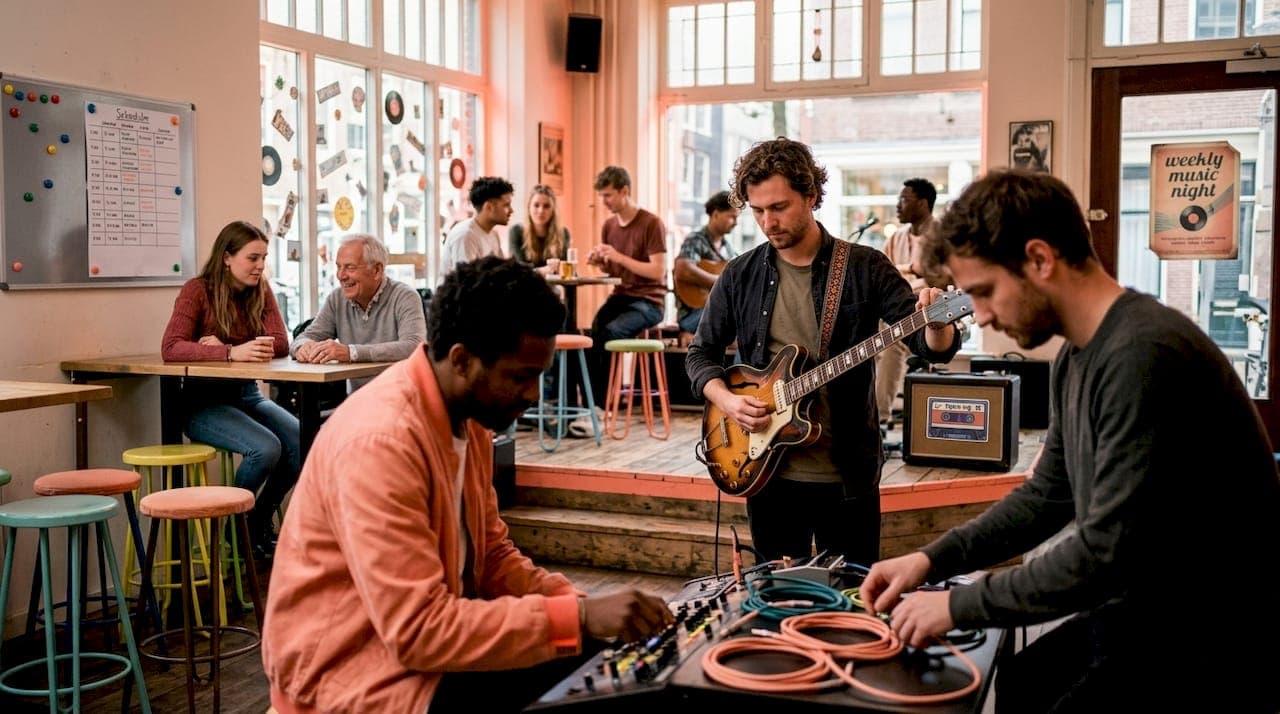
You probably walk past the flyers every week without thinking much about them. A bar hosts live music every Thursday. A community center runs a monthly acoustic showcase. A neighborhood park puts on free performances every summer Friday. These aren't random shows. They're recurring local music nights, and they do something far more significant than fill a calendar slot. They build scenes, sustain artists, and give communities a shared cultural rhythm that no streaming platform can replicate.
Table of Contents
- Key Takeaways
- What is a recurring local music night, exactly?
- Artist collaboration and community building
- How these events are organized and sustained
- Why these nights matter beyond the music
- My honest take on what makes these nights worth protecting
- Find your recurring music night with Hppn
- FAQ
Key Takeaways
| Point | Details |
|---|---|
| Consistent format defines them | Recurring music nights happen weekly, bi-weekly, or monthly with predictable structure, not just repeated bookings. |
| They serve artists differently | Musicians use these nights to experiment and collaborate outside the pressure of traditional commercial gigs. |
| Community is the real product | A core group of regulars drives long-term success more than headline talent. |
| Venues are surprisingly varied | Grocery stores, barns, parks, and community halls all host recurring nights, not just bars and clubs. |
| Discovery tools make them findable | Platforms like Hppn help fans locate nearby recurring events and preview artists before attending. |
What is a recurring local music night, exactly?
A recurring local music night is a live performance series scheduled at regular intervals, at a fixed or semi-fixed venue, with consistent programming identity. It returns. That consistency is the whole point.
Events typically run two to three hours in the evening, most often between 5 and 9 p.m., and they can occur weekly, bi-weekly, or monthly depending on the organizer's capacity and audience appetite. Ticket prices range from completely free to around $30 per person, which puts them well within reach for most community members.
The formats vary more than people expect. Here's a breakdown of the most common types:
| Format | Description | Typical Venue |
|---|---|---|
| Open mic night | Any performer can sign up to play | Bars, coffee shops |
| Curated showcase | Organizer books specific acts in advance | Theaters, community centers |
| Drop-in participatory event | Audience members join in (e.g., choirs) | Community halls, studios |
| Ambient or lounge series | Music accompanies socializing, not focused listening | Restaurants, galleries |
| Outdoor free series | Publicly funded or sponsor-supported performances | Parks, plazas |
What makes these different from a one-off concert isn't just the date on the calendar. It's the accumulated identity. A night that runs every first Friday of the month develops a personality, a regular crowd, and a reputation. Performers know what the room expects. Attendees know what they're walking into. That familiarity is genuinely rare in live music.
Some events lean toward the participatory end. A San Antonio drop-in choir, for example, costs about $20 per session and announces song selections weeks in advance so participants can prepare. That kind of structure turns passive audiences into active contributors, which deepens engagement significantly.
Pro Tip: If you're trying to find affordable recurring nights near you, check resources like budget-friendly music events before assuming local shows are out of your price range. Many are free.
Artist collaboration and community building
Here's where most people's understanding of recurring music nights falls short. They assume these events are just cheaper versions of traditional shows. They're not. They serve a fundamentally different purpose for musicians.
Some sessions host around 20 consistent musicians plus five to ten new performers weekly. Those regulars aren't performing for the paycheck. They're using the night as a low-stakes laboratory. They try new material, play with musicians they haven't worked with before, and get immediate audience feedback without the professional consequences of a ticketed headline show.
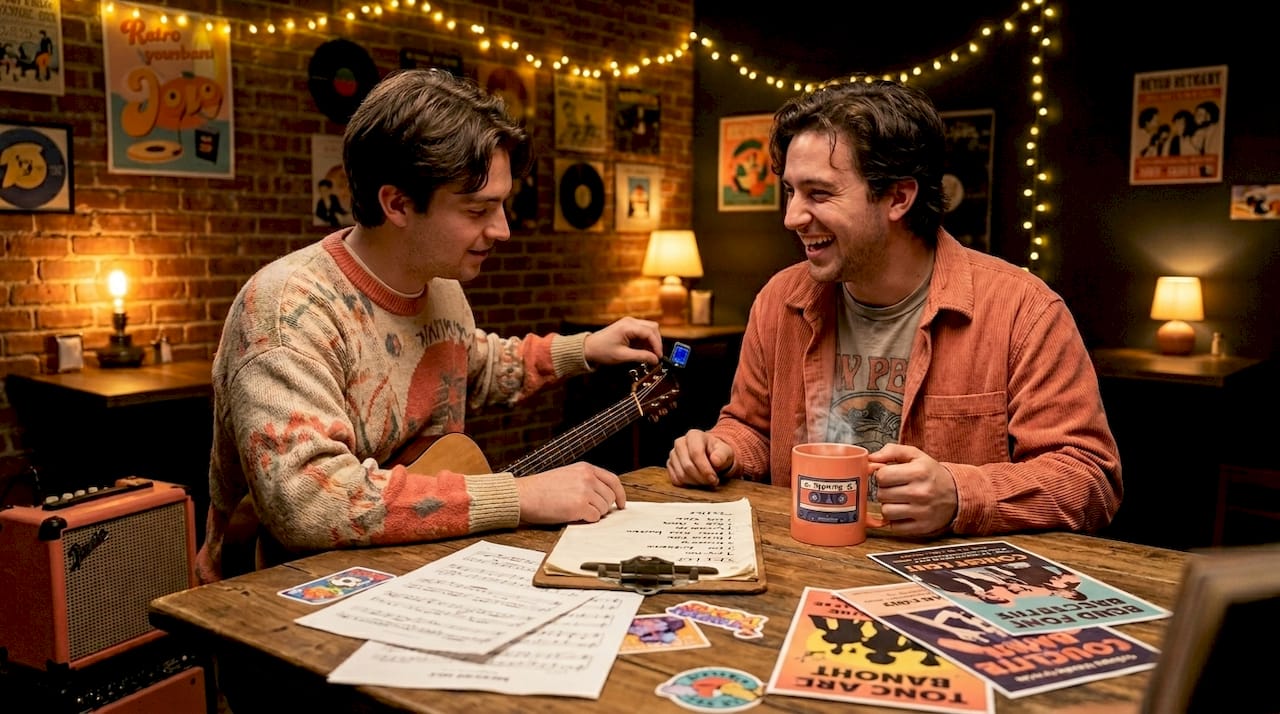
This matters because the traditional bar and club circuit is not a nurturing environment. Venues want proven draws. Promoters want names that move tickets. Newer or experimental artists get squeezed out of those spaces quickly. Recurring music nights exist in part to fill that gap, offering a space where artistic risk is not punished.
The L.A. music scene documented events that describe their weekly nights as having a "sermon-like" atmosphere, a weekly stress relief for artists who don't fit commercial molds. That framing tells you something important: for the musicians who rely on these nights, attendance isn't recreational. It's restorative.
For fans and community members, the effect compounds over time. You start recognizing faces. You start following specific performers you first heard at one of these nights. You start having opinions about the setlist and the room layout. That transformation from passive attendee to invested community member is exactly what makes recurring live music nights a different category of experience from the average concert.
- Musicians experiment with new material in a low-pressure environment
- Consistent performers build collaborative relationships across genres
- New performers gain experience in front of real, engaged audiences
- Fans develop genuine investment in artists they discover regularly
- The social fabric between performers and attendees strengthens over time
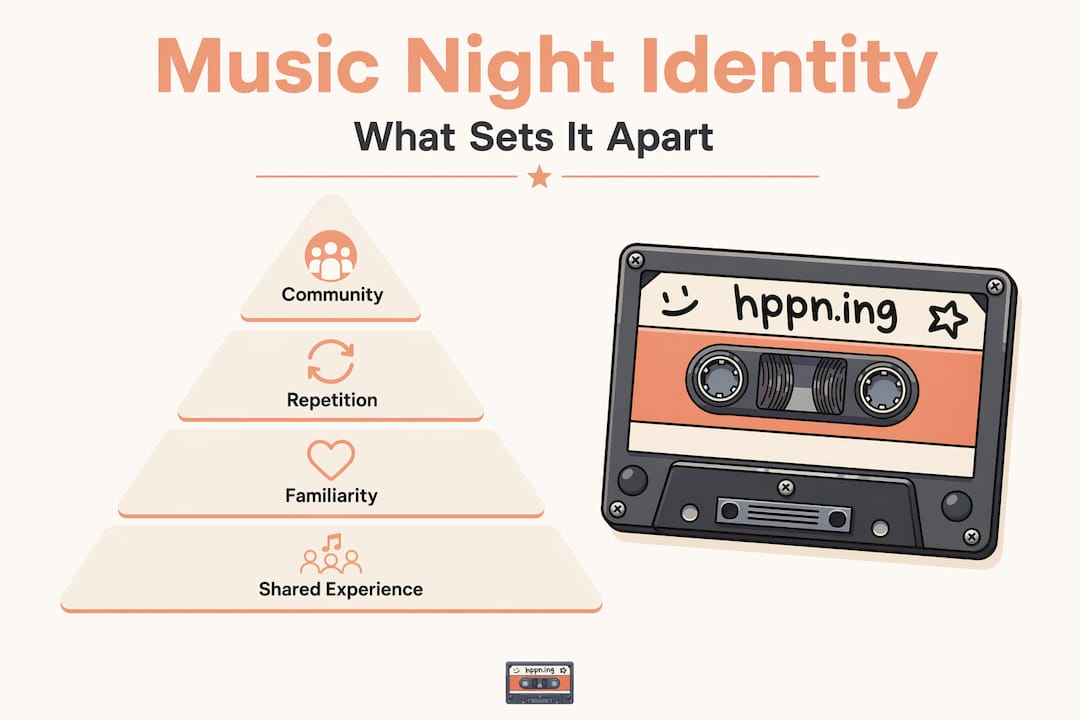
These relationships don't form at one-off shows. They form through repetition, familiarity, and shared experience built across many nights in the same room.
How these events are organized and sustained
Understanding how a recurring music night actually runs helps explain why some thrive for years while others disappear after a few months. The operational details matter.
-
Build a curated artist pool. Organizers typically book acts two to three weeks in advance from a roster of known performers, supplemented by fresh faces to prevent stagnation. This avoids the scramble of booking from scratch every cycle.
-
Partner with local businesses. Food vendors, local breweries, and nearby shops help offset costs and diversify the experience. Venues including grocery stores and community halls have become central to recurring music programming, especially post-pandemic, by folding music nights into broader community retail spaces.
-
Design the space intentionally. The most successful recurring events use layered spaces, a main stage for focused listening and a lounge or adjacent area for socializing. This accommodates people who want to dance, people who want to talk, and people who just want background music with a drink.
-
Balance experience levels. Organizers who blend seasoned artists with newer performers keep audiences curious while maintaining quality floors. A night that only books new talent feels uncertain. One that only books veterans feels stale.
-
Protect the core community. A regular base of 20 to 30 core musicians and attendees is critical to long-term success. These are the people who show up every week regardless of who's booked. Organizers who understand this invest in relationships with regulars, not just in booking marquee names.
The best venues for music nights are often not the obvious ones. A barn in rural Colorado, a natural grocery store, a church hall. These spaces come with built-in community trust and lower overhead, which makes sustainability far more realistic than relying on a traditional music club.
Why these nights matter beyond the music
Recurring community music shows do something that's hard to quantify but impossible to ignore once you've experienced it. They create a shared social reference point for neighborhoods and cities.
"Something that brings people together" is how organizers of one rural Colorado music series described their goal. That phrase sounds simple. But in a post-pandemic world where community gatherings have eroded, it's actually a profound statement about what recurring live music nights are trying to rebuild.
These events work as weekly social outlets, especially for people who work demanding hours and want a low-effort way to reconnect with their neighbors. Unlike a concert you have to plan months in advance, a recurring local music night is just there. You know it's happening Thursday. You show up or you don't. That accessibility removes the friction that keeps people isolated.
The economic case is also real. When a music night partners with local food vendors, it circulates money through the community rather than extracting it. Attendees who come for the music spend on food and drinks. Musicians who perform locally build their reputation locally, which generates more local bookings. It's a cycle that benefits everyone in the ecosystem.
- Recurring nights serve as consistent social anchors for community members
- They create inclusive spaces that welcome newcomers without requiring prior knowledge
- Local economies benefit when music nights partner with nearby businesses
- Regional identity strengthens when local artists consistently perform local material
- Mental health benefits from regular communal gathering are well documented
The connection between fans and local scenes is not accidental. It's cultivated, week after week, through events that show up reliably even when the crowd is small.
My honest take on what makes these nights worth protecting
I've followed local music scenes across a lot of cities, and the thing I've learned is this: the nights that last are never the ones with the best sound system or the biggest names. They're the ones where the organizer genuinely cares about the room.
What I've noticed repeatedly is that most people underestimate how much invisible labor goes into a recurring music night. The emails, the scheduling, the conversations with nervous new performers, the negotiations with venues, the social media posts that nobody likes. Organizers absorb all of that so that everyone else can just show up and enjoy it. That labor rarely gets acknowledged.
I also think we get confused about what "success" means for these events. A packed house every week is not the goal. A room full of the same 40 people who trust each other and genuinely connect over music, that's the goal. That smaller, committed crowd is what eventually grows into something bigger and more durable.
The events that feel like a spiritual home for misfit artists do something that commercial venues simply cannot replicate: they make people feel like they belong somewhere. That's rarer than a hit single and more lasting than a sold-out show.
If you're a music fan who has never found your recurring night, I'd encourage you to look beyond the obvious venues. The best nights are often in the places you'd least expect, and they've usually been running for longer than you think.
— Ari
Find your recurring music night with Hppn
If you've never had a "regular night," the kind you show up to automatically without overthinking it, Hppn was built to help you find one.
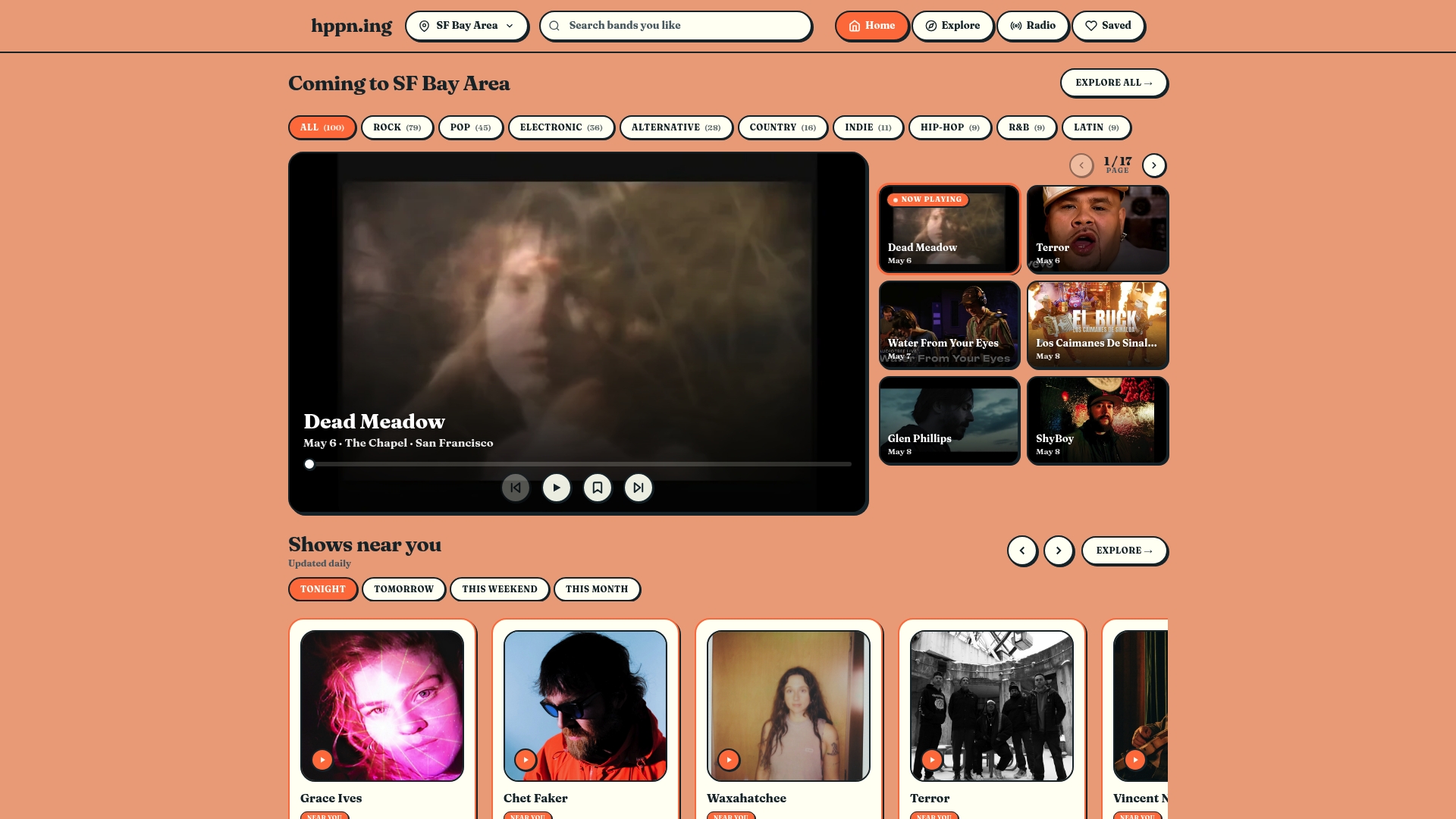
Hppn is a live music discovery platform focused specifically on emerging artists and local scenes. Rather than surfacing the same mainstream names, it helps you discover live music nearby with artist previews, audio and video samples, and real-time event information. You can browse by location, check out trending local performers through Hppn's music charts, and connect with other fans through community discussions about upcoming shows. If you've read this far and you're thinking about attending your first recurring night, or hosting one, Hppn gives you the tools to find what's already happening in your city and get involved without starting from scratch.
FAQ
What is a recurring local music night?
A recurring local music night is a live performance series held at regular intervals, typically weekly or monthly, at a consistent venue with an established programming identity. These events range from free outdoor series to ticketed showcases and serve both artists and community members.
How often do these events usually happen?
Most recurring music nights run weekly or monthly, with some operating bi-weekly. Events typically last two to three hours and are scheduled in the evening, making them accessible after work hours.
What types of venues host recurring music nights?
Recurring nights happen in a wide range of spaces including bars, parks, community centers, barns, and even grocery stores. Non-traditional venues often provide more community accessibility and lower overhead costs than dedicated music clubs.
Are these events the same as music open mic nights?
Not always. Music open mic nights are one format of recurring event where any performer can sign up, but many recurring music nights feature curated lineups, themed programs, or participatory formats like drop-in choirs. The shared element is consistency, not format.
How do I find recurring music nights near me?
Using a live music aggregator or a dedicated discovery platform like Hppn lets you browse events by location, preview performing artists, and track down community shows that don't always surface through general event search tools.