
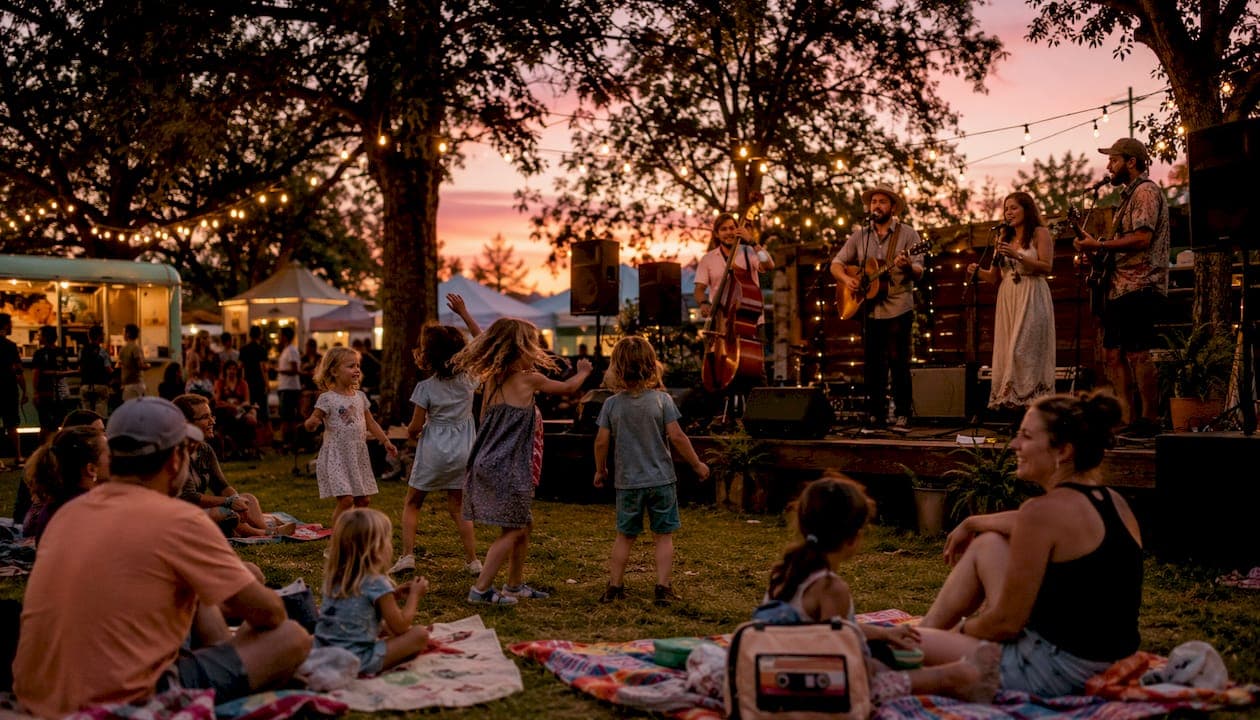
What are the main types of neighborhood music events?
Neighborhood music events come in five core formats, each with its own scale, vibe, and community role. Here is a quick breakdown before we go deeper into each one.
- Community concert series: Recurring outdoor performances, often weekly or monthly, held in parks or plazas. Programs like the Chicago Park District Night Out in the Parks run free rain-or-shine shows that draw families and regulars season after season.
- Block parties and street fairs: One-day or weekend events that close off streets for live music, food vendors, and local vendors. These tend to feature local acts like the Sawtooth Blues Band or Dawson Moon playing to neighbors who might never visit a traditional venue.
- Cultural celebrations: Events tied to a heritage, holiday, or ethnic tradition, featuring music that reflects the neighborhood's demographic identity. Think Lunar New Year performances, Juneteenth festivals, or Día de los Muertos gatherings.
- Open mic nights: Low-barrier, participatory events held in community halls, church basements, or coffee shops where anyone can sign up to perform. Event costs for a backyard open mic can run under $50.
- Outdoor music festivals: Larger, often annual events combining multiple stages, food trucks, and cultural booths. These are the neighborhood equivalent of a regional festival, scaled for a few city blocks rather than a fairground.
Each format serves a different purpose, but all of them share one goal: bringing live music into the spaces where people already live.
Table of Contents
- Real U.S. neighborhood music events worth knowing about
- Where these events happen and what you'll find there
- Why neighborhood music events matter beyond the music
- How to find and get involved in local music events
- Where neighborhood music events come from
- How neighborhood music events get organized and funded
- What makes these events hard to pull off
- Key Takeaways
Real U.S. neighborhood music events worth knowing about
The variety across American cities is striking. A few standout programs show what each format looks like in practice.
Chicago Park District Night Out in the Parks is one of the country's most established community concert series, running free performances across Chicago's park system each summer. The program rotates local artists through neighborhood parks, giving residents access to live music without a ticket price or a commute downtown. Alongside Chicago, the Vivo Performing Arts Neighborhood Arts series in Boston offers free concerts that bring professional performers directly into residential neighborhoods, often in spaces that rarely see live performance.
New York City's parks system runs one of the densest schedules of any city. NYC Parks free summer concerts span genres from jazz and folk to hip-hop and classical, with events like the Queens Jazz Trail Concert, West Harlem Summer Jazz Festival, and Folk Jams in Greeley Square Park running during the summer and fall seasons. Brooklyn Bridge Park hosts the Sounds at Sunset series, where Brooklyn Americana Music curates free sunset concerts featuring artists like Aurora Nealand and Saudia Young at Pier 3 Greenway Terrace.
Block parties in smaller cities follow a different rhythm. Local acts like the Sawtooth Blues Band and Dawson Moon anchor neighborhood street events in the Pacific Northwest, drawing crowds with a mix of blues, roots, and Americana. The Soulmates appear regularly at cultural block parties in the mid-Atlantic region, blending R&B and soul for multigenerational audiences. These aren't polished festival productions. They're neighbors playing for neighbors, often with a food truck parked nearby and kids running through the crowd.
The New York Philharmonic's Concerts in the Parks program adds a different dimension: youth ensembles from community partners perform in Central Park and Prospect Park before the main orchestra takes the stage, turning a classical concert into a community showcase.
Pro Tip: When attending a block party or street fair, arrive early. The opening acts at neighborhood events are often the most interesting, since they tend to be newer local artists who haven't built a following yet.
Where these events happen and what you'll find there
The setting shapes everything about a neighborhood music event, from the sound quality to who shows up.
Parks and open green spaces are the most common venue for outdoor music gatherings. They offer natural acoustics, room for blankets and lawn chairs, and enough space for food vendors to set up without crowding the stage. Many park concert series operate under specific environmental rules: Laguna Beach's Music in the Park, for example, bans single-use plastics, dogs, and drones to protect the local environment. These policies are becoming standard at well-run outdoor events.
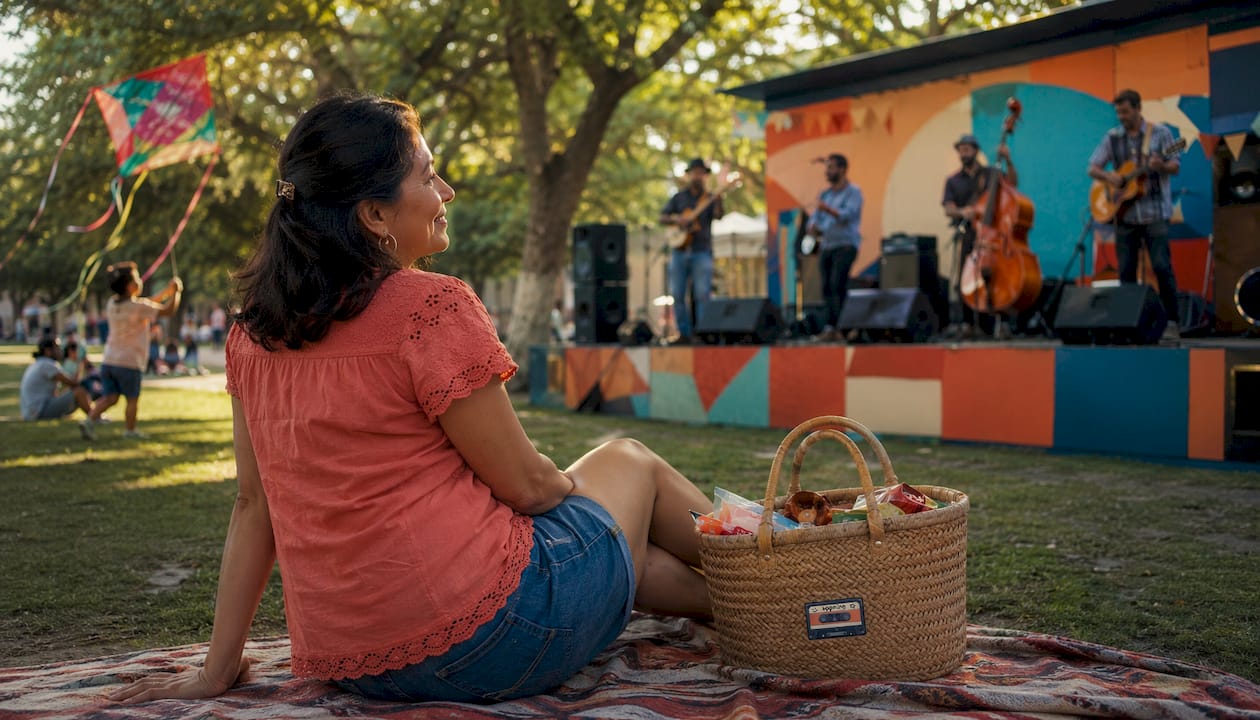
Streets and sidewalks host block parties and cultural parades, where the music moves with the crowd rather than anchoring to a fixed stage. Community halls and church basements are the natural home for open mic nights and acoustic sets, offering intimacy that a park cannot. Porches and backyards host the smallest and most informal gatherings, which typically don't require permits but still fall under local noise ordinances, especially for amplified sound after evening hours.
Beyond the stage itself, well-organized events typically include:
- Food trucks and local vendor booths that give nearby businesses a direct revenue bump
- Kid's music corners with instruments to touch and try
- Quiet zones for attendees who want to listen without the full crowd energy
- Volunteer greeters who help first-timers find their footing
Inclusive event design like this makes a real difference in who actually attends. An event with a quiet zone draws parents with young children and older residents who might otherwise skip it.
Pro Tip: Matching the music style to the venue pays off in attendance and atmosphere. Brass bands thrive at street fairs where the sound can expand outward; soft instrumentals work better at farmers' markets or courtyard settings where conversation matters as much as the performance.
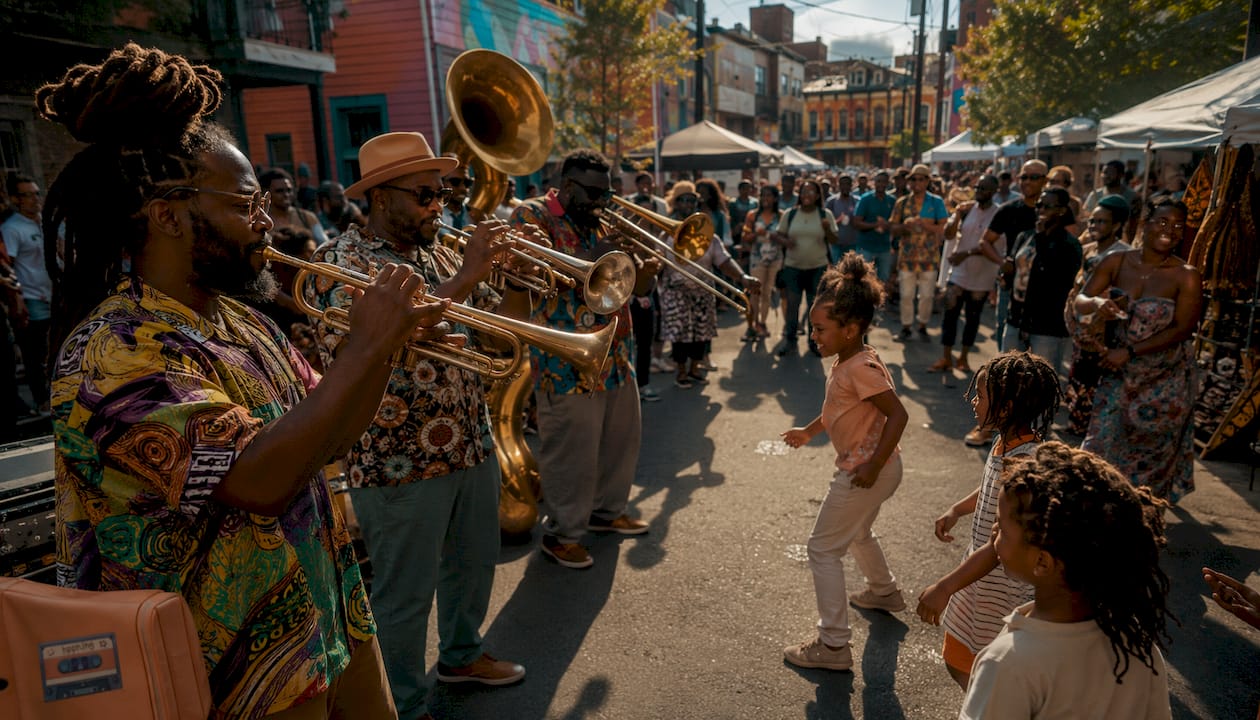
Why neighborhood music events matter beyond the music
The social return on a well-run neighborhood music event tends to outlast the event itself.
That "shared rhythm" effect is real. A block party that happens once is a nice afternoon. One that happens every summer for ten years becomes part of how a neighborhood understands itself. Organizers who run recurring events consistently report stronger turnout, deeper volunteer networks, and a measurable sense of local pride that persists between events.
The economic side is just as concrete. Seasonal festivals combining music with food and cultural booths create foot traffic that benefits nearby restaurants, shops, and vendors directly. A single well-attended block party can send hundreds of people past storefronts they'd never otherwise visit.
The social benefits stack up across demographics:
- Mixed-age crowds form naturally when the music is accessible and the setting is welcoming
- Mutual aid networks often grow out of the volunteer structures that run these events
- Cultural celebrations give immigrant and minority communities visible space in shared public life
- Local artists gain an audience and a reputation without needing a booking agent or a record deal
Local bartenders and café owners play an underrated role here. They function as informal promoters and cultural connectors, spreading word about upcoming acts and helping new residents plug into the local music scene organically. That kind of ground-level buzz is something no paid advertising fully replicates.
How to find and get involved in local music events
Finding neighborhood music events takes a little more effort than searching a mainstream ticketing platform, but the payoff is a more authentic experience.
- Community boards and neighborhood Facebook groups are often the first place local events get announced, sometimes weeks before they appear anywhere else.
- City parks department websites publish seasonal concert calendars. NYC Parks, Chicago Park District, and Boise's city site all maintain updated event listings.
- Local coffee shops, bars, and record stores post flyers and host their own shows. The role of local promoters in surfacing these events is significant and often invisible to people who rely only on apps.
- Hppn is built specifically for this kind of discovery. The platform lets you browse live music by location, preview artists through video and audio before you commit to attending, and follow emerging local performers who play neighborhood venues rather than arenas. If you want to find a blues guitarist playing a park series three blocks away, Hppn surfaces that where mainstream platforms don't.
- Volunteer as an event helper. Most neighborhood concerts run on a small crew of volunteers. Signing up puts you inside the event, connects you with organizers, and often gives you early access to the lineup.
Checking accessibility details before you go matters too. Not every event lists its quiet zones or family-friendly features prominently, so a quick message to the organizer saves a frustrating trip.
Where neighborhood music events come from
The tradition of public music in American neighborhoods stretches back further than most people realize. Brass band concerts in city parks were a fixture of late 19th-century American life, with municipal bandstands built specifically to host free public performances. The idea that live music belongs in shared civic space, not just in paid venues, is genuinely old.
The 20th century added new layers. The blues and jazz scenes that developed in cities like Chicago, New Orleans, and New York grew partly through neighborhood performance, with front porches, church halls, and street corners functioning as informal stages long before dedicated clubs existed. Cultural celebrations tied to immigrant communities, from Italian feast days to Caribbean carnival traditions, brought music into public streets as a form of identity and belonging.
The civil rights era gave neighborhood music events a new political dimension. Free outdoor concerts became tools for community organizing, drawing crowds and building solidarity in ways that indoor venues couldn't. Programs like the Chicago Park District's summer concert series emerged partly from this tradition, using public space and public funding to make culture accessible regardless of income.
Today, the diversity of genres at neighborhood events, folk, jazz, hip-hop, indie, and cultural music reflecting local demographics, reflects that layered history. The formats have evolved, but the underlying logic hasn't changed: music in shared space builds community.
How neighborhood music events get organized and funded
Most neighborhood music events run on a patchwork of funding sources, volunteer labor, and institutional support.
Community grants are a primary funding mechanism for recurring events. Local arts councils, neighborhood improvement districts, and city cultural affairs departments (like the Chicago Department of Cultural Affairs and Special Events) offer grants specifically for public programming. Organizers who secure multi-year grants can build rotating artist lineups and grow audience engagement over time rather than starting from scratch each season.
Sponsorships from local businesses fill gaps that grants don't cover. A food truck operator who pays a vendor fee, a hardware store that donates folding chairs, or a brewery that sponsors the sound system all contribute to an event's viability without requiring a large budget. The cost range for neighborhood events runs from under $50 for a backyard open mic to up to $5,000 for a block party with permits, a PA system, and paid performers.
Volunteer networks handle most of the labor. Setup, teardown, crowd management, and artist hospitality typically fall to community members who show up because they care about the event, not because they're paid. This is where the mutual aid dimension of neighborhood music events becomes most visible: the same people who staff the event often become its most loyal attendees.
Institutional partnerships add credibility and reach. Programs like Vivo Performing Arts and the New York Philharmonic's parks concerts combine professional production with community access, using institutional funding to bring quality performances to neighborhoods that wouldn't otherwise host them.
What makes these events hard to pull off
Running a neighborhood music event looks simple from the outside. It rarely is.
Permits and noise regulations are the first obstacle. Amplified sound in public spaces requires permits in most U.S. cities, and the timeline for approval can stretch weeks. Backyard and porch concerts often avoid this, but they're still subject to local quiet-hour rules, which vary by municipality and can shut down a show mid-set if a neighbor complains.
Weather is the variable no organizer fully controls. Outdoor music gatherings live and die by the forecast. Events like Chicago's park concerts run rain-or-shine, which requires covered staging, waterproof equipment, and a crowd willing to stick around in a drizzle. Smaller events without that infrastructure often cancel, which erodes audience trust over time.
Booking and artist compensation create tension between budget and quality. Paying local artists fairly while keeping the event free for attendees requires either strong sponsorship or grant funding. Events that rely entirely on "exposure" as payment tend to burn through their artist relationships quickly.
Community conflict is real too. Noise, parking, and crowd behavior generate complaints from residents who didn't choose to live next to a concert. Good organizers address this proactively by notifying neighbors in advance, setting clear end times, and building in buffer zones between the stage and nearby homes. The family-friendly features that make events welcoming, quiet zones, greeters, accessible pathways, also help manage the community friction that comes with bringing a crowd into a residential space.
Key Takeaways
Neighborhood music events are most successful when they combine consistent scheduling, inclusive design, and diverse funding to build lasting community traditions rather than one-off gatherings.
| Point | Details |
|---|---|
| Five core event formats | Concert series, block parties, cultural celebrations, open mic nights, and outdoor festivals each serve distinct community needs. |
| Cost range is wide | Events run from under $50 for a backyard open mic to up to $5,000 for a permitted block party with sound equipment. |
| Recurring events build identity | Community organizers note that regular schedules turn ordinary spaces into cultural anchors with lasting social bonds. |
| Inclusive design drives attendance | Kid's corners, quiet zones, and volunteer greeters make events accessible across ages and backgrounds. |
| Funding comes from multiple sources | Grants, local business sponsorships, and volunteer labor typically combine to make neighborhood concerts financially viable. |