

Post-concert rating is the practice of documenting and scoring a live performance using structured criteria immediately after the show ends. When you rate concerts after attending, you preserve the emotional texture and sensory details that fade within hours. A quick numeric score anchors your memory, while a written review gives that score meaning. This guide covers the tools, criteria, and step-by-step process that turn raw impressions into credible, useful feedback for the live music community.
What tools and preparation help you rate concerts accurately after attending
The right tools make the difference between a vivid review and a vague memory. Concert tracker apps like Encore let you rate shows in under 60 seconds on a 0–10 scale, logging stats and notes before you reach the parking lot. Voice memo apps on any smartphone serve as a fast backup when typing feels slow. A small notebook works just as well for fans who prefer analog methods.
Preparation matters as much as the tools themselves. Setting your evaluation criteria before the show gives you a mental checklist to run through during the performance. Decide in advance that you will assess sound quality, artist energy, setlist pacing, and crowd interaction. That pre-show commitment means you observe with purpose rather than just absorbing the moment passively.

Phone-free venues present a real challenge. Policies at venues like those using Yondr pouches lock your phone away for the entire set. The solution is simple: the moment you exit and retrieve your phone, record a voice memo. Venue rules like these can actually deepen the experience, but they require you to rely on memory until you are outside.
Pro Tip: Set a recurring post-show alarm for 15 minutes after your typical concert end time. When it fires, you record your voice memo or drop a quick numeric rating before the adrenaline fades.
Here is a quick comparison of common rating tools by speed and depth:
| Tool | Speed | Detail level | Best for |
|---|---|---|---|
| Concert tracker app (e.g., Encore) | Very fast | Moderate | Quick numeric logs |
| Voice memo app | Fast | High | Emotional, raw impressions |
| Notes app | Moderate | High | Structured bullet points |
| Physical notebook | Slow | Very high | Detailed in-venue notes |
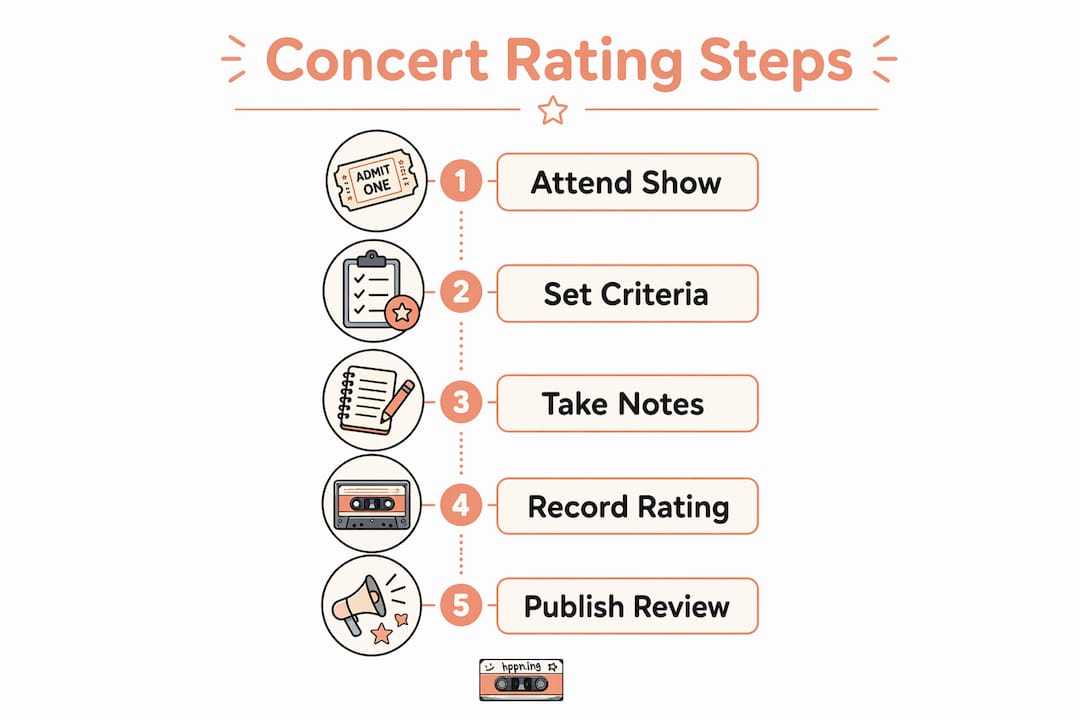
How to rate a concert well: a step-by-step process
A strong concert review follows a clear sequence. Skipping steps produces thin, forgettable feedback. Follow this process every time, and your reviews become consistent, credible records.
-
Record anchor notes within 15 minutes of leaving. Speak or type three to five raw impressions. Include one specific detail: the sound mix on the bass guitar, the moment the crowd went silent, the artist's comment between songs. Quick numeric ratings shortly after the concert preserve emotional intensity before memory softens.
-
Sleep on it. Your brain consolidates the experience overnight. What felt overwhelming at 11 PM often becomes clearer by morning.
-
Draft the full review within 24–48 hours. Writing within this window improves accuracy by preserving sensory and emotional specifics that blur after two days. Aim for 500–800 words for a comprehensive review.
-
Structure your draft in four parts. Open with a one-paragraph introduction that names the artist, venue, and date. Follow with a performance analysis covering sound, energy, and setlist. Then write a highlights and lowlights section with specific examples. Close with a one-paragraph conclusion that states your overall verdict.
-
Write everything first, edit tone second. Draft all positive and negative thoughts without filtering. Self-censorship at the drafting stage produces bland, hedged reviews. Calibrate the language during revision.
-
Add concrete evidence to every claim. "The sound was bad" tells readers nothing. "The vocals were buried under the kick drum from the third song onward" tells them exactly what happened and why it mattered.
-
Assign your final score. Return to your initial numeric anchor. Adjust it up or down based on what the full draft revealed. A score without a written review is a statistic. A review without a score is hard to compare across shows.
Pro Tip: Read your draft aloud before publishing. Sentences that sound awkward when spoken usually need rewriting. This single habit catches most tone and clarity problems.
Understanding how setlists are planned helps you evaluate pacing more accurately. A front-loaded setlist that burns through hits early often leaves the crowd flat by the encore. Knowing that context makes your analysis sharper.
What criteria should concertgoers use to evaluate live performances?
Consistent evaluation metrics move a concert review from reactive to analytical. Applying the same criteria across every show you attend, such as songwriting, vocal performance, and production, builds a reliable personal record you can compare over time. Without consistent criteria, each review starts from scratch and reflects mood more than reality.
The core criteria every concertgoer should use:
- Sound quality. Was the mix clear? Could you hear vocals over instruments? Live sound differs significantly from studio recordings, so judge it on its own terms.
- Artist performance. Did the performer engage the crowd, move the stage, and deliver vocally? Energy and technical skill are separate things. Note both.
- Setlist pacing. Did the show build momentum or stall? A well-paced set feels like a story with a beginning, middle, and peak.
- Visuals and production. Lighting, staging, and video elements either support the music or distract from it. Note which.
- Audience engagement. Did the crowd respond? A flat audience sometimes reflects the artist's failure to connect, not just the crowd's mood.
- Value relative to expectations. Reviews that compare delivery to expectations set by ticket price, marketing, and artist reputation provide deeper value to readers than pure summaries.
Venue and environmental factors belong in your analysis too. Phone-free policies, venue size, and sightlines all shape the artist-fan dynamic. A cramped general admission floor at a 300-capacity club creates intimacy that a 20,000-seat arena cannot replicate. Your rating should reflect the context, not just the performance in isolation.
The table below shows the difference between an informal impression and an analytical evaluation:
| Criterion | Informal impression | Analytical evaluation |
|---|---|---|
| Sound quality | "It sounded great" | "Vocals were clear; bass was slightly overpowering in the first three songs" |
| Artist performance | "They were amazing" | "Strong vocal control; engaged the crowd with direct eye contact and improvised banter" |
| Setlist pacing | "Good setlist" | "Opened with three deep cuts, peaked at the midpoint, and closed with two anthems" |
| Value for price | "Worth it" | "At $85 per ticket, the 90-minute set and production quality justified the cost" |
Common mistakes to avoid when sharing concert opinions
The most damaging mistake in concert reviewing is waiting too long to write. Undocumented concert memories become vague statistics rather than specific, shareable stories. Two days after a show, you remember the feeling but lose the detail. A week later, you remember almost nothing you could call evidence.
Other common pitfalls:
- Vague language without evidence. "The energy was incredible" is not a review. "The crowd rushed the barrier during the third song and the artist stepped off the stage to sing among them" is a review.
- Reviewing your expectations instead of the show. If you wanted a different setlist, say so clearly and separately from your assessment of what actually happened.
- Ignoring the negatives. A review that only praises reads as a fan post, not an honest assessment. Credibility comes from balance.
- Over-editing early drafts. Smoothing out your raw impressions too soon removes the honesty that makes reviews worth reading.
Pro Tip: For phone-free shows, whisper three specific observations to yourself as you walk out. Repeat them until you can record a voice memo. Immediate voice memos after restricted-device events preserve raw emotional details that typed notes cannot fully capture.
| Mistake | Corrective action |
|---|---|
| Waiting days to write | Record anchor notes within 15 minutes of leaving |
| Vague language | Replace adjectives with specific observations |
| Only positive feedback | Write negatives first in draft; balance in revision |
| Premature tone editing | Draft freely; shape tone only during final revision |
| Ignoring venue context | Note venue size, policies, and sightlines as separate factors |
Key takeaways
Rating concerts effectively requires prompt documentation, consistent criteria, and evidence-backed observations written within 24–48 hours of attending.
| Point | Details |
|---|---|
| Rate immediately after leaving | Record a numeric score or voice memo within 15 minutes to lock in emotional detail. |
| Use consistent criteria | Evaluate sound, performance, pacing, visuals, and value at every show for fair comparisons. |
| Write within 24–48 hours | Reviews drafted in this window are more accurate and vivid than delayed ones. |
| Draft freely, edit later | Write all impressions without filtering first; refine tone and language during revision. |
| Back every claim with evidence | Replace vague adjectives with specific, observable details from the performance. |
Why I stopped waiting until the next day to write my reviews
I attended a phone-free show at a small club in Brooklyn. No notes, no recordings, just the music. By the time I got home, I had the feeling but almost none of the specifics. I remembered the artist was great. I could not tell you why. That experience changed how I approach every show.
Now I record a voice memo the second I hit the sidewalk. Three sentences, spoken fast, before I even find my friends. That raw audio becomes the spine of every review I write. The live music experience checklist I run through before each show gives me the criteria. The voice memo gives me the evidence. Together, they produce something worth reading.
The other shift that changed my reviews was comparing shows to each other rather than rating each one in isolation. When you apply the same criteria to a hundred concerts, patterns emerge. You start to recognize what genuinely great sound production feels like versus what you just got used to. Your reviews become more useful to other fans because they carry that context.
Writing reviews also changed how I listen. Knowing I will need to describe the setlist pacing makes me pay attention to it during the show. That attention makes the experience richer, not more clinical. The review and the memory reinforce each other.
— Ari
Where Hppn fits into your concert rating practice
Hppn is built for fans who take live music seriously. The platform lets you preview artists and find shows near you before you commit to a ticket, so your expectations are grounded in actual sound rather than hype.
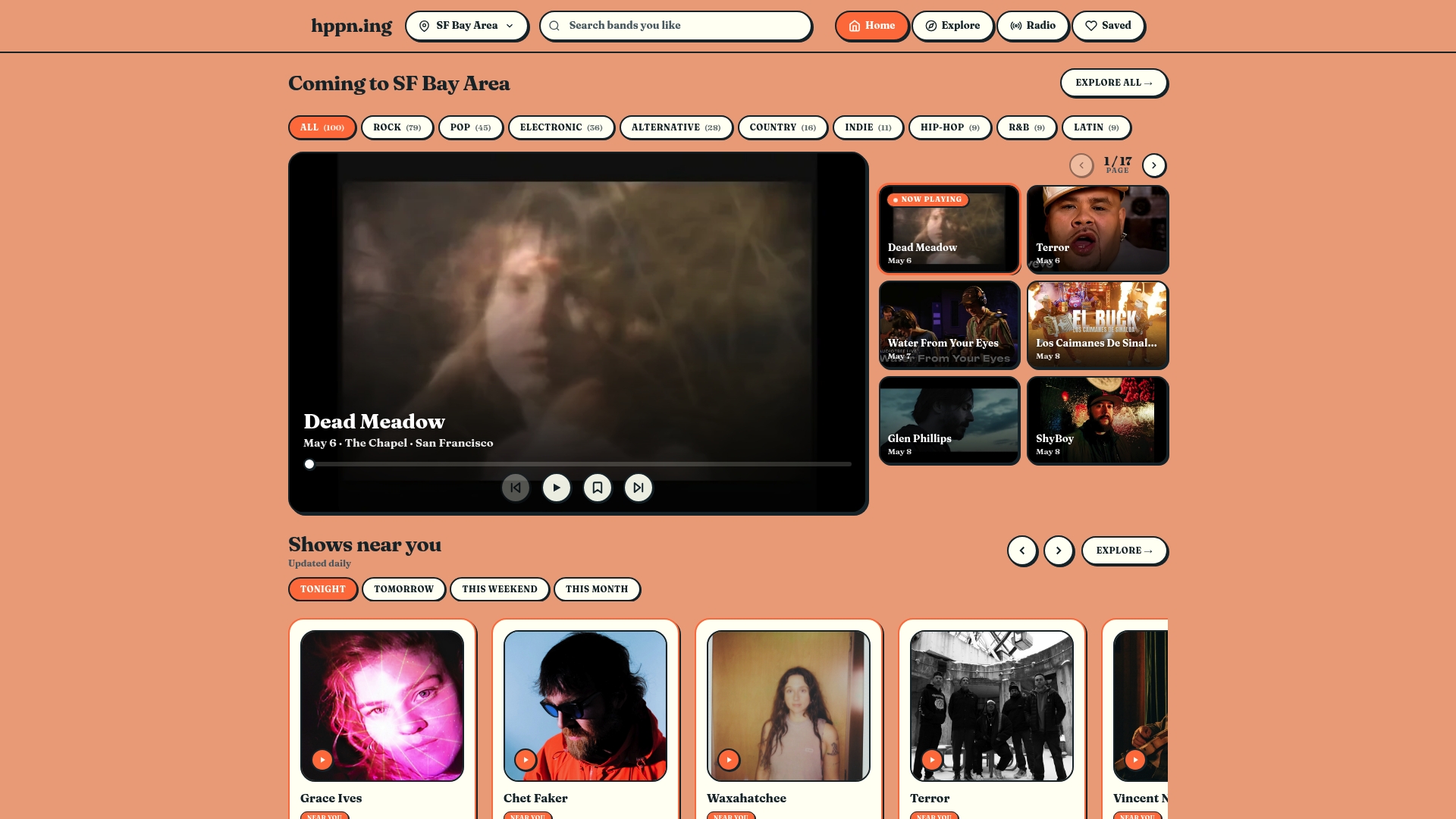
After the show, Hppn's community notes give you a place to share your ratings and observations with other fans who attended the same event. You can browse what others noticed, compare impressions, and build a personal record of every show you have attended. For fans who want to go deeper, the live music charts surface trending artists worth catching before they outgrow the small venues where the best shows happen.
FAQ
How soon should I write a concert review after attending?
Write your full review within 24–48 hours of the show. Record a quick numeric rating or voice memo within 15 minutes of leaving to anchor your memory before details fade.
What is the ideal length for a concert review?
A comprehensive concert review runs 500–800 words. That length is enough to cover sound, performance, setlist, and highlights without padding.
How do I rate a concert fairly if I disliked the artist going in?
Apply the same criteria you use for every show: sound quality, performance energy, setlist pacing, and value for price. Note your prior bias in the review so readers can weigh your perspective accordingly.
What should I do if the venue had a phone-free policy?
Record a voice memo the moment you exit the venue. Speak three to five specific observations before you do anything else. Those raw details become the foundation of your written review.
Does venue quality affect how I should rate the artist?
Rate the artist and the venue separately. A poor sound mix caused by venue acoustics is not the artist's failure. Noting both gives readers a complete picture of the experience.