

Live music is defined by a combination of physical acoustics, real-time performer energy, and audience interaction that no studio recording can fully replicate. The gap between a concert and a playlist is not just about sound quality. It runs deeper, into your nervous system, your body, and the shared space you occupy with hundreds of strangers. Understanding why live music sounds different from recordings means looking at three converging forces: the physics of the room, the biology of your brain, and the human unpredictability of performance. Each one shapes what you hear and feel in ways that a pair of headphones simply cannot deliver.
Why does live music sound different from recordings?
The short answer is that live music is a full-body event. A studio recording captures sound. A concert generates it around you, through you, and between you and everyone else in the room.
Room acoustics are the first major factor. Every venue has a unique acoustic signature shaped by its size, materials, and geometry. Sound waves bounce off walls, ceilings, and floors before reaching your ears. That natural reverberation adds depth and warmth that studio engineers spend hours trying to recreate artificially. A cathedral, a 300-seat club, and an outdoor amphitheater each produce a completely different version of the same song.
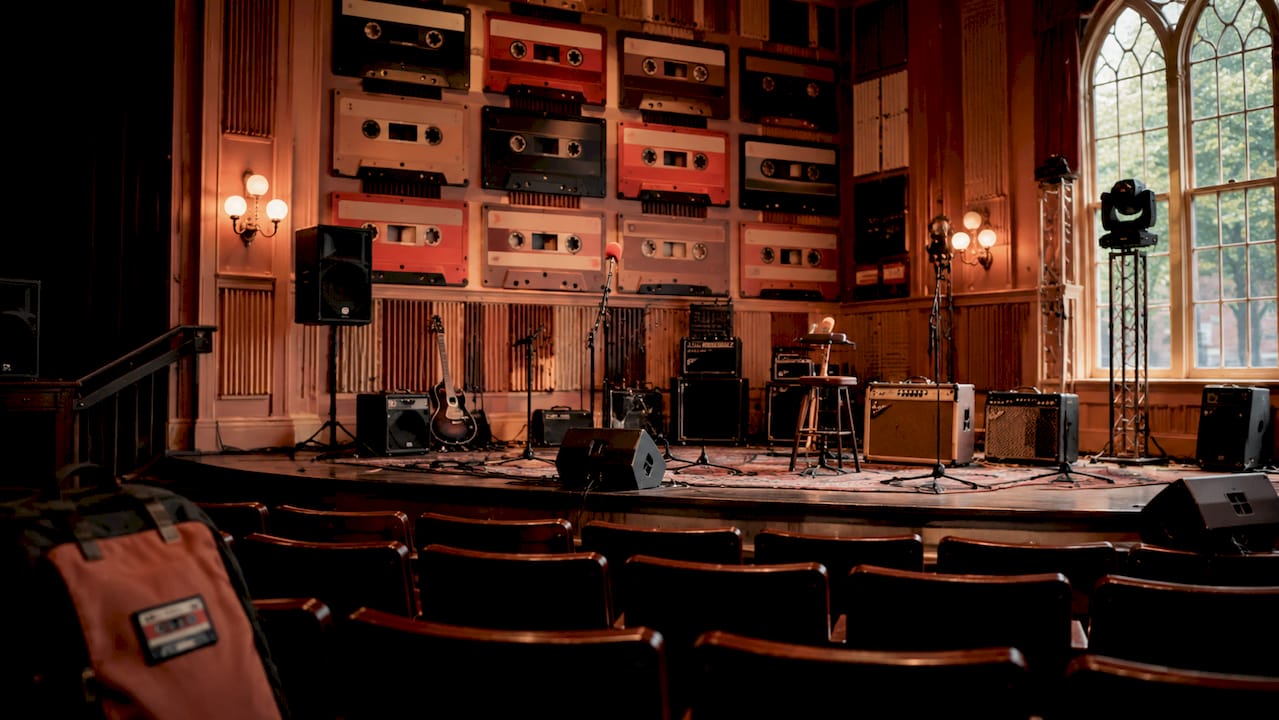
The ambient sounds in live concerts also play a larger role than most listeners realize. Crowd murmurs, the crack of a snare drum bleeding into a vocal mic, the low-frequency rumble of a bass cabinet vibrating the floor beneath your feet. These elements add texture and authenticity that a sterile studio track deliberately removes. The live acoustic environment is not a flaw. It is part of the experience.
Studio environments are built for the opposite goal. Engineers use isolation booths, acoustic panels, and directional microphones to eliminate bleed and room noise. The result is a clean, controlled signal that translates well across any playback system. That clarity is a trade-off. What you gain in precision, you lose in spatial immersion.
- Natural reverberation gives live sound a three-dimensional quality that stereo mixes compress into two channels.
- Crowd noise and ambient bleed create a sonic context that signals "this is real and happening now."
- Low-frequency physical vibration from speakers and instruments registers in your chest and feet, not just your ears.
- Microphone placement limits in live settings mean engineers must balance clarity against capturing the room's energy.
Pro Tip: If you want to hear how dramatically acoustics change a performance, listen to the same artist's studio album back-to-back with a live recording from a small venue. The difference in spatial depth is immediately obvious.
How does live music affect your brain and body differently?
The physiological gap between live and recorded music is measurable and significant. A 2026 randomized controlled pilot study with 130 participants found elevated heart rate and stronger emotional arousal in live concert settings compared to livestreamed or recorded performances. That finding matters because it confirms that the body responds to live music as a distinct biological event, not just a louder version of what you hear at home.
The brain responds differently too. Research published in the Proceedings of the National Academy of Sciences shows that live music triggers stronger amygdala activation and more complex neural patterns than recorded music. The amygdala is the brain's emotional processing center. When it fires more intensely, you feel music more deeply. That is the neurological basis for why concerts can bring people to tears over songs they have heard hundreds of times on a playlist without any emotional reaction.
"Live music is a conversation where performers adapt to audience energy in real-time, creating a reciprocal relationship that recordings simply cannot simulate." — Bigger Better Brains research summary
The phenomenon researchers call "kama muta," a Sanskrit-derived term for the feeling of being suddenly moved or touched, scores significantly higher in live settings than in recorded ones. The physical presence of musicians on stage is a key driver. Seeing a performer breathe, sweat, and make mistakes activates a different kind of attention in the listener. You are not just hearing music. You are witnessing a human being create it in real time.
Live music's unpredictability also forces a more focused listening state. When you stream a song, you can pause, rewind, or skip. At a concert, you cannot. That loss of control sharpens your attention and deepens your emotional engagement with every moment as it passes.
How do performers and audiences shape the live sound together?
Live performance is not a one-way broadcast. It is a feedback loop between the stage and the crowd. Performers read the room constantly, adjusting tempo, volume, and energy based on what they feel coming back from the audience. That real-time adaptation creates a version of the song that exists only once, in that room, on that night.
Here is how that dynamic plays out in practice:
- Audience energy shifts the performance. A quiet crowd pulls a singer inward, toward intimacy. A loud crowd pushes a band to play harder and faster. Neither response is scripted.
- Micro-timing variations communicate emotion. Slight tempo and volume deviations in live performances convey tension and vulnerability that polished studio tracks edit out. A drummer who rushes a fill during a climactic moment is expressing something. A quantized studio track cannot do that.
- Shared timing creates collective presence. When a crowd claps in unison or sways together, they become part of the sonic event. That shared timing and heightened engagement is a documented feature of live music, not just a feeling.
- Artist endurance and adaptability show. Live performance contexts reveal how an artist handles pressure, fatigue, and the unexpected. A unique one-time shared experience emerges from that exposure, one that a studio session never demands.
Pro Tip: Pay attention to the moments when a live performance deviates from the recorded version. A held note that goes longer than expected, a tempo that drags slightly before a chorus. Those are the moments where the performer is communicating something the studio version could not hold.
What are the technical differences between live recordings and studio albums?
The gap between how live recordings differ from studio albums is rooted in engineering constraints, not just artistic choices. Studio albums use multi-track recording, where each instrument is captured in isolation and mixed independently. Engineers can fix a flat note, tighten a sloppy rhythm, or add reverb after the fact. The final product is a constructed version of the song, assembled from the best parts of multiple takes.
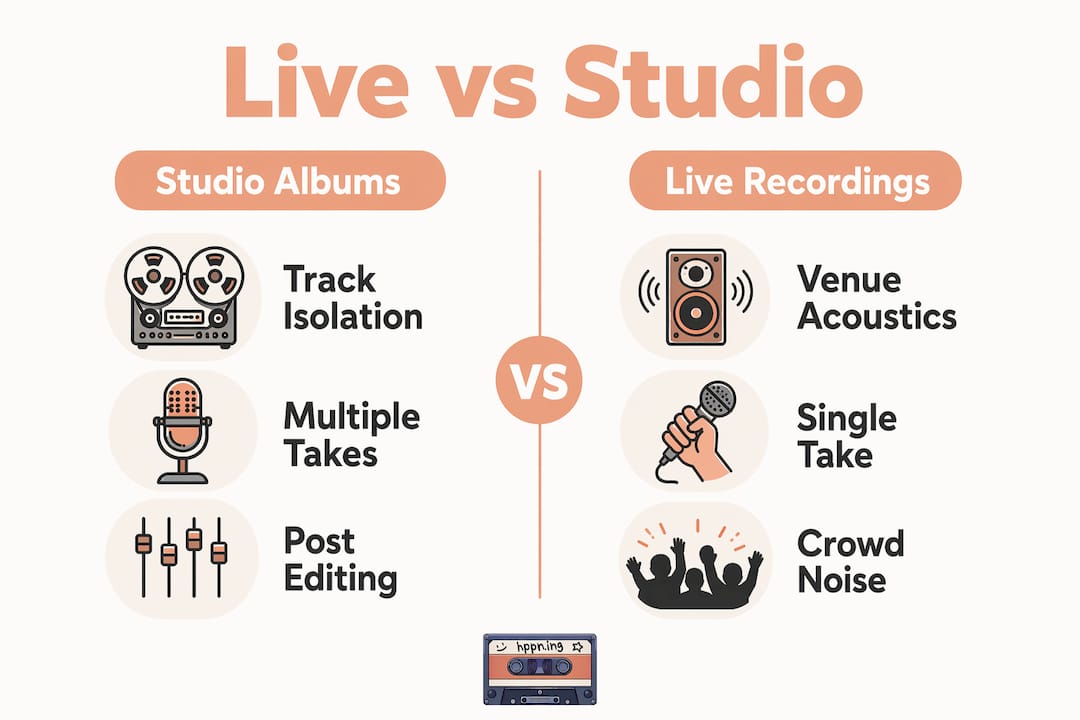
| Factor | Studio recording | Live recording |
|---|---|---|
| Instrument isolation | Full isolation per track | Bleed between mics is common |
| Editing capability | Unlimited post-production | Limited, mostly real-time |
| Acoustic environment | Controlled, treated room | Variable venue acoustics |
| Crowd noise | None | Present throughout |
| Emotional texture | Polished and consistent | Raw, variable, and unrepeatable |
Live recordings contend with venue acoustics, mic placement limits, and crowd noise simultaneously. Engineers working a live show cannot isolate the guitar from the drum kit. Sound bleeds between microphones, and the room itself becomes part of the mix. That bleed is not always a problem. Many engineers and producers argue that instrument bleed and room acoustics captured together preserve the performance cohesion and feel that multi-track isolation destroys.
The headphone mix that musicians use during live recording sessions also affects performance quality. When a guitarist hears themselves clearly in the monitor, they play differently than when they are fighting for sonic space in a loud room. That environmental pressure shapes the performance and, by extension, the sound that reaches the listener.
The trade-off is clear. Studio albums offer precision and repeatability. Live recordings offer authenticity and presence. Neither is objectively better. They are different products serving different emotional needs.
Key Takeaways
Live music sounds different from recordings because it combines physical acoustics, neurological arousal, performer-audience feedback, and unrepeatable human moments that studio production deliberately removes.
| Point | Details |
|---|---|
| Room acoustics shape the sound | Natural reverberation and venue geometry create spatial depth no studio mix fully replicates. |
| Live music triggers stronger physical responses | A 2026 study found elevated heart rate and higher emotional arousal scores in live versus recorded settings. |
| Performer-audience feedback is real | Artists adapt tempo, volume, and energy to crowd response, making every show a unique sonic event. |
| Studio albums are constructed, not captured | Multi-track isolation and post-production editing produce precision at the cost of spontaneity and feel. |
| Imperfections carry emotional information | Micro-timing variations and performance deviations in live music communicate vulnerability that polished recordings remove. |
Why I think recordings will never close the gap
I have spent years listening to both formats obsessively, and the argument that high-resolution audio or spatial sound technology will eventually replicate the concert experience misses the point entirely. The difference is not about fidelity. It is about presence.
When you are in a room where music is being made, your brain is doing something it does not do with a recording. It is tracking a living human being, reading their body language, anticipating their next move, and participating in a shared moment with everyone around you. That is a multi-sensory live experience that no playback format has ever captured, because it is not primarily an audio event.
What I find most compelling is the role of imperfection. The cracked note, the tempo that rushes before a big chorus, the moment a performer forgets a lyric and laughs. These are not failures. They are proof that something real is happening. Studio recordings sand all of that away in the name of quality, and in doing so, they remove the evidence of human presence. That is the trade-off nobody talks about honestly.
My advice is to stop treating live and recorded music as competing formats. They serve different purposes. A studio album is a document. A concert is an event. Use recordings to learn the songs deeply, then bring that knowledge into a live room and let the experience rewrite what you thought you knew about the music.
— Ari
Hppn makes finding your next live experience simple
The gap between knowing why live music feels different and actually getting into a room where it is happening is where most music fans get stuck. Hppn closes that gap.

Hppn lets you preview artists and find shows near you before you commit to a ticket, so you walk in already connected to the music. Browse trending local artists who are building their live sound right now, or search artist profiles and audio samples to find performers whose energy matches what you are looking for. Hppn focuses specifically on emerging and underground artists, the ones whose live shows carry the raw, unpolished energy that this article is entirely about.
FAQ
Why does live music feel more emotional than recordings?
Live music triggers stronger amygdala activation and higher "kama muta" scores than recorded music, according to neuroscience research. The physical presence of performers and the shared energy of a crowd amplify emotional responses beyond what headphones can produce.
What role do venue acoustics play in live sound?
Every venue creates a unique acoustic signature through its size, materials, and geometry. Natural reverberation and sound reflections add spatial depth and warmth that studio recordings remove through acoustic treatment and isolation.
How do live recordings differ from studio albums technically?
Studio albums use multi-track isolation and unlimited post-production editing. Live recordings capture instrument bleed, crowd noise, and room acoustics in real time, which limits editing but preserves performance cohesion and emotional authenticity.
Why do small imperfections make live music sound better?
Slight tempo variations and volume deviations in live performances communicate emotional tension and human presence. Studio production removes these deviations for consistency, but in doing so strips out the vulnerability that makes music feel alive.
Can livestreamed concerts replicate the live music experience?
Research from a 2026 pilot study found that livestreamed performances produced lower heart rate and emotional arousal scores than in-person concerts. Physical presence, ambient sound, and shared timing with other audience members are factors that streaming cannot reproduce.