

Local concert ticket options are defined by five main admission categories: general admission, reserved seating, VIP packages, lawn tickets, and accessible seating. Each category delivers a different experience, carries a different price, and suits a different type of fan. Knowing the difference before you buy saves money and prevents disappointment on show night. Platforms like Live Nation and Ticketmaster list all five types, but the smartest fans understand what they are buying before they click checkout.
1. What are the main types of local concert ticket options?
Concert admission falls into a handful of clear categories. Experts recommend limiting ticket tiers to three or four main types to reduce buyer decision fatigue. The standard breakdown includes general admission, reserved seating, VIP or premium, lawn, and accessible seating. Each type serves a distinct purpose and fits a different budget or comfort level.
Understanding these categories upfront is the single most useful concert ticket purchase tip you can apply. Fans who skip this step often overpay for a standing spot or underpay and end up far from the stage with a blocked view.

2. What is general admission and who is it best for?
General admission (GA) is an unreserved ticket that grants entry to a standing or open floor area. There are no assigned seats. You claim your spot by arriving early, and the closer to the stage you want to be, the earlier you need to show up.
GA tickets are typically the most affordable local live music tickets at any venue. The trade-off is physical. You stand for the entire show, navigate crowds, and compete for position. For fans who want raw energy and proximity to the artist, GA is the right call. For fans who want comfort or have mobility concerns, it is not.
Key GA characteristics:
- No assigned seat or section
- First come, first served positioning
- Lower base price than reserved options
- High crowd energy, especially near the stage
- Long standing periods, sometimes 2–4 hours before the show
Pro Tip: Arrive at least 90 minutes before doors open if you want a front-row GA spot. Venues like House of Blues and smaller club stages fill fast, and latecomers end up behind taller fans with no recourse.
Dynamic pricing affects GA tickets too. Rising concert ticket prices now reflect increased tour logistics, production, and venue staffing costs. That means even a basic GA floor ticket can surge in price as the show date approaches.
3. How does reserved seating differ and what benefits does it offer?
Reserved seating assigns you a specific row and seat number before you arrive. You know exactly where you will sit the moment you buy. This predictability is the core appeal.
Venues like amphitheaters, arenas, and performing arts centers use tiered reserved seating. Seats closer to the stage or at better sightline angles cost more. Upper-level or side-angle seats cost less. The price difference between a front-floor reserved seat and an upper-deck seat at the same show can be dramatic.
Reserved seating advantages:
- Guaranteed spot with no need to arrive hours early
- Comfortable seating for long shows
- Better sightlines from mid-level sections
- Easier to manage with groups or families
- Predictable experience with no crowd jostling
Reserved seating trade-offs:
- Higher price than GA for comparable proximity
- Less crowd immersion and energy
- Obstructed-view seats exist and are not always clearly labeled
| Seat location | Typical experience | Price tier |
|---|---|---|
| Floor reserved | Close to stage, standing or seated | Highest |
| Lower bowl | Good sightlines, seated | High |
| Mid-level | Balanced view, comfortable | Mid |
| Upper deck | Distant view, budget-friendly | Low |
Pro Tip: Always open the venue's interactive seat map before buying. Zoom into the section you are considering and check the angle. Seats labeled "partial view" or "limited view" are legal disclosures that many fans miss until they are already inside.
Comparing estimated final ticket prices including all fees is the only accurate way to evaluate reserved seating costs. A $45 reserved seat with $22 in fees can cost more than a $60 GA ticket with lower fees on a competing platform.
4. What makes VIP and premium ticket options special?
VIP tickets are premium packages that bundle standard admission with exclusive perks. Common inclusions are early entry, dedicated viewing areas, meet and greet access, artist merchandise, private bars, and lounge seating. The experience is designed to remove friction and add comfort at every stage of the night.
"VIP access is not just about a better seat. It is about a fundamentally different relationship with the show, from the moment you park to the moment you leave."
Premium pricing reflects that difference. Official Platinum tickets are not a separate category but market-priced seats with surge pricing applied. In 2026, surge pricing pushed one Platinum ticket above $1,200 while standard seats nearby sold for $20. That gap is not about quality. It is about demand-based algorithms.
Common VIP perks at local concerts:
- Early venue entry before general doors open
- Dedicated VIP bar or lounge area
- Meet and greet or photo opportunity with the artist
- Exclusive merchandise bundle
- Premium viewing platform or reserved floor section
- Complimentary food or drink credits
VIP tickets make sense for fans attending a bucket-list show, celebrating a special occasion, or seeing an artist they follow closely. For a casual local show, the price premium rarely justifies the extras.
5. What are lawn and accessible seating ticket options?
Lawn tickets are the outdoor equivalent of general admission. They are sold at amphitheaters and festival-style venues where a grassy hillside or open field sits behind the reserved seating sections. You bring a blanket, claim a patch of grass, and watch the show from a relaxed distance.
Live Nation's 2026 Summer of Live campaign offers $30 all-inclusive tickets and 4-packs for $99 on select shows. Many of those deals apply specifically to lawn sections. That makes lawn tickets the most cost-effective way to attend a major outdoor show.
Lawn ticket characteristics:
- No assigned spot within the lawn area
- Lower price than any reserved section
- Social, relaxed atmosphere
- Sound and visuals are farther from the stage
- Weather dependent at outdoor venues
Accessible seating is a legally protected category under the Americans with Disabilities Act. Venues must provide ADA-compliant seating with companion seats, clear sightlines, and accessible routes. These seats are not inferior. Many accessible sections sit at prime viewing angles with easy restroom and exit access.
To purchase accessible seating, look for the accessibility filter on Ticketmaster or Live Nation's event pages. You can also call the venue box office directly. Venues are required to hold a portion of accessible inventory until close to the show date.
6. How to compare and choose the best ticket type for your needs
The right ticket type depends on three factors: your budget, your comfort tolerance, and how much the show matters to you personally.
| Ticket type | Price range | Best for | Key trade-off |
|---|---|---|---|
| General admission | Low | Energy seekers, young fans | No seat, long standing |
| Reserved seating | Mid to high | Comfort-focused fans, groups | Higher cost, less energy |
| VIP or premium | High to very high | Special occasions, superfans | Price can be extreme |
| Lawn | Lowest | Budget fans, casual attendees | Distance from stage |
| Accessible seating | Varies | Fans with mobility needs | Must request specifically |
Practical steps for buying local concert tickets:
- Set a total budget that includes fees, not just the base ticket price.
- Check the official venue or artist website first before going to resale platforms.
- Use the venue's seat map to evaluate sightlines before committing.
- Compare final prices across Ticketmaster, Live Nation, and StubHub for the same event.
- Verify show details on the official artist or venue site. Promoters often release preliminary show info and dates or lineups can change after tickets go on sale.
- Check ticket delivery timing. Many venues delay electronic ticket delivery until 48 hours before the event as an anti-scalping measure.
Secondary market resale tickets typically add about 15% in fees and carry risks of counterfeit tickets if purchased outside official platforms. StubHub and SeatGeek offer buyer guarantees. Social media classifieds do not.
Pro Tip: Search for affordable local concerts before defaulting to the biggest show in town. Smaller venues often offer better sound, closer proximity to the artist, and tickets at a fraction of the price.
Key takeaways
The smartest way to buy local concert tickets is to compare estimated final prices across ticket types and platforms before committing to any single option.
| Point | Details |
|---|---|
| Know your ticket type | GA, reserved, VIP, lawn, and accessible seats each offer a different experience and price point. |
| Always check final price | Fees and dynamic pricing can make a cheap base price far more expensive at checkout. |
| Buy from official sources | Ticketmaster, Live Nation, and venue box offices reduce the risk of counterfeit tickets. |
| Verify show details | Confirm dates and lineups on the official artist or venue site before purchasing. |
| Accessible seating is protected | ADA-compliant seats are legally required at all major venues and can be requested directly. |
What I've learned from years of buying concert tickets
The biggest mistake fans make is buying on impulse. A ticket looks affordable, the base price seems fair, and they click buy without checking the final total. Then the fees hit. A $35 GA ticket becomes $58 after service charges, facility fees, and order processing. That is not a scam. It is standard industry practice. But it catches people off guard every time.
My honest advice: treat the base price as a starting point, not the real number. Dynamic pricing and fees now influence concert costs more than the base artist or venue fee. The final checkout screen is the only number that matters.
I also think fans underestimate lawn tickets. Most people assume lawn means a bad experience. At a well-run amphitheater, the lawn is often the best place to be. The sound carries, the crowd is relaxed, and you are not wedged into a plastic seat for two hours. For local outdoor shows, I almost always choose lawn over mid-level reserved.
The one area where I think VIP is genuinely worth it: smaller local venues. A VIP package at a 500-person club show often includes a meet and greet that would cost thousands at an arena. The artist is accessible, the experience is personal, and the price is still reasonable. That is the sweet spot most fans miss. Platforms like Hppn make it easier to find those unique live music experiences before they sell out.
— Ari
Live music near you, with every ticket type covered
Hppn is built for fans who want to find the right show before it sells out, not after.
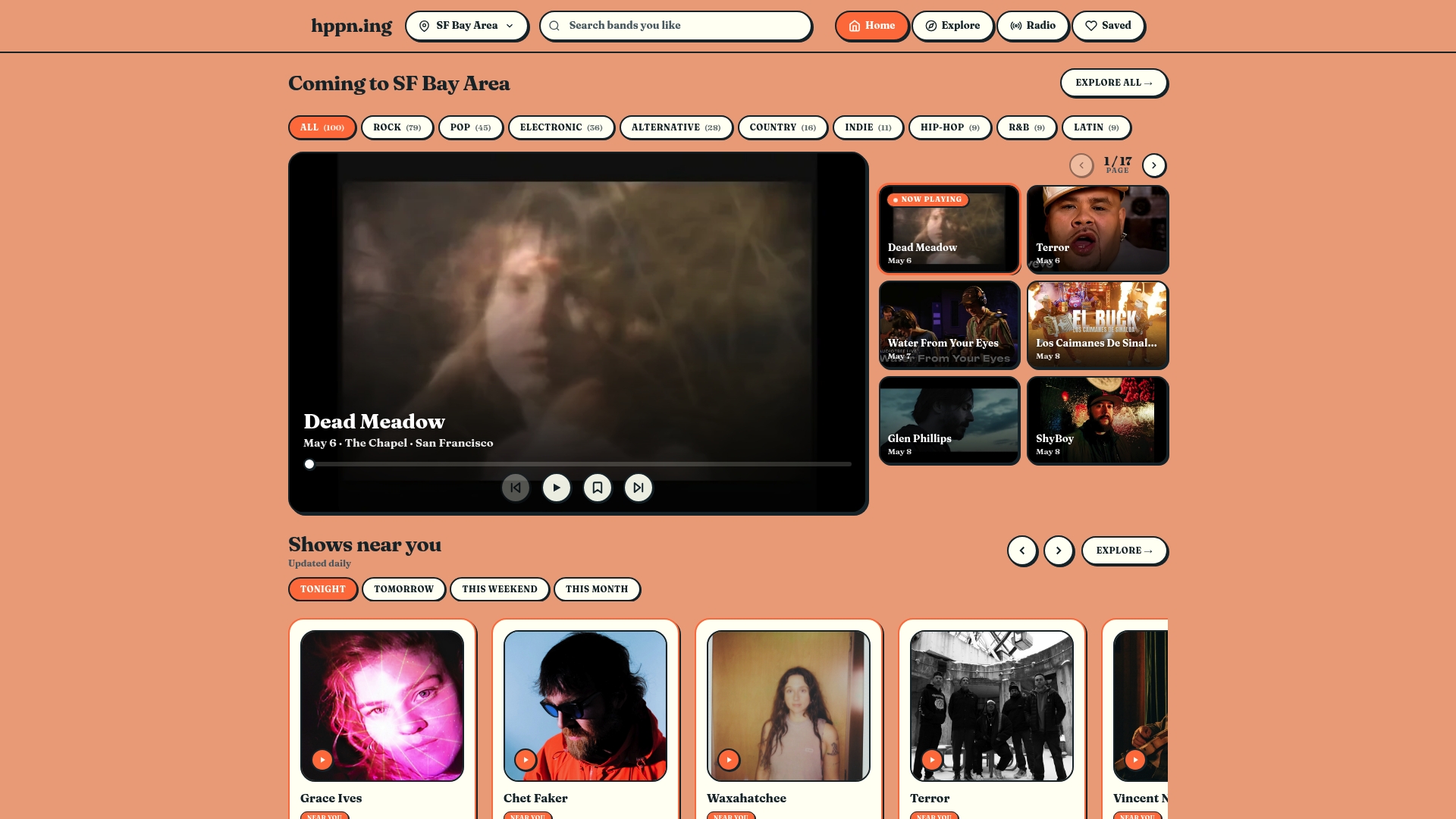
On Hppn's discovery platform, you can browse concerts by location, preview artists through audio and video, and check available ticket types for shows happening near you. Whether you are looking for a GA floor spot at a local club or a lawn ticket to a summer amphitheater show, Hppn surfaces the options that match your taste and budget. The platform focuses on emerging and local artists, which means you find shows that major ticket portals bury. Check trending local artists and upcoming events in your city before the best tickets are gone.
FAQ
What is the cheapest type of concert ticket?
Lawn tickets are typically the lowest-priced option at outdoor venues. GA tickets are the most affordable at indoor shows.
How do I avoid paying too much in fees?
Compare the estimated final price across multiple platforms before buying. Fees vary significantly between Ticketmaster, Live Nation, and resale sites like StubHub.
What is a Platinum ticket?
A Platinum ticket is a standard seat with demand-based surge pricing applied. It is not a VIP upgrade. Prices can exceed $1,200 for the same seat that sells for $20 without the Platinum label.
When will I receive my concert tickets after buying?
Many venues hold electronic ticket delivery until 48 hours before the show. This is a standard anti-scalping practice, not a sign of a problem with your order.
Is it safe to buy concert tickets on social media?
Buying through social media classifieds carries a higher risk of counterfeit tickets. Stick to official platforms or verified resale sites like StubHub and SeatGeek, which offer buyer guarantees.