

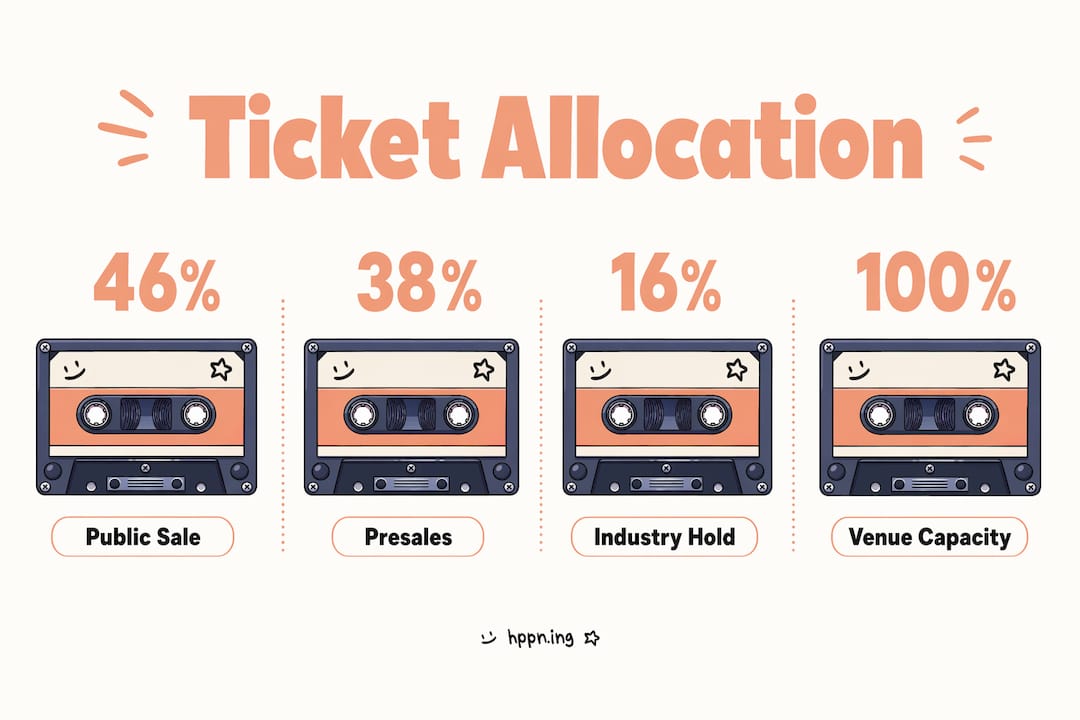
Local gig tickets sell fast because fewer than half the venue's seats ever reach the general public. Industry data shows that public allocation averages just 46% of total capacity, with 38% absorbed by presales and 16% held by the industry. That math alone explains why popular gigs near you vanish in seconds. Understanding the reasons local gigs sell quickly puts you ahead of the crowd, literally and figuratively.
Why local gig tickets sell fast: the allocation problem
The core reason concert tickets go fast is simple math. Public ticket allocation averages 46% of a venue's capacity, while presales claim 38% and industry holds take 16%. That means when the general on-sale opens, you are competing for less than half the house. The other seats were already spoken for, often weeks or months earlier.
Industry holds cover a wide range of recipients. Venue staff, artist guest lists, sponsors, media, and production crews all receive allocations before a single ticket goes on sale to the public. These holds are standard practice across the live music industry, from 500-seat clubs to 5,000-seat theaters. Fans rarely see this side of the business, which is why sellouts feel sudden and inexplicable.
The result is a structural mismatch between perceived supply and actual supply. A venue that holds 1,000 people may only release 460 tickets publicly. If that artist has 2,000 local fans ready to buy, the show sells out in minutes regardless of any other factor. This is the foundational truth behind fast local event ticket demand.
How presales and early bird pricing shrink public inventory
Presales are the single biggest drain on public ticket supply before general on-sale day. Fan club presales, credit card holder presales, and venue member presales each carve out portions of the ticket pool days or weeks in advance. By the time the public window opens, the most desirable seats are already gone.
Early bird pricing compounds the effect. Early bird tiers capture 15–25% of venue capacity at discounts of 20–40%, and committed fans snap them up immediately. That means a quarter of the house can sell before most fans even know the show exists. The discount creates urgency, and urgency creates speed.
The timing gap is equally striking. Over 50% of attendees for premium local events buy tickets at least three months before the show date. Fans who wait until the week of the show are not just late. They are competing for whatever fraction of the original public allocation remains unsold after months of attrition.
- Fan club presales open 48–72 hours before general on-sale and often sell out independently.
- Credit card presales from financial partners give cardholders exclusive early windows.
- Venue member presales reward loyalty program members with first access.
- Early bird tiers sell at a discount and disappear within hours of going live.
Pro Tip: Sign up for the artist's official fan club and your credit card's entertainment portal before the show is even announced. Presale codes are distributed through these channels, and they are your best shot at tickets before the public rush.
Why artists book smaller venues on purpose
Underplaying is a deliberate marketing tactic where artists book venues smaller than their actual draw. A band that could fill a 2,000-seat hall books a 600-seat club instead. The show sells out fast, the artist earns a "sold out" credit, and social media amplifies the scarcity signal to thousands of fans who missed out.
This tactic works because scarcity is a powerful psychological trigger. When fans see "SOLD OUT" next to a show, two things happen. Those who missed it feel urgency to act faster next time. Those who got in feel they hold something rare and valuable. Both reactions build the artist's reputation and drive demand for future dates.
Venues participate actively in this strategy. Physical capacity manipulation through retractable stages, floor layout changes, and VIP area expansions can reduce a room's effective capacity by hundreds of seats. The official ticket count drops, the sellout happens faster, and the buzz grows louder. Understanding live music venue types helps fans recognize when this tactic is in play.
The social media effect is not accidental. A sold-out show generates organic posts, stories, and shares from fans who attended and fans who did not. That earned media costs the artist nothing and reaches audiences that paid advertising never would. The fear of missing out, commonly called FOMO, becomes the most effective marketing tool in the room.
- Sold-out status signals demand and builds credibility for future bookings.
- Smaller venues create intimate atmospheres that fans describe as "special," reinforcing the experience's value.
- Artists use underplaying to test new markets before committing to larger, riskier venues.
- The strategy increases media coverage, since "sold out in minutes" is a more compelling headline than "tickets still available."
How local promoters move tickets before you even know about them
Local promoters are the hidden engine behind fast ticket sales for local gigs. Promoters build local stories by engaging existing community networks rather than relying on broad advertising. That means tickets move through email lists, venue memberships, and direct artist-to-fan outreach long before a show appears on a general listing site.
The role of local promoters in live music scenes is often underestimated by fans who focus only on public sale windows. Promoters activate local partnerships with record stores, bars, community groups, and music schools to distribute tickets through trusted channels. These channels absorb large portions of inventory organically, without any public announcement.
Most critical ticket inventory for local gigs moves weeks before general on-sale through non-public channels. Waiting for the public release means competing for the smallest ticket portion. Fans who tap into promoter networks access tickets when supply is still plentiful and prices are often lower.
Here is how to position yourself inside the promoter network before the next show you want sells out:
- Follow the promoter directly. Search for the local promoter behind your favorite venue on Instagram and Facebook. Promoters announce presale codes and early access windows on their own channels first.
- Join venue mailing lists. Most independent venues maintain email lists that deliver presale codes 24–72 hours before public on-sale. Sign up at the box office or venue website.
- Connect with local artist communities. Artists often share early ticket links directly with fans who engage with them on social media. A comment or a direct message can put you on the list.
- Check local music blogs and community boards. Promoters seed early announcements in local music communities to generate organic buzz before a wider release.
Pro Tip: Set up a dedicated email folder for venue and promoter newsletters. Most fans miss presale codes because the email gets buried. A separate folder means you check it the moment a show you want is announced.
Are bots really why concert tickets sell out so fast?
Bots are the most common explanation fans reach for when a show sells out instantly. The reality is more nuanced. Anti-bot measures like CAPTCHA, purchase limits, and identity verification have made large-scale bot purchasing significantly harder than it was a decade ago. Bots exist, but they are not the primary driver of instant sellouts.
The more accurate explanation is structural. High local demand plus limited public inventory creates a natural environment for instant sellouts without any bot involvement. When 460 public tickets face 2,000 eager buyers, the math produces a sellout in under a minute even if every single buyer is a real human being acting manually.
Blaming bots also leads fans to the wrong solution. Waiting for a "fairer" system or a second release misses the point. The real fix is getting ahead of the public sale entirely, through presales, promoter networks, and early bird tiers. That is where the inventory actually lives.
- CAPTCHA systems and purchase limits reduce bot effectiveness on major ticketing platforms.
- Venue-level holds and presales reduce public supply before bots ever enter the picture.
- Natural fan demand for popular local acts is sufficient to sell out small venues in seconds.
- Focusing on bot prevention distracts fans from the more productive strategy of accessing pre-public inventory.
Key Takeaways
Local gig tickets sell fast because public inventory averages just 46% of capacity, with the rest absorbed by presales, industry holds, and deliberate venue underplaying before general on-sale begins.
| Point | Details |
|---|---|
| Public allocation is limited | Only 46% of tickets reach the general public; the rest go to presales and industry holds. |
| Presales move first | Fan clubs, credit card partners, and venue members access tickets 48–72 hours before public on-sale. |
| Underplaying creates scarcity | Artists book smaller venues intentionally to manufacture sold-out status and build demand. |
| Promoter networks move inventory early | Most critical ticket supply moves through local email lists and community channels before public release. |
| Bots are not the main cause | Limited public supply and high local demand explain instant sellouts more accurately than bot activity. |
What I have learned from watching shows sell out in real time
The most common mistake I see fans make is treating the public on-sale like the starting line. It is not. By the time that countdown hits zero, the race is already half over. The fans who consistently get tickets are the ones who treat presale access as their primary strategy, not a backup plan.
The bifurcated local gig market makes this even more pronounced. High-demand acts sell out in seconds while less-hyped artists struggle to fill the same room a week later. That gap is not just about popularity. It is about how well each artist's team has activated presale channels and local networks ahead of the public window.
What I find genuinely underappreciated is how much the underplaying tactic shapes fan behavior. Fans who understand it stop feeling cheated by sellouts and start reading them as signals. A sold-out 300-seat show for an artist you have never heard of is worth paying attention to. That artist is building something real, and the next ticket window will be even tighter.
The practical takeaway is this: follow the promoter, not just the artist. Artists announce shows. Promoters control access. The fans who get tickets are the ones in the promoter's inbox, not just the artist's Instagram comments. Checking local concert ticket options before a show is announced puts you in the right position when the presale drops.
— Ari
Hppn makes finding local gigs easier before they sell out
Staying ahead of fast-selling local shows requires knowing about them before the general public does. Hppn is built for exactly that situation.
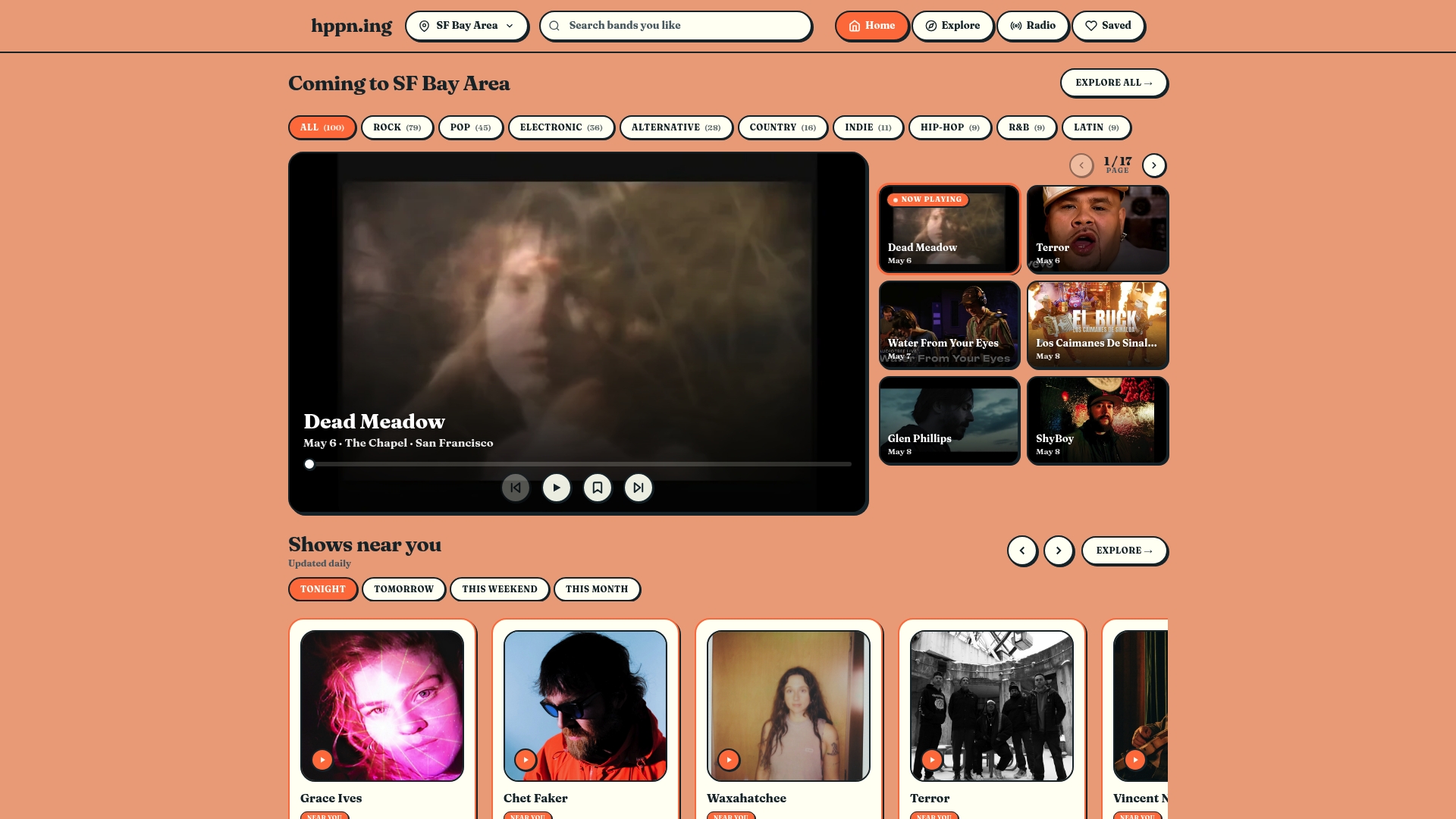
Hppn surfaces upcoming local concerts with artist previews, so you can hear an act before committing to a ticket. The platform connects fans directly to official ticket links, cutting out the lag between discovery and purchase. You can also track trending local artists to spot which acts are building momentum before their next show sells out. For fans who want to stop missing out on the local shows that matter, Hppn is the tool that keeps you informed and ready.
FAQ
Why do local gig tickets sell out so fast?
Public ticket allocation averages just 46% of venue capacity, with 38% going to presales and 16% held by the industry. High local demand for a limited public supply produces instant sellouts even without bot involvement.
What is the best way to get tickets before they sell out?
Joining promoter mailing lists and fan club presales gives you access to tickets 48–72 hours before the public on-sale window opens. Most of the best inventory is gone before the general sale begins.
Do bots cause most local gig sellouts?
Bots are a factor but not the primary cause. Anti-bot measures like CAPTCHA and purchase limits have reduced their impact, and limited public supply alone is enough to sell out small venues in seconds.
Why do artists book smaller venues than they could fill?
Underplaying venues is a deliberate tactic to manufacture sold-out status, generate social media buzz, and build demand for future shows at larger venues.
How far in advance should I buy local gig tickets?
Over 50% of attendees for premium local events buy tickets at least three months in advance. Waiting until the week of the show means competing for whatever remains after months of presale and early bird sales.