

Music venues are defined community assets that shape the social, cultural, and economic fabric of urban neighborhoods. The role of music venues in urban communities extends far beyond entertainment. They create jobs, anchor commercial corridors, incubate emerging artists, and build the social bonds that hold neighborhoods together. Organizations like the Music Venue Trust and the Night Time Industries Association have documented these contributions for years, yet venues continue to close at alarming rates. Understanding what is actually at stake when a venue shuts its doors is the first step toward doing something about it.
How do music venues shape urban cultural identity?
Music venues create shared cultural experiences that no digital platform can replicate. A recurring open mic night at a neighborhood bar becomes a weekly rhythm that residents organize their lives around. Concerts at grassroots venues generate strong social bonds and transform ordinary spaces into cultural meeting places. That transformation is the foundation of neighborhood identity.
Venues also function as incubators for the next generation of creative professionals. The loss of a venue does not just silence a stage. It removes the training ground for sound engineers, lighting technicians, booking agents, and managers. Music venues act as cultural incubators enabling musicians and related professionals to develop their craft, and their closure creates a permanent gap in creative talent pipelines. V&A curator Harriet Reed has described this incubator function as irreplaceable.
Local music scenes generate a cultural energy that strengthens community ties in ways that are difficult to quantify but easy to feel. When a neighborhood has a thriving live music scene, residents develop a shared vocabulary, a set of shared references, and a reason to gather in person. That social cohesion is a measurable asset for urban resilience. Cities that invest in local music scenes consistently report stronger civic engagement and neighborhood pride.
- Recurring events like open mic nights create predictable social rhythms that build community.
- Venues provide physical spaces for face-to-face connection that online communities cannot substitute.
- Local scenes develop neighborhood-specific cultural identities that attract residents and visitors alike.
- Artist development at the grassroots level feeds the broader creative economy for decades.
Pro Tip: If you want to understand a neighborhood's cultural health, count its active music venues. A shrinking venue count is an early warning sign of broader community fragmentation.
What is the economic impact of music venues on urban neighborhoods?
The economic case for music venues is concrete and well-documented. Independent live music venues in Chicago generated $2.8 billion in annual economic output and supported nearly 17,000 local jobs as of 2026. That figure places live music venues among the most productive cultural industries in any major American city.

The economic impact does not stop at the venue door. Attendees in Chicago spent $383.7 million in nearby hospitality businesses, covering restaurants, bars, hotels, and transportation. Venues function as anchor businesses vital to neighborhood commercial corridors. When a venue closes, the surrounding block often loses foot traffic that supported multiple other businesses.
| Economic contribution | Impact |
|---|---|
| Direct venue output | $2.8 billion annually in Chicago alone |
| Local jobs supported | Nearly 17,000 positions |
| Hospitality spillover spending | $383.7 million in surrounding businesses |
| UK grassroots venue contribution | £526 million to the national economy in 2024 |
| Touring circuit coverage (UK, 1994) | 22 dates across 28 locations |
| Touring circuit coverage (UK, 2024) | 11 dates across 12 cities |
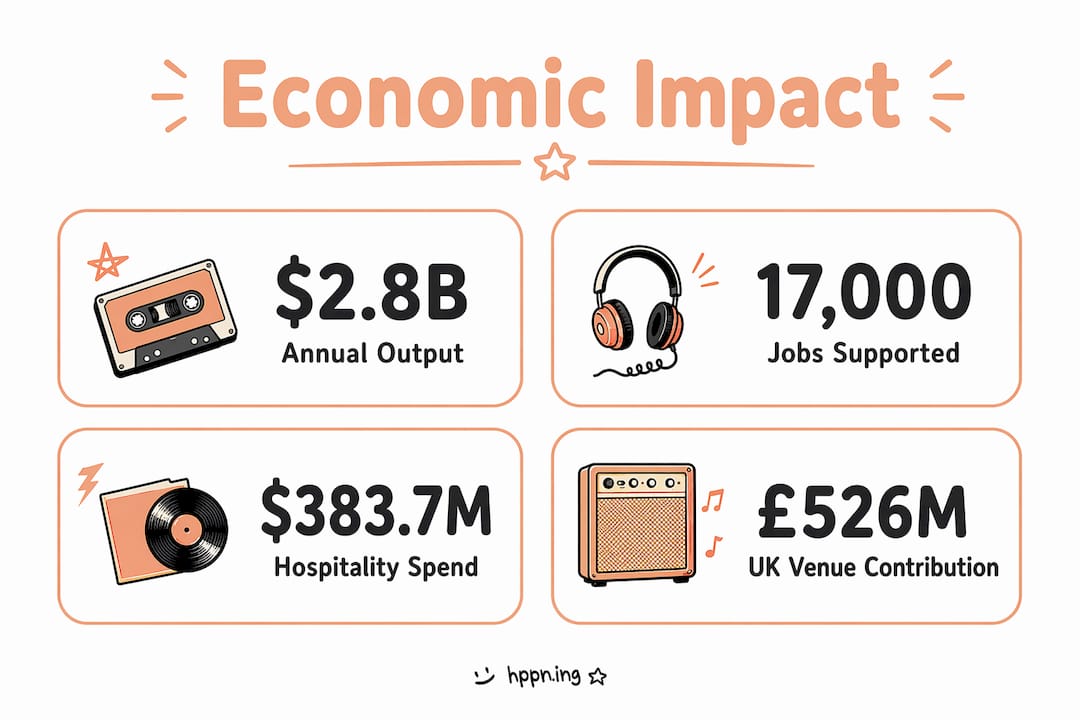
UK grassroots venues contributed £526 million to the national economy in 2024, even as the touring circuit collapsed from 22 dates covering 28 locations in 1994 to just 11 dates covering 12 cities in 2024. That contraction means fewer cities receive the economic benefits of touring, concentrating wealth in a shrinking number of urban centers. The ripple effects of venue closures reach far beyond music fans.
For every dollar spent inside a venue, substantial additional spending flows into the surrounding hospitality and transportation sectors. This multiplier effect makes venues one of the most cost-effective investments a city can make in neighborhood economic development. Local stakeholders who want to understand why live music supports local economies will find the data consistently points in the same direction: venues pay for themselves many times over.
What challenges threaten the survival of urban music venues?
The threats facing music venues are structural, not cyclical. UK grassroots venues' governance currently meets only 46% of compliance principles, with critical failures in benefit-sharing and rights recognition. Without reform, researchers project sector collapse within 5–10 years. That timeline is not a distant warning. It is an active crisis.
"Venues function as interdependent networks. Below a critical regional threshold, touring circuits collapse and entire creative ecosystems unravel. The loss of individual venues is never just a local story."
Urban redevelopment compounds the governance problem. The lack of "Agent of Change" protections means that when new residential buildings go up near existing venues, the venues become legally vulnerable to noise complaints from the very neighbors who moved in after them. Planning systems expose venues to risks from permissions granted to new neighbors without requiring noise mitigation from developers. This is a policy failure with direct consequences for neighborhood culture.
The top challenges communities face in venue preservation include:
- Rising commercial rents that price out independent operators before they can build financial reserves.
- Residential redevelopment that brings noise complaints without legal protections for existing venues.
- Governance failures that leave venues without benefit-sharing agreements or rights recognition.
- Shrinking touring circuits that reduce the economic viability of maintaining a venue at all.
- Loss of institutional knowledge when venues close, including trained staff and established artist relationships.
Understanding why live music venues close down requires looking at all these pressures together, not in isolation. A venue facing rising rent is also facing governance gaps and planning risks simultaneously. The combination is often fatal.
How can communities and stakeholders preserve local music venues?
Community ownership is the most durable solution to venue closures. Shifting to community ownership models improves resilience against economic pressures like high rents and residential redevelopment. When a venue is owned collectively by its community rather than a single landlord or operator, it becomes significantly harder to displace.
Practical steps for communities and local stakeholders include:
- Advocate for "Agent of Change" zoning protections that require new residential developers to fund noise mitigation, not existing venues.
- Support local boards and city councils in creating dedicated funding streams for grassroots venue preservation.
- Organize community ownership structures, such as cooperatives or community land trusts, to remove venues from speculative real estate markets.
- Engage with organizations like the Music Venue Trust, which provides frameworks for collective governance and advocacy.
- Attend shows consistently. Regular attendance is the most direct financial support any community member can provide.
Policy action matters as much as community effort. Noise mitigation requirements, zoning protections, and targeted arts funding all reduce the structural pressures that close venues. Community boards that support live music have demonstrated that local governance can make a measurable difference in venue survival rates.
Pro Tip: Short-term fundraising campaigns rarely save venues. Long-term survival requires systemic changes in ownership, zoning, and governance. Direct your energy toward policy advocacy, not just benefit concerts.
Key Takeaways
Music venues are irreplaceable urban infrastructure that generate economic output, build social cohesion, and develop creative talent that cities depend on for decades.
| Point | Details |
|---|---|
| Venues drive local economies | Chicago venues generated $2.8 billion annually and supported nearly 17,000 jobs. |
| Spillover spending is significant | Attendees spent $383.7 million in surrounding hospitality businesses in Chicago alone. |
| Governance failures threaten survival | UK venues meet only 46% of compliance principles, risking collapse within 5–10 years. |
| Community ownership builds resilience | Collective governance models protect venues from speculative rent increases and redevelopment. |
| Policy action is the long-term fix | Zoning protections and "Agent of Change" principles reduce structural threats to venue viability. |
What I've learned from watching venues disappear
I've spent years watching neighborhoods lose their music venues and then spend a decade trying to figure out why they feel less alive. The answer is always the same. The venue was doing more work than anyone realized.
What strikes me most is how the incubator argument gets underestimated. People mourn the loss of a stage. They rarely mourn the loss of the sound engineer who trained there, or the booking agent who built their career on that room's calendar. Those are the people who go on to build the next generation of creative infrastructure. When the venue closes, they scatter, and that knowledge does not reassemble easily.
The social bonding function is equally undervalued. A neighborhood with a weekly live music event has a built-in mechanism for residents to meet each other. Remove it, and you remove something that urban planners spend millions trying to recreate with parks and public squares. Venues do it organically, and they do it cheaply relative to their output.
The urgency here is real. Governance scores of 46% and touring circuits half the size they were 30 years ago are not abstract statistics. They describe a sector in active decline. Communities that wait for the crisis to become obvious will find they have waited too long. The time to support local music scenes is before the last venue on the block closes, not after.
— Ari
Find live music near you and keep local venues alive
Attending shows is the most direct way to support the venues your community depends on. Hppn makes it easy to find what is happening near you, preview artists before you go, and connect with the local music scene in real time.
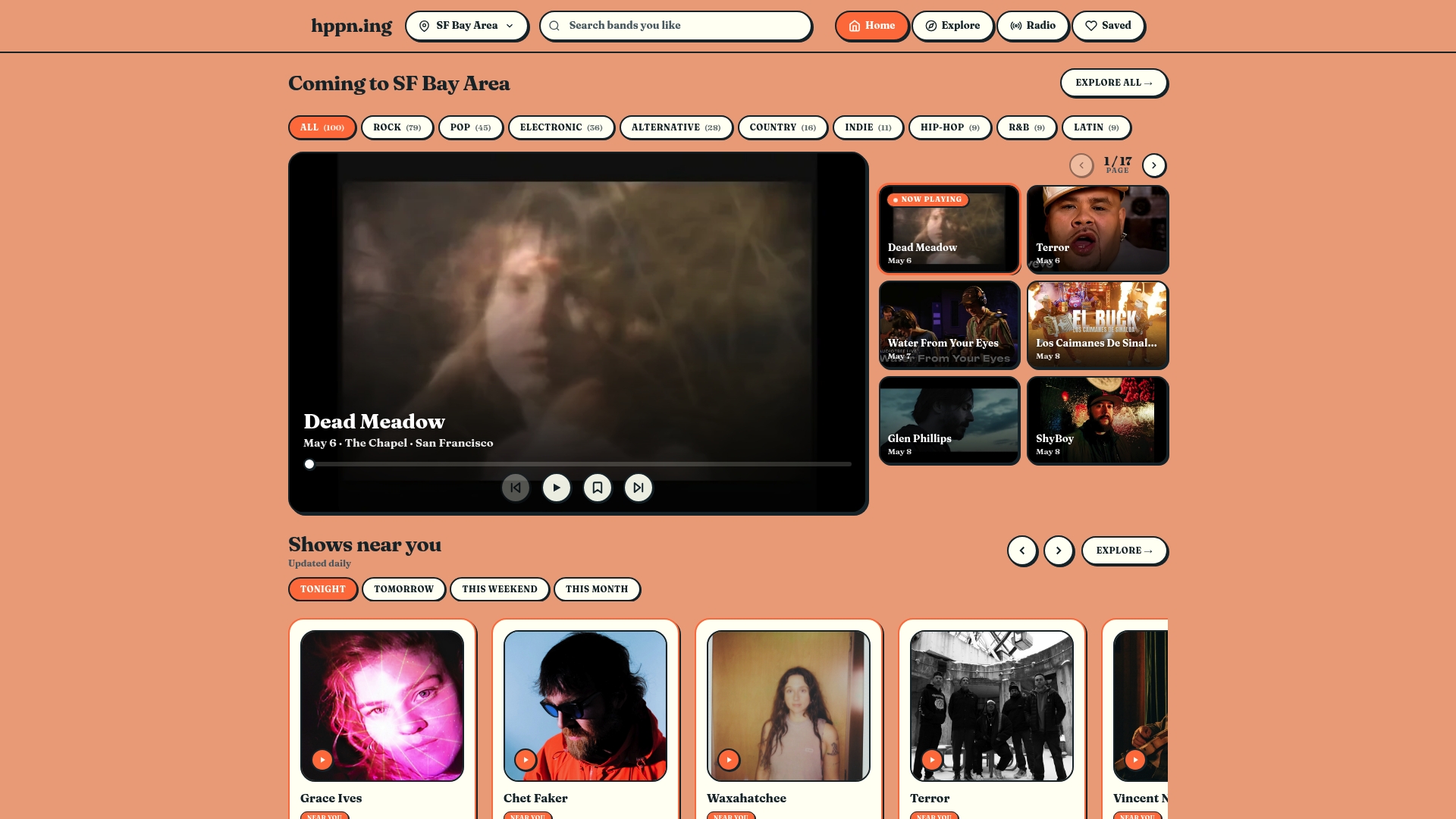
Hppn focuses specifically on emerging and underground artists, the performers who fill grassroots venues and keep local scenes alive. When you find live music nearby through Hppn, you are not just buying a ticket. You are contributing to the economic and cultural ecosystem that makes your neighborhood worth living in. Browse by location, preview artists through audio and video, and show up for the venues that show up for your community.
FAQ
What makes music venues community assets?
Music venues create jobs, generate economic spillover into surrounding businesses, and build social bonds through recurring shared experiences. They function as cultural incubators for artists and related creative professionals.
How much do music venues contribute to local economies?
Independent venues in Chicago generated $2.8 billion in annual economic output and supported nearly 17,000 jobs, with attendees spending an additional $383.7 million in nearby hospitality businesses.
Why are so many music venues closing in cities?
Rising commercial rents, lack of "Agent of Change" zoning protections, governance failures, and shrinking touring circuits combine to make independent venue operation financially unsustainable in many urban markets.
What is the "Agent of Change" principle?
The "Agent of Change" principle requires new residential developers near existing venues to fund noise mitigation, rather than placing that burden on the venue. Without it, venues become legally vulnerable to complaints from new neighbors.
How can residents help preserve local music venues?
Attend shows regularly, advocate for zoning protections and community ownership models, and engage with organizations like the Music Venue Trust that provide governance frameworks and policy advocacy resources.