

Live music venues close down primarily because operating costs outpace revenue, and that gap has widened every year since 2020. Rising rents, insurance premiums, labor costs, and regulatory burdens combine to make the grassroots venue model financially unsustainable for most independent operators. Industry consolidation by major players like Live Nation further limits the options available to smaller spaces, while shifting consumer behaviors reduce the foot traffic that once kept tight margins workable. Understanding why live music venues close down is not an academic exercise. For venue owners, promoters, and music industry professionals, it is a survival question.
Why live music venues close down: the financial reality
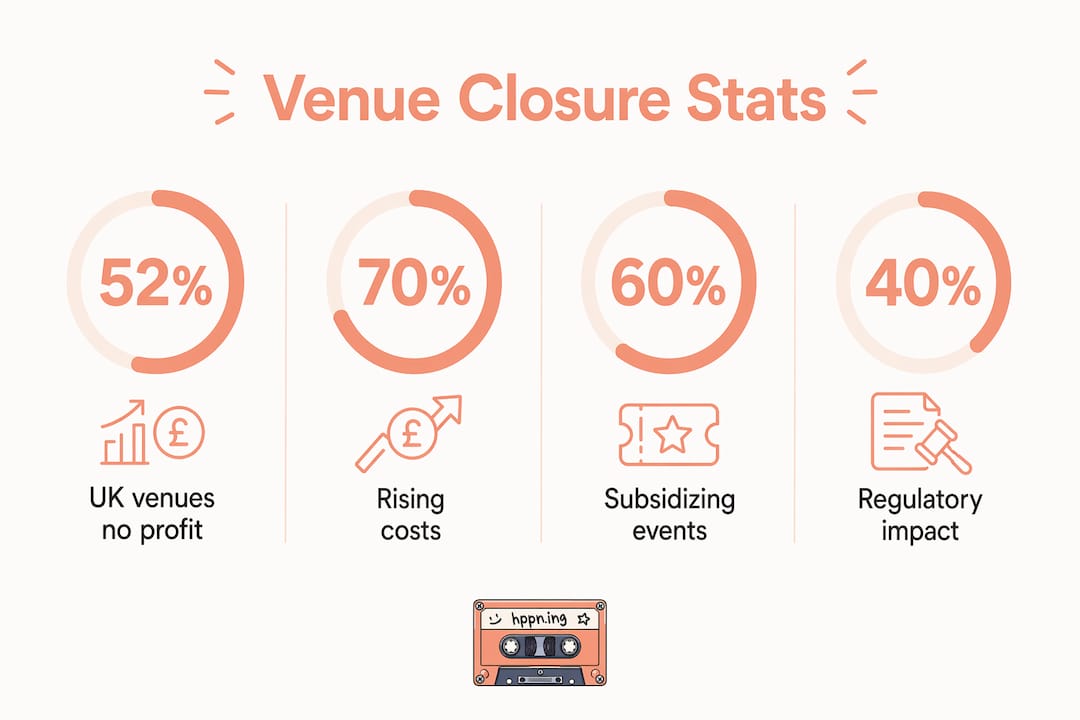
Financial pressure is the single largest driver of venue closures, and the numbers from 2026 make that impossible to ignore. 53% of grassroots music venues in the UK failed to make a profit in 2025, with an average profit margin of just 2.5%. That figure means the typical venue earns two cents on every dollar before any unexpected cost, equipment failure, or slow month wipes it out entirely.
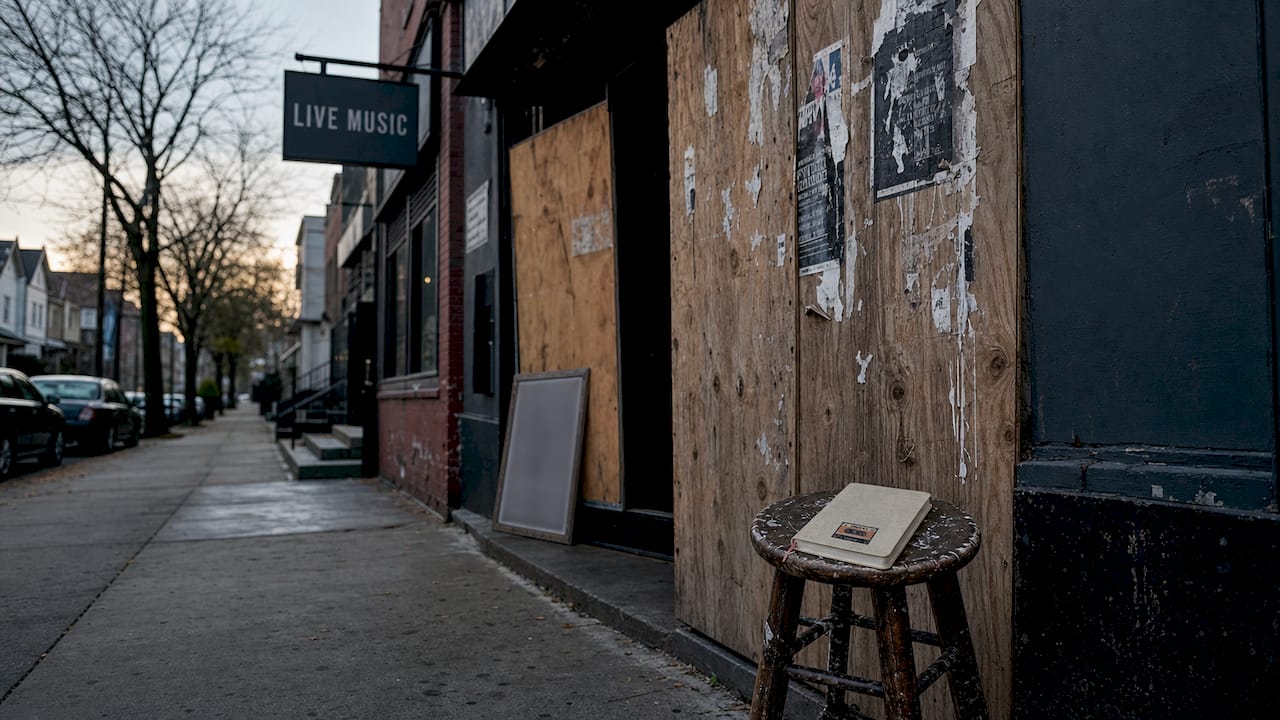
In the United States, the picture is equally grim. 64% to 75% of independent venues nationwide struggle to remain financially viable, leaving only 22% to 33% of venues operating in the black. Chicago's independent venue scene, studied in depth in early 2026, reflects a national pattern where the financial struggles of live music are structural, not situational.
The cost side of the equation tells the story clearly:
- Rent and property costs have increased sharply in urban areas where most venues operate, often outpacing any growth in ticket revenue
- Insurance premiums for venues hosting live events have climbed due to liability exposure and post-pandemic risk reassessments
- Payroll and labor costs have risen with minimum wage increases and tighter labor markets, particularly for security, bar staff, and sound technicians
- Venue subsidies reached approximately £76.6 million in 2025 across the UK, meaning operators were effectively paying out of pocket to keep shows running
That last point deserves emphasis. Venues are not just failing to profit. Many are actively subsidizing the live music experience, absorbing losses to maintain programming and community presence. That model has a finite lifespan.
Pro Tip: Track your venue's cost-per-attendee monthly, not just total revenue. When that number rises without a corresponding ticket price increase, you are subsidizing attendance and the gap will compound quickly.
How does industry consolidation squeeze independent venues?
The financial struggles of live music do not exist in a vacuum. Market structure makes them worse. Live Nation controls promotion, venues, and ticketing platforms simultaneously, creating a monopoly-like environment that limits independent venues' access to talent and revenue streams.
Vertical integration at this scale means a single company can influence which artists tour, where they play, and how tickets are sold and priced. Independent venues that fall outside that ecosystem face a compounding disadvantage: they cannot compete for the same artists, cannot access the same ticketing infrastructure, and cannot negotiate from the same position of scale.
"The gap between top-tier arena shows and grassroots venues widens, with the latter bearing disproportionate financial strain despite their cultural importance." This is not a temporary market correction. It is a structural shift that requires deliberate policy and community responses to reverse.
The practical consequences for independent operators include:
- Artist fees have risen as top-tier promoters control booking circuits, pricing smaller venues out of acts that would have been accessible a decade ago
- Ticketing revenue is captured upstream by platforms with exclusive venue agreements, reducing the per-ticket margin available to the host space
- Routing decisions for touring artists increasingly favor markets and venues within consolidated networks, leaving independent spaces off itineraries entirely
- Artist development suffers as fewer public performance opportunities exist for emerging acts, weakening the pipeline that feeds larger venues over time
The venue closures concentrate cultural loss in ways that are not immediately visible in revenue reports. When a 200-capacity room closes, the city loses the incubator where the next generation of headliners would have developed. Understanding how concert tour routing works clarifies why independent venues are systematically excluded from the circuits that sustain touring economies.
What role do consumer behavior and COVID play in closures?
Changing music consumption habits have reshaped the demand side of the equation just as costs have risen on the supply side. Live music attendance at small venues declined before the pandemic and COVID-19 accelerated that trend sharply, compressing years of gradual decline into a single catastrophic period.
The impact of COVID on music venues was not just a temporary shutdown. It reset audience habits, strained venue finances beyond recovery for many operators, and created a two-tier recovery where large arena shows rebounded quickly while grassroots spaces continued to struggle. Some venue owners reported pandemic losses exceeding $1 million at a single location, with personal assets like liquor licenses used as loan collateral to survive.
The behavioral shifts driving customer attendance issues today include:
- Cost-of-living pressure has reduced discretionary spending on entertainment, with live music competing against streaming subscriptions, dining, and other leisure options for a shrinking share of consumer budgets
- Streaming normalization has changed how audiences relate to music discovery, making the couch a viable alternative to the club for many listeners who previously attended shows regularly
- High-capacity event preference has shifted younger audiences toward festivals and arena experiences, leaving mid-size and small venues with a narrowing demographic base
- Post-pandemic hesitancy persists in some markets, particularly for indoor, high-density events, reducing the reliable walk-up attendance that once padded margins on slower nights
Pro Tip: Venues that have survived the post-COVID period consistently report that community-building programming, not just concert booking, drives repeat attendance. Open mics, listening sessions, and artist meet-and-greets create loyalty that a single show cannot.
Country music festivals offer a useful contrast here. Festival-driven artist support demonstrates how community-oriented programming can sustain grassroots scenes even when individual venue economics are under pressure.
What regulatory and operational challenges contribute to closures?
Regulatory burdens add a layer of cost and complexity that many venue operators are not equipped to absorb. These challenges facing concert spaces are often invisible to audiences but are decisive for operators working on thin margins.
Noise complaints represent one of the most direct regulatory threats to venue viability. Increasing population density around urban venues generates more complaints, which trigger enforcement actions that can escalate from warnings to forced closures. A venue that operated without issue for 20 years can become non-compliant as the neighborhood around it changes, with no change in its own operations.
Beyond noise, the regulatory picture includes:
- Business rates and property taxes have increased in most major markets, adding fixed costs that do not scale with attendance or revenue
- Licensing and permitting processes for live music, alcohol service, and late-night operation vary by jurisdiction and often require legal expertise to navigate, adding administrative cost
- Insurance requirements have grown more complex, with some insurers exiting the live event market entirely following pandemic-era claims, reducing competition and driving premiums higher
- Emergency relief access during the pandemic exposed a structural vulnerability. Complex government processes delayed relief funds for months, leaving venues in cash flow crises that forced permanent closures before aid arrived
Local government policies on venues vary enormously. Cities like Nashville and Austin have developed explicit frameworks to protect live music spaces as cultural infrastructure. Most cities have not, leaving venue operators to navigate systems designed for commercial real estate rather than cultural institutions. Understanding how community boards support live music in specific cities reveals how much local policy shapes survival odds.
Key takeaways
Live music venues close down because financial margins are structurally too thin to absorb rising costs, market consolidation, regulatory pressure, and shifting consumer behavior simultaneously.
| Point | Details |
|---|---|
| Profit margins are critically low | Over half of UK grassroots venues made no profit in 2025, with an average margin of just 2.5%. |
| Consolidation limits independent access | Live Nation's control of promotion, venues, and ticketing cuts independent operators out of key revenue and talent pipelines. |
| COVID reset audience habits permanently | Pandemic shutdowns accelerated pre-existing attendance declines and created a two-tier recovery favoring large venues. |
| Regulatory costs are underestimated | Noise enforcement, licensing complexity, and delayed relief funds push viable venues into closure during cash flow gaps. |
| Data-driven adaptation improves survival odds | Venues using granular booking and pricing data outperform those relying on intuition-based programming decisions. |
The uncomfortable truth about venue survival
I have spent years watching venues that should have survived close, and venues that looked fragile somehow hold on. The difference almost never comes down to the quality of the music. It comes down to whether the operator treated the venue as a business first and a cultural institution second.
That sounds harsh, but the data supports it. Surviving venues use granular data to book genres and artists that maximize attendance, shifting toward high-value, lower-capacity events rather than chasing volume with low-margin shows. The venues that adapted to higher ticket prices, beverage minimums, and day rentals are still open. Many of the ones that refused to change their model out of principle are not.
The live music industry decline at the grassroots level is real, but it is not inevitable for every operator. The venues I have seen thrive in 2025 and 2026 share three traits: they know their numbers cold, they have diversified revenue beyond ticket sales, and they have built genuine community relationships that translate into consistent attendance. The ones that treat every show as a standalone transaction, with no loyalty infrastructure and no data feedback loop, are the ones that close.
The harder truth is that policy needs to catch up. Individual venue operators cannot solve market consolidation or rising urban rents through better spreadsheets alone. Cities that want live music need to treat venues the way they treat parks: as public goods that require active protection, not just passive permission to exist. Until that shift happens, the financial struggles of live music will continue to claim spaces that no amount of good programming can save.
— Ari
Find and support live music in your city with Hppn
The venues that survive need audiences who show up consistently, not just for headliners. Discovering and attending shows at smaller spaces is one of the most direct ways to keep those rooms open.

Hppn makes it easier to find those shows before they disappear. The platform lets you discover live music nearby, preview artists through video and audio before you commit to a ticket, and track emerging performers in your city in real time. Unlike platforms built around mainstream acts, Hppn surfaces the grassroots artists and independent venues that need your attention most. You can also explore live music charts and trending artists to see who is building momentum in your local scene right now. Every ticket you buy at a small venue is a direct vote for its survival. Hppn helps you cast that vote with confidence.
FAQ
Why do most independent music venues fail financially?
Most independent venues fail because operating costs, including rent, insurance, labor, and licensing, exceed ticket and bar revenue. Only 22% to 33% of U.S. independent venues operate profitably, according to 2026 data from Chicago's music venue study.
How did COVID-19 affect small music venues long-term?
COVID-19 caused permanent closures across the sector, with some venues reporting losses exceeding $1 million during shutdowns. The pandemic also reset audience habits, accelerating a shift toward streaming and large-format events that has not fully reversed.
What is vertical integration in the live music industry?
Vertical integration in live music refers to a single company controlling promotion, venue ownership, and ticketing simultaneously. Live Nation is the primary example, and its market position limits independent venues' access to touring artists and ticketing revenue.
Can noise complaints actually close a music venue?
Yes. Noise complaints trigger regulatory enforcement that can escalate from warnings to license revocation and forced closure, particularly as urban population density increases around established venues.
What strategies help venues stay open despite financial pressure?
Venues that survive typically combine data-driven booking, diversified revenue streams such as day rentals and beverage minimums, and active community programming. Understanding how live music supports local economies also helps operators make the case for municipal support and policy protection.