
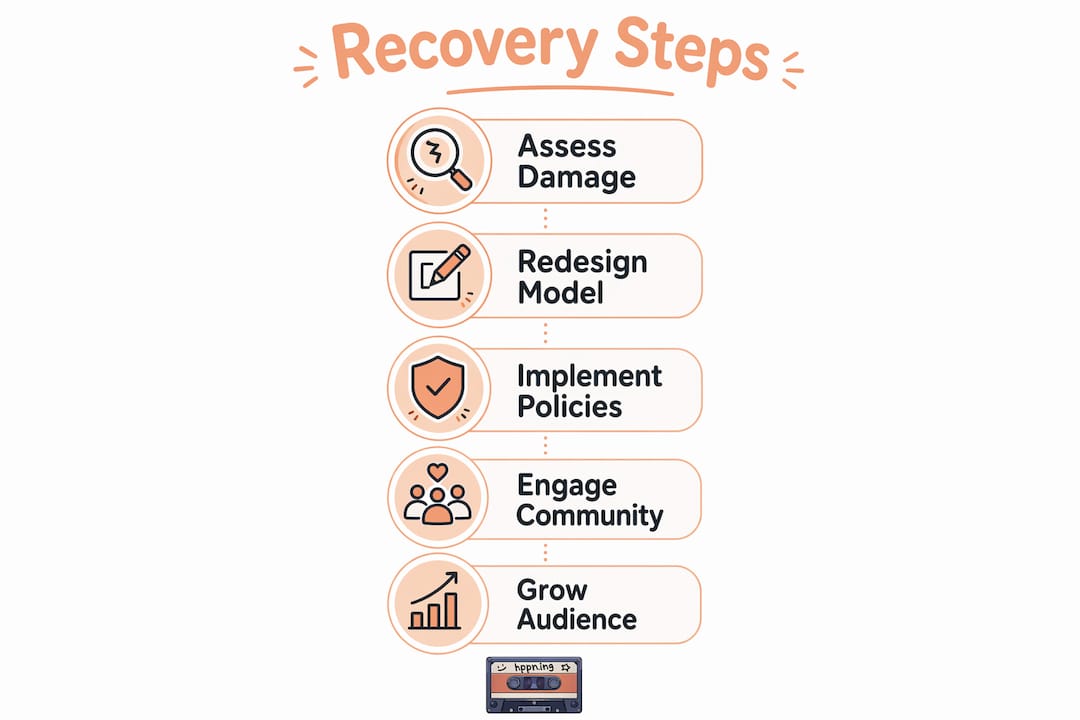
Live music scene recovery is defined as the process of restoring financial sustainability, artistic vibrancy, and community engagement after venue closures disrupt a local music ecosystem. The path back is rarely a straight line. 53% of grassroots venues remained unprofitable in 2025, with 30 closures triggering a 20% workforce loss. That number tells you the scale of the problem. Yet cities like Newcastle, Australia, and Logan, Utah, prove that how live music scenes recover after closures depends on three converging forces: smarter venue business models, targeted government policy, and grassroots community action.
How do live music scenes recover after closures?
Recovery does not mean returning to what existed before. It means building something more durable. The venues and scenes that have come back strongest share a common trait: they stopped treating live music as a volume business and started treating it as a curated experience. That shift changes everything from pricing to programming to how artists and audiences relate to a space.
The local music scene transformation in Des Moines after venue closures illustrates this well. Formal venues closed, but DIY shows filled the gap. The scene did not die. It reorganized. Recovery, in practice, looks less like resurrection and more like reinvention.
What business model changes help venues survive post-pandemic?
The most effective shift venues have made is trading raw capacity for intentional experience. Successful venues have cut capacity from 200 to 80 while raising cover charges from $8 to $15–$20. That math works because a smaller, committed audience spends more per head and returns more often than a large, indifferent crowd.
Here is what the new venue playbook looks like in practice:
- Reduced capacity with higher cover charges. Fewer seats mean more intentional bookings and better artist-to-audience energy.
- Minimum spends on food and beverages. Tying a $20 food and drink minimum to a ticket creates a reliable revenue floor beyond the door.
- Collaborative booking and co-promotion. Venues co-booking artists to create weekend mini-festival circuits reduces individual risk and builds audience habits across multiple spaces.
- Boutique aesthetic upgrades. Better lighting, curated decor, and artist meet-and-greet moments justify premium pricing and create social media moments that market the venue organically.
- Non-music revenue streams. Venues averaging 2.5% profit have survived by adding daytime rentals, arts workshops, and community events to their weekly calendar.
Pro Tip: Set your ticket price at the point where selling 60% of capacity covers your artist fee and fixed costs. That buffer lets you take risks on emerging acts without betting the whole night on a sellout.
The boutique model also changes the artist relationship. When a venue books 80 people instead of 200, the artist can actually connect with the room. That intimacy becomes the product, and audiences pay for it.
How have government policies shaped music scene recovery?
Policy is the fastest lever for reviving local music venues at scale. New South Wales is the clearest proof. Under its vibrancy reforms, NSW saw a 400% venue increase, growing from 133 to 564 active music venues. The 80% discount on liquor licenses alone removed one of the biggest fixed costs operators face.
The NSW model combined several policy tools simultaneously:
- Liquor license discounts that cut operating costs for small operators
- Noise complaint reforms that shifted the burden of proof away from venues and toward complainants
- Extended trading hours that gave venues flexibility to program late-night shows
- Sound equipment upgrade grants that helped operators meet acoustic standards without taking on debt
| Policy Tool | Impact |
|---|---|
| 80% liquor license discount | Reduced fixed costs for new and existing operators |
| Noise complaint reform | Reduced venue closures driven by neighbor disputes |
| Extended trading hours | Enabled late-night programming and increased revenue windows |
| Equipment upgrade grants | Lowered barrier for venues to meet safety and sound standards |
Flexible trading laws in NSW also encouraged operators who had left the industry to return. The combination of lower costs and reduced regulatory friction made the math work again. For community organizers, the lesson is clear: policy advocacy is not separate from music scene recovery. It is central to it. Understanding how community boards support live music in your city is a practical starting point for that advocacy work.
What role does community ownership play in stabilizing venues?
Community ownership is the structural answer to the most common cause of venue death: lease volatility. When a landlord sells or raises rent, a commercially leased venue has almost no defense. Community ownership models remove that risk by giving the venue's stakeholders control over the property itself.
Organizations like Music Venue Properties in the UK have made this their core mission. The model works because it separates programming decisions from landlord negotiations. Operators can focus on booking artists and building audiences instead of managing existential property threats.
Beyond formal ownership, the grassroots circuit plays a parallel role. Here is how informal venues sustain scenes when formal ones close:
- House shows create immediate performance opportunities with zero overhead. A living room, a PA system, and a mailing list are enough to start.
- Underground spaces like warehouses, galleries, and community halls fill the programming gap at low cost.
- Pop-up events in public parks and plazas build audience habits and generate local press without requiring a permanent venue.
- Artist-run collectives pool resources for shared equipment, promotion, and booking, reducing individual cost and risk.
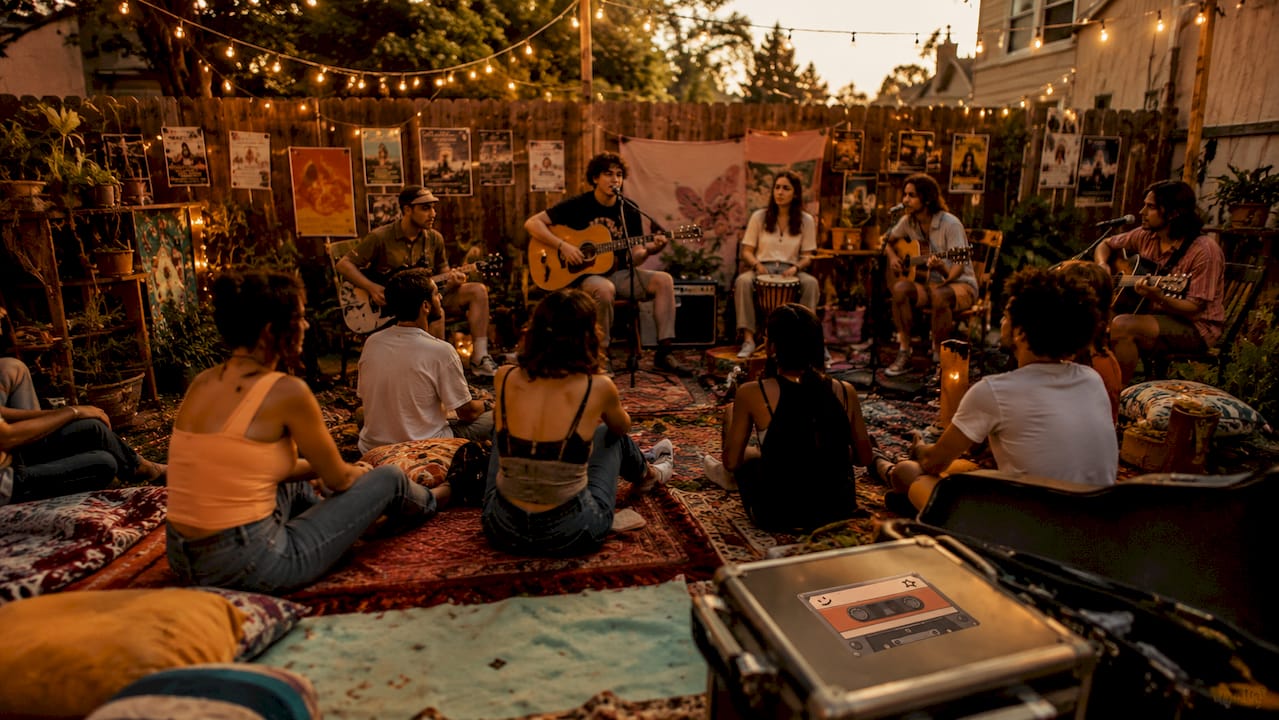
DIY venues using non-traditional spaces have proven critical in cities like Logan, Utah, where formal venue closures left a gap that grassroots organizers filled within months. The role of public spaces in live music recovery is often underestimated by venue owners focused on bricks-and-mortar solutions.
Pro Tip: Before waiting for a permanent venue to open, run three pop-up shows in non-traditional spaces. You will build your audience list, test your booking relationships, and generate the proof of demand that attracts investors and landlords.
How can musicians and organizers rebuild audiences after shutdowns?
Supporting artists after shutdowns requires more than good intentions. It requires coordinated action from musicians, promoters, and community organizers working toward shared goals. The impact of closures on musicians is direct: fewer venues mean fewer paid gigs, fewer opportunities to develop stage presence, and fewer pathways to a sustainable career.
The most effective music community recovery strategies combine audience engagement with structural support:
- Advance ticket purchasing programs. Fans who buy tickets two to four weeks out give venues cash flow to pay artists upfront. Organizers can promote this as a direct support mechanism.
- Venue membership models. Monthly memberships that include free or discounted entry create a reliable revenue base and a core audience that shows up consistently.
- Coordinated booking networks. When musicians and promoters share booking calendars, they avoid competing on the same nights and can build mini-festival weekends that draw larger combined audiences.
- Artist-led workshops and events. Songwriting workshops, production clinics, and listening sessions hosted by local artists create revenue outside of performance and deepen community ties.
- Local promotion partnerships. Collaborating with independent media, coffee shops, and record stores to cross-promote shows extends reach without paid advertising budgets.
Local promoters are often the connective tissue between these efforts. A promoter who coordinates three venues, six artists, and a shared marketing calendar multiplies the impact of every individual effort. For musicians, the practical step is to treat every show as a community-building event, not just a performance. Meet-and-greets, merchandise tables, and post-show conversations turn one-time attendees into regulars.
What challenges and trends shape the future of live music recovery?
The financial reality of live music recovery is harder than the comeback stories suggest. Small and mid-sized venues face existential pressure from rising costs and property values, even in cities where scene activity has rebounded. A venue can sell out every weekend and still operate at a loss if rent, insurance, and staffing costs have outpaced ticket revenue.
The trend toward boutique, curated experiences is real and growing. Audiences in 2026 are choosing fewer, better nights out over frequent, mediocre ones. That preference rewards venues that invest in quality programming and punishes those that rely on volume. The venues winning right now are the ones that have accepted this shift rather than fought it.
"Local music scenes often transform rather than die. DIY shows fill gaps left by formal venue losses, but they lack the scale and consistent income that sustain careers long-term." — Iowa Public Radio, 2026
Experimental formats are also gaining ground. Listening parties, artist residencies, and genre-specific monthly events build loyal micro-audiences that show up reliably. These formats reduce the pressure of the traditional one-off show model, where every night is a fresh gamble. Recovery, in this sense, signals a transformation of the live music industry rather than a return to pre-closure norms. The economic impact of live music on local communities depends on whether that transformation produces durable institutions or just a temporary surge.
Key takeaways
Live music scenes recover after closures through a combination of smarter venue economics, targeted policy reform, community ownership, and grassroots organizing rather than any single fix.
| Point | Details |
|---|---|
| Boutique model outperforms volume | Cutting capacity and raising cover charges produces better margins and stronger audiences. |
| Policy reform accelerates recovery | NSW's 400% venue growth proves that licensing discounts and noise reforms move the needle fast. |
| Community ownership removes lease risk | Venues owned by their communities survive property market volatility that kills commercial leases. |
| Grassroots action fills the gap | House shows and DIY spaces keep scenes alive while formal venues rebuild. |
| Diversified revenue is non-negotiable | Workshops, rentals, and memberships supplement music income for venues averaging 2.5% profit margins. |
The comeback is real, but it requires honesty
I have watched enough scenes collapse and rebuild to know that the most dangerous moment in recovery is early optimism. A few sold-out shows feel like proof that everything is fine. They are not. They are proof that demand exists. Demand and sustainability are different things.
What I have seen work consistently is the combination of two things most stakeholders treat as separate: financial discipline and community investment. Venues that survive long-term are not the ones with the best bookings. They are the ones where the community feels ownership, literally or emotionally, over the space.
The NSW data is the most compelling evidence I have encountered that policy can move faster than culture. A 400% increase in venues in a few years is not organic. It is engineered. That should be a signal to every community organizer reading this: your city council meeting matters more to your local music scene than your next show announcement.
The boutique shift also gives me genuine optimism. Smaller rooms with higher stakes produce better music and better audiences. The era of the 300-capacity venue running on $8 covers and cheap beer was never as good as we remember it. What is replacing it, in the cities doing this right, is more interesting.
— Ari
Discover your local scene with Hppn
Rebuilding a live music scene takes more than strategy. It takes people showing up. Hppn is built for exactly that moment, connecting fans, musicians, and venue owners around the live music happening in their city right now.
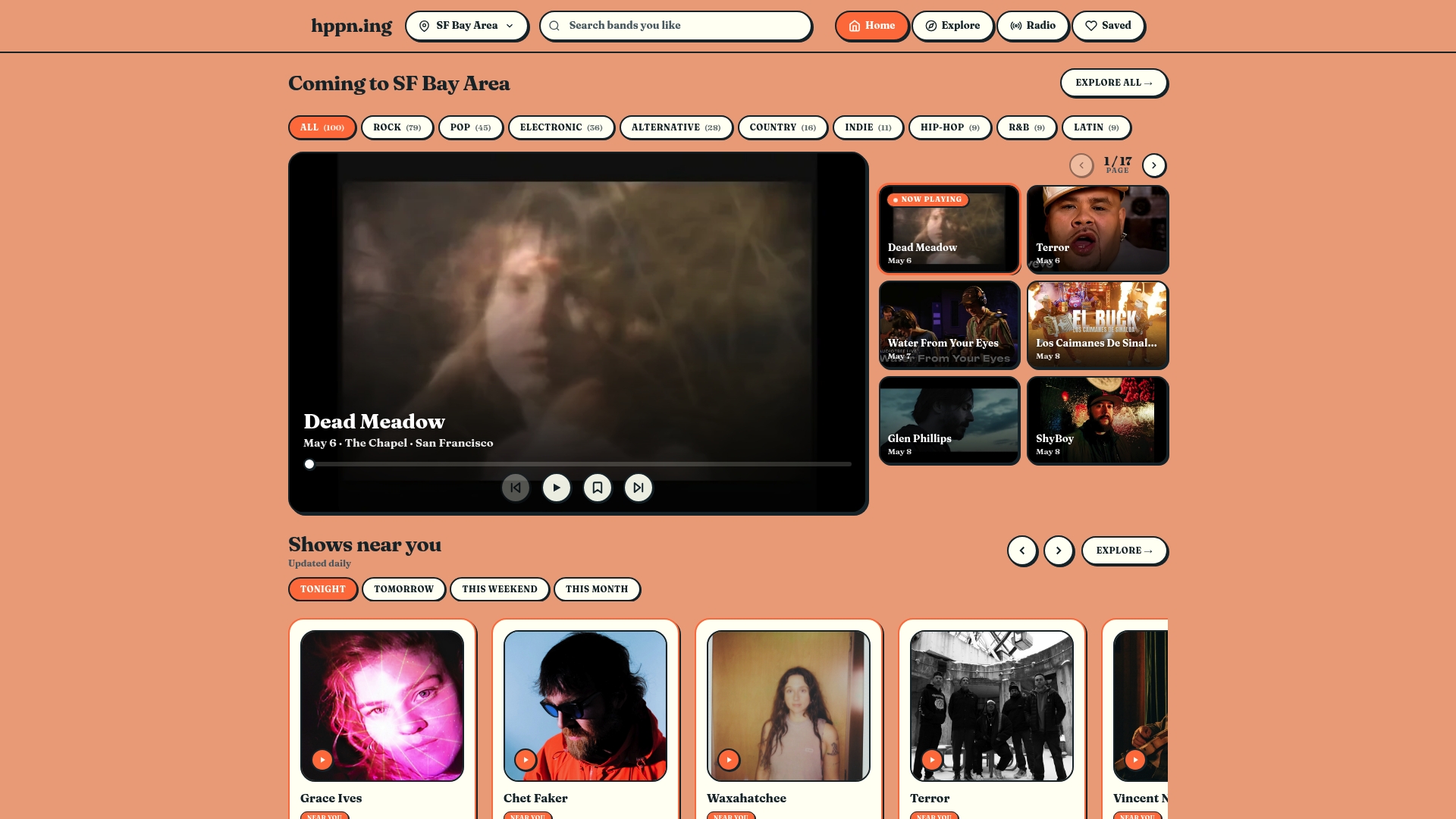
On Hppn, you can browse local shows by location, preview artists before you buy a ticket, and find the underground acts and emerging performers that traditional platforms miss entirely. For venue owners and organizers, the platform puts your events in front of an audience that is actively looking for something new. For musicians, it is a direct line to fans who want to discover you. Find live music near you and become part of the recovery happening in your city.
FAQ
How long does it take a live music scene to recover after closures?
Recovery timelines vary widely, but policy-driven markets like New South Wales saw a 400% venue increase within a few years of implementing vibrancy reforms. Grassroots scenes can rebuild within months through DIY shows and community organizing.
What is the biggest financial threat to venues during recovery?
Lease volatility is the leading structural threat, as rising commercial rents can eliminate venues even when they are selling out shows. Community ownership models directly address this by removing landlord risk from the equation.
How can musicians support venue recovery after shutdowns?
Musicians can support venues by promoting advance ticket sales, participating in collaborative booking networks, and hosting workshops or events that generate non-performance revenue for the space.
What makes the boutique venue model more sustainable than high-capacity venues?
Smaller capacity with higher cover charges produces better per-head revenue and more committed audiences. Venues that shifted to boutique models report stronger margins than those maintaining large-capacity, low-cover formats.
Do DIY and house shows actually sustain a music scene long-term?
DIY venues and house shows are critical early recovery points, but they lack the scale and consistent income needed for long-term career sustainability. They work best as a bridge while formal venues rebuild, not as a permanent replacement.