
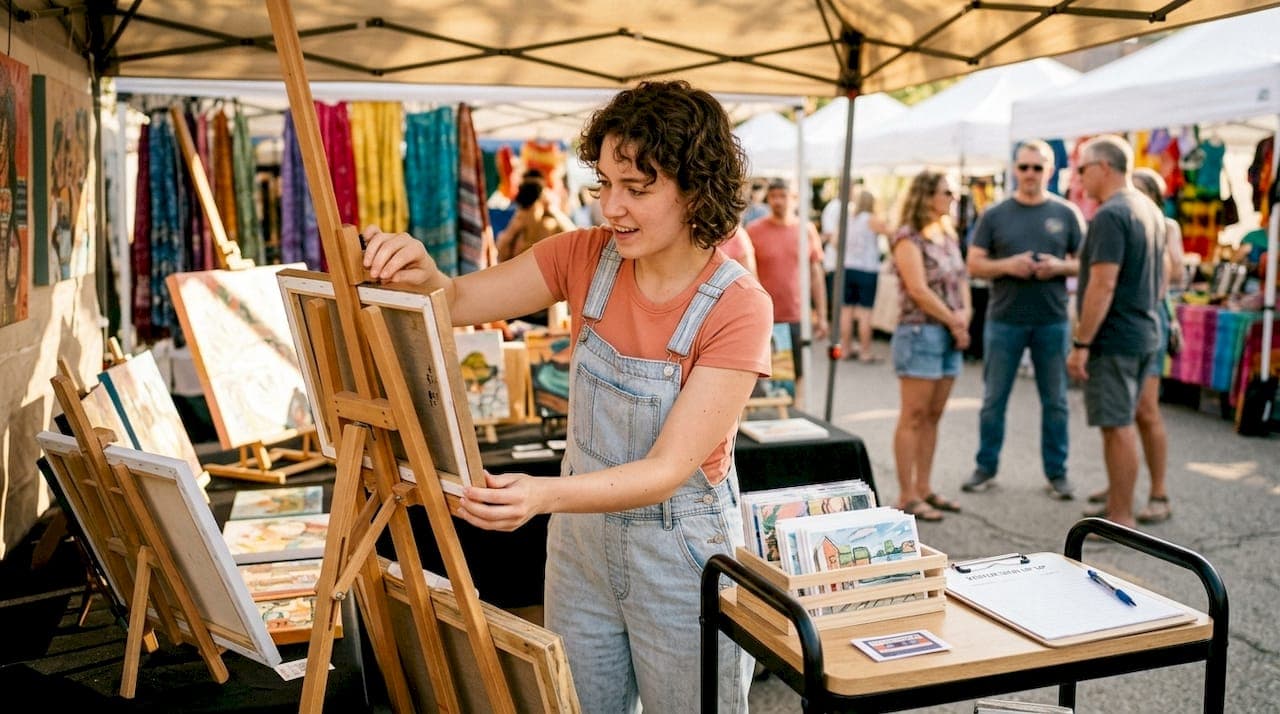
A local showcase event for artists is a curated, intimate gathering that spotlights emerging talent in front of a live audience, typically in a small venue like a gallery, cafe, or community theater. These events sit between an open mic night and a full concert. They give artists real stage time and give audiences direct access to creators they would never find on a mainstream playlist. If you follow local arts and culture, understanding what is a local showcase event for artists helps you get more out of every night you spend supporting your scene.
What is a local showcase event for artists?
A local showcase event is a short-format, curated performance designed to highlight emerging artists in front of an intimate audience, typically ranging from 50 to 300 people. The word "showcase" is the industry standard term. It signals a deliberate curation process, not just an open stage. Organizers select artists, shape the lineup, and control the pacing to create a focused experience.
These events differ from a standard art fair or community art show in one key way: the emphasis is on discovery. A local art exhibition might display finished work in a gallery for weeks. A showcase compresses that discovery into a single evening, with the artist present and the audience engaged in real time. The format rewards both sides. Artists get feedback instantly. Audiences get access they cannot buy at a stadium show.
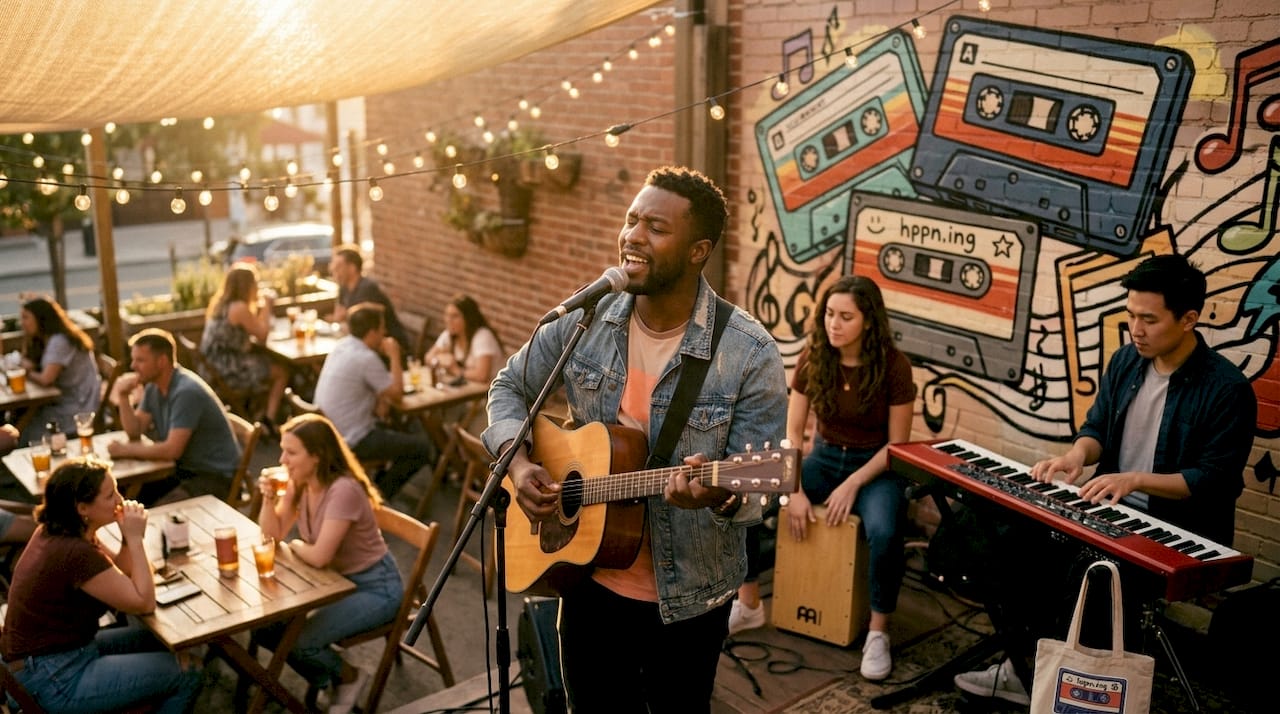
The standard industry term for the music version is "showcase," while visual arts equivalents include "artist spotlight" or "emerging artist reception." Both share the same core logic: small room, curated talent, direct connection.
How do local showcase events work?
The structure of a showcase event follows a recognizable pattern, though formats vary by venue and art form.
Showcase sets typically last 15–30 minutes, with full events running 2–4 hours. That pacing keeps energy high and gives audiences enough time to connect with each artist without fatigue setting in. Music showcases often feature three to five artists in rotation. Visual art showcases may run as a reception, with the artist circulating among guests.
Here is what a typical evening looks like:
- Doors open and networking begins. Attendees arrive, browse work, or grab a drink before the program starts.
- Artists perform or present in short sets. Each slot runs 15–30 minutes, with brief transitions between performers.
- Networking breaks are built into the schedule. These pauses let audiences approach artists directly, which is the point of the whole format.
- A closing period wraps the event. Some showcases end with a Q&A, a group discussion, or an informal hang.
Music showcases often charge around $10 admission, while visual art exhibitions tend to be free and rely on sponsorships or memberships instead. That pricing difference reflects the production cost and the audience expectation for each format.
Pro Tip: If you attend a showcase, arrive at doors-open time. The networking window before the program starts is often where the most genuine artist conversations happen.
Why do local showcase events matter for artists and communities?
Showcase events solve a specific problem that emerging artists face: visibility without infrastructure. A new musician or visual artist rarely has the budget for a full marketing campaign. A showcase puts them in front of a curated, interested audience without requiring that investment.
Showcases give emerging artists exposure, immediate feedback, and a path to building a local fan base. Industry professionals, including booking agents, gallery owners, and music supervisors, also attend showcases specifically to scout talent. That dual audience, fans and professionals, makes a single showcase night worth more than months of social media posting.
The community benefits run just as deep:
- Cultural enrichment. Showcases introduce neighborhoods to artists they would never encounter through mainstream channels.
- Support for diversity. Curated events can deliberately feature underrepresented voices in ways that open markets rarely do.
- Local business activation. Showcases build community ties between artists, audiences, and the venues and businesses that host them.
- Micro-community formation. Regular attendees become regulars. Regulars become advocates. That word-of-mouth is the most durable form of promotion an emerging artist can earn.
"Spotlight events differentiate themselves from regular gigs by pairing performance with networking to help build small, invested communities rather than transactional audiences. The goal is not a one-night crowd. It is a group of people who come back."
That distinction matters. A transactional audience buys a ticket and leaves. An invested community follows an artist's career, shares their work, and fills the next room they play.
What are the different types of showcase events?
Not every showcase looks the same. Format choice shapes the entire experience for both artists and attendees.
| Format | Audience size | Production cost | Best for |
|---|---|---|---|
| Seated listening showcase | 50–150 | Low to moderate | Singer-songwriters, acoustic acts, spoken word |
| Rotating artist sets | 100–300 | Moderate | Multi-genre nights, music discovery events |
| Open mic with curation | 50–200 | Low | New artists testing material for the first time |
| Listening party with Q&A | 30–100 | Low | Album previews, intimate fan engagement |
| Hybrid livestream showcase | Unlimited online | Moderate to high | Artists building audiences beyond their city |
Different showcase formats vary by audience size, production cost, and artist experience level. A seated listening showcase demands the most from an artist because the room is quiet and attentive. An open mic format is more forgiving and works well for artists who are still developing their stage presence.
Intimate venues with capacities between 100 and 300 create the personal atmosphere that defines a great showcase. Larger rooms dilute the connection. When an artist can make eye contact with the front row, the performance changes. The audience feels it too.
Hybrid livestream formats are growing in 2026. They let a local showcase reach viewers in other cities without losing the intimacy of the in-room experience. The key is keeping the livestream secondary. The room comes first.
Pro Tip: For your first showcase as an attendee, choose a rotating-set format. You will hear three to five artists in one night, which gives you a much faster read on the local scene than a single-artist show.
How do you participate in or organize a local showcase event?
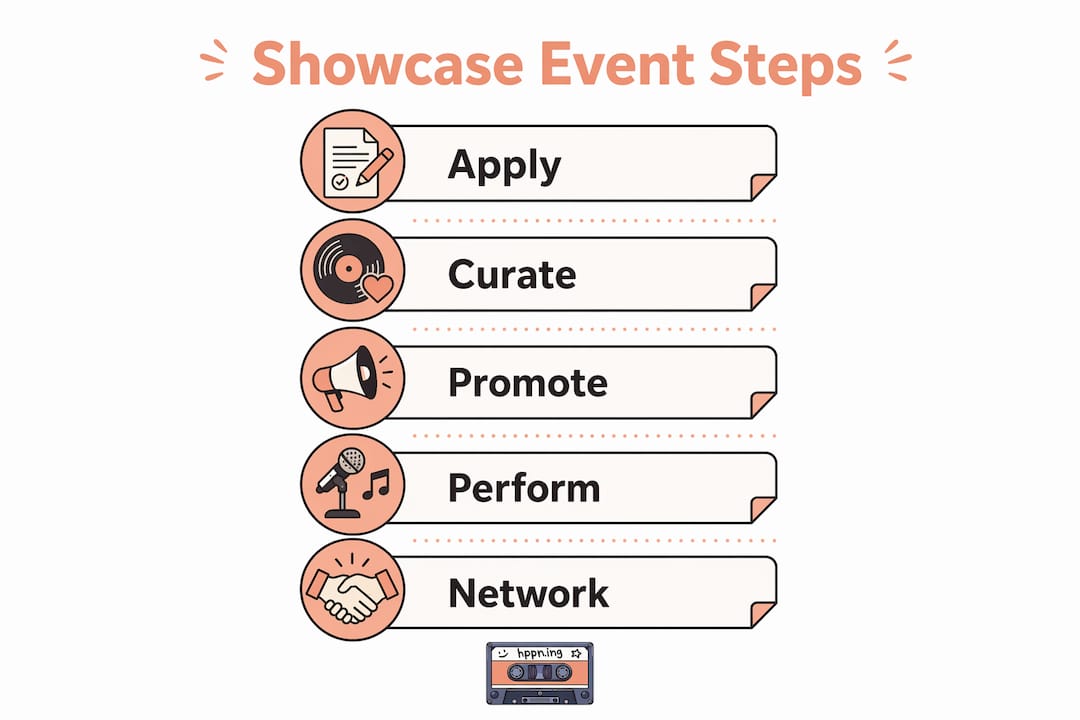
Getting involved in a showcase, whether as an artist or an organizer, follows a clear process. The steps below apply to both music and visual arts formats.
- Define your goal. Artists should decide whether they want exposure, feedback, or industry attention. Organizers should clarify whether the event serves discovery, community building, or fundraising.
- Select a venue that fits your capacity target. A room that holds 150 people feels full at 100 attendees. A room that holds 500 feels empty at the same number. Effective showcase planning starts with matching venue size to realistic attendance.
- Curate the lineup deliberately. A showcase is not a random open call. Select artists who complement each other in style or theme. Genre-focused nights, all-local singer-songwriters, or emerging visual artists from one neighborhood, tend to attract a more committed audience.
- Set a clear event flow. Publish the schedule in advance. Audiences who know what to expect stay longer and engage more. Build in at least one networking break of 15–20 minutes.
- Promote through the right channels. Digital promotion tools, local event listings, and artist social networks all drive attendance. Hppn lets organizers and artists reach fans who are already looking for live music near them, which shortens the discovery gap significantly.
- Follow up after the event. Collect emails at the door. Post photos and video clips within 48 hours. Artists who document their showcase performances build a portfolio that works long after the night ends.
For artists applying to existing showcases, the process usually involves submitting a short audio or video sample, a brief bio, and links to social profiles. Spotlight Showcase events at Marquee Nashville run weekly with open seating and a $10 admission model, which is a practical template for organizers building a recurring program.
Key Takeaways
A local showcase event is the most direct path an emerging artist has to a real, engaged audience without the infrastructure of a label or a large marketing budget.
| Point | Details |
|---|---|
| Core definition | A showcase is a curated, short-format event spotlighting emerging artists for 50–300 attendees. |
| Event structure | Sets run 15–30 minutes; full events last 2–4 hours with built-in networking breaks. |
| Artist benefits | Showcases deliver exposure, immediate feedback, and access to industry professionals in one night. |
| Format variety | Seated, rotating, open mic, and hybrid formats each serve different artist levels and audience sizes. |
| Organizing principle | Match venue size to realistic attendance and curate the lineup with a clear theme or focus. |
What I have learned from watching local showcases evolve
The single biggest mistake I see organizers make is treating a showcase like a mini-concert. It is not. A concert is a delivery mechanism. A showcase is a conversation starter. The moment you optimize for production value over artist-audience proximity, you lose the thing that makes the format work.
Venue intimacy is not just a logistical detail. Intimate venues create vulnerability and discovery that larger rooms cannot replicate. I have watched artists perform to 80 people in a back room of a bar and walk away with three booking offers. The same artist on a 500-person stage would have been invisible.
The other thing most organizers overlook is the post-event window. The 30 minutes after the last set ends is where real relationships form. Artists who linger, talk, and exchange contacts consistently outperform those who pack up and leave. The showcase is the introduction. What happens after is the actual career move.
Hybrid formats are worth watching in 2026. Done well, they extend a local showcase's reach without destroying its intimacy. Done poorly, they split the artist's attention and make the room feel like a film set. The organizers getting it right are those who treat the livestream as a broadcast of the room, not a separate production.
The local arts scene does not need more events. It needs better ones, with clearer curation, smaller rooms, and longer networking windows.
— Ari
How Hppn connects you with local showcase events
Finding a local showcase used to mean following the right Instagram accounts or knowing someone at the venue. Hppn changes that equation.
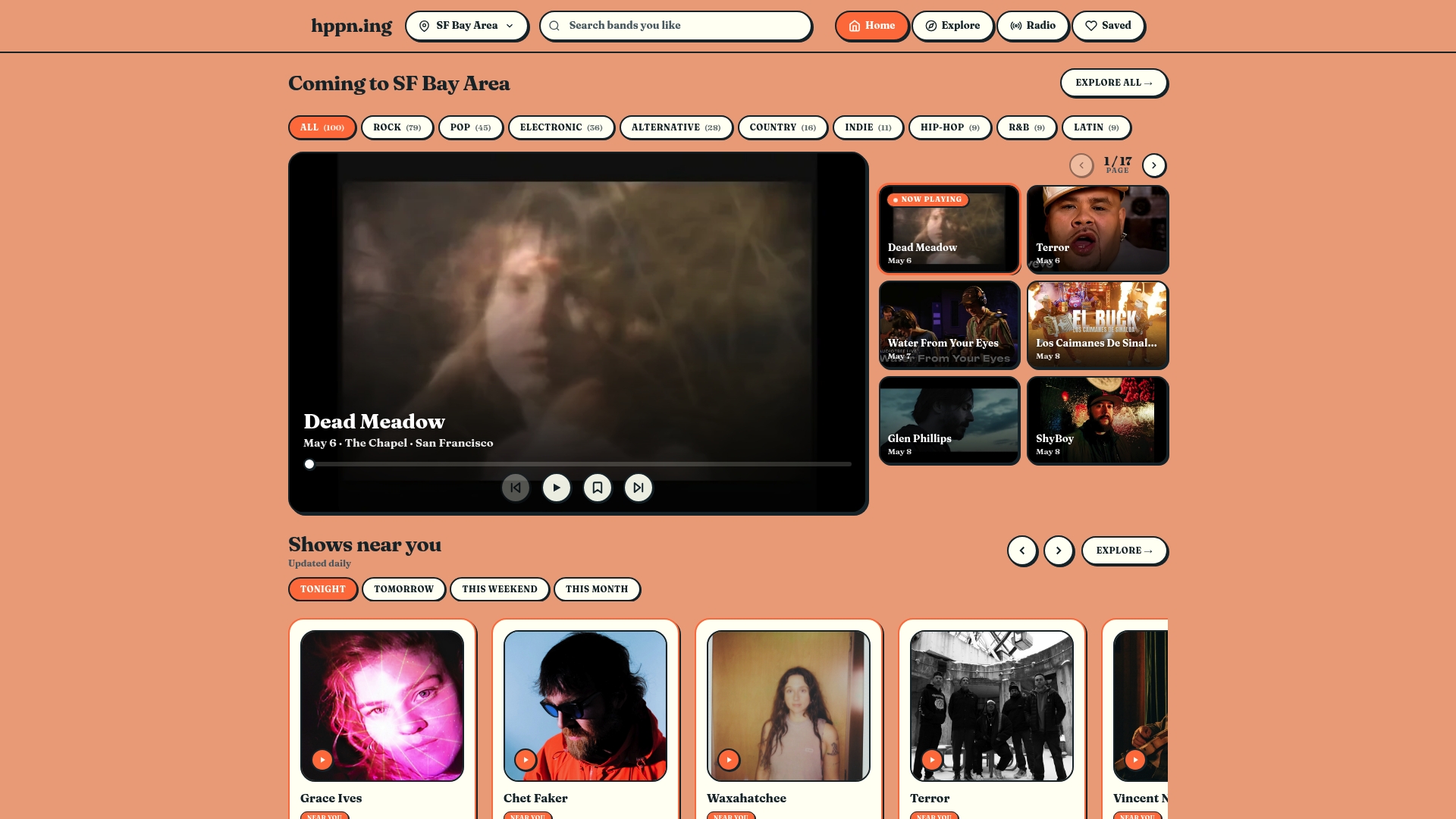
Hppn is built specifically for fans who want to find emerging artists and live events before they blow up. The platform lets you browse artists and preview music by location, so you can hear an act before you commit to a Tuesday night out. You can also check live music charts and trending performers in your city to see which local artists are gaining real momentum right now. For anyone who wants to go deeper, the community notes feature connects you with other fans who are tracking the same local scene. Hppn puts the local showcase circuit on your radar, so you stop missing the nights that matter.
FAQ
What is the difference between a showcase and an open mic?
An open mic is open to anyone who signs up. A showcase features a curated lineup selected by an organizer, which means the quality and focus are more consistent.
How long does a local showcase event typically last?
Most showcase events run 2–4 hours, with individual artist sets lasting 15–30 minutes and networking breaks built into the schedule.
Do artists get paid at local showcase events?
Payment varies by event. Some showcases offer a door split or a flat fee. Others offer exposure and industry access in place of direct payment, particularly for emerging artists early in their careers.
What types of venues host local showcase events?
Cafes, small theaters, galleries, bars with performance spaces, and community centers all host showcases. The right venue type holds 50–300 people and prioritizes sight lines and sound quality over capacity.
How can an emerging artist get booked for a local showcase?
Most showcases accept applications through email or a submission form. Artists typically submit a short audio or video sample, a bio, and links to their social profiles for organizers to review.