
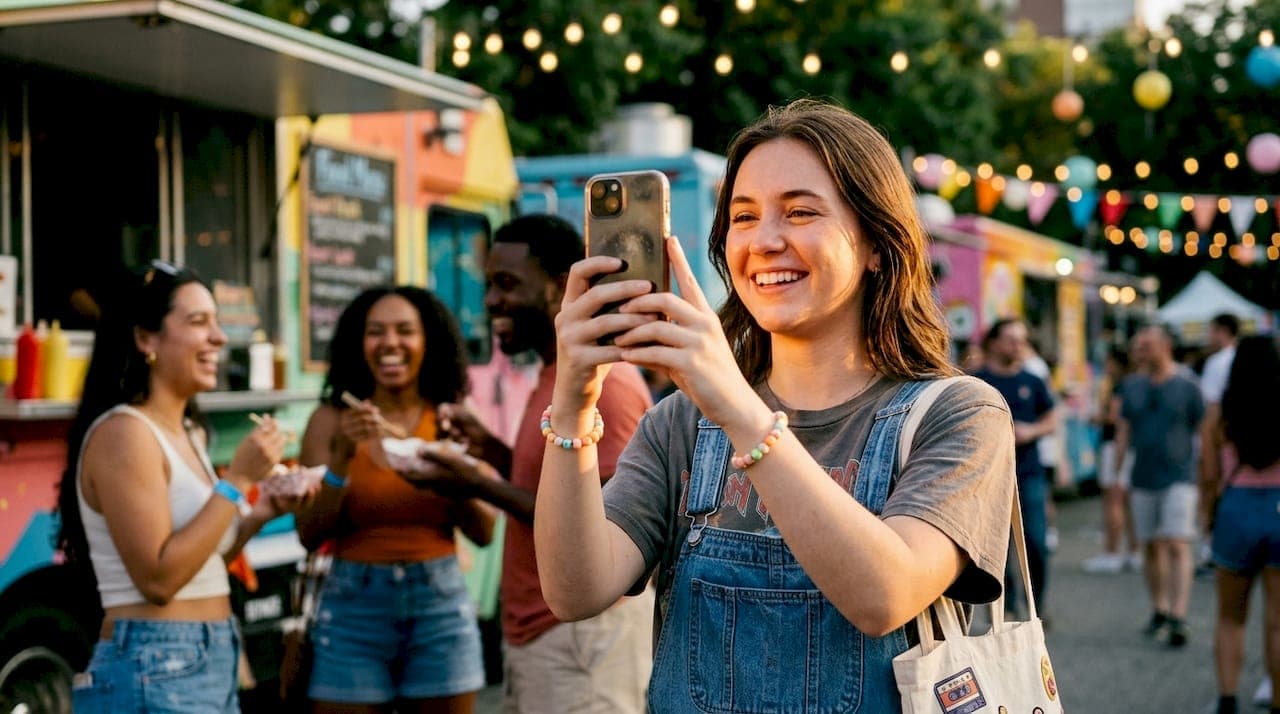
Identifying songs heard at concerts means using audio recognition apps, specialized DJ set tools, and crowd-sourced setlist databases to capture and verify every track played during a live performance. These three methods form the complete toolkit for any concertgoer who wants to leave a show with a full, accurate list of what was played. The process works both in real time and in the hours after a show. Platforms like Setlist.fm and tools like Beatport's Track ID have made it easier than ever to recognize concert songs, even in loud, chaotic festival environments. Hppn also connects fans to live music discovery resources that make the whole experience richer.
How can you identify songs heard at concerts in real time?
The fastest way to recognize a song during a live show is an audio recognition app. These apps work by recording a short audio sample, converting it into an acoustic fingerprint, and matching it against a database of known recordings. The process takes seconds when conditions are clean.
The problem is that concert conditions are rarely clean. Standard recognition apps fail in at least 50% of noisy, complex live scenarios. Crowd noise, reverb, and live instrument variations all confuse apps built to match studio recordings.
Specialized tools for DJ sets and festival stages
For electronic music fans and festival crowds, a dedicated DJ set recognition tool is the right choice. Beatport's Track ID tool uses AI designed specifically to handle pitch shifts, overlapping tracks, and room noise. Unlike standard recognition apps, Track ID can identify time-stretched or mixed tracks in real time. That distinction matters enormously at a festival where a DJ blends 30 tracks across two hours.
Apps like Trakd take a different approach. Trakd records full DJ sets live, continuously identifies tracks, and relies on community contributions to fill gaps the AI misses. The combination of machine recognition and human input is what makes it reliable in the messiest live environments.
Comparison of tool types by environment
| Tool type | Strength | Best environment |
|---|---|---|
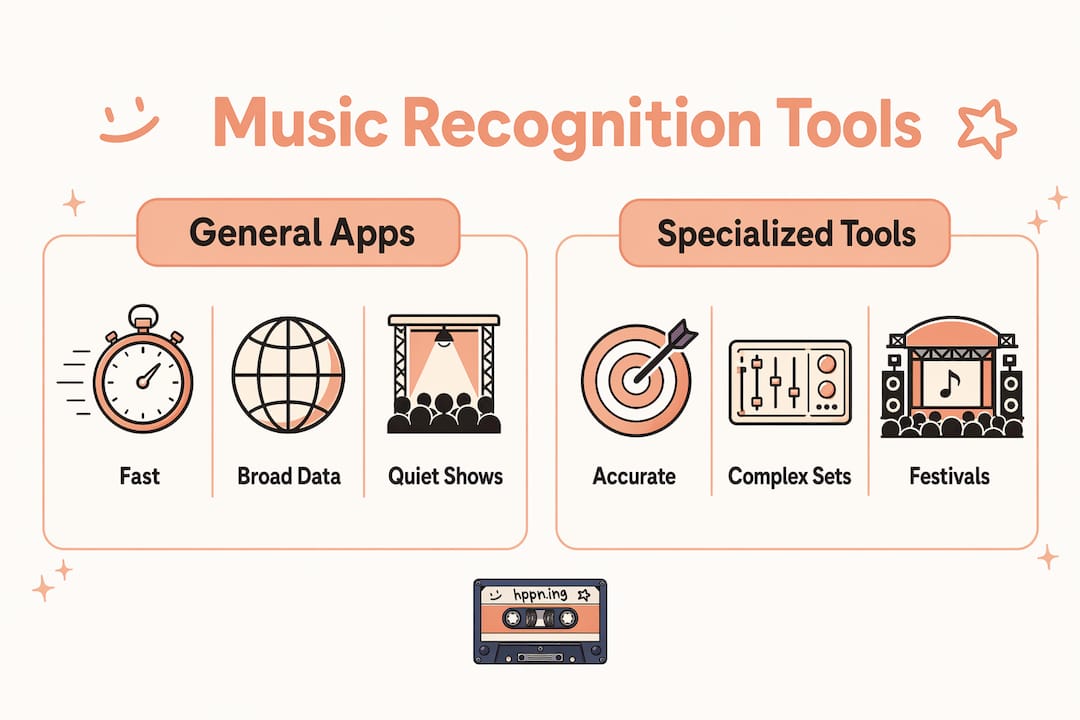
| General audio recognition app | Fast, broad music database | Quiet venues, acoustic shows |
| DJ set recognition tool (e.g., Track ID) | Handles pitch shifts and mixing | Festivals, electronic music events |
| Continuous set recorder (e.g., Trakd) | Full-set logging with community fill | Long DJ sets, raves, club nights |
| Crowd-sourced setlist database | High accuracy, verified post-show | All genres, post-concert review |
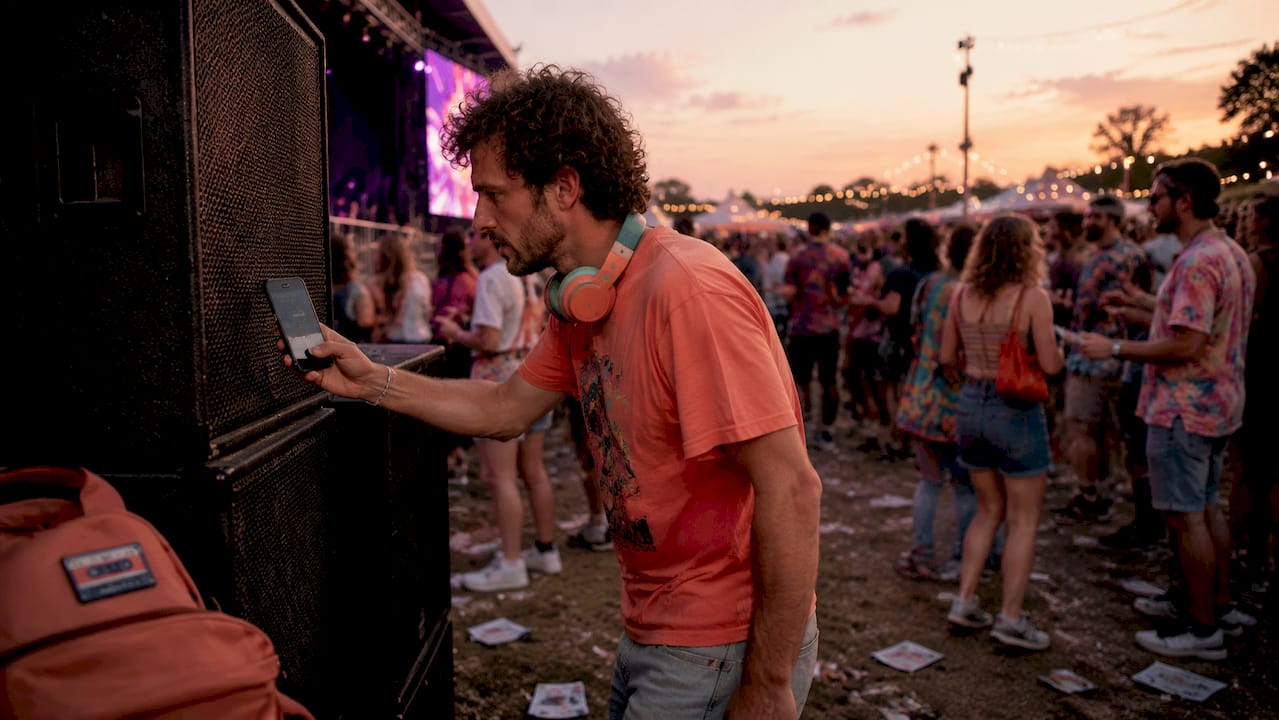
Pro Tip: Hold your phone toward the stage speakers rather than pointing it straight up. Speaker proximity cuts crowd noise and gives the app a cleaner audio sample to work with.
How to use crowd-sourced setlist databases to find concert song lists
Crowd-sourced setlist databases are the gold standard for accuracy when you want to track live music performances after the fact. Setlist.fm is the most widely used platform, with fans submitting and verifying setlists for concerts across every genre and country. The data is community-driven, which means accuracy improves the more people attend and contribute.
The typical verification window for crowd-sourced data is 8–12 hours after a show. That delay exists because fans need time to submit, cross-check, and correct entries. A setlist posted within 30 minutes of a show ending is often incomplete or contains errors.
Where fan communities share setlists in real time
Beyond dedicated databases, fan communities on Reddit and Facebook groups share setlists as shows happen. Subreddits for specific artists often have live threads where attendees post songs song by song as they are played. These real-time threads are exciting but less reliable than a verified Setlist.fm entry.
The best approach is to use real-time fan threads for excitement and immediacy, then cross-check against multiple independent sources once the show ends. Official venue social media posts are also credible, especially for larger productions where the venue has an interest in accurate documentation.
- Check Setlist.fm 12–24 hours after a show for the most verified version of the setlist.
- Search the artist's name plus the city and date on Reddit for live fan threads.
- Look at official venue Instagram or X posts for song-by-song updates during the show.
- Cross-reference at least two independent fan reports before treating a setlist as confirmed.
- Flag discrepancies in the Setlist.fm comments section so the community can correct them.
Pro Tip: Wait until the morning after a show to pull your final setlist. The overnight window gives the fan community time to fill gaps, correct mistakes, and add songs that were missed in the post-show rush.
Step-by-step approach to tracking and verifying concert songs
A reliable workflow for identifying live songs combines preparation, real-time tools, and post-show verification. Each stage serves a different purpose, and skipping any one of them leaves gaps.
Preparing before the concert is the most underrated step. Fans who research likely setlists before a show recognize songs faster during the performance. Setlists are dynamic, so comparing recent shows from the current tour gives better accuracy than relying on historic or opening night lists. Focus on three categories: must-play hits, likely deep cuts, and wildcard bonus tracks.
The full workflow from pre-show to playlist
| Stage | Action | Best tool |
|---|---|---|
| Pre-show | Research recent tour setlists | Setlist.fm, fan forums |
| During show | Run audio recognition for unknown tracks | Track ID, Trakd, general recognition app |
| Immediately after | Note any unidentified songs by humming or voice memo | Voice recorder app |
| 8–12 hours post-show | Check verified setlist database | Setlist.fm |
| Final verification | Cross-check two or more independent sources | Reddit threads, venue posts |
Handling rare or unidentified tracks takes patience. If an app fails and no fan thread mentions the song, post a description or voice memo clip in the artist's fan community. Dedicated fans often recognize obscure tracks, B-sides, or covers that no database has indexed. This community knowledge is irreplaceable for niche artists or one-off live performances.
Discrepancies between sources are common for the first few hours after a show. Official venue posts and multiple independent fan reports are more credible than a single thread post. When two sources disagree, wait for a third before committing to a final list.
How to add identified concert songs to your music library
Once you have a verified setlist, adding those songs to your personal library is straightforward. Most major audio recognition apps now support direct syncing to Spotify or Apple Music. Automated playlist generation takes under 5 seconds and saves 10–15 minutes of manual sorting per event. That efficiency compounds quickly if you attend multiple shows a month.
Organizing your concert playlists by event rather than by artist creates a more meaningful listening experience. A playlist titled "Radiohead, Madison Square Garden, march 2026" captures a specific memory in a way that a generic artist playlist does not.
- Use your recognition app's built-in export feature to push identified tracks directly to Spotify or Apple Music.
- Create one playlist per concert, named with the artist, venue, and date.
- Add songs from the verified setlist that the app missed during the show.
- Review lyrics for your top five songs before the next show to prepare for singalongs.
- Set up live music alerts so you get notified when the same artist announces a new date.
For songs the app did not catch during the show, the verified setlist fills the gap. Pull the full list from Setlist.fm, search each track manually on your streaming service, and add them to the concert playlist. The manual step takes five minutes and gives you a complete record of the night.
Key Takeaways
The most reliable way to identify songs heard at concerts combines real-time audio recognition with crowd-sourced setlist verification and post-show cross-checking across multiple independent sources.
| Point | Details |
|---|---|
| Use the right tool for the venue | Standard apps work for quiet shows; specialized tools like Track ID handle festivals and DJ sets. |
| Crowd-sourced databases win on accuracy | Setlist.fm delivers verified setlists within 8–12 hours, making it the most reliable post-show source. |
| Prepare before the show | Researching recent tour setlists helps you recognize songs faster during the performance. |
| Cross-check before finalizing | Use at least two independent sources to confirm any setlist, especially for rare or unannounced tracks. |
| Sync to streaming immediately | Automated playlist export saves 10–15 minutes per event and preserves the concert as a permanent memory. |
What I've learned from chasing setlists at hundreds of shows
Real-time song identification at concerts sounds simple until you are standing in a crowd of 10,000 people with your phone pointed at a speaker stack. The honest truth is that no single tool gets it right every time. Standard recognition apps are built for studio recordings, and a live band playing a song 15 BPM faster than the album version will confuse them every time.
The fans who consistently build accurate setlists are the ones who treat it as a two-stage process. They use apps during the show for quick wins on obvious tracks, then spend 20 minutes the next morning on Setlist.fm to fill in everything the app missed. That combination is more reliable than any single tool alone.
One mistake I see constantly is fans trusting the first setlist they find online. A single Reddit post from someone who left early is not a verified setlist. Multiple independent confirmations are what separate a reliable list from a guess. The extra 10 minutes of verification is always worth it.
The deeper value of tracking setlists is what it does for your relationship with the music. When you know what an artist is likely to play, you show up prepared. You know the words to the deep cuts. You recognize the opening notes of a song before the crowd does. That preparation turns a good concert into a great one.
— Ari
Live music discovery made better with Hppn
Knowing which songs were played is only the beginning. Hppn is built for fans who want to go deeper into live music, connecting you with upcoming concerts near you, emerging artists worth watching, and a community of fans who share your obsession with live performance.
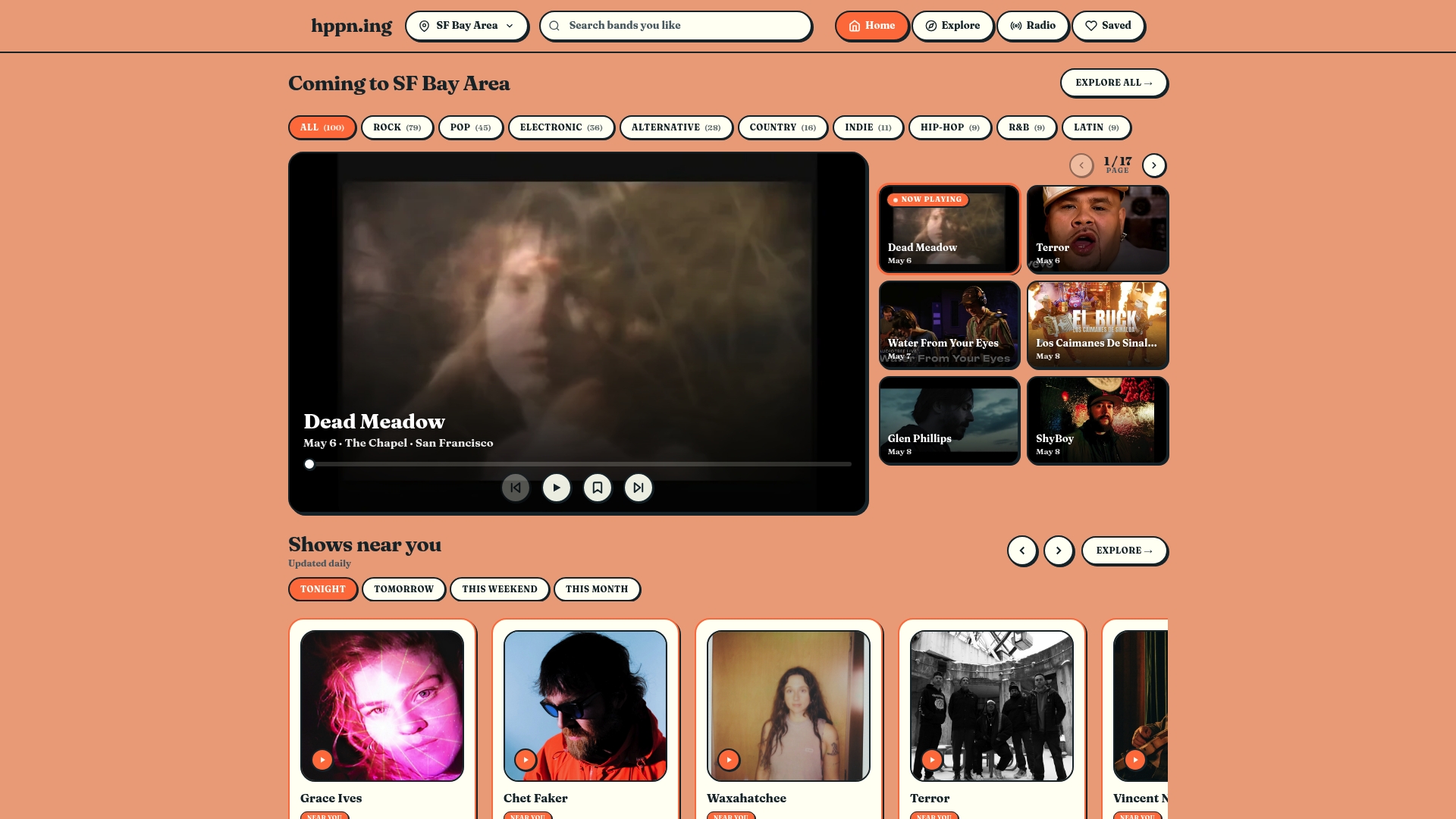
On Hppn, you can preview artists through video and audio before you buy a ticket, browse shows by location, and read community notes from fans who have already seen the act. The platform surfaces smaller and emerging artists who rarely appear on mainstream discovery tools, which means you find shows worth attending before everyone else does. If you are serious about live music, Hppn gives you the full picture.
FAQ
What is the best app for identifying songs at a concert?
Specialized tools like Beatport's Track ID perform better than general recognition apps in loud, complex live environments because they are built to handle pitch shifts and crowd noise. For DJ sets specifically, apps like Trakd also record full sets and use community contributions to fill identification gaps.
How do I find the setlist for a concert I attended?
Setlist.fm is the most reliable source, with verified setlists typically available 8–12 hours after a show. Cross-checking with Reddit fan threads and official venue social posts improves accuracy further.
Why do recognition apps fail at concerts?
Standard recognition apps are trained on clean studio recordings and fail in at least 50% of noisy live scenarios. Crowd noise, reverb, and live performance variations all reduce their accuracy significantly.
Can I add concert songs directly to Spotify or Apple Music?
Yes. Most major recognition apps support direct syncing, and automated playlist generation takes under 5 seconds per event. You can also manually add songs from a verified setlist to complete any gaps the app missed during the show.
How do I prepare for a concert to recognize more songs?
Research recent setlists from the current tour on Setlist.fm before the show. Focus on must-know songs, likely tracks, and bonus wildcards, and refresh your knowledge of choruses and fan call-and-response moments for the best experience.