

A live music bucket list is a personalized, actionable roadmap of concerts, festivals, and unique music experiences you commit to attending before time runs out. Unlike a vague wish list, it forces you to prioritize the shows that genuinely matter to you, so you stop saying "I'll catch them next tour" and start buying tickets. The difference between fans who see their dream shows and those who don't comes down to one thing: intention. This guide shows you exactly how to build live music bucket list entries that are worth your time, money, and travel.
How to build your live music bucket list from scratch
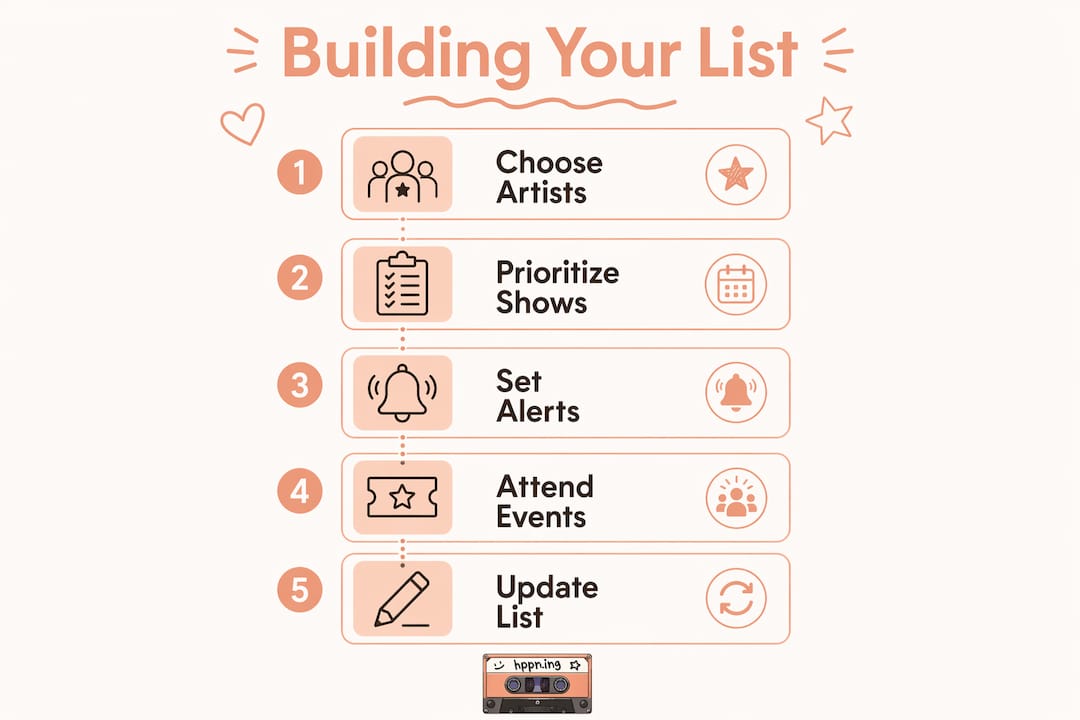
The most effective live music bucket list starts with five artists, not fifty. Experts recommend beginning with exactly five names you would genuinely regret missing, because a short list stays actionable where a long one becomes wallpaper. Five artists forces you to make real choices about who matters most, which is the entire point.
Write those five names down right now, in a notes app, a spreadsheet, or a dedicated app like Concerts Remembered. The format matters less than the act of committing. Once they exist outside your head, they become a plan.

Tier your artists by urgency
Not all five artists carry equal weight. Organize them into three tiers based on two factors: how much you would regret missing them, and how far you are willing to travel or spend to see them.
- Tier 1 (Non-negotiable): Artists you would fly internationally for, pay premium prices for, or rearrange your schedule around. Think legacy acts with limited touring windows, or artists whose live show is genuinely unrepeatable.
- Tier 2 (High priority): Artists you would travel domestically for and pay above face value, but with some flexibility on timing.
- Tier 3 (Opportunistic): Artists you would see if they came within driving distance and tickets were reasonably priced.
This tiering system turns your concert wish list into a decision-making tool. When two shows conflict, you already know which one wins.
Pro Tip: Set your phone's notes app to open your bucket list every Sunday morning. A 30-second weekly glance keeps it mentally active and prevents you from missing on-sale announcements for Tier 1 artists.
How do you keep a live music bucket list current?
A static list goes stale fast. Artists retire, tastes evolve, and new acts emerge that belong on your radar immediately. Active bucket list maintenance means adding, pruning, and re-tiering regularly, not just building the list once and forgetting it.
Three approaches keep your music festivals bucket list fresh and relevant:
- The retrospective scan. Every three to four months, review your Spotify Wrapped data, your saved albums, and your most-played artists. If someone appears consistently in your listening but not on your bucket list, add them. Your listening habits are honest in a way your memory is not.
- The forward-add habit. Add an artist to your list the moment you feel the impulse, whether that is mid-set at a local show, mid-song on a playlist, or after a friend's recommendation. Delayed additions rarely happen. Discovering new artists live is one of the fastest ways to expand your list with artists who genuinely move you.
- The genre sweep. Once or twice a year, spend an hour deliberately exploring a genre you do not normally follow. Jazz, bluegrass, electronic, classical crossover. Pick two or three artists from that genre who have a reputation for exceptional live performance and add them to Tier 3. This prevents your list from becoming an echo chamber of your existing tastes.
Pruning is equally important. Remove artists you have already seen and felt satisfied by. Remove artists whose recent output no longer excites you. A meaningful list stays lean.
Pro Tip: Connect your Spotify account to a tour-tracking service and set email alerts for every artist on your bucket list. Combine this with following tour dates through dedicated platforms so announcements reach you within hours of going live, not days.
What does planning a live music trip actually cost?
Budgeting for a bucket list show requires accounting for far more than the ticket price. A complete gig-trip budget covers at least ten cost categories beyond the face value of admission, including travel, accommodation, food and drink, parking, shuttle passes, rental cars, camping gear, travel insurance, merchandise, and incidentals. For major destination festivals, these additional costs routinely exceed the ticket price itself.
Here is a realistic cost breakdown for three common bucket list scenarios:
| Experience type | Ticket cost range | Estimated additional costs | Total realistic budget |
|---|---|---|---|
| Local arena show | $80 to $300 | $50 to $150 | $130 to $450 |
| Domestic festival (e.g., Bonnaroo, Coachella) | $350 to $600 | $500 to $1,200 | $850 to $1,800 |
| International destination concert | $150 to $500 | $1,500 to $3,500 | $1,650 to $4,000 |
The numbers above make one thing clear: the ticket is often the cheapest part of a bucket list trip. Budget for the full experience from the start, or you will be making uncomfortable decisions at the merch table.
For festivals specifically, pre-planning your schedule by mapping stages and identifying priority artists before you arrive reduces missed shows and prevents the burnout that hits on day two when you have been running between stages without rest.
Pro Tip: The border-hop method books a 7 to 10 day multi-city trip within two to four hours by train or short flight, letting you attend multiple shows across different cities while splitting accommodation costs across the journey. A London to Amsterdam to Berlin trip, for example, can yield three shows for roughly the cost of one transatlantic round trip.
Pack smart for festivals. The essentials that most first-timers forget:
- A clear bag (required at most major venues and festivals)
- High-SPF sunscreen and a portable charger
- Earplugs rated for music (not foam construction plugs, which muffle highs)
- Comfortable shoes you have already broken in
- Cash for vendors who do not accept cards
What makes a live music experience truly bucket-list worthy?
The most meaningful bucket list experiences answer at least one of three questions: Will you remember this forever? Will you learn something about yourself? Will it change how you hear live music? If a show cannot clear at least one of those bars, it probably belongs on a general concert calendar, not a bucket list.
Venue experience defines concert memory as much as the artist does. The Las Vegas Sphere, for instance, is a bucket-list attraction independent of who is performing. Its haptic, visual, and acoustic technology creates a sensory environment that transforms how artists perform, treating the venue itself as an instrument for real-time improvisation. Phish's residency there in 2025 and 2026 became a reference point for what immersive live music can be.
Beyond technologically advanced venues, certain formats consistently produce unforgettable experiences:
- Artist residencies in a single city over multiple nights, where set lists change and the artist takes creative risks unavailable on a standard tour.
- Surprise or secret shows at small venues, where the intimacy creates a shared memory that arena shows cannot replicate.
- Genre-crossing events, such as a classical orchestra performing film scores or a jazz musician collaborating with an electronic producer live on stage.
The communal presence of live music is what technology cannot replicate. Singing with thousands of strangers who know every word, or standing in a small club where the artist makes eye contact with the room, produces a shared human connection that no streaming platform or AI-generated content can approximate. That irreplaceability is exactly why a bucket list exists.
Pro Tip: Balance your list between legacy acts and emerging artists. Unique live music formats from newer performers often deliver more surprise and emotional impact than a well-rehearsed stadium production you have seen recreated on YouTube a hundred times.
Key takeaways
A live music bucket list works only when it is intentional, tiered by urgency, and actively maintained rather than treated as a static wish list.
| Point | Details |
|---|---|
| Start with five artists | A short, prioritized list stays actionable and prevents the overwhelm that kills follow-through. |
| Tier by urgency and willingness to travel | Separating non-negotiables from opportunistic picks makes every scheduling conflict easier to resolve. |
| Budget beyond the ticket | Additional costs for travel, food, and accommodation routinely exceed the ticket price for destination shows. |
| Prioritize venue and format | Immersive venues like the Sphere and formats like residencies produce memories that outlast standard tours. |
| Maintain the list actively | Re-tier every three to four months, add artists immediately when inspired, and prune what no longer fits. |
Why I stopped treating my concert list as a wish list
I spent years keeping a mental note of artists I "really should see someday." Someday is not a date. It does not show up on a calendar, and it does not send you a reminder when tickets go on sale. The shift that changed everything for me was treating my bucket list as a living document with real tiers and real deadlines, not a fantasy inventory.
The hardest lesson I learned was about intentionality. I used to add artists because they seemed culturally important, not because I genuinely wanted to see them. That produced a list full of filler. Stripping it back to artists I would feel actual loss over missing made the whole thing sharper and more motivating.
I have also learned that the venue and the crowd matter as much as the artist. Some of my most vivid concert memories come from 200-capacity rooms with artists I barely knew at the time. Some of my least memorable nights were at sold-out arenas for artists I had followed for a decade. The format and the room shape the experience in ways that are hard to predict from a Spotify play count.
My honest advice: review your list every season, not every year. Tastes shift faster than most people admit, and a bucket list that reflects who you were three years ago is not serving who you are now.
— Ari
Start discovering your next bucket list show with Hppn
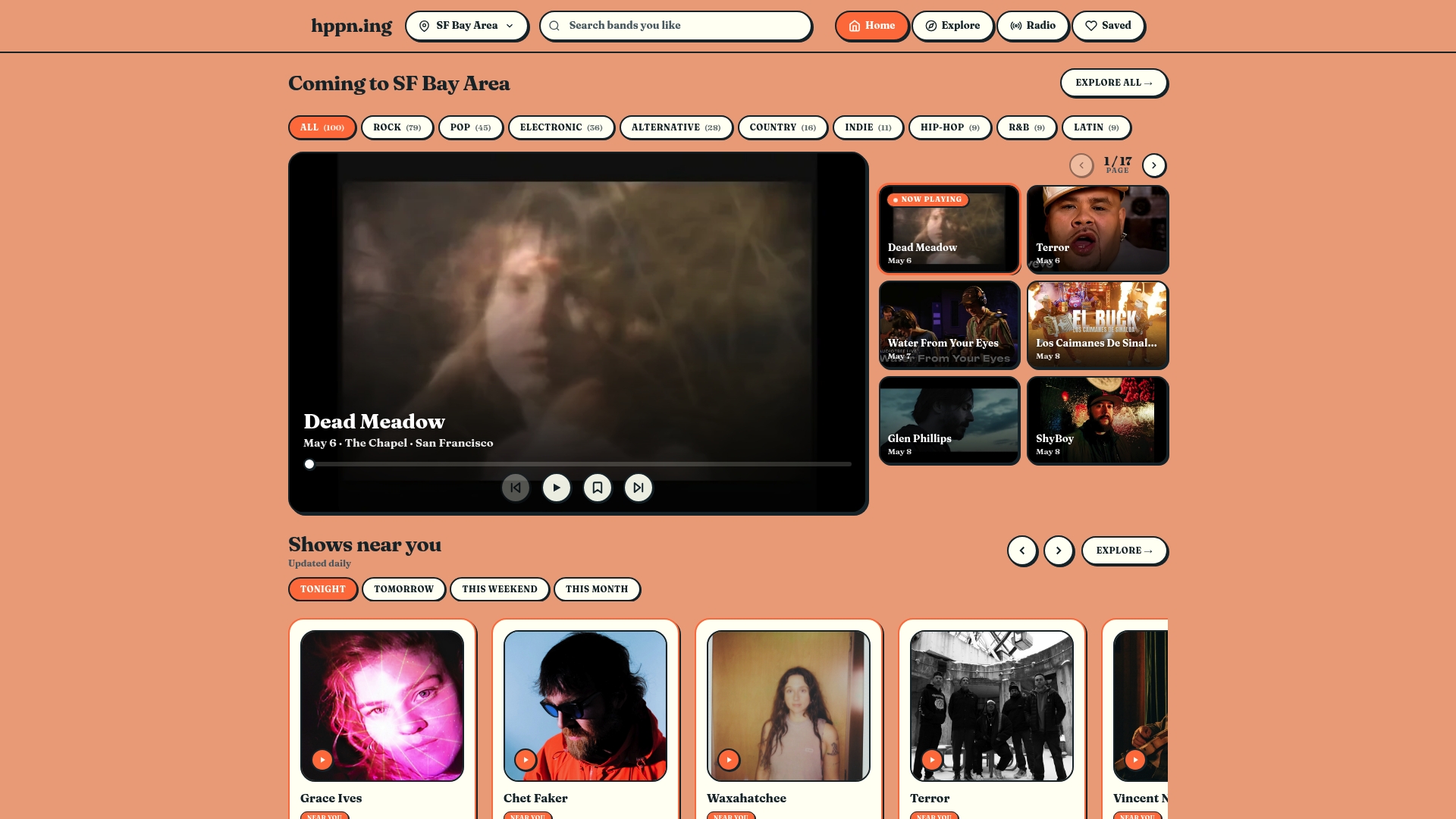
Hppn is built for exactly the kind of music fan who takes their live music experiences seriously. The platform lets you preview artists and find shows near you by location, browse emerging and underground performers before they sell out small venues, and access tickets directly. Unlike mainstream platforms that surface the same headliners repeatedly, Hppn surfaces the artists and events that belong on a genuine bucket list, including local scenes and trending performers you would not find through a standard search. You can also search and preview artists to decide whether they deserve a spot on your list before you commit to a ticket. Start building your list where the music actually lives.
FAQ
How many artists should be on a live music bucket list?
Start with five artists to keep the list actionable and focused. Expand gradually as you see shows and discover new performers, but avoid letting the list grow beyond 20 to 25 items without regular pruning.
What makes a concert worth adding to a bucket list?
A show earns bucket list status when it answers yes to at least one of three questions: Will you remember it forever? Will it teach you something about yourself? Will it change how you experience live music? Venue, format, and artist rarity all factor in.
How do you budget for a bucket list concert trip?
Budget across at least ten cost categories beyond the ticket, including travel, accommodation, food, parking, and merchandise. For domestic festivals, expect additional costs of $500 to $1,200 on top of the ticket price.
How do you avoid missing on-sale dates for bucket list artists?
Set up email alerts and push notifications through tour-tracking platforms the moment an artist joins your list. Checking manually is not reliable enough for Tier 1 artists whose tickets sell out within minutes of going live.
Are smaller venues worth prioritizing over major festivals?
Yes, for certain experiences. Intimate venues produce a level of artist-audience connection that stadium shows cannot match, and emerging artists in small rooms often deliver more raw impact than polished arena productions. A balanced bucket list includes both.