
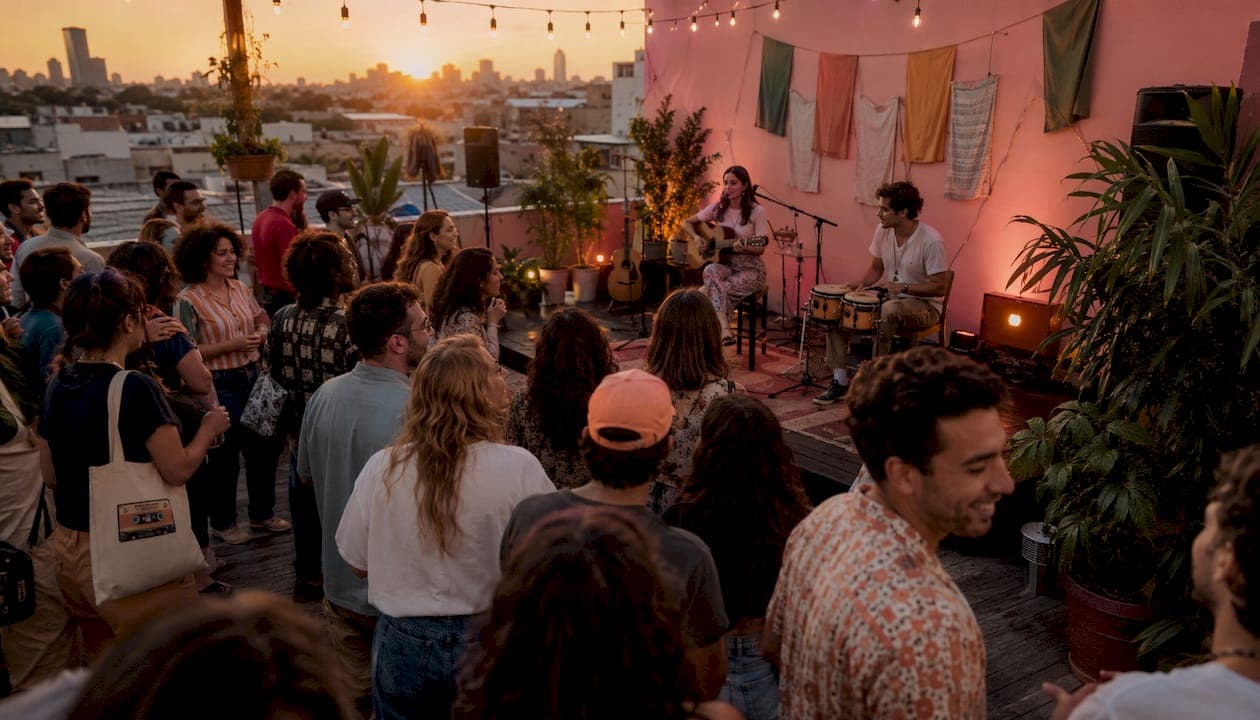
The small venue performances fans still talk about years later
Some concerts stay with you not because of pyrotechnics or a 40-foot LED wall, but because the artist was close enough that you could see their hands shake. The best examples of memorable small venue shows share a specific quality: something happened in that room that could not have happened anywhere else.
Here are the performances that prove it.
- Phoebe Bridgers at Duling Hall, Jackson, Mississippi (May 2026): Bridgers announced the show the morning of the concert using only physical posters placed in record stores, coffee shops, and boutiques. No social media. No presale. Attendees could not bring phones, smartwatches, cameras, or even pens. The venue capped attendance to maintain an intimate setting, with most fans sitting on the floor. Bridgers sat on a couch, performed acoustically with just a guitarist and pianist, and signed autographs for every single person afterward.
- The Avett Brothers at Kings Barcade, Raleigh, North Carolina (July 2004): Roughly 75–80 people witnessed what musicians who were there describe as the night the band "became" The Avett Brothers. The stage stood just 18 inches off the ground. The crowd was close enough to wipe sweat off Scott Avett's face.
- St. Vincent at Little Saint, Healdsburg, California (March 2026): In a small room, Annie Clark stripped her densely layered songs to voice and acoustic guitar, leaned down to clasp fans' hands, and cradled a concertgoer's cheek mid-song. She borrowed a Nike cap from the crowd and clutched a bouquet of Bodega roses handed up from the front row.
- The White Stripes at the Cannery Club, Nashville, Tennessee (May 2007): Only 250 fan tickets were sold, and they sold out in under three minutes. Jack White played seven feet from the front row. Fans drove ten to fifteen hours from Detroit and beyond just to be in that room.
- TAGABOW at Sound Church, Brattleboro, Vermont: The band performed on the floor of a converted church, facing each other instead of the audience. No encore. No stage. The acoustics of the old building made the sound unlike anything most attendees had heard live. One concertgoer summed it up simply: "That was life affirming."
What connects all of these? None of them were about spectacle. Every one of them was about proximity, both physical and emotional.
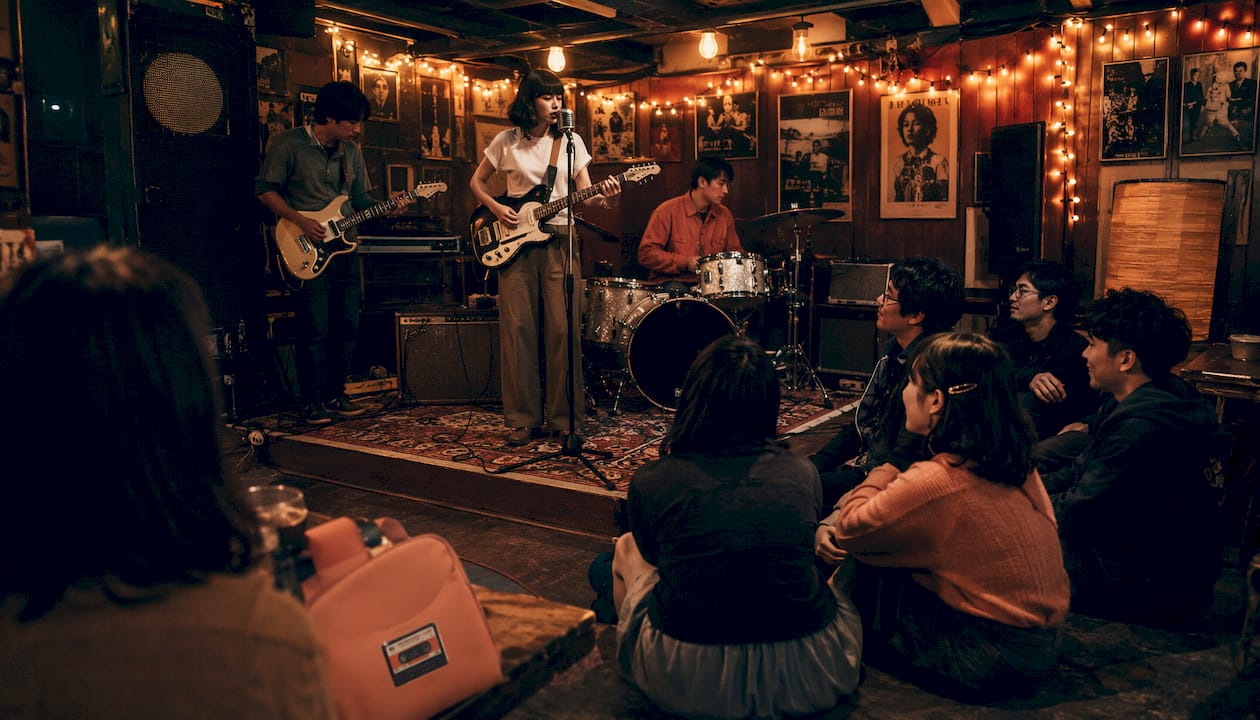
Legendary small venues that keep producing unforgettable nights
The room itself shapes the memory. Certain venues have a track record of turning ordinary shows into unique small venue performances that fans carry for decades.
- Kings Barcade, Raleigh, North Carolina: The original location, now gone, sat where Red Hat Amphitheater stands today. Co-owner Steve Popsin built the stage at just 18 inches high, deliberately, for what he called "intimacy factors." That low platform is why the Avett Brothers show in 2004 felt like the band was performing inches from your face. The venue's legacy lives on in Raleigh's current ecosystem of small, locally owned clubs.
- Duling Hall, Jackson, Mississippi: A mid-sized club in the Fondren neighborhood that holds a few hundred people. Box office manager Haley McWhorter described the Phoebe Bridgers pop-up as a model she hopes other artists replicate: small, local, off the internet, built for people who actually live there.
- Sound Church, Brattleboro, Vermont: A converted church with acoustics that concertgoers describe as transformative. TAGABOW's floor performance there became a word-of-mouth legend in the underground music community, partly because the room's natural reverb made the band sound better than any engineered venue could.
- The Cannery Club, Nashville, Tennessee: A tiny club that hosted the White Stripes' ten-year anniversary surprise show. The room's sound was praised even by critics who covered the band's arena tours. At $25 a ticket and $5 T-shirts, it was also a deliberate act of fan appreciation.
- Little Saint, Healdsburg, California: A 280-capacity room above a vegan restaurant in Sonoma County wine country. St. Vincent's March 2026 show there was described by the Press Democrat as "a room the size of a coffee shop" hosting a six-time Grammy winner who would headline the Hollywood Bowl weeks later. That contrast is exactly what made it extraordinary.
Pro Tip: When researching a venue before buying tickets, look up its stage height and capacity. Rooms under 500 capacity with low or floor-level stages consistently produce the closest artist-to-fan contact. Venues in converted spaces like churches, warehouses, or old theaters often add acoustic character that purpose-built clubs can't replicate.
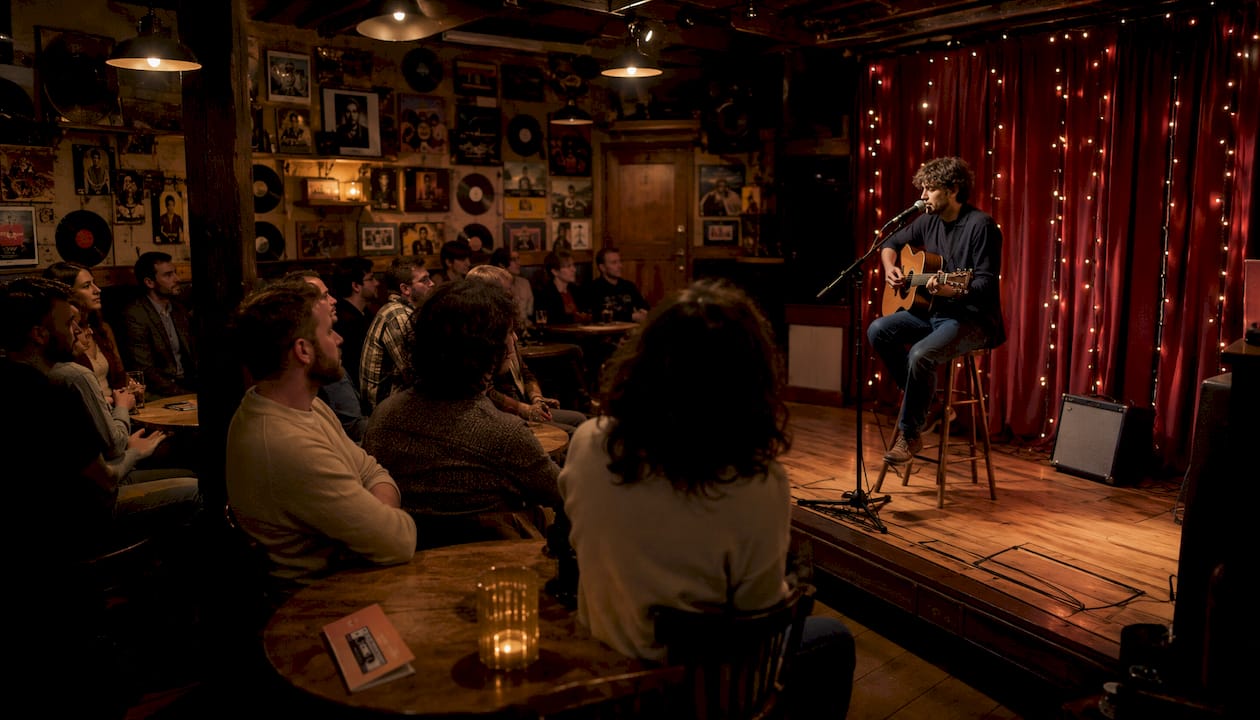
What actually makes a small venue show stick in your memory
Capacity is the starting point, not the whole answer. The most memorable live music events share a cluster of specific conditions, and once you know what they are, you can seek them out.
Physical proximity changes the emotional stakes
When a stage sits 18 inches off the ground, as it did at Kings Barcade, the psychological distance between artist and audience collapses. Devoted fan John Dexter, who was at the Avett Brothers show on his 25th birthday, described it this way: the band felt like they were "exhausting themselves on our behalf." That sensation is almost impossible to replicate in a 5,000-seat theater where the artist is a silhouette.
St. Vincent's show at Little Saint produced the same effect from the opposite direction. She is a Grammy-winning artist who regularly headlines major festivals, yet in that 280-person room she leaned off the stage to hold fans' faces while she sang. The scale of the room made that gesture possible. In a larger venue, it would have been theater. There, it was just true.
Phone bans force everyone into the same moment
Phoebe Bridgers has made the phone-free show a signature of her 2026 tour, locking devices in Yondr pouches at every stop from small clubs in Fargo, North Dakota to Madison Square Garden. The effect at Duling Hall was immediate. Attendee Madeline Cox described it: "Everyone there was so present. It was so nice to go to a music venue and not have any phones out. Everybody's just sitting there and focusing on her 100%. Nobody's recording, nobody's trying to get the perfect picture."
Devices secured in Yondr pouches have become a structural tool for reclaiming that club-level attention, even in arenas. The policy works because it removes the social pressure to document the experience and replaces it with permission to just be there.
Analog promotion creates genuine exclusivity
Bridgers' pop-up tour used physical posters only, placed by hand in local record stores, coffee shops, and boutiques the morning of each show. The intent was explicit: keep it local, keep it off the internet, give the show to people who actually live in that city. That approach produced a line of over 500 people stretching down the street from Duling Hall, most of whom had never expected to see Bridgers perform in Jackson, Mississippi.
The contrast with standard presale culture is stark. When a show is announced months in advance and sold through a major ticketing platform, the audience is whoever was fastest online. When a show is announced by a poster in a coffee shop at 9 AM, the audience is whoever happened to be in that neighborhood that morning.
Breaking stage conventions creates ritual energy
TAGABOW's floor performance at Sound Church in Brattleboro removed every physical marker that separates a band from its audience. No stage, no elevation, no clear boundary. The band faced each other rather than the crowd. When the set ended without an encore, nobody demanded one. The crowd had already received something complete. That kind of non-traditional setup produces a different kind of memory than a conventional show because it asks the audience to participate in something closer to a shared ritual than a ticketed event.
- Low or no stage: Reduces psychological distance, increases physical energy exchange
- Phone ban: Shifts audience attention from documentation to presence
- Analog-only promotion: Limits attendance to locals, builds genuine community
- Unconventional spaces: Churches, warehouses, and lofts add acoustic and visual character
- Stripped-down production: Forces the performance itself to carry the weight
How Hppn helps you find shows like these before they sell out
The problem with the best small venue shows is that they are, by design, hard to find. A pop-up announced by a poster in a coffee shop is not going to show up in a standard search. An emerging artist playing a 150-cap room in your city might not have a Wikipedia page yet. That gap is exactly what Hppn was built to close.
Hppn is a live music discovery platform focused specifically on the kinds of shows that mainstream platforms miss: local scenes, emerging artists, underground venues, and events happening nearby right now. The platform lets you browse concerts by location, preview artists through video and audio before you commit to a ticket, and track trending local performers who are building the kind of momentum The Avett Brothers had in 2004 before anyone outside of Raleigh knew their name.
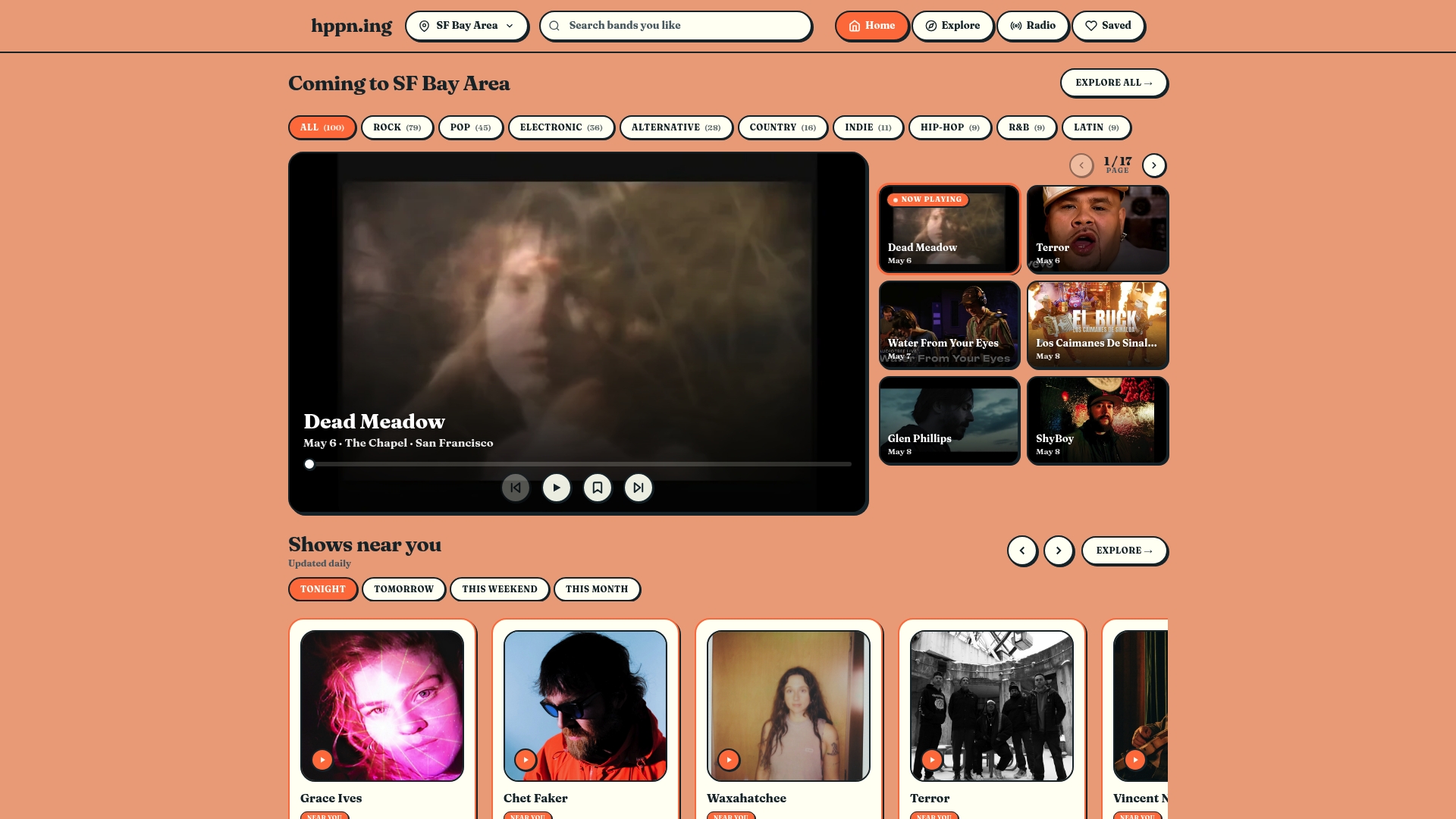
A few things that set Hppn apart for fans who care about intimate concert experiences:
- Artist previews before you buy: You can hear and watch an artist before deciding to go, which matters when the show is in a 100-cap room and you have never heard of the band.
- Location-based discovery: The platform surfaces events happening near you, including the kind of low-key local shows that never get national press coverage.
- Trending local acts: Hppn tracks which emerging artists are gaining traction in your city, so you can catch them in a small room before they outgrow it.
- Music community engagement: Connect with other fans who are already tracking the local scene, the people most likely to know about a pop-up before the poster goes up.
The White Stripes sold 250 tickets in under three minutes for their Cannery Club show. The Phoebe Bridgers pop-up in Jackson drew a line of over 500 people for a few hundred available spots. The fans who got in were the ones who were paying attention. Hppn is built for those fans. Discover what's playing near you tonight.
Key Takeaways
The most memorable small venue shows combine physical proximity, deliberate policies, and unconventional spaces to create experiences that no arena can replicate.
| Point | Details |
|---|---|
| Proximity drives emotional impact | Stages at 18 inches or floor level collapse the distance between artist and audience. |
| Phone bans restore presence | Yondr pouches and no-device rules shift attention from documentation to the live moment. |
| Analog promotion builds community | Poster-only announcements limit attendance to locals, producing genuine exclusivity. |
| Unconventional spaces add character | Converted churches and low-capacity rooms create acoustics and atmosphere purpose-built venues can't match. |
| Discovery requires the right tools | Platforms like Hppn surface local and emerging artists before they outgrow small rooms. |