

Finding live music discovery apps that surface small local shows or underground artists without forcing you through account signups or ads is still difficult for many fans. Too many platforms focus only on major tours, have narrow geographic limits, or require ticket purchases through their ecosystem to unlock meaningful event recommendations. This side by side review makes it clear which discovery platforms best match your city, privacy needs, and event planning style so you can spend less time filtering noise and more time at real shows.
Table of Contents
hppn.ing
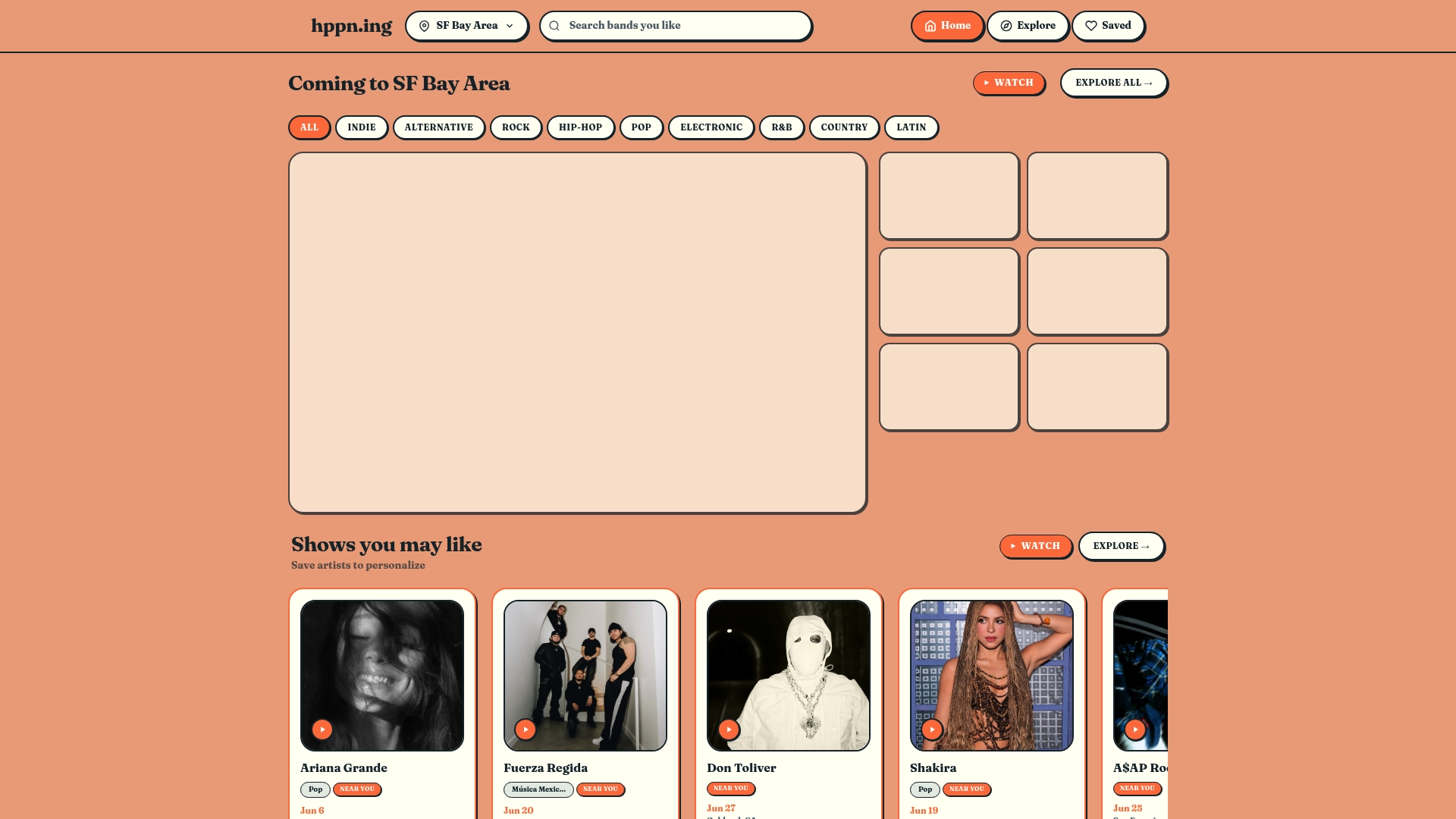
At a Glance
Hppn runs without user accounts and keeps the service free through voluntary community support like stickers and coffee donations. That setup lets you browse shows and listen to artist samples while avoiding signups and targeted marketing.
The app concentrates on the San Francisco Bay Area and emphasizes underground and local artists across multiple genres. It links out to third-party ticket providers rather than selling tickets directly.
Core Features
- Event listings and information with location, date, and lineups for small venues and DIY shows.
- Artist information and music samples so you can preview acts before committing to a night out.
- Links to third-party ticket providers when an event uses an external box office or platform.
- Personalized recommendations and playlists that highlight under-the-radar performers based on local trends.
- Community support options such as stickers and coffee donations to help artists and sustain the app.
Key Differentiator
Hppn’s focus is the local underground scene combined with community engagement and near real-time updates. That focus pushes discovery toward smaller bills and emerging performers rather than spotlighting mainstream tours or festival lineups.
Pros
-
Focused discovery. If you want underground shows and local bands in the Bay Area, Hppn surfaces gigs you would otherwise miss at smaller venues.
-
Genre breadth. Rock, electronic, folk, and niche subgenres all appear, which helps you assemble eclectic weekly playlists from local talent.
-
No user accounts required. You can jump straight into browsing and listening, which lowers friction for casual explorers and protects privacy.
-
Community-funded model. Optional donations and stickers create a direct way to support artists and the platform without ads or paywalls.
-
Real-time updates on upcoming shows help when lineups shift or last-minute bills appear at neighborhood venues.
Cons
- Relies on third-party listings and links, so there is no direct ticket checkout and some event details may change without notice.
Who It's For
Music lovers in the San Francisco Bay Area who prioritize discovering emerging artists and attending small local shows. Ideal if you prefer privacy over social features and want a curated feed of under-the-radar concerts.
Unique Value Proposition
Running as a no-account, donation-supported app means Hppn trades data-driven advertising for community funding and a promotional model that favors smaller artists. For fans who want discovery without signups or targeted ads, that funding model keeps the spotlight on local acts rather than on ticket-marketing funnels.
The implication is simple: you get a discovery experience tuned to local scenes and artist support rather than curated major-tour listings.
Real World Use Case
You check Hppn on a Thursday night looking for weekend folk and indie rock shows. You preview a few 30-second samples on the artist pages, save a couple of listings to your device, and follow the third-party ticket link for a $12 door list.
Before leaving the venue, you buy a sticker from the app’s shop and drop a coffee donation for the opening band. No account, no inbox spam, just discovery and small-scale support.
Website: https://hppn.ing
sounds.city
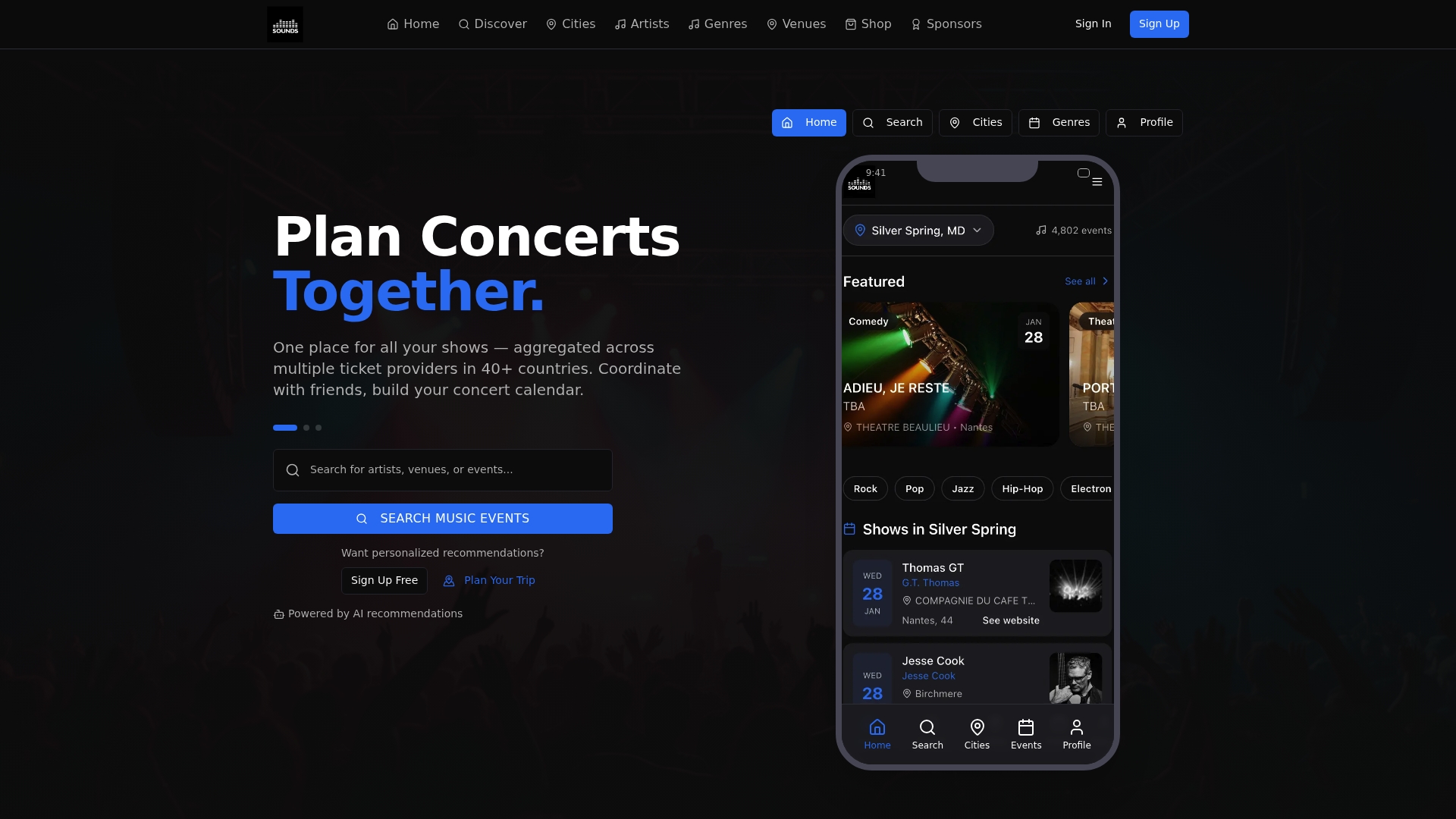
At a Glance
Aggregates live events from multiple ticket sources across 40+ countries while layering AI-powered recommendations and shared planning tools for friend groups. Part of the Connectus ecosystem, Sounds.city frames discovery around what you like and where you are rather than a single ticket storefront.
Core Features
- Aggregates live events from multiple ticket providers across dozens of cities and countries.
- Personalized recommendations powered by AI that learn your preferences and local tastes.
- Shared concert calendars so groups can plan meetups, coordinate rides, and avoid double booking.
- Follow artists to get tour and release notifications and surface related shows.
- Exclusive partner offers for travel, dining, and venue perks tied to event listings.
Key Differentiator
Sounds.city centers discovery on its AI recommendations and cross-source event aggregation rather than editorial curation alone. Where Hppn emphasizes artist-first community tools and emerging-artist discovery, Sounds.city narrows the focus to prediction and planning, helping you find shows based on behavior and location.
Pros
-
Comprehensive aggregated listings let you compare options from several ticket providers in one place, which speeds planning and reduces hunting across sites.
-
The recommendation engine surfaces nearby shows you might miss and tailors suggestions by genre, venue size, and past attendance.
-
Social planning features make it simple to share a calendar, set meet points, and coordinate with friends without copying links into group chat.
-
Wide geographic coverage means you can scout events while traveling and maintain a single hub for home and away dates.
-
Platform positioning toward local artists gives smaller acts more visibility than purely mainstream ticket feeds.
Cons
-
Buyer caution: third-party reseller listings can appear in aggregated results. Confirm ticket validity with the seller before purchase, since Sounds.city does not directly process transactions.
-
Independent user reviews and long-term reliability data are not included in the provided materials, so the real-world experience may vary by city.
-
Artist and venue verification processes are not detailed, which could make it harder to tell verified tour dates from tentative or fan-posted listings in some markets.
When It May Not Fit
If you need guaranteed, platform-handled ticket purchases and buyer protection, this may not be the right place to complete a sale. Also avoid it if your priority is a deep editorial scene with staff-written local guides rather than AI-curated suggestions. Finally, if you require strict verification of every listing for professional booking, expect extra vetting work.
Who It's For
Music fans and concert-goers who want a planning hub that recommends shows for them and for their social circle. Artists and small venues benefit from increased visibility through aggregated listings, and travelers who schedule concerts across cities will find the single-calendar workflow handy.
Real World Use Case
A group of friends planning a weekend tour searches Sounds.city for shows in two cities, follows favored artists to catch newly announced dates, shares a concert calendar, and redeems a partner dining offer near a venue. The shared timeline keeps meetups organized and reduces planning friction.
Website: https://sounds.city
SceneSync
At a Glance
Aggregates live event data from venue calendars, ticketing partners, and community scraping to produce a single, local scene feed that stays current without manual cross checking. The platform also offers automatic venue pages and in-app ticketing so fans can browse and buy without leaving the site.
Core Features
- Live event discovery pulled from venue calendars, ticketing partners, and scrapers so event listings are consolidated into one place.
- Automatic venue pages that venues can claim to manage hours, links, and event details.
- Artist profiles that aggregate performances across venues and festivals for easy history and upcoming-show lookup.
- Support for DIY house shows with private posting options for invite lists and logistics.
- In-app ticketing to keep fans in one flow instead of bouncing between ticketing sites.
- Scene-themed articles, interviews, and personalized feeds for saving shows and following local activity.
Key Differentiator
SceneSync leans explicitly local first and community driven rather than algorithm driven. That focus means venue owners and artists get tools designed around manual control, like claimable venue pages and private DIY postings, rather than surface-level recommendation feeds.
Pros
- Designed around local scenes which helps fans find smaller shows that larger listings miss. The editorial pieces and event aggregation make discovery contextual.
- Automatic updates reduce double entries for shows and venues, saving moderators and venue staff time.
- Venue claim and management features let owners correct details and post last minute changes directly to their page.
- Community features include articles and DIY support, which create places for storytelling and grassroots promotion rather than just event rows.
- No cost for venues, artists, or fans lowers the adoption barrier for small venues and independent artists.
Cons
- There is limited third-party review or independent validation of user experience, so adoption signals are harder to verify.
- The platform favors local discovery and community features over broad social networking and heavyweight social tools.
- Visibility outside active local scenes may be limited, so touring artists or fans seeking global discovery will find fewer matches.
When It May Not Fit
If you rely on algorithmic recommendations to surface unfamiliar genres or national touring data, SceneSync may feel narrow. Also avoid it if you need independent user research or broad marketplace metrics for decisions since third-party reviews appear sparse.
Who It's For
Local music fans, venue managers, and independent artists who prioritize accurate schedules and community reporting over viral reach. It fits teams and DIY promoters who want a low friction way to publish shows and keep a single, correct calendar.
Real World Use Case
A neighborhood venue claims its page, adds a late-night lineup update, and a touring artist updates their profile to show the new date. Fans see the corrected listing, buy tickets without leaving SceneSync, and an organizer posts a private DIY house show invite to a closed group.
Website: https://scenesync.live
FOSH
At a Glance
An all in one real time map for Philadelphia that surfaces music, art, comedy, theater, drag, and karaoke on a single interface. The app pairs map filters with social sharing and mobile access to reduce the need to hop between venue pages and feeds.
Core Features
- real time map that plots ongoing and upcoming events across Philadelphia so you can spot clusters and walking distance options.
- filters for date, genre, venue, and vibe to narrow results quickly when you know what kind of night you want.
- Real time updates let event status and plan changes appear in the app rather than forcing you to check venue pages.
- mobile apps on the App Store and Google Play for quick lookup and event sharing while you are already out.
Key Differentiator
FOSH centers everything on a single city map and a tight geographic focus. That local-first approach makes it faster to find small shows and pop ups that often miss larger aggregators.
Compared with Hppn, FOSH serves a narrower footprint focused exclusively on Philadelphia. If your priority is deep, city level coverage and quick social planning for nights out, that focus is the draw.
Pros
- Consolidates scattered listings into one place so you spend less time toggling between Instagram, venue sites, and ticket pages.
- Saves planning time with filters and map clustering that highlight nearby options for a walkable evening.
- Real time updates reduce last minute surprises by surfacing cancellations or schedule changes directly in the app.
- Social sharing features make it simple to send a curated event list to friends and coordinate meetups without copying links.
- Mobile first design keeps discovery usable on the go which matches how most locals decide where to go on short notice.
Cons
- No substantive third party reviews were found during research, so reliability claims rely largely on the vendor’s materials.
- The platform depends on external social channels and venue listings for initial event data which can introduce gaps or delays.
- Limited public information about scale and reach makes it hard to judge how complete coverage is across every Philly neighborhood.
When It May Not Fit
If you travel between multiple cities or need a national events feed, FOSH is too geographically narrow. Promoters running multi city tours or users who want guaranteed coverage beyond Philadelphia will find the app limited. Heavy users who need integrations with ticketing CRMs or calendar automation should look elsewhere.
Who It's For
Local Philadelphia residents, venue managers, and performers who want a single app to list, discover, and share city shows. It suits people who prefer map browsing over scrolling feeds and who frequently decide plans the same day.
Real World Use Case
A Philly resident opens FOSH on a Saturday evening, filters for indie rock within two miles, spots a late set at a nearby bar, checks the update that the opener moved up, and shares the event with three friends in under two minutes.
Website: https://fosh.live
Live Music Discovery Platforms Compared
Explore platforms designed to connect music fans with live events, each emphasizing unique features tailored to specific user needs.
| Platform | Core Feature | Key Differentiator | Best For | Pricing | Notable Limitation |
|---|---|---|---|---|---|
| Hppn | Event listings and music samples | Focus on local, underground scenes | Discovering emerging artists in the Bay Area | Not disclosed | Relies on third-party ticket links |
| Sounds.city | Aggregated live events and AI recommendations | AI-powered personalization and social planning tools | Broad global event discovery and planning | Not disclosed | May include listings from third-party resellers |
| SceneSync | Consolidated live event feeds and in-app ticketing | Local-first, community-driven tools | Fans and venues prioritizing grassroots promotion | Not disclosed | Limited visibility outside active local scenes |
| FOSH | Real-time mapped event discovery | Real-time, geographically-focused mapping | Philadelphia residents and performers | Not disclosed | Limited to events within the Philadelphia area |
Discover Live Music Differently with Hppn
If you are searching for reliable backstagesocial.com alternatives that focus on authentic, underground live music experiences without overwhelming social clutter or account requirements, Hppn is designed for you. The challenge of finding small local shows and emerging artists can feel frustrating especially when many platforms push mainstream events alongside complicated ticketing processes. Hppn prioritizes privacy and community support while letting you browse events, preview artists, and keep up-to-date with real-time music happenings in your area.
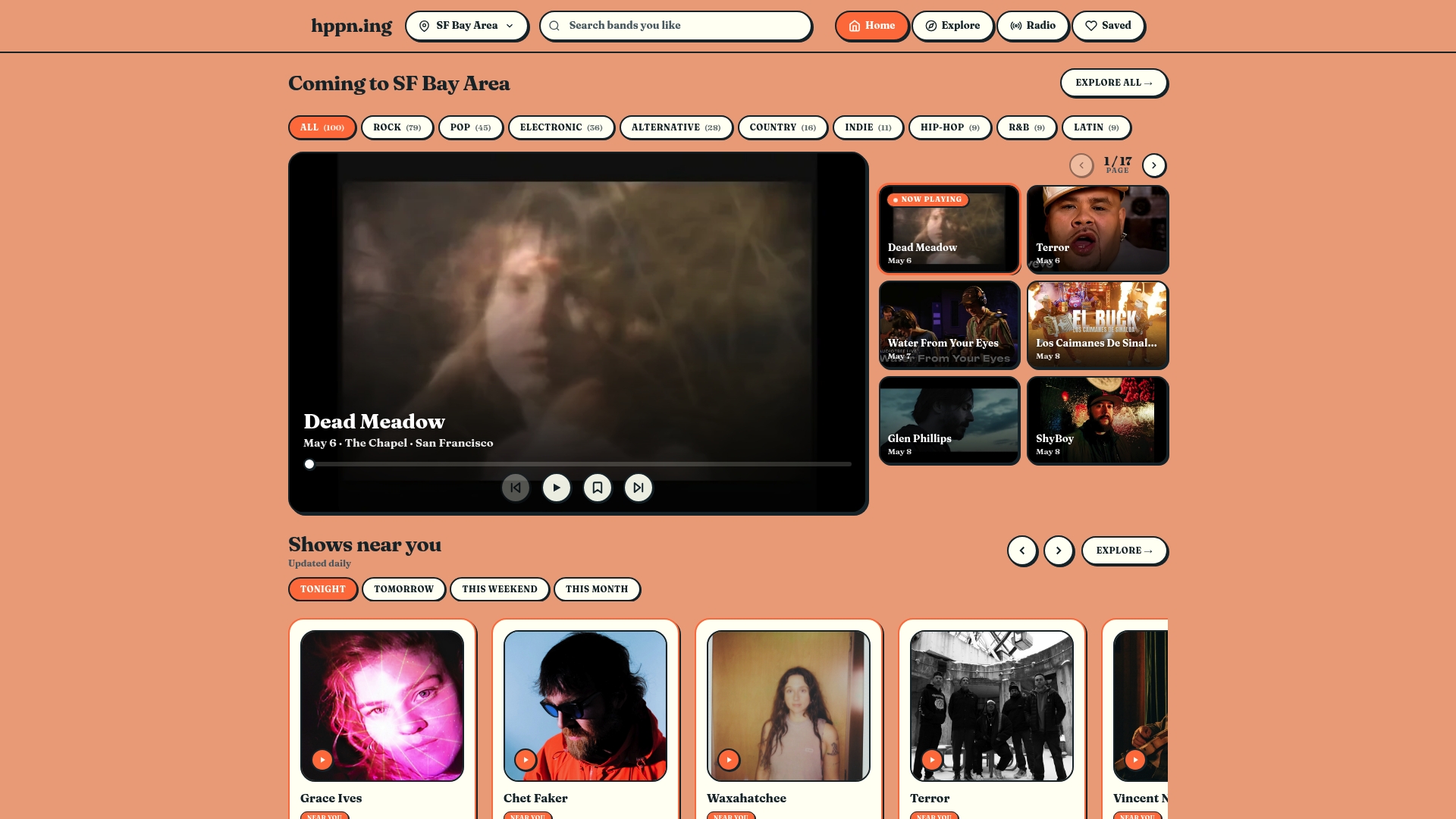
Explore concerts and discover new artists on Hppn.ing today. Take control of your live music nights by previewing local talent and accessing event tickets through one simple platform. Don’t wait to find your next unforgettable show — browse events near you now and support the underground scenes that matter most.
Frequently Asked Questions
How does Hppn help me discover local underground shows?
Hppn focuses on the San Francisco Bay Area's underground music scene, making it ideal for discovering smaller local shows. The app provides event listings with location, date, and lineups for small venues and DIY shows, which can help you find gigs you might miss elsewhere. To start, simply browse events based on your musical preferences.
What is the difference between Hppn and Sounds.city for music discovery?
Sounds.city provides AI-powered recommendations and aggregates live events across over 40 countries, offering a wide geographic reach and a planning hub for groups. Hppn, on the other hand, is more tailored for local discovery within the Bay Area, emphasizing underground artists and direct community support. Choose Hppn if you're specifically interested in smaller shows and local acts.
Which platform offers real-time updates for upcoming shows?
Hppn features real-time updates on upcoming shows, allowing you to stay informed about last-minute changes or additions to lineups. This immediate information is crucial for music lovers who want to catch spontaneous performances in their area. Check Hppn regularly to be in the loop on your local music scene.
Can I use SceneSync for discovering music events if I'm outside its local focus?
SceneSync is explicitly designed for local event discovery and may not be ideal for finding music events in broader, multi-city contexts. The platform's focus on community-driven features makes it perfect for localized scenes, but if you're traveling or looking for national tours, consider Hppn for a more tailored experience.
How does Hppn allow community support for artists?
Hppn includes options for community support through initiatives like stickers and coffee donations, allowing fans to financially contribute to local artists and the platform. This model creates a way to engage and support the music community in your area while enjoying live music. Participate in community-supported events when using Hppn.