
Finding live music discovery apps that give timely, local, and diverse concert alerts or let fans support independent acts is difficult. Many services limit city coverage, lack social tools, or require multiple apps to track ticket alerts, event discovery, and artist recommendations. This comparison shows which platforms offer tailored discovery, direct artist support, and real-time ticket alerts so music fans can pick one that fits their habits.
Table of Contents
hppn.ing
At a Glance
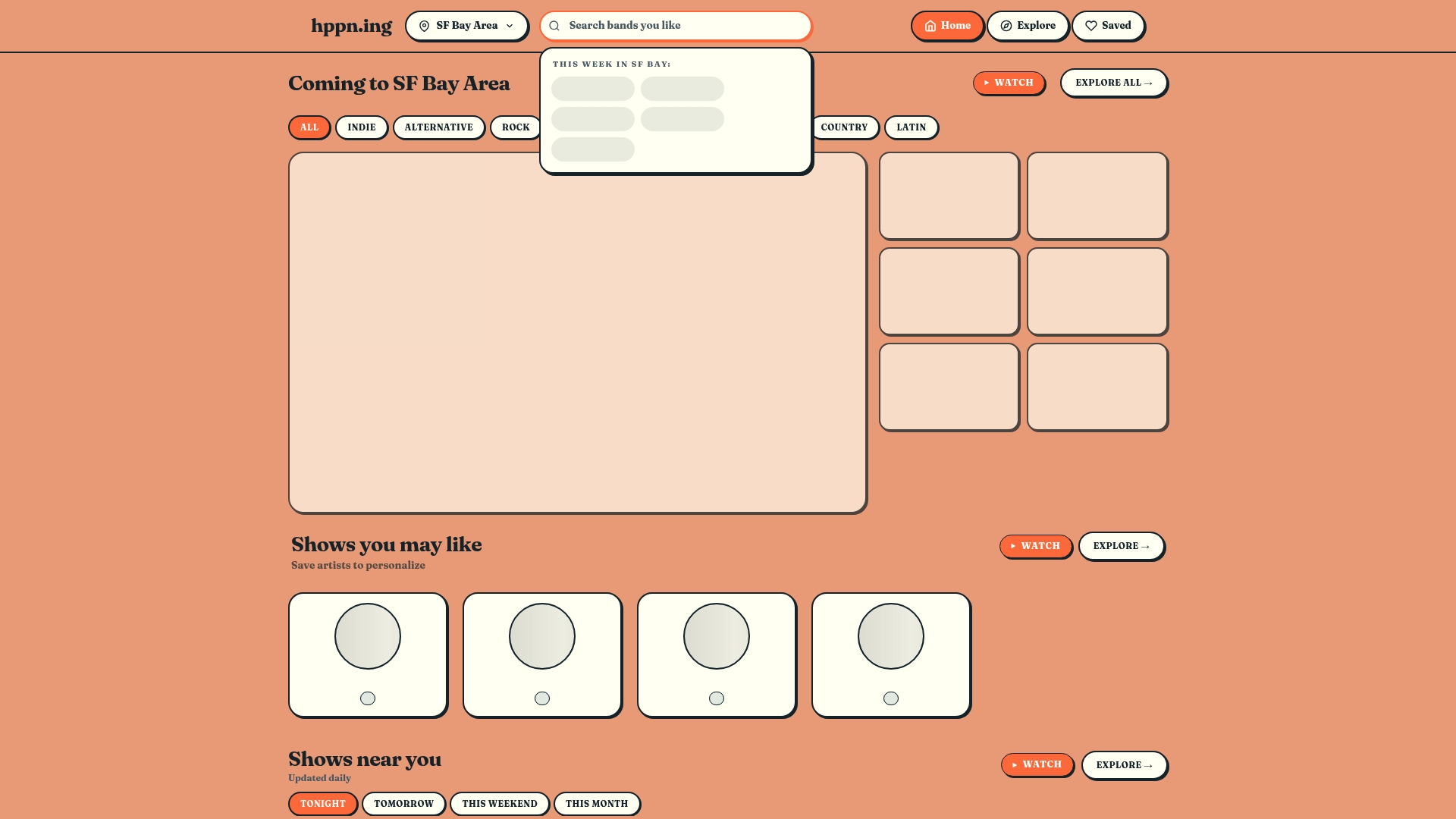
Washington DC and surrounding areas receive primary attention on hppn.ing, while the platform also lists events across multiple countries. The site highlights local and emerging artists and includes multimedia previews such as YouTube sessions and audio clips. Fans can support performers directly through stickers and donations, which ties discovery to tangible artist support.
Core Features
hppn.ing aggregates live music events by date, genre, venue, and city so members can scan upcoming shows in their area. The community can save favorite artists and get personalized recommendations that learn from saved artists and browsing. Curated weekly playlists and event updates help surface emerging performers, and the platform groups venue and location based listings for targeted exploration.
Key Differentiator
Comprehensive, community driven discovery and artist support distinguishes hppn.ing from general listings. The platform pairs broad geographic coverage with tools that let fans back artists directly through small contributions. That combination keeps lesser known performers visible while helping local music scenes stay active.
Pros
The event listings cover a wide geographic range, making it useful whether you live in Washington DC or travel to another city. Personalized artist recommendations and saved artist features reduce the time needed to find shows that match your taste. Curated playlists and multimedia previews let you sample artists before you buy a ticket or head to a show. Direct support options such as stickers and donations give community members a low friction way to fund artists and message support.
Cons
- Limited clarity on ticket purchasing or RSVP workflows. The platform does not show detailed ticket checkout or direct booking steps in the available content, so you may need to follow external vendor links to buy tickets.
Who It's For
Music enthusiasts who want to find live concerts and smaller acts in their city will get the most from hppn.ing. Members who like supporting emerging artists and sharing community driven recommendations will find the tools useful. People who prefer browsing curated playlists and short video sessions to sample performers will also benefit.
Unique Value Proposition
Direct artist support via stickers and donations creates a feedback loop between discovery and patronage. Fans who back performers on the platform help keep underground acts in rotation and visible to the community. That dynamic helps local scenes grow while giving you a simple way to invest in artists you care about.
Real World Use Case
A Washington DC music fan checks hppn.ing each week for curated playlists and venue listings. They save three rising artists, get tailored show alerts, and use stickers to tip a musician after a YouTube session. The fan attends a neighbor hood show found through the platform and shares the event with other members.
Website: https://hppn.ing
Jamr
At a Glance
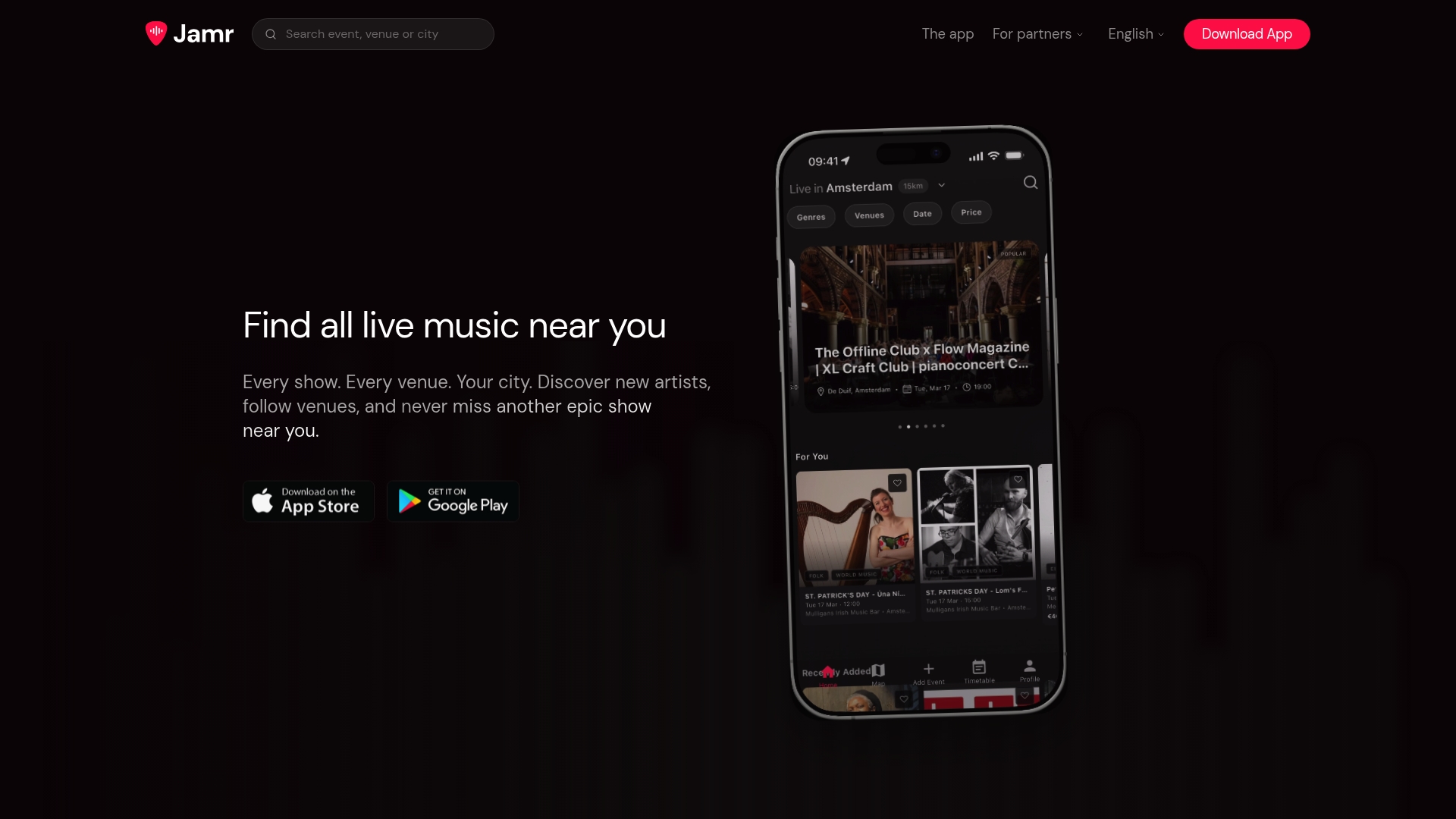
Jamr reports thousands of live music events searchable by location, genre, venue, date, and price. The app emphasizes connecting friends, artists, and venue staff through social discovery and event sharing. It lists shows city by city while stressing user privacy and community control.
Core Features
Jamr lets members filter events and view an interactive map to find nearby shows, and it shows a personal profile that reflects preferences and upcoming plans. The app provides social discovery tools so people can connect, share events, and coordinate nights out. A timetable view helps plan multiple shows across one evening.
Key Differentiator
Jamr focuses narrowly on building local scenes by making it simple for friends and artists to meet around live shows. Its privacy emphasis gives attendees control over what they share with other members and with venue staff. That local, friend-centered approach positions Jamr as a community hub rather than a broad ticket marketplace.
Pros
The interface feels approachable, which makes adding events and following local artists quick and painless. Community features encourage friends to coordinate attendance and recommend emerging acts to each other. The platform highlights smaller venues and independent artists, which helps local scenes get noticed. Jamr also claims active updates and frequent show additions, which keeps event listings current for engaged members.
Cons
- Limited city coverage. The app only lists shows where it has an active presence, so members outside those cities will see sparse listings.
- Stability and polish issues reported. Some reviewers mention crashes and distracting UI elements that interrupt browsing.
- Narrow filtering. Genre filtering and artist profile depth are thinner than on larger services.
- No public integrations or advanced customization. There is no information about third party connectors for calendars or promoter tools.
When It May Not Fit
If you travel between many cities and want nationwide listings, Jamr will feel limited because its reach depends on active local markets. If you run a venue that needs complex promoter tools or calendar integrations, Jamr does not document those features. If you need deep genre segmentation or robust artist pages, the platform lacks some of those options.
Who It's For
Local music fans who want to find shows with friends and follow emerging artists will get the most from Jamr. Venue staff and small promoters aiming to fill local gigs will find the social features useful for neighborhood outreach. Artists focused on growing a local following will appreciate the community-first tools.
Real World Use Case
A user in Groningen opens Jamr, checks the timetable for Friday, and spots two compatible shows near their favorite venue. They share both events with friends inside the app and agree on a meeting time. After the night out they follow a new local artist and RSVP to the next show.
Website: https://jamr.live
Songkick
At a Glance
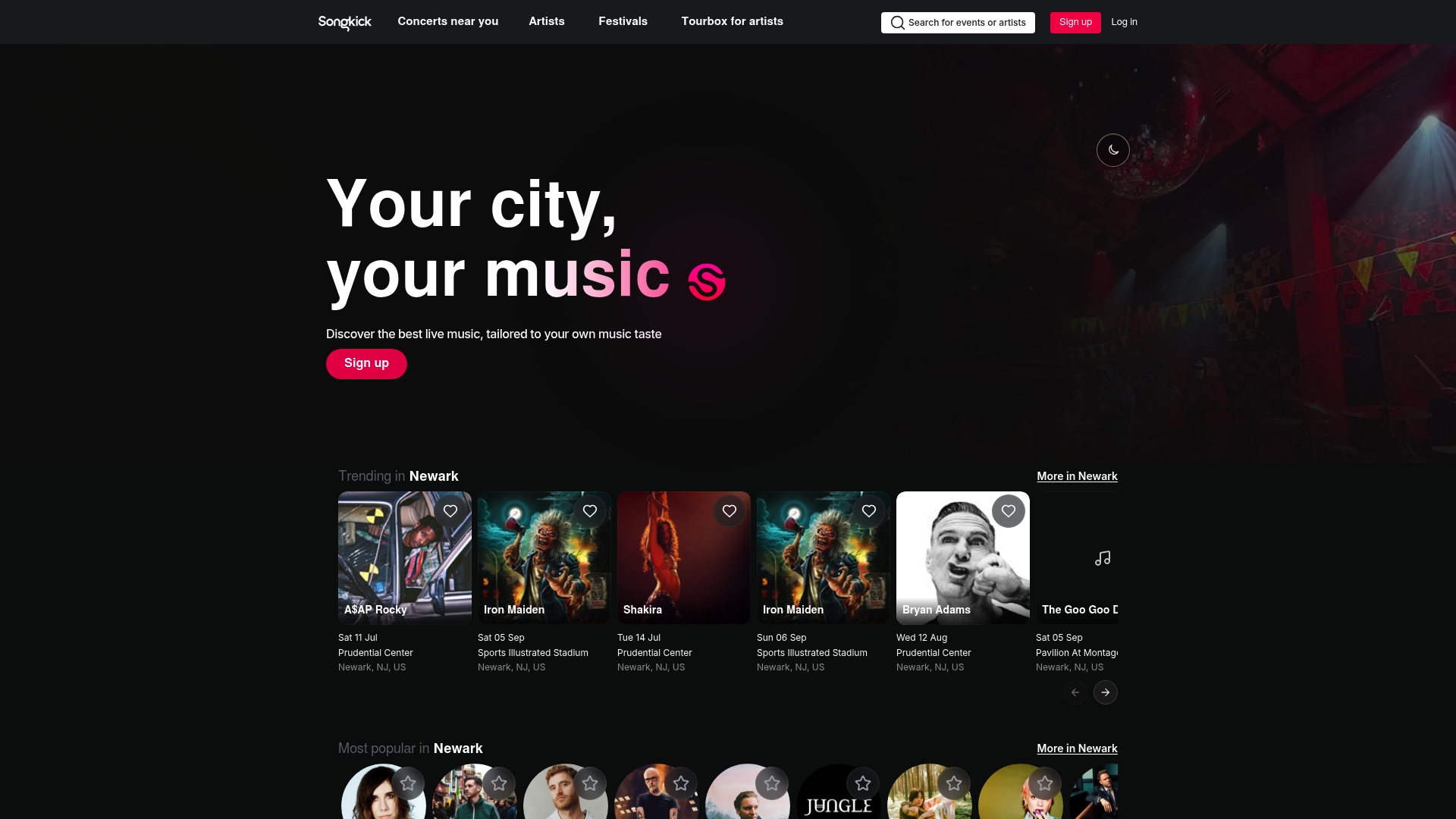
Artist leaderboards highlight who is trending while personalized concert alerts tell you when those acts are coming to your area. The site combines location-based calendars with artist follow notifications. Fans can move from discovery to ticket purchase without leaving the same view.
Core Features
Songkick offers personalized concert recommendations that match your music tastes and location, plus upcoming concert calendars you can filter by artist, date, or genre. The platform supports artist follow and notifications so you get tour announcements and news for bands you track. It also links to ticket sales so members can complete purchases from event listings.
Key Differentiator
The standout feature pairs live alerts with visible trends. That combination makes it easy to spot which artists are gaining momentum while receiving timely show notices for the acts you follow. For people who want both a pulse on what is popular and direct show alerts, this focus is the defining angle.
Pros
Songkick helps you discover shows curated to your taste and local area, which speeds up event planning and reduces hunting across sites. The leaderboards provide a quick read on regional and global artist movement, useful for following rising acts. Integrated ticket purchasing simplifies turning a notification into an actual night out. Geographical filtering narrows results to nearby venues and dates. Coverage across many regions means you can follow artists who tour outside major markets.
Cons
- Ticket prices and final fees may change at the vendor checkout rather than on Songkick. This creates surprises at purchase time.
- Availability depends on external ticket vendors, so sold out listings or price swings can occur outside the platform.
- The publicly visible feature set focuses on discovery and buying. Tools for event organizers or deep promoter workflows are less clear from the site.
When It May Not Fit
If you run frequent shows and need advanced promoter tools, Songkick may fall short because organizer features appear limited. If you need guaranteed ticket price transparency before leaving a listing, reliance on third-party vendors could be frustrating. Teams that require in-platform inventory controls or dedicated organizer dashboards should look for a platform built specifically for promoters.
Who It's For
Music fans who want fast concert discovery, timely alerts, and a simple path to buy tickets will get the most value. Casual concert-goers who rely on location filters to find nearby shows benefit from the calendars and leaderboards. Local promoters and artists can use it for visibility, but professional promoter needs may exceed what the public listings provide.
Real World Use Case
A fan follows several indie bands and turns on notifications for each artist. When one band announces a regional tour, the fan receives an alert, checks the filtered calendar, and buys tickets from the linked vendor. That flow reduces time between hearing a tour announcement and showing up at the venue.
Website: https://songkick.com
Yoink
At a Glance
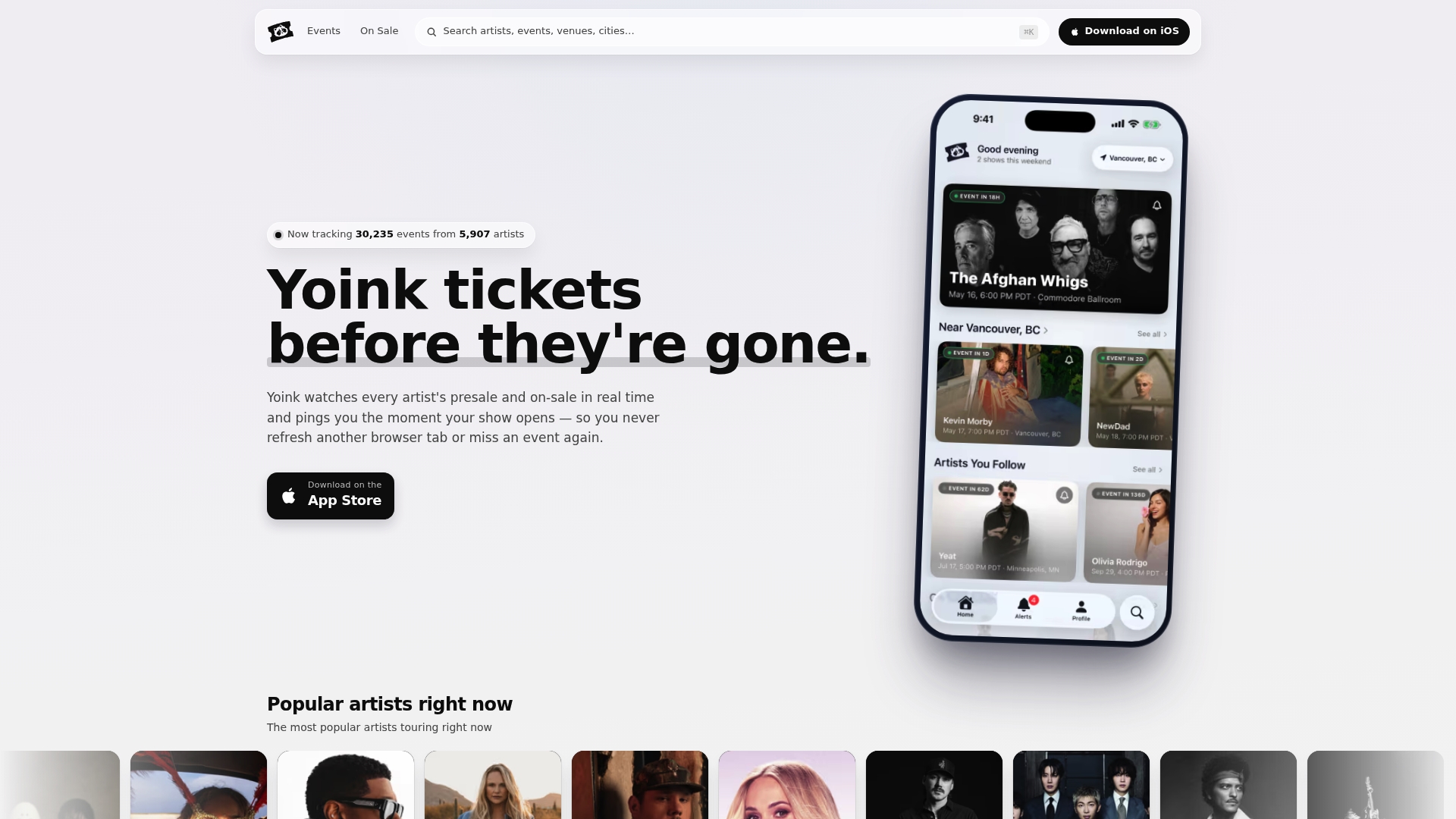
Yoink fires alerts the moment an artist's presale or on sale ticket window opens, letting members act immediately. The app focuses on concert ticket drops rather than resales and emphasizes a fan-first experience. That immediacy matters for high-demand shows where early access beats last-minute scalper prices.
Core Features
Yoink offers real-time tracking of artist presales and on sale events and delivers push notifications when tickets go live. Members can browse upcoming, on sale, and weekend events and follow city-based calendars to limit alerts to specific locations. Alert setup stays simple so people who follow many artists can keep notifications organized.
Key Differentiator
Yoink tracks artist presale and on sale events in real time and notifies members the instant tickets become available. That narrow focus on ticket drop timing sets it apart from broader event apps that surface shows after sales start. For fans chasing presales, that timing advantage often makes the difference between getting a seat and seeing sellouts.
Pros
Immediate alerts reduce the friction of competing for high-demand tickets and help members get access before secondary markets inflate prices. Coverage spans many artists and cities so people who travel or follow multiple local scenes can consolidate alerts in one place. The browsing experience and simple alert setup make it easy for less technical members to subscribe to presales and weekend shows. Being fan-focused and not a reseller keeps the app oriented toward concertgoers rather than ticket traders.
Cons
- Limited to iOS devices. The lack of an Android version prevents many concertgoers from using the service.
- Focused strictly on concert tickets. It does not cover other event types or act as a resale marketplace.
- Relies on app notifications to deliver value. If members disable notifications the alerts can be missed.
When It May Not Fit
If you use Android phones, Yoink will not meet your needs because no Android client is mentioned. If you want a single app for sports, theater, or festival wristbands, Yoink's concert-only scope will feel narrow. If you prefer to buy from resellers inside one marketplace, this app does not provide integrated resale listings.
Who It's For
Yoink fits music fans and concertgoers who attend multiple shows and want early notice of ticket drops. It works best for members who follow artists closely and can act quickly on alerts. Casual concertgoers who attend rarely or who rely on resale markets will find less value here.
Real World Use Case
A member follows a favorite artist and enables alerts for that city. When presale codes trigger and tickets go live, Yoink sends a push notification with the event details. The member completes checkout early and avoids paying inflated secondary prices.
Website: https://yoink.events
Gigora
At a Glance
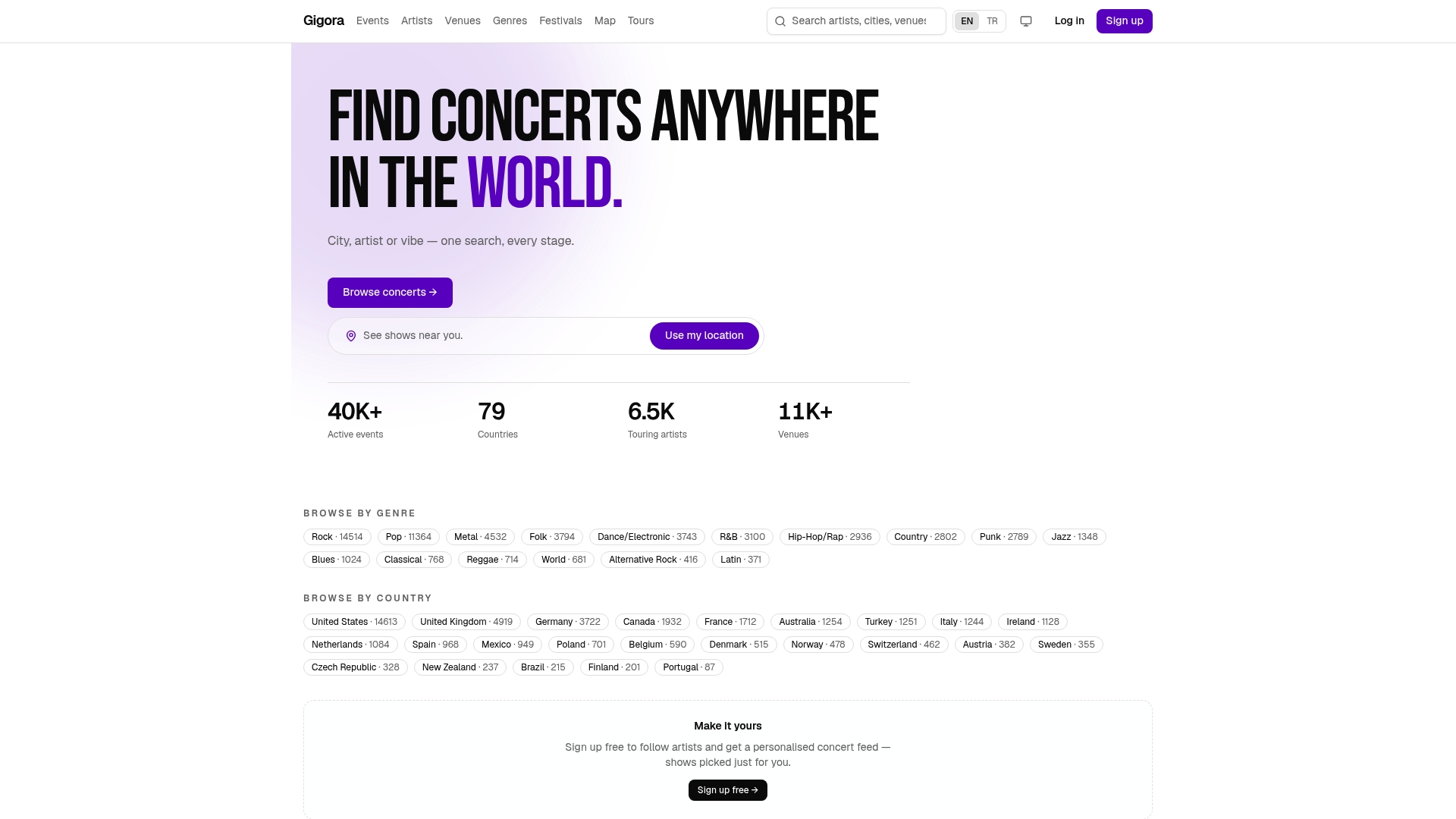
Aggregates concert listings directly from Ticketmaster, Bubilet, and Biletinial to surface shows across many countries. Gigora requires no account to browse and offers privacy focused tracking with no ads or data selling. The site also publishes iCal and RSS feeds so you can push updates into your own calendar or reader.
Core Features
Gigora pulls event data from official ticketing platforms and regional sellers, then normalizes listings for city, venue, and date. The site includes a Tour Radar tool for visualizing overlapping artist tours and provides iCal and RSS feeds for automated personal updates. Browsing works without signing up, and Gigora advertises independent ranking rather than pay-to-promote listings.
Key Differentiator
Gigora stands out for aggregating events directly from multiple official ticketing sources and regional platforms, which increases coverage for nonmainstream markets. That aggregation approach aims to catch tickets published on local sellers that larger aggregators miss. The result is a single index for global ticketed shows that prioritizes source fidelity over editorial curation.
Pros
Gigora centralizes ticketed events from a broad set of official sources, which helps you find shows that slip past media feeds. The Tour Radar visualization makes it simple to track several artists and spot overlapping dates in nearby cities. The calendar feeds let you move alerts into your phone or desktop calendar so you do not miss newly announced dates. No account requirements and a no-ads stance reduce friction and protect privacy when you search.
Cons
- Platforms that sell tickets outside supported ticketing systems may not appear on Gigora. This can leave gaps for DIY or cash-only shows.
- The site focuses on listing and tracking rather than handling ticket purchases, so it does not add checkout features.
- Personalization is limited to following artists or regions, with no deep behavioral recommendations.
- Relying on ticketing APIs means some events are missed when a promoter does not publish through supported channels.
When It May Not Fit
If you want an app that handles ticket purchases and seat selection from start to finish, Gigora is not the best fit. The service does not offer rich social discovery features like event comments or community threads. If you need algorithmic personalization beyond artist and region filters, another platform with profile driven recommendations will serve you better.
Who It's For
Music fans who track multiple artists and prefer a privacy first tool will like Gigora. Travelers who want a quick way to find concerts in specific countries will also find value. Event promoters seeking visibility on official ticket channels can use Gigora to check how listings appear across regions.
Real World Use Case
A fan follows five bands on Gigora and exports the combined iCal feed to a phone calendar. When a band adds a new city, the calendar updates automatically and the fan gets a notification. That workflow keeps tour alerts in one place without creating accounts on many ticketing sites.
Website: https://gigora.live
Afterglow
At a Glance
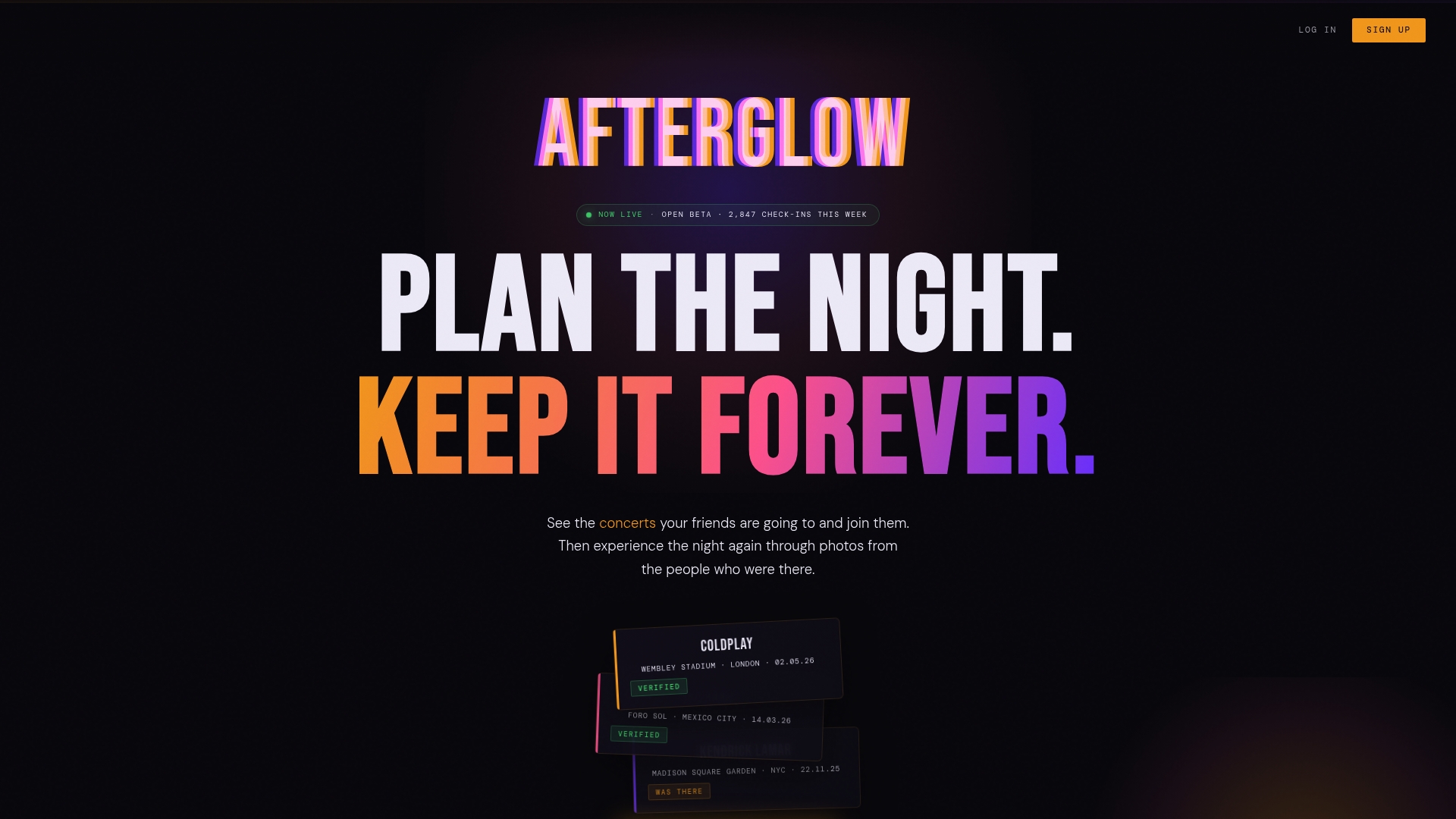
GPS-verified event attendance anchors every check-in. The app builds a permanent, chronological Concert Passport that records each show a member attends. Afterglow runs in open beta and emphasizes friend-sourced photos and real-time check-ins over curated algorithmic feeds. The emphasis on memory and verification makes it feel like a shared concert diary rather than a discovery engine.
Core Features
GPS-verified event attendance, shared photo rooms, and real-time check-ins form the platform's basic workflow. Photo rooms let groups upload and tag images for a single concert so everyone can contribute one collective album. Privacy controls let members choose which shows and photos remain private or visible to friends. The platform also creates a permanent digital memory of concerts and venues that you can browse chronologically.
Key Differentiator
No algorithms or gatekeepers determine which moments surface. Content comes from people who were at the show, and those posts rely on GPS verification rather than engagement metrics. That approach pushes recommendations toward plans your friends make and away from broadly promoted events. For fans who value actual attendance history and shared memories, that focus feels intentionally narrow and social.
Pros
Afterglow foregrounds authentic, crowd-sourced moments instead of popularity signals. The Concert Passport produces a lasting timeline members can revisit long after a tour ends. The platform's privacy controls give precise sharing options for every event and photo set. Friend-driven recommendations tend to feel trusted because they reflect real plans and verified attendance.
Cons
- No visible pricing information beyond a free-to-join note in public materials.
- Public documentation lists few additional features and no third-party integrations.
- Attendance verification depends on GPS accuracy, which can fail inside large venues or underground stages.
- Limited public details about scaling, platform reliability, or official support channels.
When It May Not Fit
If you need venue-level ticket verification or links to ticketing partners, Afterglow may not fit. Groups that require enterprise support or formal uptime guarantees should look elsewhere. Casual listeners who rarely attend shows will get limited value from a platform built around attendance and shared memories.
Who It's For
Music fans and concert attendees who want to chronicle live experiences and share moments with trusted friends are the ideal members. People who coordinate meetups or maintain a personal concert archive will find direct value. Fans seeking broad event discovery, algorithmic recommendations, or deep integrations will likely prefer a different app.
Real World Use Case
A group of friends commits to a summer of festivals. They check into each event on Afterglow, upload photos to the shared rooms, and tag set lists and crowd moments. Over time they build a shared digital scrapbook inside the Concert Passport that documents where they were and who was with them. Months later they can scroll a chronological record of that summer with GPS-verified check-ins and collective photo sets.
Website: https://weareafterglow.app
Comparison of alternatives
Personalization and artist support in live music discovery platforms provide distinct advantages tailored to diverse user preferences. Each service contributes unique strengths to the experience of finding local concerts and emerging music acts.
Community and Artist Support
hppn.ing emphasizes community-driven discovery. With tools like personalized artist recommendations, curated playlists, and direct artist support through stickers and donations, users can actively participate in supporting emerging talents. In comparison, Jamr adopts a community-centric approach by enabling social connections around local events, fostering collaboration among friends attending concerts together. While Songkick integrates leaderboards and personalized alerts for a discovery-to-purchase journey, it serves fans focused on trending acts and efficient event planning.
Event Tracking and Accessibility
Gigora excels in aggregating official ticketing sources and offering tools like iCal and RSS feeds for advanced event tracking. Yoink’s real-time ticket drop notifications facilitate early booking for high-demand events, while Afterglow caters to concert attendees seeking to build a chronological archive of their live music experiences through GPS-verified attendance and shared photo rooms. Each platform serves unique tracking and accessibility functions ideal for different priorities, such as immediacy or documentation.
Best fit
- Fans seeking artist support tools for fostering emerging music scenes will find hppn.ing’s direct support features.
- Groups planning multiple simultaneous events with friends benefit from Jamr’s intuitive social coordination options.
- Travelers tracking global tours enjoy Gigora’s aggregation of ticketing sources and feed integration.
- Users chasing presale tickets for high-demand shows rely on Yoink’s immediate alerts to secure access.
- Concert attendees who value memory building over event discovery should explore Afterglow’s features.
Our pick
Among the discussed platforms, hppn.ing shines brightest for users who value combining music discovery with direct artist support. By enabling contributions through stickers and donations, hppn.ing fosters an encouraging environment for emerging artists while providing fans broader geographical event access and personalized recommendations. However, fans prioritizing local social connections or advanced global tour tools may find other platforms more aligned with their needs.
Explore the strengths and unique features of these live music discovery platforms to find the best option for your preferences and needs.
| Platform | Core Feature | Key Differentiator | Best For | Notable Limitation |
|---|---|---|---|---|
| hppn.ing | Aggregates events by city and genre | Community-driven artist support via stickers and donations | Fans supporting emerging local artists | Limited clarity on ticket purchasing workflows |
| Jamr | Social discovery and friend connection for local music | Focuses on local scenes with privacy-enhanced tools | Small venues, local fans, independent artists | Limited city coverage and genre filtering |
| Songkick | Personalized concert alerts and ticket sales | Combines discovery with trending artist alerts | General listeners seeking concert notifications | Relies on vendor listings and third-party pricing |
| Yoink | Real-time tracking of ticket sales | Emphasizes instant alerts for artist presales | Fans chasing tickets for high-demand shows | Only supports iOS with no Android version |
| Gigora | Aggregates listings from ticketing platforms | Privacy-first listings with global ticketing integration | Travelers seeking tickets abroad | Focuses on event listings without ticket purchase support |
| Afterglow | GPS-verified event attendance with shared photos | Builds a personal Concert Passport for memories | Groups chronicling concert experiences | Limited platform documentation and integration options |
What Challenges Arise When Searching for Bandsintown.com Alternatives?
Many music fans want a platform that highlights underground and emerging artists, while making concert discovery easy and personalized. Typical alternatives sometimes focus on mainstream acts or lack real community support for smaller venues. Fans who want to discover unique live shows often face time-consuming searches and limited artist previews.
Hppn offers a distinct solution by combining concert discovery with community engagement. It highlights local artists through video previews, supports direct artist contributions, and personalizes recommendations based on saved favorites. Whether you want to find trending underground performers or access upcoming events nearby, Hppn brings those experiences together in one place.
Explore how Hppn helps music enthusiasts find concerts tailored to your taste. Visit hppn.ing to browse events, support artists, and connect with local music scenes to enjoy live music in a fresh, curated way.
FAQ
What unique features does Hppn offer for music discovery?
Hppn provides personalized artist recommendations based on saved artists and browsing history. This feature allows users to discover live music events tailored to their preferences and locality, making it easier to engage with emerging performers.
How does Hppn compare to Jamr in terms of social features?
Jamr emphasizes connecting friends and artists through social discovery and event sharing, which enhances the communal aspect of attending live shows. Hppn, on the other hand, focuses on direct artist support and broader geographic coverage, making it a better fit for discovering and supporting lesser-known artists directly.
Can I support artists directly through Hppn, and how does that work?
Yes, Hppn allows fans to support artists directly through stickers and donations, creating a feedback loop between music discovery and financial support. This feature is crucial for keeping local music scenes active while enabling community members to contribute to events they care about.
What limitations should I be aware of regarding ticket purchasing on Hppn?
Hppn currently lacks clarity on ticket purchasing or RSVP workflows, which means users might need to follow external vendor links to complete ticket purchases. This could require more steps than users are accustomed to in other platforms.
Who would benefit the most from using Hppn for music discovery?
Music enthusiasts who want to explore live concerts and smaller acts in their cities will find Hppn most beneficial. The platform especially appeals to those who enjoy supporting emerging artists and engaging with community-driven recommendations.